Africa · Tanzania
Paje & Jambiani
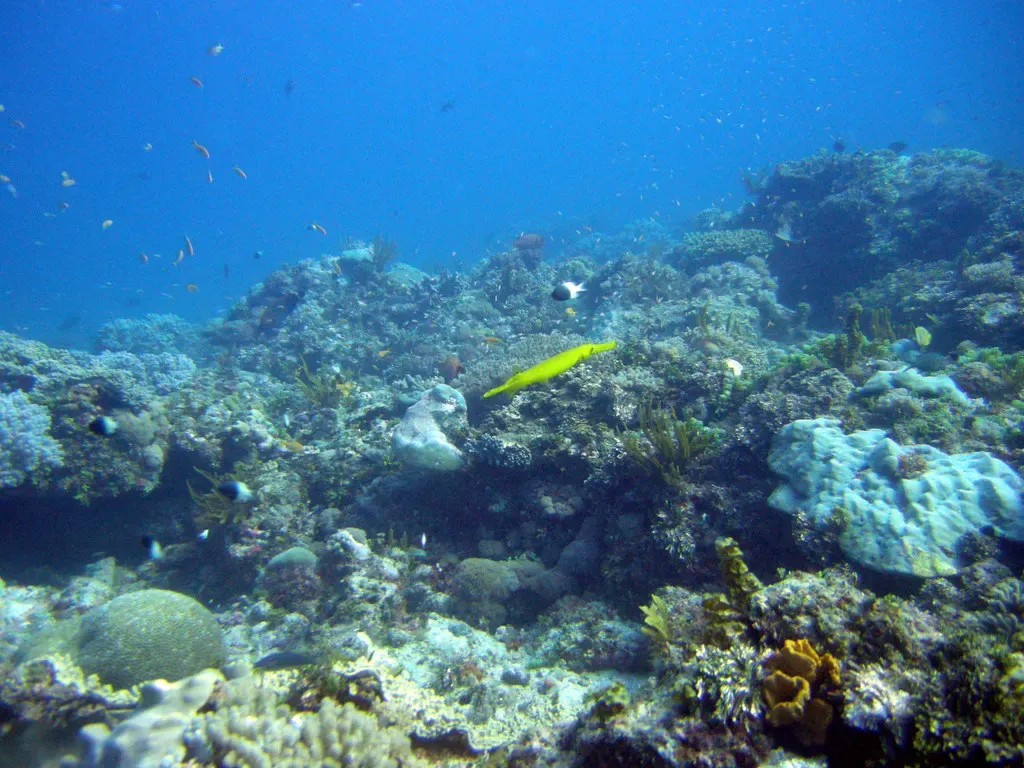
Outer-reef drift walls and a seahorse lagoon on Zanzibar’s south-east coast
Photo: mattk1979 · CC BY-SA 2.0
Paje and Jambiani are beach villages on Zanzibar’s south-east coast, where a barrier reef shelters a lagoon. Boats run out through a gap in the reef, the mlango, to drift dives along outer walls and sloping coral gardens such as Napoleon Wall, Giant Grouper Wall and Powoni, while seahorses and blue-spotted stingrays live in the lagoon behind. Most dives sit between 6 and 30 m on a largely unexplored stretch of coast.
About diving in Paje & Jambiani
Every dive here is a boat dive. Three lagoon sites lie about 15 minutes by boat from the bases in Paje and Jambiani, and the outer-reef sites are 5 to 20 minutes beyond the mlango, one of the gaps in the barrier reef that boats use to reach the outside. Departure times change every day with the tide, so the timetable has to be checked for each dive day. Every dive is run as a drift, with the boat following the group.
The outer reef offers sloping coral gardens and walls. Napoleon Wall and Cement Wall begin around 12 m and drop to 35 m, while Woo South falls away to 75 m. Napoleon fish, groupers, morays, turtles, lobsters, octopus and ribbon eels live along the outside. Inside the barrier reef, the lagoon mixes sandy and seagrass areas with the large coral formations of the Eastern reef.
The current outside runs north or south and usually allows a leisurely drift over the gardens and along the walls. Because the lagoon lies within the barrier reef, it is protected from the outside elements, which gives newer divers calmer conditions. Some outer sites are further afield and call for advanced-level experience. The coast suits divers who enjoy unhurried wall and garden drifts and lagoon macro.
Best time to dive Paje & Jambiani
| Jan | Feb | Mar | Apr | May | Jun | Jul | Aug | Sep | Oct | Nov | Dec |
|---|---|---|---|---|---|---|---|---|---|---|---|
| Good | Good | Fair | Fair | Fair | Good | Good | Good | Good | Good | Fair | Fair |
In the hot months of the northern-hemisphere winter, strong sea breezes of the northeast monsoon often cool the east coast. March, April and May bring the main rains with the southwest monsoon, the wettest stretch of the year. The months in between the two rainy seasons receive less rain, reaching the minimum in July, before a second, lesser rainy spell in November and December. Some sites are better in certain seasons, but no month is named as the best, so none is rated above good.
Best months: January, February, June, July, August, September, October
Dive types & marine life
Seahorses are typically found over the sand and seagrass of Jambiani Lagoon, and frogfish, leaf fish and harlequin shrimp are often spotted on the far side of the Eastern reef. Chances are high of seeing dozens of blue-spotted stingrays around the main lagoon channel at Stingray City.
- Wall
- Drift
- Coral garden
- Reef
- Napoleon wrasse
- Groupers
- Sea turtles
- Stingrays
- Frogfish
- Macro critters
- Octopus & cuttlefish
Best dive sites in Paje & Jambiani
- 1
Napoleon Wall
A drop-off from 12 to 35 m with corals crowning the top of the wall.
- 2
Giant Grouper Wall
Wall dive from 12 to 28 m known for potato groupers, with pelagics out in the blue.
- 3
Cement Wall
Wall named for a 1930s cement cargo, with three enormous anchors, one in front of a small cave.
- 4
Powoni
Table corals from 9 to 30 m, crowded with sweetlips and unicornfish.
- 5
Sau Inn Garden
A colourful garden of assorted corals from 6 to 20 m, rich in small life and fish, with a deeper dive on a small ledge.
- 6
Stingray City
Lagoon channel where dozens of blue-spotted stingrays are likely, then large coral formations.
Site guides
Lagoon
Seahorses on seagrass and harlequin shrimp on the Eastern reef
Lagoon
Nudibranchs, leaf fish and snake eels on a varied inner reef
Wall
Corals crowning the rim of a drop-off beyond the barrier reef
Reef
Table corals crowded with sweetlips and unicornfish
Coral garden
A colourful patchwork of assorted corals rich in small life
Lagoon
Dozens of blue-spotted stingrays in the lagoon's main channel
How to get to Paje & Jambiani
Flights land at Abeid Amani Karume International Airport (ZNZ), about 5 km (3.1 mi) south of Zanzibar City, and a taxi to Paje takes about 1 hour. Dive centres are based in Paje and Jambiani and offer free transfers within the Paje, Bwejuu and Jambiani areas.
Photos from Paje & Jambiani
mattk1979 · CC BY-SA 2.0
mattk1979 · CC BY-SA 2.0
Questions divers ask
Why do dive times change every day in Jambiani?+
Boats leave at a different time each day to match the tide, so the timetable for the planned dive days has to be asked for in advance.
What certification is needed for the outer walls at Paje and Jambiani?+
Open Water is the minimum, but some outer sites need advanced-level experience, and every dive is a drift with the boat following the group.
How do divers get to Paje and Jambiani?+
Flights land at Zanzibar’s ZNZ airport and a taxi to Paje takes about 1 hour; dive centres offer free transfers across the Paje, Bwejuu and Jambiani areas.
Where can seahorses be seen near Paje?+
In Jambiani Lagoon, over the sandy and seagrass areas; the dive continues to the far side of the Eastern reef, where frogfish and harlequin shrimp are often spotted.
When is the rainy season on Zanzibar’s south-east coast?+
The main rains fall from March to May and a second, lesser wet spell comes in November and December; July is the driest month.
Sources
- Dive Zanzibar | Buccaneer Diving — Buccaneer Diving
- Dive Zanzibar — Buccaneer Diving
- Explore our Dive Sites — Buccaneer Diving
- Zanzibar Half-Day Dive Trip (Pole Pole Divers) — PADI
- Zanzibar Average Sea Temperatures — SeaTemperature.org
- Zanzibar — Wikipedia
- Paje — Wikivoyage
- Zanzibar Archipelago — Wikivoyage
- Best time to swim in Paje Beach in Zanzibar — seatemperatu.re
Photo credits
- A rocky coral reef sloping into blue water, with a yellow fish in the centre and small orange fish swimming above. by mattk1979, CC BY-SA 2.0, via Openverse
- A mottled grey and white lizardfish resting on top of a large yellow-green brain coral. by mattk1979, CC BY-SA 2.0, via Openverse
- A crown-of-thorns starfish with dark red arms and long spines draped over a pale boulder coral. by mattk1979, CC BY-SA 2.0, via Openverse
Embed
Run a dive centre, club or blog? Embed this map of 6 dive sites near Paje & Jambiani on your own page.
Similar destinations
Africa
Kizimkazi & Menai Bay
Tanzania
Coral gardens and walls in a bay where humpback and bottlenose dolphins live.
Africa
Diani Beach
Kenya
Whale sharks from November to February and 29 sites within 40 minutes

An atoll wall and easy coral slopes off Zanzibar's north-east corner

Tidal gaps flush an 800 m channel past sheer coral walls