Coral Triangle · Malaysia
Pulau Aur & Pulau Dayang
Offshore rocks with barracuda and a chance of mantas and whale sharks
Pulau Aur and its neighbour Pulau Dayang are the outermost islands of Johor, part of the offshore Johor Marine Park in the South China Sea. Deep water surrounds Aur, so the rocks draw pelagics: barracuda at the Pinnacles, bumphead parrotfish and the odd manta or whale shark at Rayners Rock, and big-fish drift dives along Captain's Point. Singapore dive companies run the trips, by liveaboard or by boat through Mersing.
About diving in Pulau Aur & Pulau Dayang
Singapore dive companies run the diving, either on an overnight liveaboard or from a resort base on Dayang, which faces Aur across the Dayang Channel; Aur itself has chalets but no dive resort. Boats take divers out to offshore rocks such as Rayners Rock, shore dives cover the shallow reefs, and at slack tide Captain's Point runs as a drift down into Telok Jawa. Dayang lies about 65 km east of the Johor coast. The northeast monsoon confines sea activities, and the season closes for it. A 2018 New Straits Times report said recreational diving around Aur had been halted for conservation, so divers should confirm with the operator before booking.
Deep water surrounds Aur, which brings pelagic encounters. At the Pinnacles, large boulders and coral gardens hold schools of fish and macro life; batfish, fusiliers and damsels are ever present, and reef and nurse sharks have been spotted. A family of bumphead parrotfish grazes the reef at Rayners Rock, where sea fans and soft corals grow between the rocks, and the waters of Dayang and Lang bring a chance of eagle rays, manta rays and whale sharks. Pulau Lang usually offers excellent visibility and green turtles.
Most dives run from 8 to 15 m, and the range suits Open Water, Advanced and more experienced divers alike, from shallow shore reefs to more challenging rocky depths. The headline sites ask more: currents around Aur and Dayang can be challenging, the channel at Crocodile Rock runs fast on the tide, and newly certified divers should not head out from Rayners Rock into open water. Captain's Point has nowhere to place a descent line and becomes a difficult pickup in rough seas. Aur is difficult to reach, so it suits divers willing to trade a long crossing for pelagic chances.
Best time to dive Pulau Aur & Pulau Dayang
| Jan | Feb | Mar | Apr | May | Jun | Jul | Aug | Sep | Oct | Nov | Dec |
|---|---|---|---|---|---|---|---|---|---|---|---|
| Off-season | Fair | Good | Good | Good | Good | Good | Good | Good | Prime | Fair | Off-season |
The northeast monsoon blows off the South China Sea from November to March, bringing heavy rain to the east coast, and the island season closes through the depth of it. Trips start in February or March and run to October, with some boats going on into November. October and November give the best chance of eagle rays, manta rays and the occasional whale shark, though November trips meet the first of the monsoon. Surface water sits near 25 °C in February and peaks around 29 °C in May.
Best months: October
Dive types & marine life
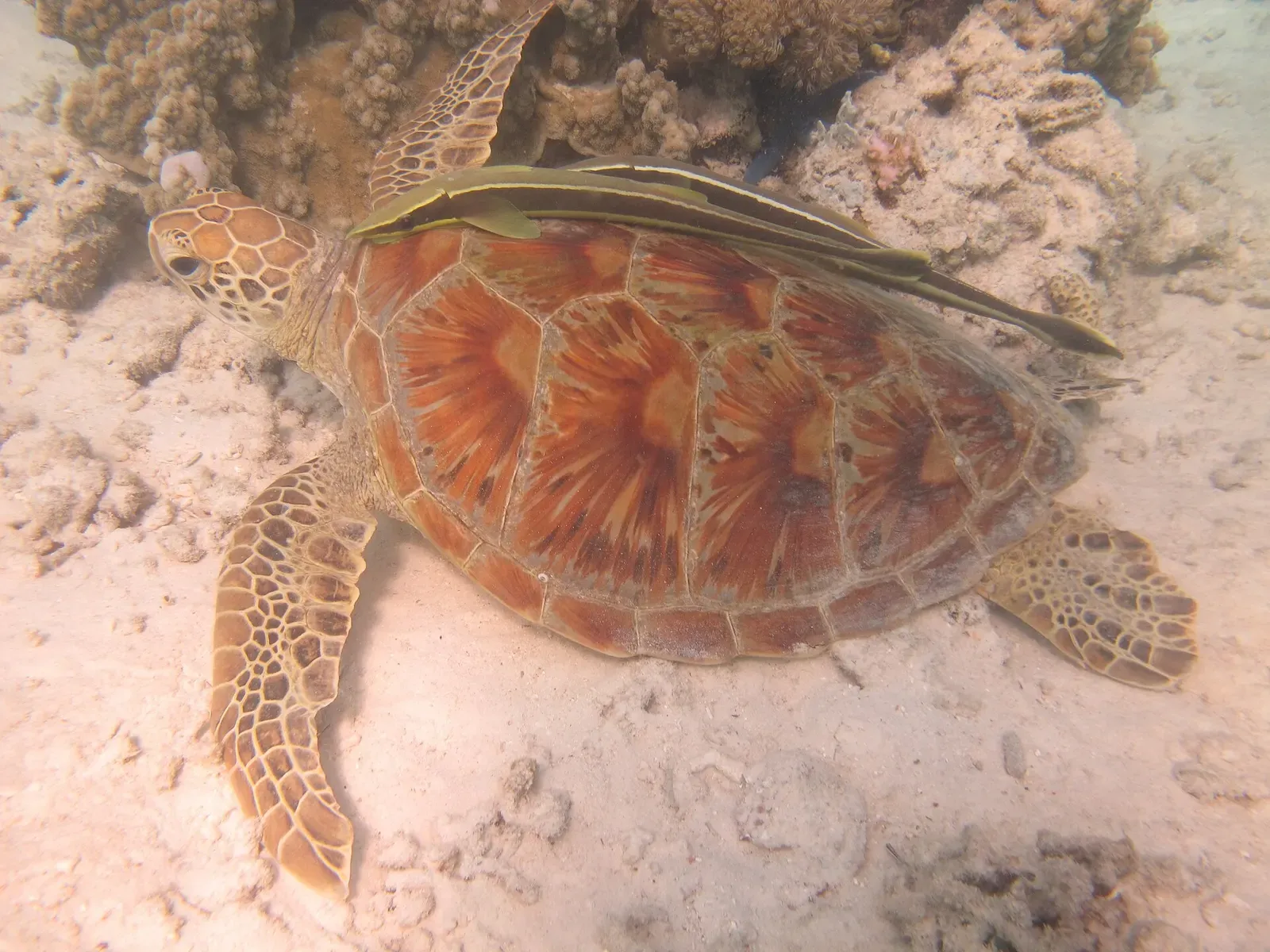
Mantas, eagle rays and the occasional whale shark are chance encounters, most likely in October and November. Barracuda and morays are regulars at the Pinnacles, bumphead parrotfish graze Rayners Rock, and green turtles are usually seen at Pulau Lang.
- Reef
- Drift
- Pelagic & blue water
- Wreck
- Night
- Manta rays
- Whale sharks
- Eagle rays
- Barracuda
- Sea turtles
Best dive sites in Pulau Aur & Pulau Dayang
- 1
Rayners Rock
Pelagic rock where mantas or whale sharks occasionally come close, at about 17 to 18 m
- 2
Pinnacles
Three large rocks just below the surface with barracuda, morays and sometimes mantas
- 3
Captain's Point
Drift dive with big-fish encounters, diveable in many conditions
- 4
Zero Wreck
Sunken Japanese fighter plane south of Aur, thickly encrusted with coral
- 5
Crocodile Rock
Rock shaped like a crocodile's snout, used for night dives
- 6
Dayang Tip
Gentle slopes of colourful coral for a relaxed dive
Site guides
Pinnacle
Three rocks topping out just under the surface, ringed by batfish and jacks
Pinnacle
Schools of jacks and barracuda just off a lone boulder in open water
How to get to Pulau Aur & Pulau Dayang
Divers reach the islands by chartered boat from Mersing or Singapore. From Mersing, Aur is about two hours away by speedboat and Dayang 3 to 4 hours on the normal ferry; liveaboards from Singapore sail overnight.
Photos from Pulau Aur & Pulau Dayang
Nicolas Lannuzel · CC BY-SA 2.0
Questions divers ask
Is there a marine park fee at Pulau Aur and Pulau Dayang?+
Yes. Aur, Dayang, Lang, Pinang and Pemanggil form the offshore part of Johor Marine Park, and marine park fees are charged; the cost has kept some dive operators away.
Can newly certified divers dive Pulau Aur?+
Yes, on the easier sites: shallow shore reefs, Crocodile Rock, the gentle slopes of Dayang Tip and Captain's Point at slack tide. At Rayners Rock newly certified divers should not head out into open water, and the current-swept rocks are better left to experienced divers.
When is the best chance of mantas or whale sharks?+
October and November give the best odds around Dayang and Lang. The start and end of the season are also prime spotting time at the more challenging sites, though seas tend to be choppier then.
Sources
- Dayang Diving Malaysia | Gill Divers — Gill Divers
- Pulau Aur/Dayang - FishermenScuba — Fishermen Scuba
- Pulau Aur | Malaysia — GS-Diving
- Tioman & Aur diving guide — Underwater Asia
- Islands of Johor — Tourism Malaysia
- Aur Island — Wikipedia
- Becoming a Rescue Diver up in Dayang — The Occasional Traveller
- Pulau Aur - New option to dive — ScubaBoard
- Température de la mer à Pulau Aur — cabaigne.net
- Go hidden gems: Pulau Aur — New Straits Times
Photo credits
- Wooden boardwalk climbing between large grey boulders and coconut palms, a small boat pulled up on the sand beside clear blue water by Nicolas Lannuzel, CC BY-SA 2.0, via Wikimedia Commons
Embed
Run a dive centre, club or blog? Embed this map of 2 dive sites near Pulau Aur & Pulau Dayang on your own page.
Similar destinations

The world's second-largest contiguous coral reef, closed to fishing

Community-run whale shark tourism, and mantas queueing in Ticao Pass
Turtle-heavy reefs and pygmy seahorses within 25 minutes of Pom Pom by fast boat.

Calm marine-park reefs and twin pinnacles a short boat ride from the Sibu resorts