
Pacific Islands · Cook Islands
Rarotonga & Aitutaki
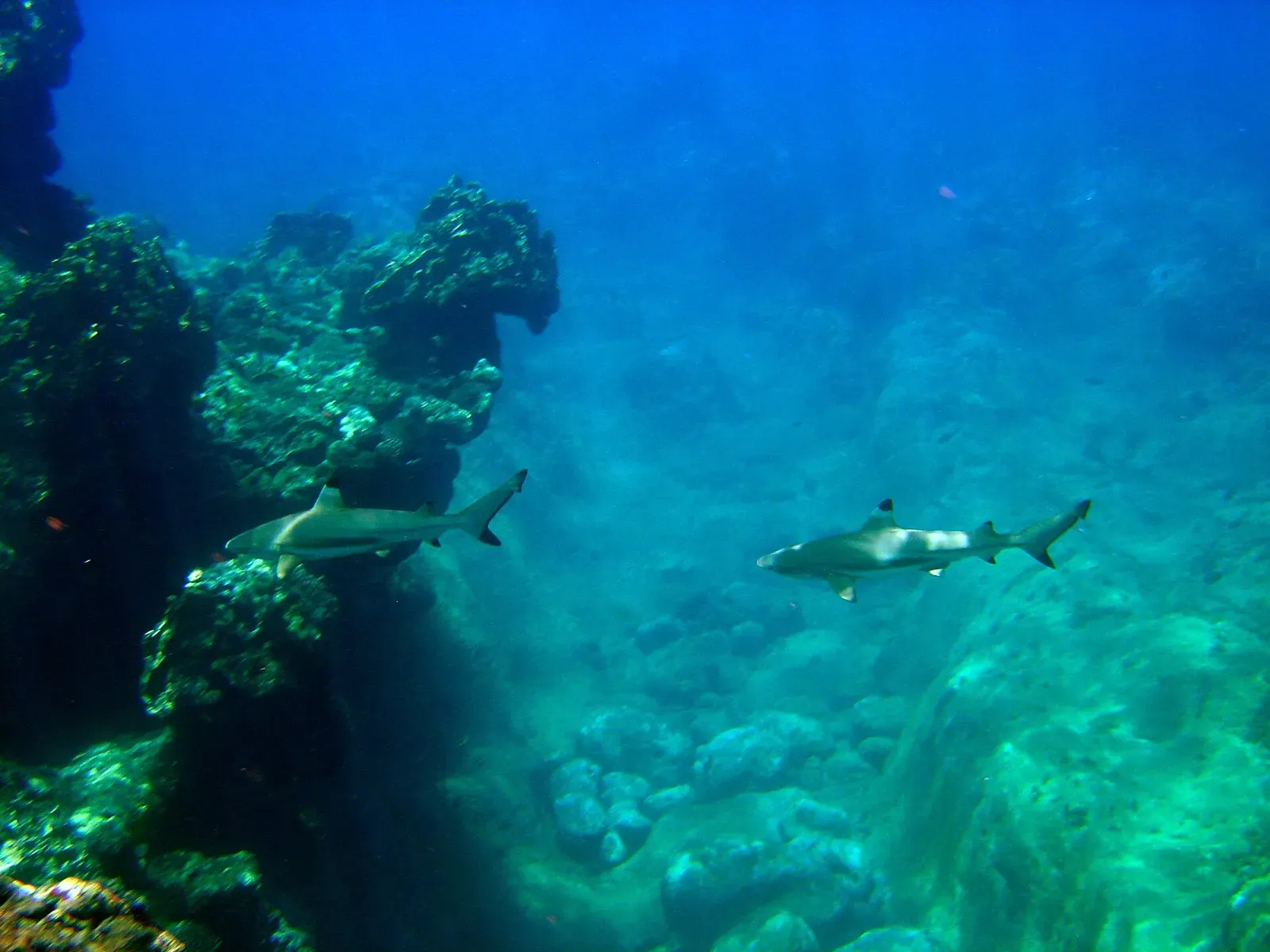
Forty-metre visibility over lava caves and canyons, straight off the reef
Photo: Geoff Shuetrim · CC BY 4.0
Rarotonga has no lagoon runoff to speak of and no river silt, so the water off its fringing reef is startlingly clear — 40 m and beyond is normal, and the volcanic drop-offs, canyons and lava caves are visible from the surface. The SS Maitai has lain broken on the reef since 1916, shallow enough to snorkel. Humpback whales pass between July and October, and Aitutaki adds one of the Pacific's most photographed lagoons with a wall on its outer edge.
About diving in Rarotonga & Aitutaki
Rarotonga is small and the reef is close in, so there is almost no travel time in the diving. Boats launch from Avatiu on the north coast or straight off the west-coast beaches, clear the passage and are on a site within minutes, which makes the standard two-dive morning a genuinely relaxed one — back on land by lunch with the rest of the day free. Sites are picked by wind, the fleet working whichever coast is in the lee as the trades swing. Shore diving exists but is limited: the reef flat is shallow and the surf breaks along its edge.
Underwater it is a steep volcanic island with a thin fringing reef stuck to the side of it. The lagoon is narrow around most of the island — Muri, on the south-east, is the exception — so the drop-off starts close in and the terrain runs to canyons, arches, sand chutes and old lava tubes cut into the slope. The reef passages drain the flat and give a gentle outbound drift rather than anything demanding. Aitutaki works the other way round: a very large shallow lagoon, with the diving out on the outer face where it falls away.
The reef is species-poor next to the western Pacific — fewer corals, fewer of the big Indo-Pacific headliners — so this is scenery diving, read in shape and light rather than in colour. That suits divers who are new or coming back after a break, and anyone fitting dives around a family holiday. May to October is the settled core, with April and November usually holding either side of it; December to March brings rain, swell and the region's cyclone season, and costs operators days rather than shutting the diving down. Leave a clear day between the last dive and the flight home.
Best time to dive Rarotonga & Aitutaki
| Jan | Feb | Mar | Apr | May | Jun | Jul | Aug | Sep | Oct | Nov | Dec | |
|---|---|---|---|---|---|---|---|---|---|---|---|---|
| Season | Fair | Fair | Good | Good | Prime | Prime | Prime | Prime | Prime | Prime | Good | Fair |
| Sea surface | 27°C81°F | 28°C82°F | 28°C82°F | 28°C82°F | 27°C81°F | 26°C79°F | 25°C77°F | 25°C77°F | 25°C77°F | 25°C77°F | 25°C77°F | 27°C81°F |
| Daytime high | 28°C82°F | 28°C82°F | 28°C82°F | 28°C82°F | 27°C81°F | 26°C79°F | 26°C79°F | 25°C77°F | 25°C77°F | 26°C79°F | 27°C81°F | 27°C81°F |
| Rain | 178 mm7.0 in | 183 mm7.2 in | 193 mm7.6 in | 142 mm5.6 in | 164 mm6.5 in | 56 mm2.2 in | 74 mm2.9 in | 63 mm2.5 in | 68 mm2.7 in | 95 mm3.7 in | 114 mm4.5 in | 184 mm7.2 in |
| Jan | Feb | Mar | Apr | May | Jun |
|---|---|---|---|---|---|
| Fair | Fair | Good | Good | Prime | Prime |
| Sea surface | |||||
| 27°C81°F | 28°C82°F | 28°C82°F | 28°C82°F | 27°C81°F | 26°C79°F |
| Daytime high | |||||
| 28°C82°F | 28°C82°F | 28°C82°F | 28°C82°F | 27°C81°F | 26°C79°F |
| Rain | |||||
| 178 mm7.0 in | 183 mm7.2 in | 193 mm7.6 in | 142 mm5.6 in | 164 mm6.5 in | 56 mm2.2 in |
| Jul | Aug | Sep | Oct | Nov | Dec |
|---|---|---|---|---|---|
| Prime | Prime | Prime | Prime | Good | Fair |
| Sea surface | |||||
| 25°C77°F | 25°C77°F | 25°C77°F | 25°C77°F | 25°C77°F | 27°C81°F |
| Daytime high | |||||
| 26°C79°F | 25°C77°F | 25°C77°F | 26°C79°F | 27°C81°F | 27°C81°F |
| Rain | |||||
| 74 mm2.9 in | 63 mm2.5 in | 68 mm2.7 in | 95 mm3.7 in | 114 mm4.5 in | 184 mm7.2 in |
2011–2025 averages. Sea surface: NOAA Coral Reef Watch, measured at the surface, so deeper water can run colder. Daytime high and rain: NASA POWER.
Apr–Nov is the dry season with the clearest water and humpbacks Jul–Oct; Dec–Mar brings rain and cyclone risk.
Best months: May, June, July, August, September, October
Rarotonga & Aitutaki water temperature and weather by month
The sea surface runs from 25 °C (77 °F) in August to 28 °C (82 °F) in March. Most rain falls from December to May, peaking at about 190 mm (7.5 in) in March; it stays largely dry from June to September. Daytime highs sit around 27 °C (81 °F) all year. The coldest water here is about 24 °C (75 °F), so pack a 3 mm full suit.
Dive types & marine life
Turtles, whitetip reef sharks and dense schools of small reef fish are on the reef year-round, with eagle rays over the sand chutes and nudibranchs on shaded rock; grey reef sharks show on the outer edges rather than everywhere. Humpbacks move through from July to October, usually heard on the dive and sometimes seen from the boat, and dolphins work the water off the passages.
- Reef
- Wall
- Cave & cavern
- Wreck
- Drift
- Coral garden
- Whales
- Sea turtles
- Reef sharks
- Reef fish swarms
- Eagle rays
- Napoleon wrasse
- Nudibranchs
- Dolphins
Best dive sites in Rarotonga & Aitutaki
Channel & pass
Eagle rays over the sand in a cut through the reef
Sand slope
A sand chute that ends at a drop-off with sharks in its caves
SS Maitai
Steamer wrecked in 1916, scattered across 3–12 m off Avarua.
Black Rock
Volcanic headland on Rarotonga's west coast with caves and a drop-off.
The Wall
Aitutaki's outer reef face, dropping vertically from 12 m.
How to get to Rarotonga & Aitutaki
Most flights come through Auckland; the airport sits just outside Avarua, and a single coast road of about 32 km serves the whole island, so nothing is far. Dive centres cluster on the north and west coasts and run half-day boats. Aitutaki is a short domestic flight with only one or two operators, so book dives before you go.
Dive videos
Rich Explores the Maitai Wreck in Rarotonga August 2025 · Muri Retreat on YouTube
Diving with Pacific Divers in Rarotonga, Cook Islands · Escape The Ordinary on YouTube
Photo credits
- Island goatfish and a juvenile boxfish over a coral reef in the Cook Islands by Geoff Shuetrim, CC BY 4.0, via Wikimedia Commons
Embed
Run a dive centre, club or blog? Embed this map of 1 dive sites near Rarotonga & Aitutaki on your own page.
Similar destinations
Lava tubes and drop-offs, with a marine reserve walkable from Apia
Wrecks from two wars touching in Apra Harbor, plus the Blue Hole sinkhole

Molokini's crater wall and Lānaʻi's skylit lava caverns


A 38 m chimney built by freshwater springs venting inside the lagoon