Recife Wrecks · Brazil · Wreck
Corveta Camaquã
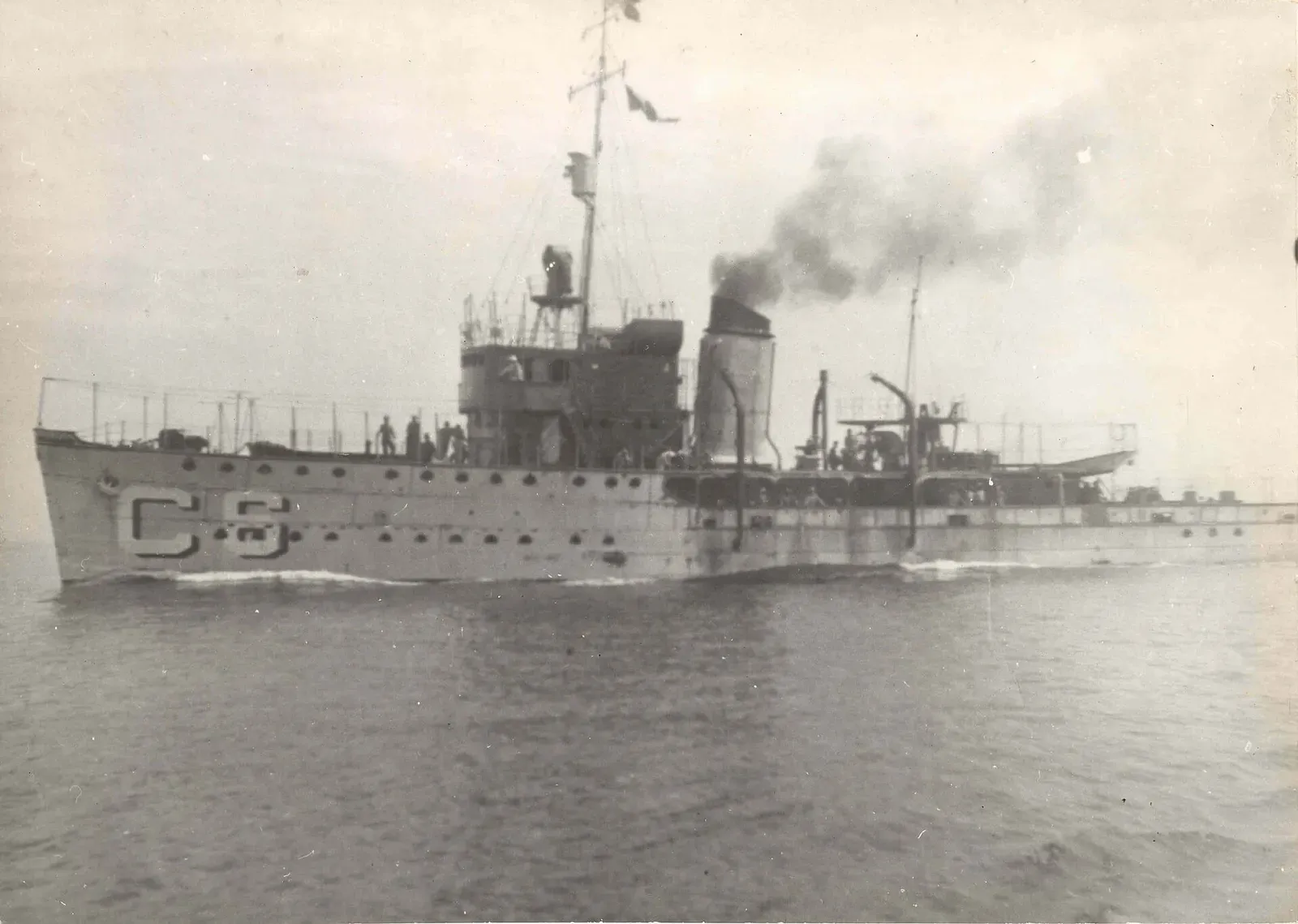
Wartime escort corvette at 60 m with her cannons still aboard
Photo: Marinha do Brasil · CC BY-SA 2.0
A warship built to lay mines and reclassified as an escort corvette to protect Brazilian waters during the Second World War, the Camaquã was capsized by heavy seas in July 1944 and rests at 60 m with her cannons and ammunition still in place. That depth puts her outside recreational limits and makes this a planned technical dive rather than a wreck you drop onto for a look.
Also known as Corveta Camacuã.
Where it is and how deep
7.7869° S, 34.4243° WApproximate position — the dashed circle shows where the site lies; your operator's briefing has the mooring.
The dive
This is a descent into open water with nothing to see until the wreck arrives at depth. The Camaquã lies at 60 m, well past the recreational limit, so the dive is planned as a decompression dive from the start: a short window on the wreck, a fixed turn time and an ascent schedule agreed before anyone leaves the boat. Everything about the profile is decided on the surface rather than on the bottom.
What you get for the depth is a warship that still carries her armament. She lies over to starboard and several pieces remain intact, including cannons and ammunition, which is unusual for a hull that has been down as long as this one. The dive is a single considered pass along the ship rather than an exploration; there is no bottom time here for wandering, and narcosis at this depth compresses what you take in.
Ascend on schedule and on the line. There is nothing on the bottom to navigate by if you leave the wreck, and the water column above it is open, so the shotline is the whole plan for getting back. Team, gas and timing matter more on this site than on anything else in the area, and a day when conditions are marginal is a day to dive something shallower.
The wreck
- Vessel
- Camaquã
- Type
- Escort corvette, converted from a Carioca-class minelayer
- Sunk
- 1944
- Cause
- Capsized by heavy seas on 21 July 1944 while returning from escorting a convoy
- Lies
- Listing to starboard at 60 m, cannons and ammunition still in place
The Camaquã was built as a minelayer of the Carioca class and reclassified as an escort corvette during the Second World War to protect Brazilian waters. She was not lost in action: returning from escorting a convoy, she was capsized by heavy seas on 21 July 1944, twelve miles off the Recife bar entrance. The wreck lies at 60 m and still carries several intact pieces, including her cannons and her ammunition. Wikipedia's list of wreck diving sites names Corveta Camacuã among the wrecks that define diving off Recife, alongside the Pirapama and the Vapor Bahia.
Marine life and season
The sources we used don't single out particular species here.
| Jan | Feb | Mar | Apr | May | Jun | Jul | Aug | Sep | Oct | Nov | Dec |
|---|---|---|---|---|---|---|---|---|---|---|---|
| Prime | Prime | Good | Fair | Fair | Fair | Fair | Good | Prime | Prime | Prime | Prime |
Season follows Recife Wrecks: Sep–Mar is the dry season with the calmest seas and best visibility; Apr–Jul rain and runoff can drop it below 8 m.
Know before you go
- At 60 m this is a decompression dive beyond recreational limits, requiring technical training, suitable gas and a planned ascent schedule.
- Ammunition is still aboard the wreck; leave ordnance untouched and keep your gear and hands clear of it.
- Narcosis and short bottom time at this depth leave no margin for improvisation; fix the turn time before the dive and hold to it.
Dive videos
CORVETA CAMAQUÃ · Adair Ribeiro Jr on YouTube
Questions divers ask
How deep is the Corveta Camaquã wreck?+
She rests at 60 m, well beyond recreational limits, so the dive needs technical certification, decompression planning and appropriate gas rather than an Advanced card.
When and why did the Camaquã sink?+
She was capsized by heavy seas on 21 July 1944, twelve miles off the Recife bar entrance, while returning from escorting a convoy. She had been built as a Carioca-class minelayer and reclassified as an escort corvette.
Sources
- Corveta Camaquã dive site — Scubago / SSI MyDiveGuide
- Brazilian Navy in World War II — Wikipedia
- List of wreck diving sites — Wikipedia
Photo credits
- Black and white photo of the corvette Camaquã underway at sea, smoke rising from her stack by Marinha do Brasil, CC BY-SA 2.0, via Wikimedia Commons
In The Logbook
- Air, nitrox or trimix: which gas, and when?Gear & kit · 15 min read
- WWII wrecks you can dive, by theatreWrecks · 7 min read
More dive sites in Recife Wrecks
Wreck
Nineteenth-century steamer at 19-23 m with many pieces still identifiable
Wreck
Tug deliberately sunk in 2002, in navigation position at 20-25 m
Wreck
Steamer still in navigational position at 18-25 m, parts identifiable
Similar dives elsewhere
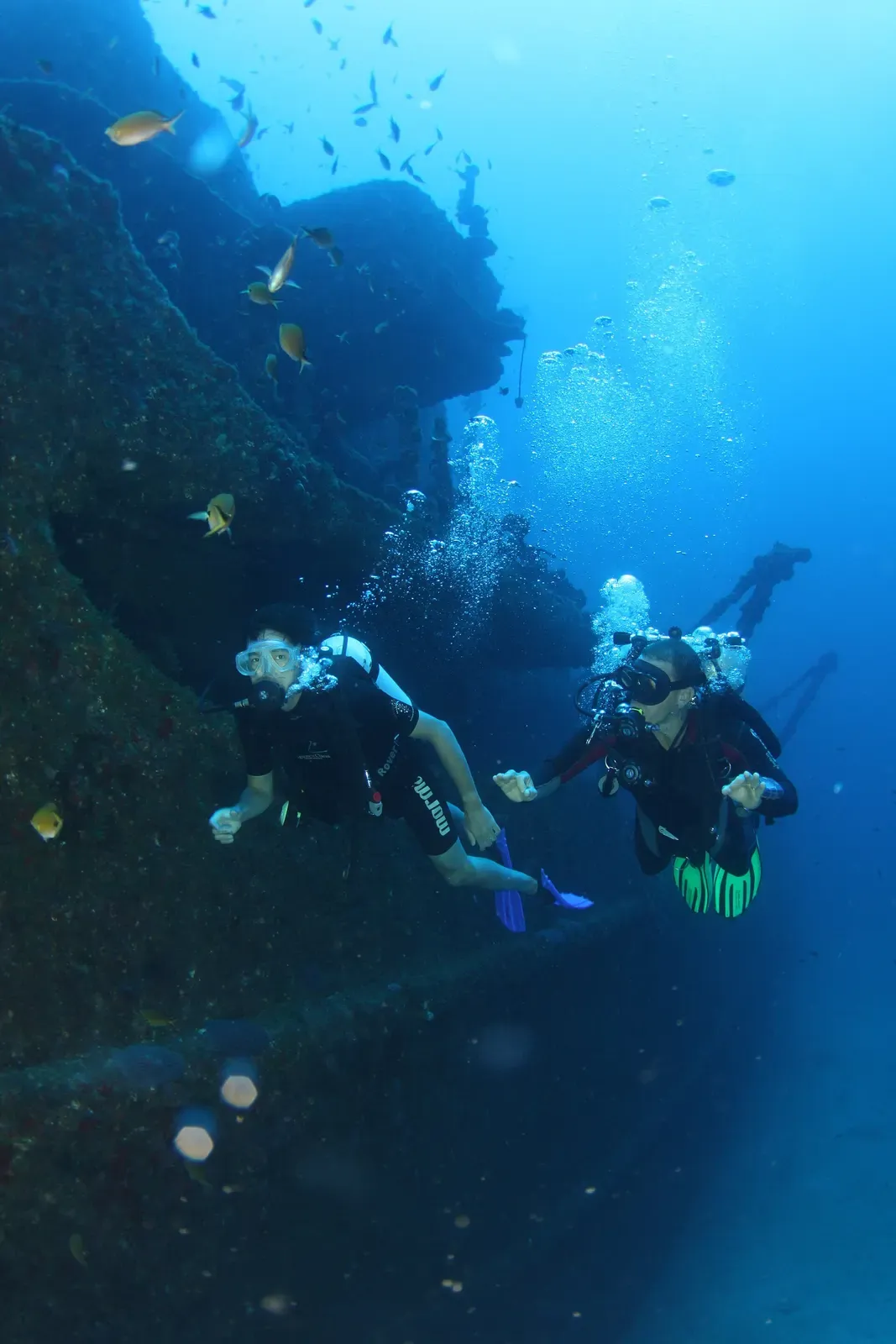
A 55 m navy corvette lying at about 62 m
.jpg)
A 102 m British steamer lying between 15 and 27 m
Wreck
Blackadder
Salvador & Baía de Todos os Santos · Brazil
A 1905 clipper wreck at 9 m, dived every day of the year
Wreck
Castor
Porto Seguro & Santa Cruz Cabrália · Brazil
A cargo ship broken in three on the reef, propeller and rudder at 15 m