
South America · Brazil
Recife Wrecks
Dozens of wrecks on flat sand, including the 1887 steamer Pirapama
Photo: Elvis Boaventura · CC BY 3.0
The Pernambuco coast off Recife holds one of the densest concentrations of shipwrecks in the South Atlantic — steamers lost on the reef in the nineteenth century, wartime casualties and vessels sunk deliberately as artificial reefs. Most sit between 10 and 40 m on a flat sand bottom, encrusted with soft coral and holding dense fish life, with the 1887 steamer Pirapama the best known. Warm water and short boat rides make it an unusually accessible wreck destination.
About diving in Recife Wrecks
The diving day is short and repetitive in a useful way. Boats leave the city in the morning, run out to a wreck, dive it, move a short distance and dive a second, and are back before the afternoon is over, so there is no reason to stay anywhere but Recife. Because the hulls sit close together on the same stretch of shelf, a crew can swap a deep site for a shallow one at short notice when the swell or the current is wrong, and the day usually still goes ahead in some form.
There is no wall or slope out there to give the diving a backdrop. The bottom is flat sand and each wreck is an isolated patch of hard structure with nothing else around it, which is why the fish stack onto it so visibly. That makes the sites easy to read: drop onto the hull, work it end to end and come back up the line. It also means the dive is entirely about the ship, so the character changes completely between a collapsed steamer of ribs, plating and boilers and a hull that still reads as a vessel.
The history is part of the appeal and part of the frustration. The reef line that gave the city its name has been catching ships since the colonial period, and losses accumulated across several eras after that, but the paperwork is patchy and the name a boat uses for a site does not always match a documented ship. Expect a confident story on the way out, and treat any single identification as one account among several rather than as settled fact.
It suits divers who like wrecks for their own sake and do not mind repeating a similar profile several days running, and there are enough separate hulls in range to fill most of a week without going back to the same one. The deeper ones cut bottom time hard, so ask how an operator plans gas and repetitive profiles before booking a run of consecutive days. Photographers should expect suspended particles rather than long clean sightlines, and anyone hoping for coral will do better on the reef coast south of the city.
Best time to dive Recife Wrecks
| Jan | Feb | Mar | Apr | May | Jun | Jul | Aug | Sep | Oct | Nov | Dec | |
|---|---|---|---|---|---|---|---|---|---|---|---|---|
| Season | Prime | Prime | Good | Fair | Fair | Fair | Fair | Good | Prime | Prime | Prime | Prime |
| Sea surface | 28°C82°F | 29°C84°F | 29°C84°F | 29°C84°F | 29°C84°F | 28°C82°F | 27°C81°F | 26°C79°F | 27°C81°F | 27°C81°F | 28°C82°F | 28°C82°F |
| Daytime high | 32°C90°F | 32°C90°F | 33°C91°F | 32°C90°F | 31°C88°F | 29°C84°F | 28°C82°F | 28°C82°F | 30°C86°F | 31°C88°F | 32°C90°F | 32°C90°F |
| Rain | 76 mm3.0 in | 87 mm3.4 in | 113 mm4.4 in | 160 mm6.3 in | 224 mm8.8 in | 221 mm8.7 in | 206 mm8.1 in | 97 mm3.8 in | 52 mm2.0 in | 32 mm1.3 in | 28 mm1.1 in | 44 mm1.7 in |
| Jan | Feb | Mar | Apr | May | Jun |
|---|---|---|---|---|---|
| Prime | Prime | Good | Fair | Fair | Fair |
| Sea surface | |||||
| 28°C82°F | 29°C84°F | 29°C84°F | 29°C84°F | 29°C84°F | 28°C82°F |
| Daytime high | |||||
| 32°C90°F | 32°C90°F | 33°C91°F | 32°C90°F | 31°C88°F | 29°C84°F |
| Rain | |||||
| 76 mm3.0 in | 87 mm3.4 in | 113 mm4.4 in | 160 mm6.3 in | 224 mm8.8 in | 221 mm8.7 in |
| Jul | Aug | Sep | Oct | Nov | Dec |
|---|---|---|---|---|---|
| Fair | Good | Prime | Prime | Prime | Prime |
| Sea surface | |||||
| 27°C81°F | 26°C79°F | 27°C81°F | 27°C81°F | 28°C82°F | 28°C82°F |
| Daytime high | |||||
| 28°C82°F | 28°C82°F | 30°C86°F | 31°C88°F | 32°C90°F | 32°C90°F |
| Rain | |||||
| 206 mm8.1 in | 97 mm3.8 in | 52 mm2.0 in | 32 mm1.3 in | 28 mm1.1 in | 44 mm1.7 in |
2011–2025 averages. Sea surface: NOAA Coral Reef Watch, measured at the surface, so deeper water can run colder. Daytime high and rain: NASA POWER.
Sep–Mar is the dry season with the calmest seas and best visibility; Apr–Jul rain and runoff can drop it below 8 m.
Best months: January, February, September, October, November, December
Recife Wrecks water temperature and weather by month
The sea surface runs from 26 °C (79 °F) in August to 29 °C (84 °F) in April. Most rain falls from March to July, peaking at about 220 mm (8.7 in) in May; it stays largely dry from September to December. Daytime highs reach 33 °C (91 °F) in March and drop to 28 °C (82 °F) in July. The coldest water here is about 25 °C (77 °F), so pack a 3 mm full suit.
Dive types & marine life
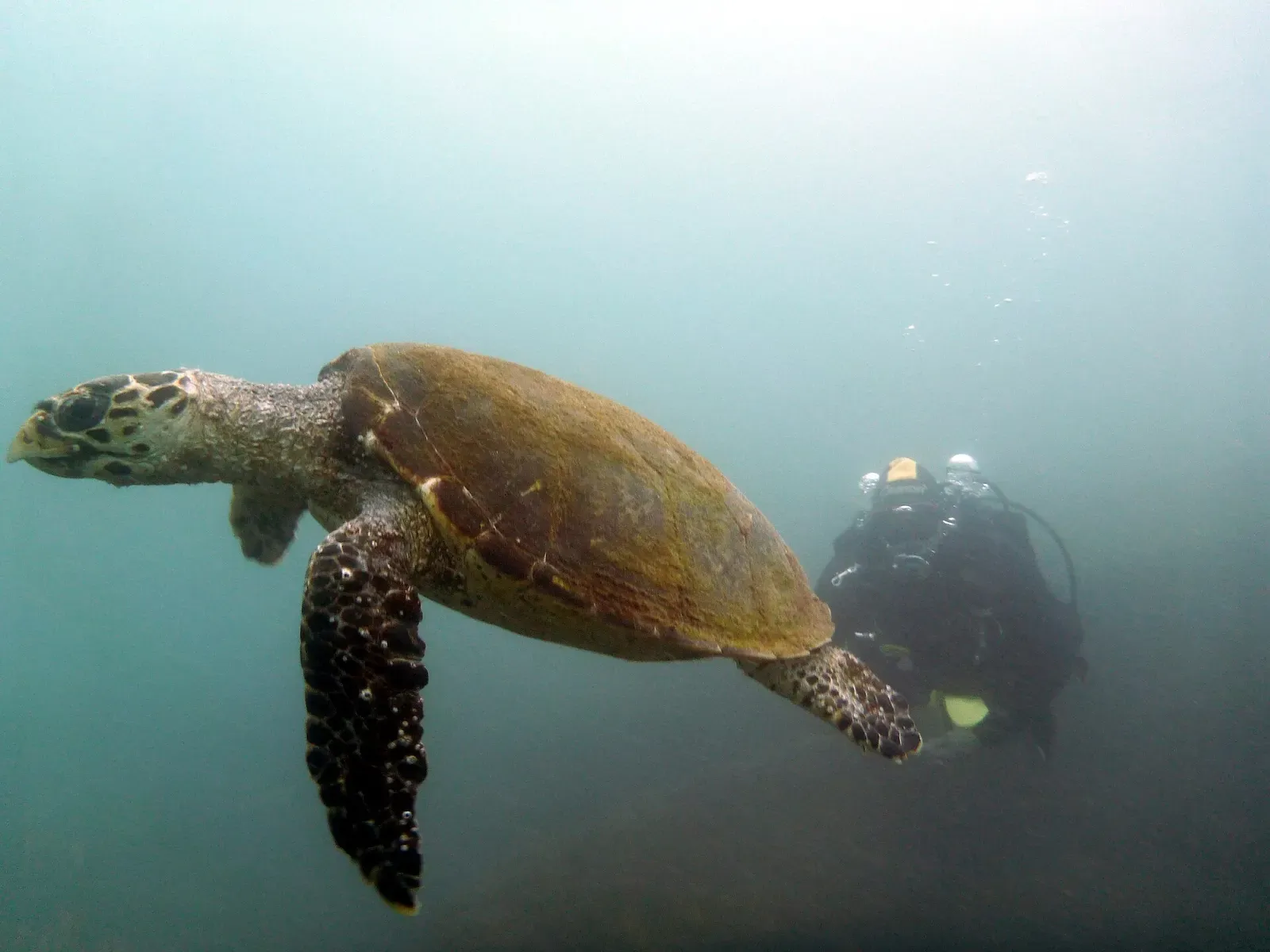
Each hull carries its own residents: groupers back in the plating, barracuda hanging over the highest structure, small fish massed over the wreckage. Turtles, stingrays on the surrounding sand, octopus and nudibranchs on the encrusted metal turn up year-round. Sightings barely shift month to month, so the real variable is clarity, and that is best through the September-to-March dry season.
- Wreck
- Reef
- Night
- Sea turtles
- Groupers
- Barracuda
- Reef fish swarms
- Octopus & cuttlefish
- Stingrays
- Nudibranchs
Best dive sites in Recife Wrecks
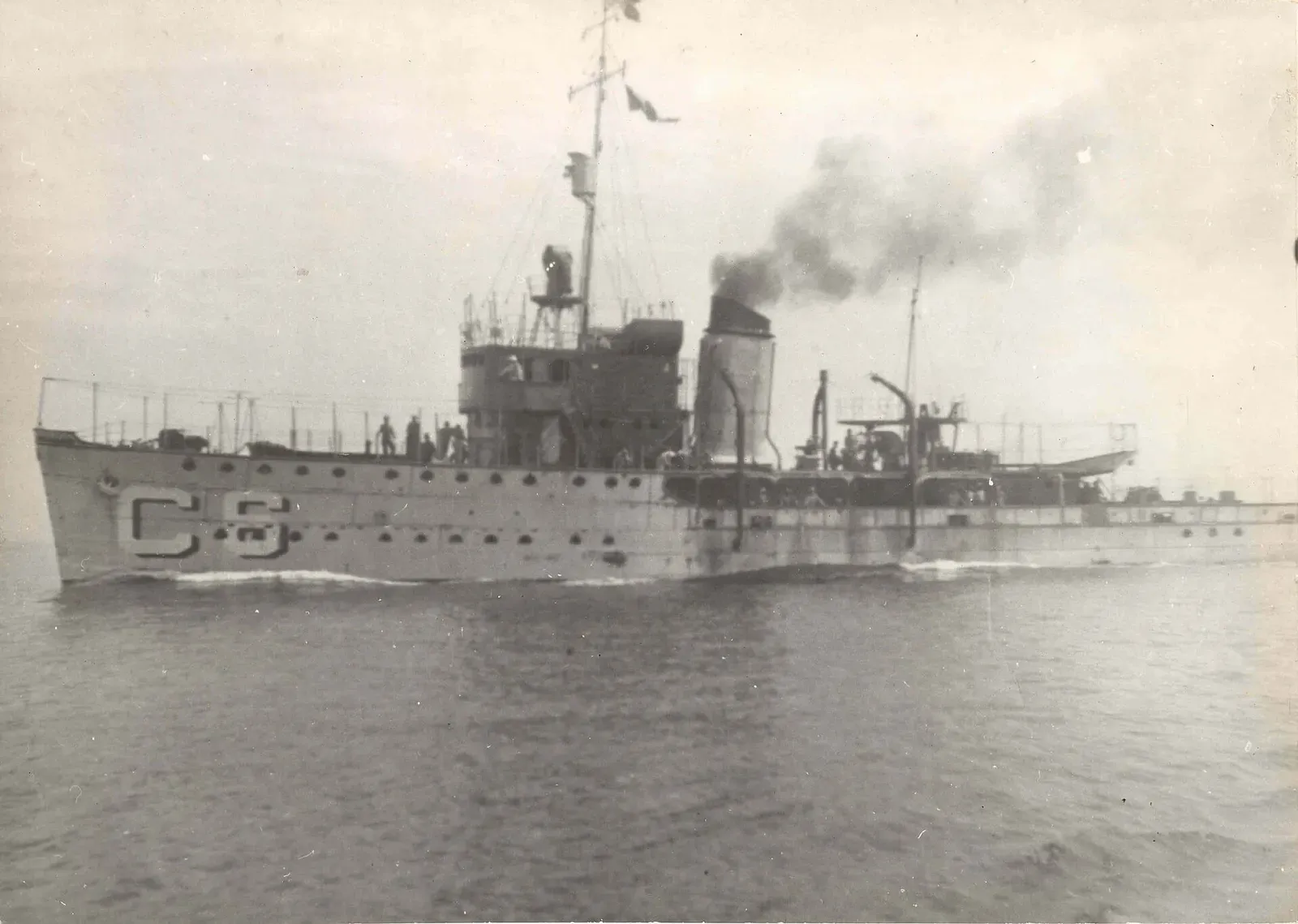
Wartime escort corvette at 60 m with her cannons still aboard
Wreck
Nineteenth-century steamer at 19-23 m with many pieces still identifiable
Wreck
Tug deliberately sunk in 2002, in navigation position at 20-25 m
Wreck
Steamer still in navigational position at 18-25 m, parts identifiable
Vapor de Baixo
Shallow steamer wreck at 14 m, a common first wreck dive here.
Vapor de Cima
Broken steamer at 22 m with dense schools over the boilers.
How to get to Recife Wrecks
Recife's international airport is the arrival point and almost everyone stays in the city, usually along the Boa Viagem beachfront. The wrecks are dived from day boats leaving the city waterfront on short offshore runs; no liveaboard works this coast and nothing is within shore range, so book through a Recife-based centre.
Photos from Recife Wrecks
Raul · CC BY 2.0
Matti Blume · CC BY-SA 4.0
Elvis Boaventura · CC BY 3.0
Dive videos
PARQUE DOS NAUFRÁGIOS - Recife/PE - Pirapama · CUMULUS TV on YouTube
Mero GIGANTE! Mergulho nos Naufrágios de Recife | Florida & Pirapama · Dive Lovers on YouTube
Photo credits
- Sun breaking through clouds over the Atlantic at Boa Viagem beach in Recife, gateway to the offshore wreck sites by Elvis Boaventura, CC BY 3.0, via Wikimedia Commons
- Natural reef breakwater along Boa Viagem beach in Recife, the rocky formation that gives the city its name by Raul, CC BY 2.0, via Wikimedia Commons
- Swimmers wading in a shallow natural pool formed by the reef at Boa Viagem beach in Recife by Matti Blume, CC BY-SA 4.0, via Wikimedia Commons
- Traditional wooden jangada fishing boats resting on the sand at dawn near Recife, Pernambuco by Elvis Boaventura, CC BY 3.0, via Wikimedia Commons
Embed
Run a dive centre, club or blog? Embed this map of 7 dive sites near Recife Wrecks on your own page.
In The Logbook
- Ships sunk on purpose, and where to dive themWrecks · 14 min read
- Air, nitrox or trimix: which gas, and when?Gear & kit · 15 min read
- WWII wrecks you can dive, by theatreWrecks · 7 min read
Similar destinations
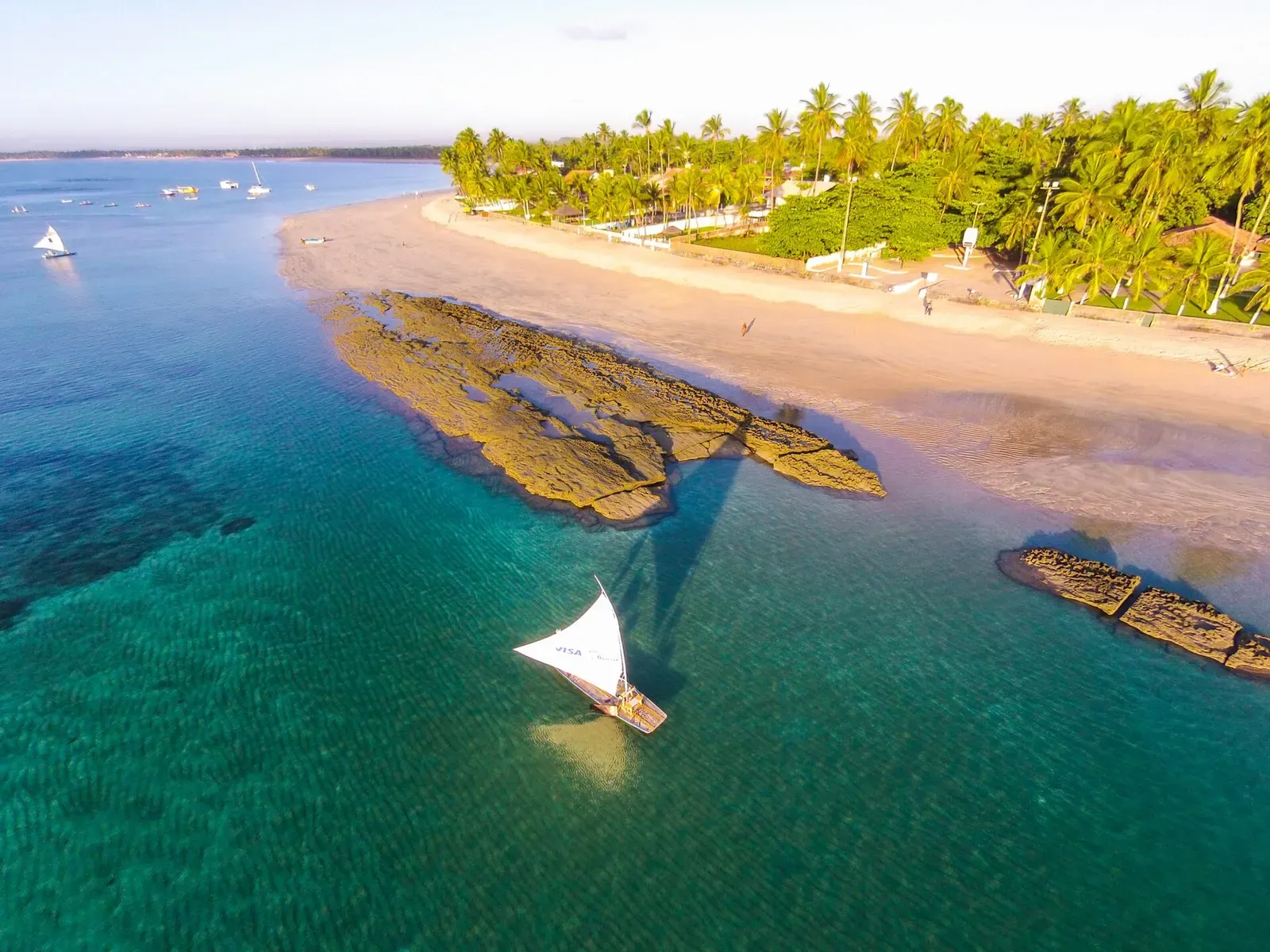
Two artificial-reef wrecks at 32 to 35 m: the Gonçalo Coelho and the Marte tug

Granite reefs where tropical and temperate species overlap

Pinguino wreck, Jorge Grego crevice and rocky islands


.jpg)

Cold upwelling packs granite walls with fish an hour from Rio