Capo Caccia & Nereo Cave · Italy · Cave & cavern
Grotta di Nereo
Red coral and cup coral inside the Mediterranean's largest sea cave
Photo: Marco Busdraghi · CC BY 3.0
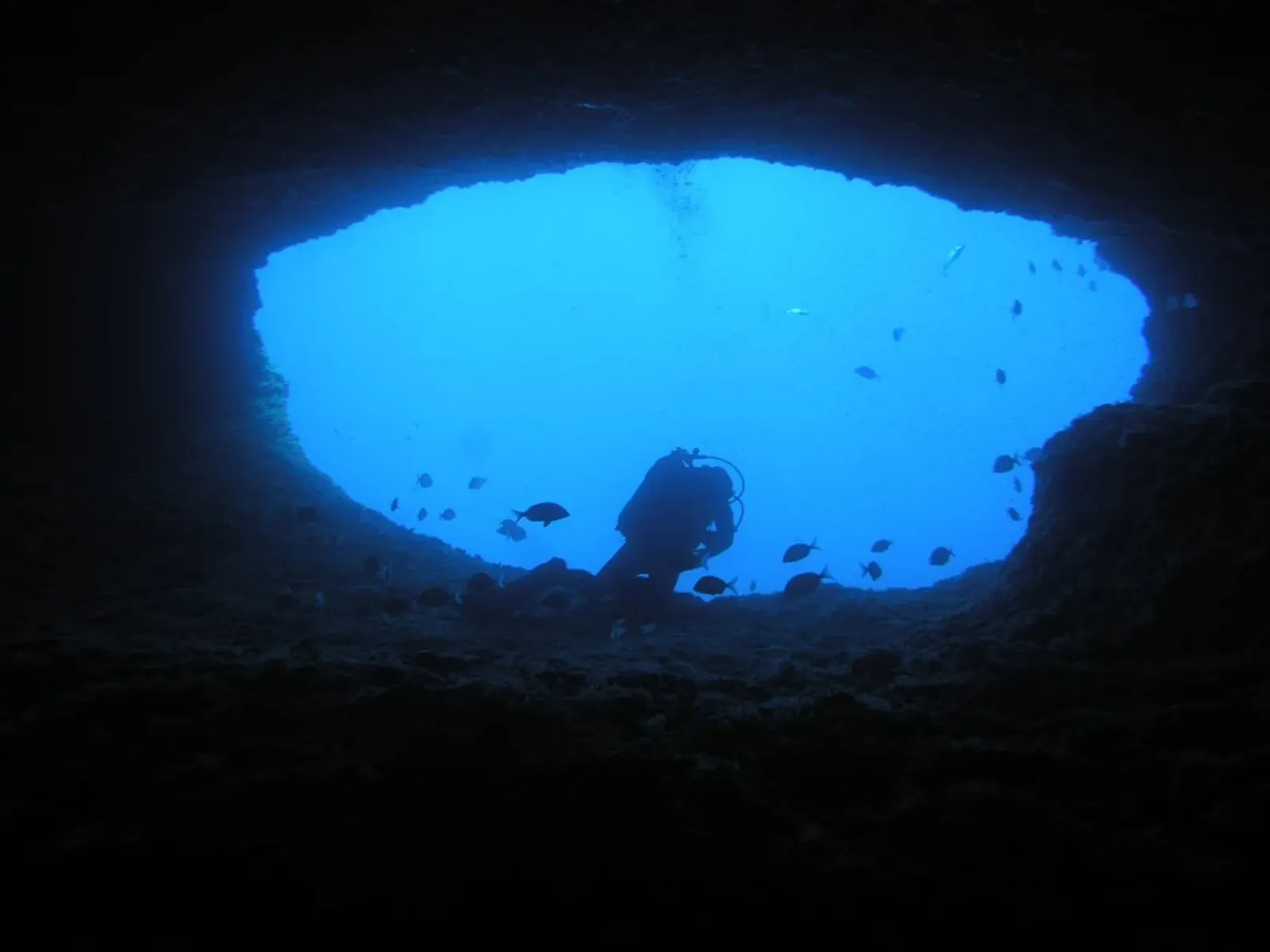
Grotta di Nereo is considered the biggest marine cave in the Mediterranean, cut into the limestone cliffs of Capo Caccia on Alghero's Coral Riviera, 100 metres north of Neptune's Grotto. Around ten entrances, arches and tunnels open into one connected system of long, wide passages and air chambers. Red coral and yellow cup coral cover the walls, and groupers, congers and moray eels hold the openings.
Also known as Nereo Cave, Cova de Nereu.
Where it is and how deep
40.5618° N, 8.1611° EPublished position for this site.
The dive
There is no single way in. Around ten entrances, arches and tunnels open into the same system under the limestone cliffs of the cape, so what you get depends on which pair of openings the guide links up. Published figures put dives on the system anywhere between the surface and 35 m, with the cave's own depth given as 33 m, so the route and the gas plan are settled before the descent rather than worked out inside.
Inside, the passages are long and wide rather than tight, and the system holds air chambers where the roof lifts clear of the water. Torchlight does the work: the walls are covered with red coral and yellow cup coral, and the fauna is the sheltered-rock kind, with groupers, lobsters, congers and moray eels around the openings and crustacean life over the surfaces. Because several ways through connect, the exit is often not the entrance you came in by.
Background
The cave was named by its discoverers after Nereus, the Old Man of the Sea and father of the Nereids. With the cape of Punta Giglio and the bay of Porto Conte it was taken into a marine reserve set up in 2003, and it sits inside the Capo Caccia - Isola Piana marine protected area, which covers 26.31 km2 of sea off the headland.
Marine life and season
- Groupers
- Macro critters
| Jan | Feb | Mar | Apr | May | Jun | Jul | Aug | Sep | Oct | Nov | Dec |
|---|---|---|---|---|---|---|---|---|---|---|---|
| Fair | Fair | Fair | Good | Good | Prime | Prime | Prime | Prime | Good | Fair | Fair |
Season follows Capo Caccia & Nereo Cave: May–Oct is the settled season; winter mistral and north-westerlies make the exposed cape unworkable for weeks at a time.
Know before you go
- A genuine overhead environment: with around ten entrances and several ways through, the exit is often not the one you entered by, so route, gas and redundant lights are agreed before the descent.
- The passages are wide, but the walls are covered with red coral and yellow cup coral; a dropped fin or a hand put out for balance strips growth straight off the rock.
Photos from Grotta di Nereo
Marco Busdraghi · CC BY-SA 4.0
Marco Busdraghi · CC BY-SA 3.0
Marco Busdraghi · CC BY-SA 3.0
Dive videos
Grotta di Nereo - Nereo Cave - Cavern diving by Adventure Diving Alghero · Adventure Diving Alghero on YouTube
Questions divers ask
How deep is the Grotta di Nereo?+
Published figures differ a little: the record of the cave describes dives from the surface to 35 m and lists its depth as 33 m. Either way this is a cavern profile rather than a deep dive, and the plan is built around which entrances the route links.
Do you need cave training to dive Nereo Cave?+
This is a genuine overhead environment with around ten entrances and several ways through it, so cavern or cave training, redundant lights and controlled buoyancy are what the site asks for. Divers without them get more out of the walls outside.
What is there to see inside the cave?+
Red coral and yellow cup coral on the walls, with groupers, lobsters, congers and moray eels around the openings and crustacean life across the rock. It is torchlight work, so a good light is the difference between a grey tunnel and a red one.
Sources
- Nereo Cave — Wikipedia
- List of Marine Protected Areas of Italy — Wikipedia
Photo credits
- A diver hovers in a wide, sunlit cave opening glowing deep blue against dark rock. by Marco Busdraghi, CC BY 3.0, via Wikimedia Commons
- A cluster of yellow cup coral polyps growing on the cave ceiling above deep blue water. by Marco Busdraghi, CC BY-SA 4.0, via Wikimedia Commons
- A red squat lobster perched on pale cobbles on the cave floor. by Marco Busdraghi, CC BY-SA 3.0, via Wikimedia Commons
- A red squat lobster among rounded cobbles on the cave floor, seen from further back. by Marco Busdraghi, CC BY-SA 3.0, via Wikimedia Commons
In The Logbook
- Cavern and cenote diving without cave trainingCaves & caverns · 8 min read
More dive sites in Capo Caccia & Nereo Cave
Cave & cavern
White limestone tunnels, air pockets and an internal lake
Cave & cavern
Two entrances, at 5 m and 12 m, below the 654-step Cabirol stair
Cave & cavern
Submerged stalactites and the old sea-level line, past the 7 m entrance
Artificial reef
Sheltered from the mistral, so it dives when the wind is up
Wall
A hundred metres of wall strung with arches facing the blue
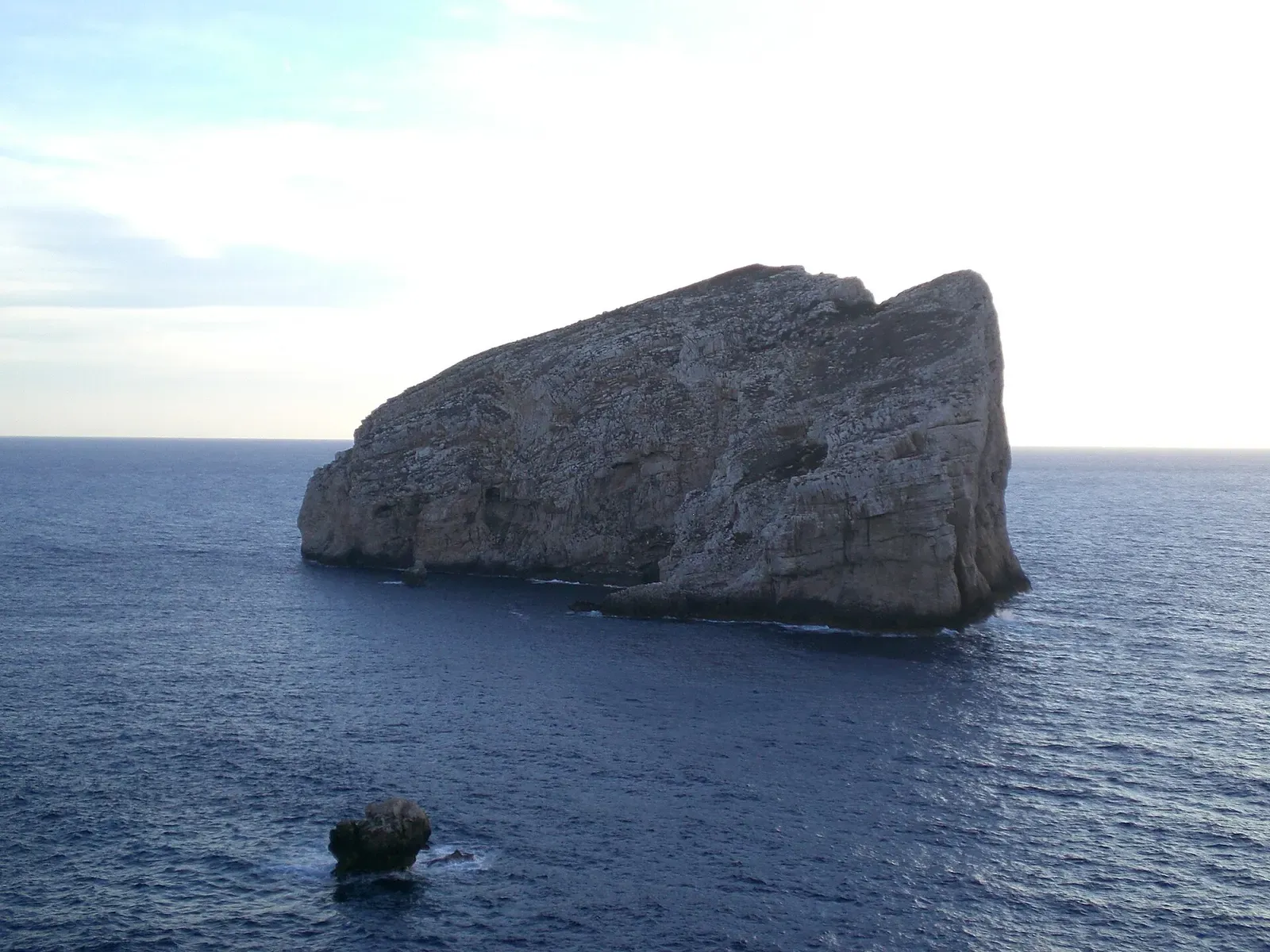
Two rock towers on a 30 m bottom, and a wall passage at 5 m
Cave & cavern
Arches and life-covered walls, finishing in a cave at 8 m
Pinnacle
A pinnacle rising from 22 m in the middle of Baia d'inferno
Similar dives elsewhere
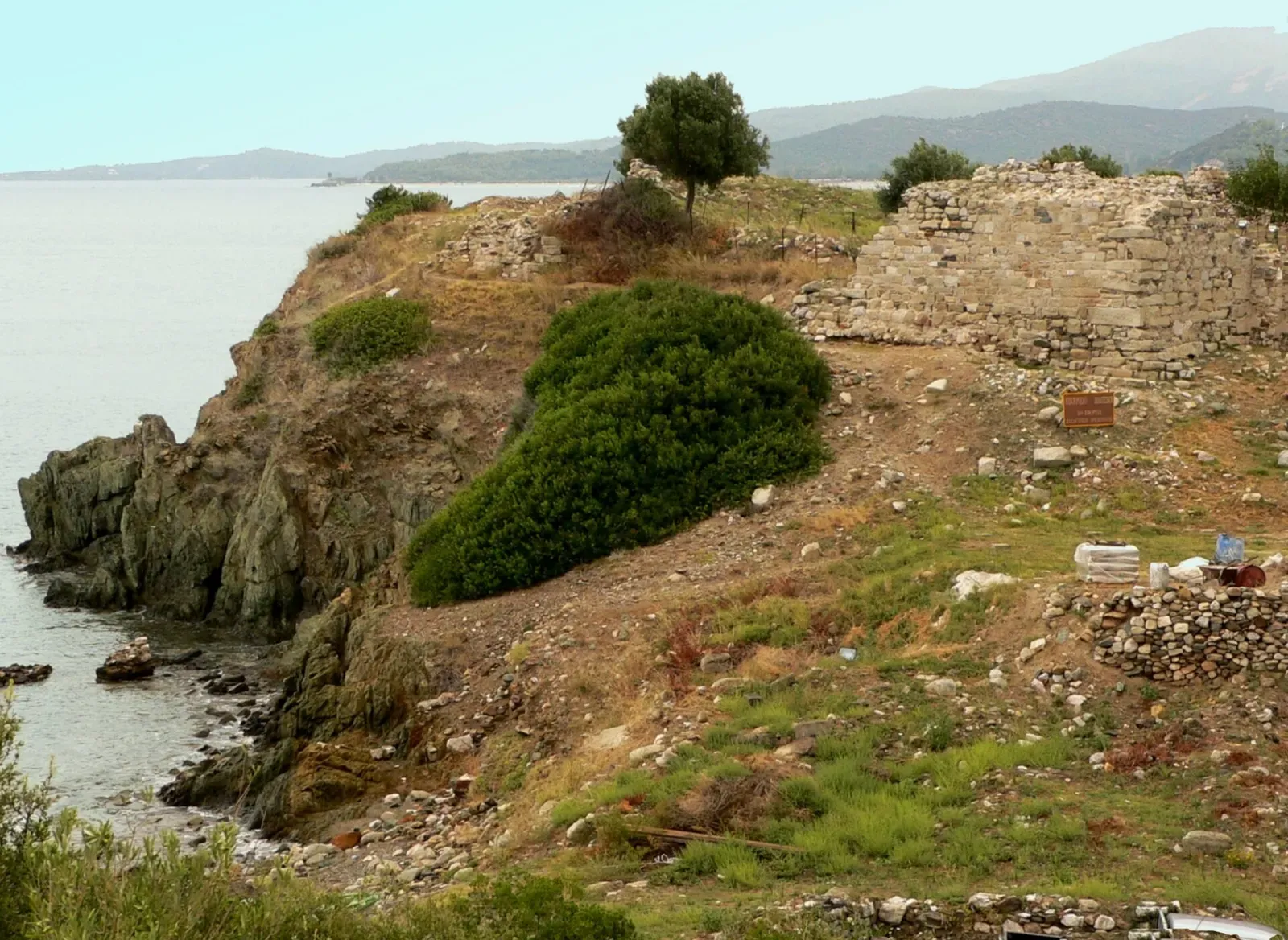
A 40 m long cavern where shrimps, crayfish and lobsters breed
Cave & cavern
Grotta dei Gamberi
Filicudi & Salina · Italy
Thousands of shrimp packed into the wide mouth of a volcanic cave
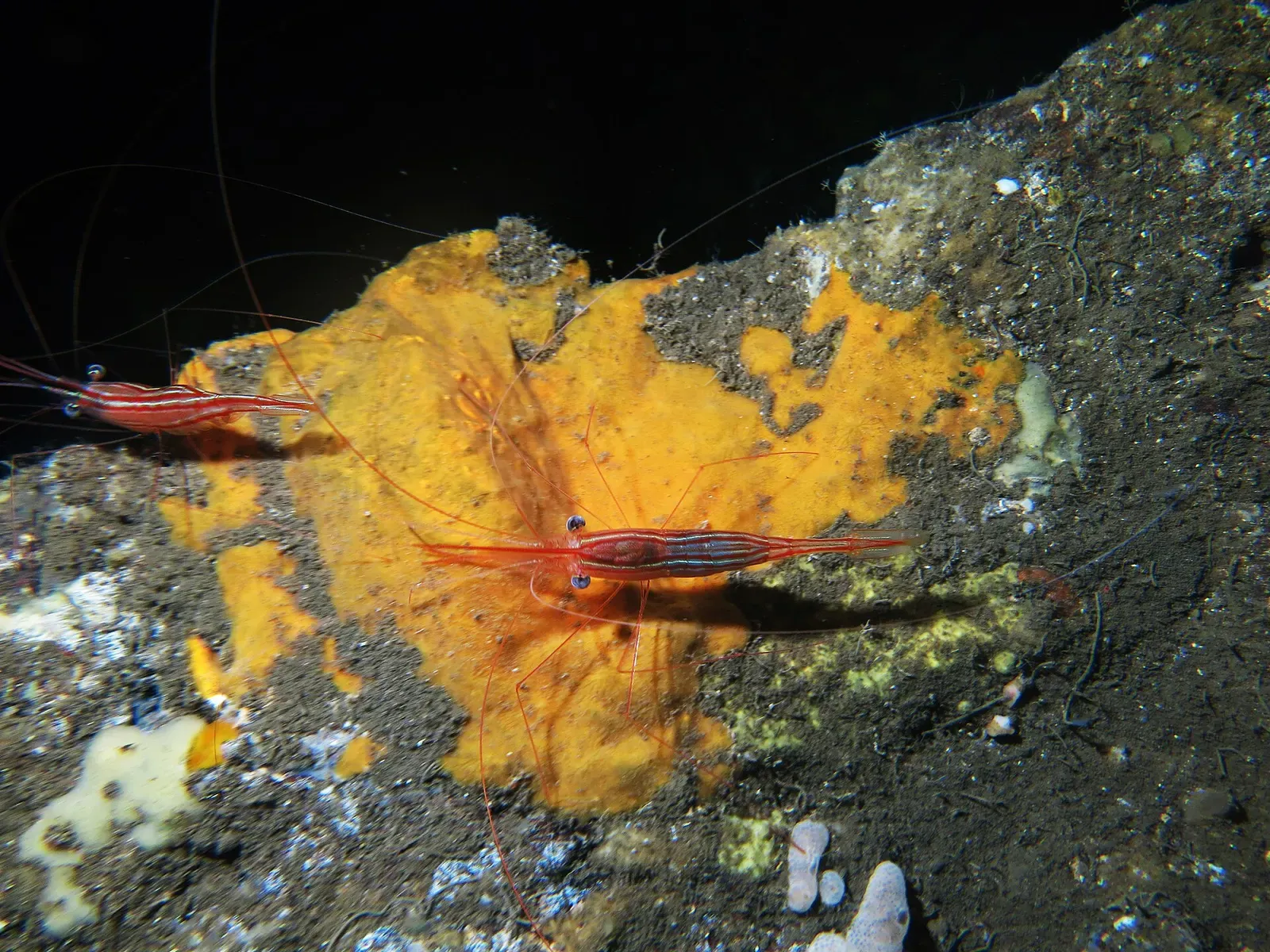
Walls that seem to move under thousands of massed shrimp


The exit opening is shaped like a huge butterfly