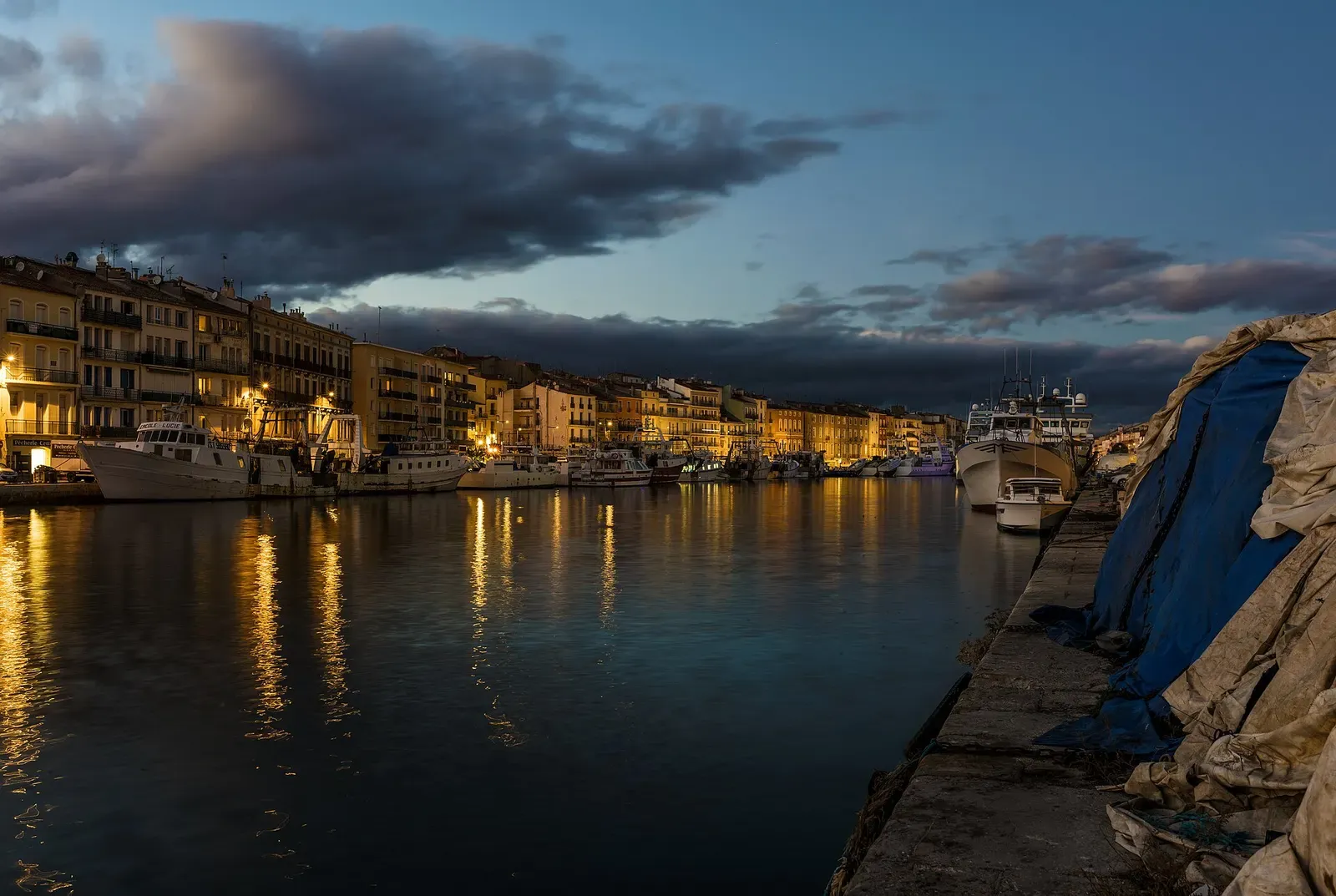
Sète & Frontignan · France · Reef
La Voie Romaine
Shallow slabs at 7 m, a site for navigation practice
Area photo: Christian Ferrer · CC BY 4.0
A long strip of rocky slabs running parallel to the shoreline at around 7 m, wide and easy to read, which is why the Sète school uses it to practise navigation and control. Sand breaks up the rock and there is seagrass in places; anemones and encrusting life cover the slabs, with octopus and crabs on them and conger and forkbeards in the cracks.
Where it is and how deep
43.3903° N, 3.6621° EPublished position for this site.
The dive
The site is a band of rocky slabs lying parallel to the shoreline, generally around 7 m, with sandy patches between the rock and seagrass in places. There is no drop-off to follow, so you swim the strip rather than a contour, which is what makes it a training ground: it is wide, easy to read, and a good place to practise navigation and control.
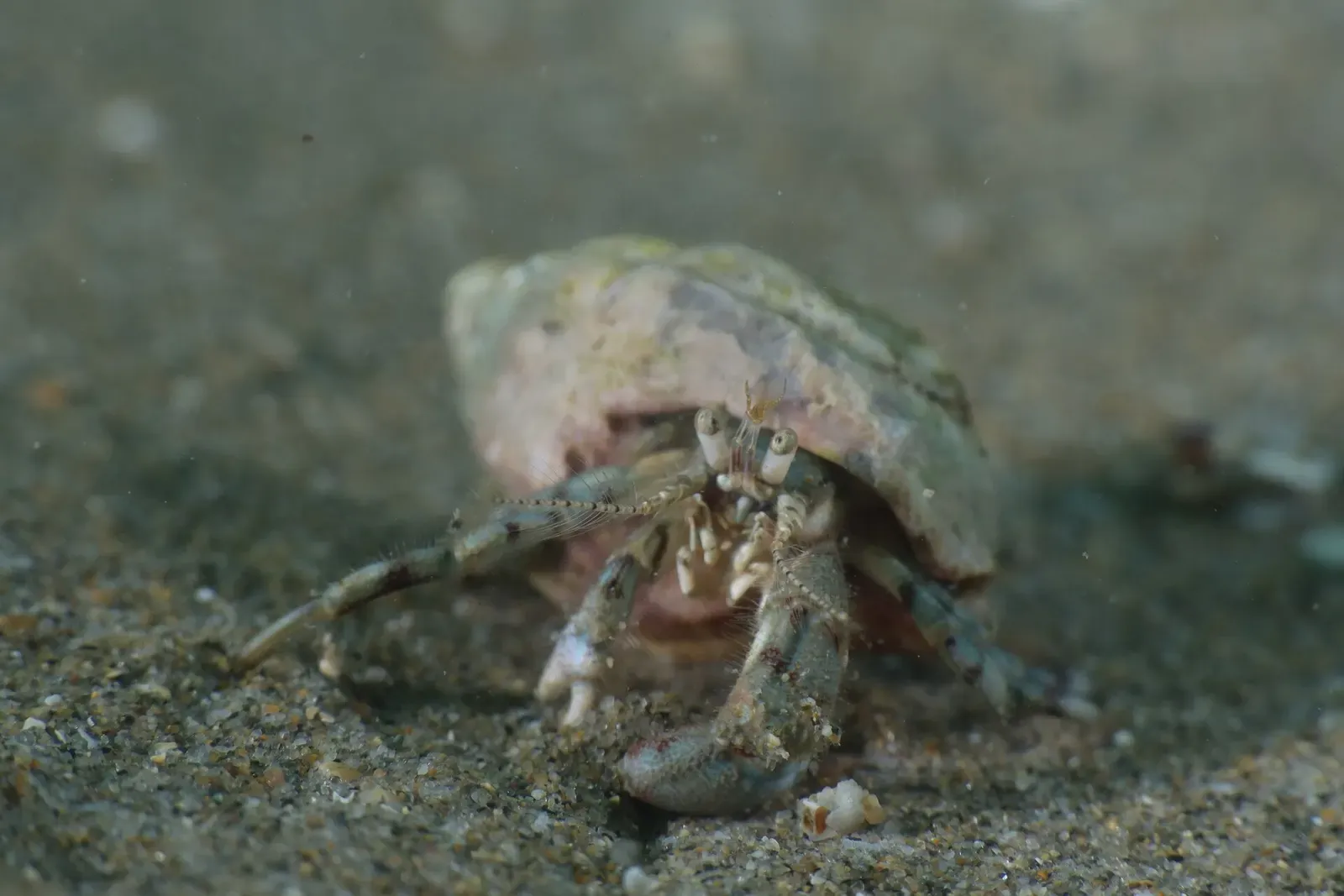
The rock itself is covered in anemones and encrusting growth, and the interest is in what uses it: octopus and crabs out on the slabs, conger eels and forkbeards backed into the cracks, and schools of fish moving over the top. The sandy patches between the rocks are worth a look on the way past. At this depth it is your air rather than your computer that ends the dive, so the pace can stay slow all the way round.
Marine life and season
- Octopus & cuttlefish
- Macro critters
- Reef fish swarms
| Jan | Feb | Mar | Apr | May | Jun | Jul | Aug | Sep | Oct | Nov | Dec |
|---|---|---|---|---|---|---|---|---|---|---|---|
| Fair | Fair | Fair | Good | Good | Prime | Prime | Prime | Prime | Prime | Fair | Fair |
Season follows Sète & Frontignan: The sea averages about 12 °C in February against 22 °C in August and stays above 20 °C from June to October; cuttlefish return to the coast in April, and wind can close the exposed sites.
Sources
- La voie romaine - Scubago — Scubago / École de Plongée Sétoise
More dive sites in Sète & Frontignan
Lagoon
The deepest point of the Étang de Thau, at 32 m
Wreck
A 1905 trader broken in two on sand at 18 m
Artificial reef
Three dumped rock mounds on a bottom of 14 m
Reef
Flat slabs to 10 m on a little-dived, exposed stretch
Two artillery pieces on a sand-and-rock bottom
Similar dives elsewhere
Black volcanic rock in 3–11 m, with octopus through the holes
Seahorses, cuttlefish and rays in the sand and posidonia at 12 m
A sheltered 7 m dive beside the Deux Frères rocks

A 4-6 m bank 400 m off the beach, used for first dives