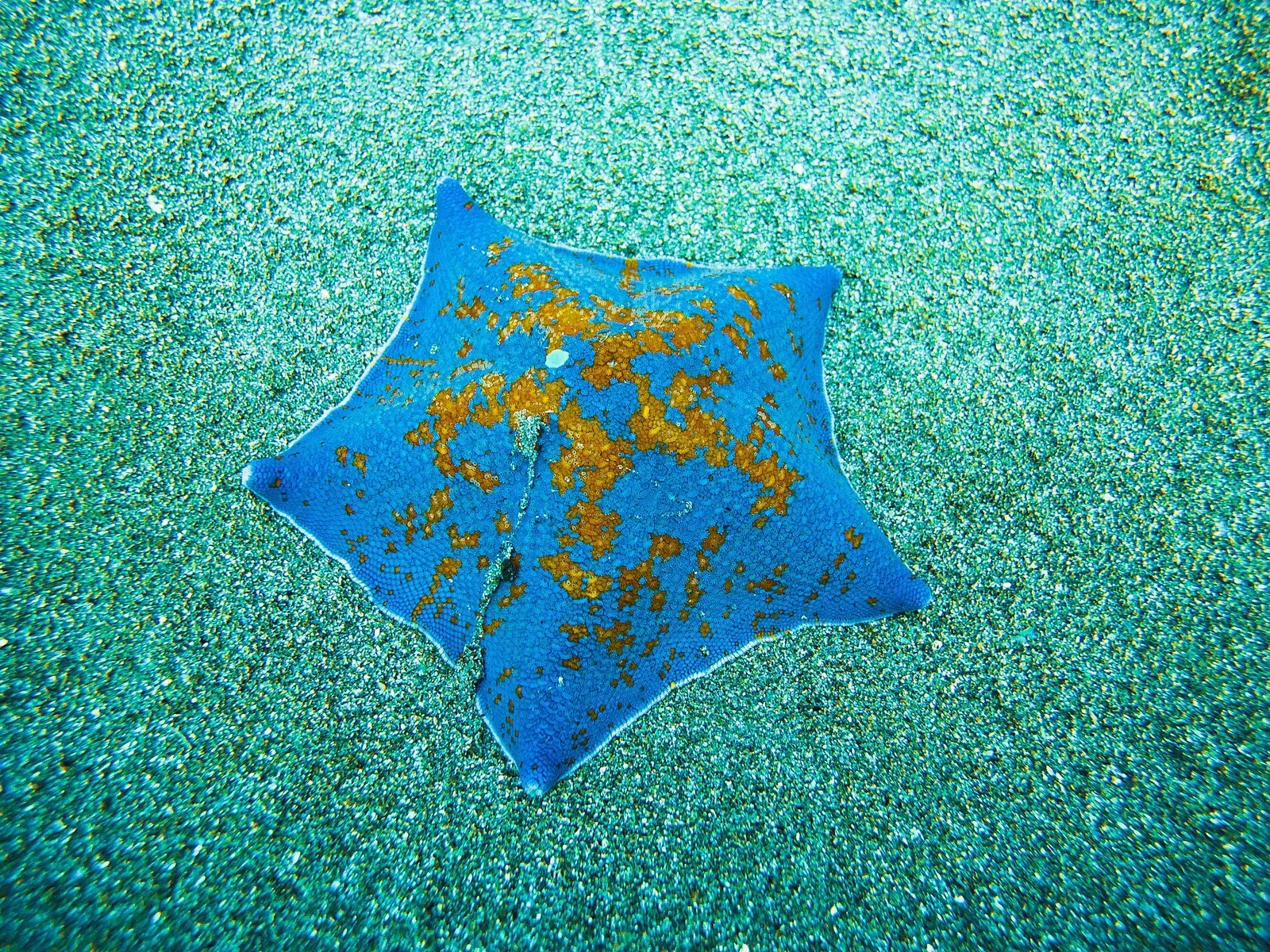
Cold Water · Japan
Shakotan Peninsula
Columnar rock and Shakotan Blue water in Hokkaido's only marine park
The Shakotan Peninsula juts into the Sea of Japan from western Hokkaido, its cliffs cut by heavy swell, and its waters form the marine park of the Niseko-Shakotan-Otaru Kaigan Quasi-National Park. Boats from Horomui and Bikuni harbours run short hops to columnar rock, hidden pinnacles and the fast water off Cape Kamui, with most dives between 5 and 23 m (16 to 75 ft). The draw is the clear summer water called Shakotan Blue, and a cold-water fish life that changes with every season.
About diving in Shakotan Peninsula
Diving here is boat diving from the small harbours of Horomui and Bikuni. From Horomui the points near the harbour take 4 to 6 minutes, the rock columns of Canyon about 17, and Cape Kamui, on the western side, about 30. At Bikuni the boats load from a pier right in front of the base. The points nearest Horomui serve courses, try dives and night dives, while the far capes and the Gunkan reefs are kept for experienced divers. The coast is battered by strong waves throughout the winter.
Underwater the peninsula is rock: columnar-jointed shelves, tilted slabs, boulder fields and sand. One point near Horomui starts on a rock shelf at 5 m, works down to 9 m and follows a sand and rubble line at 15 m before climbing back to the shallows. Further out, hidden pinnacles drop away in strong current. The residents are cold-water fish and invertebrates: greenling, rockfish, sculpins, hokke, giant Pacific octopus and several kinds of lumpsucker, with flounder, squid and juvenile knifejaw in summer.
Shakotan suits divers who want cold-water life and rock architecture, and photographers chasing lumpsuckers and sculpins in winter or clear blue water in summer. Most points carry a beginner rating, so new divers can build cold-water experience here. Divers wanting warm water should look elsewhere: even the best months top out around 22 °C (72 °F). The current at Cape Kamui and the Gunkan reefs is strong, so those dives call for confidence in moving water.
Best time to dive Shakotan Peninsula
| Jan | Feb | Mar | Apr | May | Jun | Jul | Aug | Sep | Oct | Nov | Dec |
|---|---|---|---|---|---|---|---|---|---|---|---|
| Good | Good | Good | Good | Good | Good | Prime | Prime | Prime | Good | Good | Good |
Diving runs through the whole year here. January to March is the coldest stretch, with water at 4 to 7 °C (39 to 45 °F) and sea lions, octopus and lumpsuckers on the sites. Spring brings the lumpsucker hatch, and from about June huge pods of Dall's porpoise gather offshore. July to September is the best season, at 15 to 22 °C (59 to 72 °F) with good visibility and water warm enough for a wetsuit. From September tuna pass Cape Kamui, autumn brings greenling and hokke spawning, and sea lions return from mid-November as the water drops towards 8 °C (46 °F).
Dive types & marine life
Steller sea lions arrive from mid-November and stay through winter, alongside octopus and lumpsuckers. Tens of thousands of Dall's porpoise gather offshore from about June, and orca pods pass around April. Giant flounder spawn at Tekkui Point from June to the end of August, tuna are seen from September, and hokke columns rise from 15 m to near the surface at the Gunkan reefs in late October.
- Reef
- Night
- Seals & sea lions
- Tuna
- Octopus & cuttlefish
Best dive sites in Shakotan Peninsula
- 1
Cape Kamui
Fast-current cape 30 minutes out, with clear water and oversized greenling and rockfish packed into a ditch.
- 2
Canyon
Rock columns rising from sand, perhaps the finest on the peninsula and best in the shallows.
- 3
Takenoko Rock
Sheltered 2 m cove that steps to 7 m and then drops to 20 m, with hidden reefs and a cave.
- 4
Tekkui Point
Tilted slab of rock columns where flounder of 80 to 90 cm lie stacked like playing cards.
- 5
Gunkan Hidden Reefs East
Five submerged pinnacles in strong current, rated for intermediate to advanced divers.
- 6
Jorogo Rock
Intricate, broken rock ten minutes from the harbour, entered by boat or from the rock shelf.
- 7
Makka Point
A circuit of the cape's rock columns down to 8 m, exiting by a channel to the boat.
Site guides
Reef
Columnar rock rising from a sand floor, best in the shallows
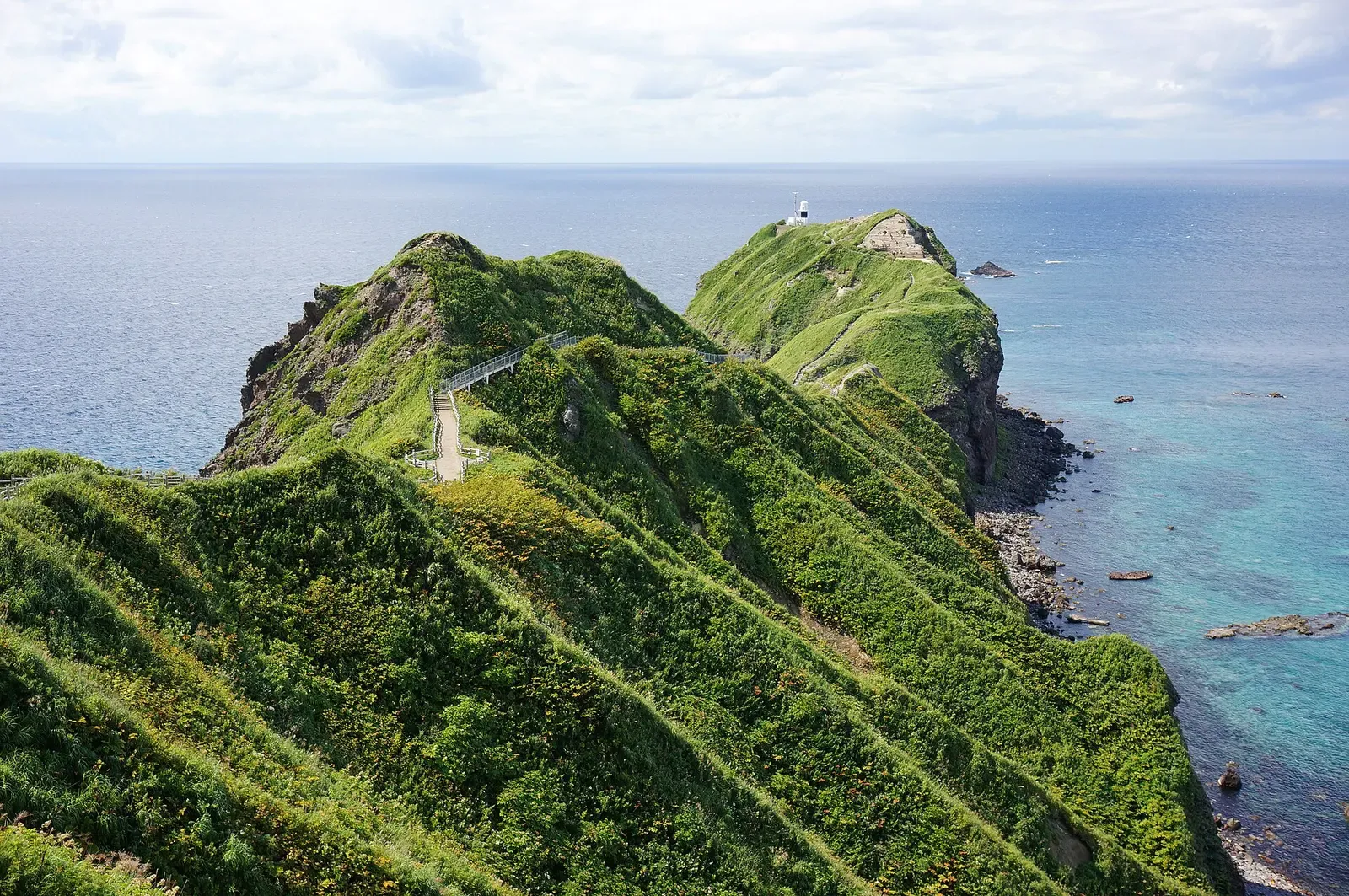
Fast, clear water and oversized fish off the peninsula's headland
Reef
A tangle of interlocking rocks with entry from boat or shelf
Reef
A shallow, weak-current dive 4 minutes from the harbour
Reef
A loop around columnar-jointed rock, exiting through a channel
Reef
A sheltered inlet, a drop to 20 m, hidden reefs and a cave
How to get to Shakotan Peninsula
New Chitose Airport is the gateway. The Airport Rapid reaches Otaru in 70 minutes, and buses run from JR Otaru Station to Bikuni, on the east of the peninsula, in about 75 minutes. Dive bases sit at Horomui harbour and at Bikuni.
Photos from Shakotan Peninsula
sunoochi · CC BY 2.0
663highland · CC BY 2.5
OKJaguar · CC BY-SA 4.0
Dive videos
9CHANnel #004 北海道 積丹半島&海獣編/Hokkaido Shakotan Peninsula. 【スキューバダイビング番組】 · and 9 films / Kyu Furumi 古見きゅう on YouTube
Questions divers ask
When is the best time to dive Shakotan?+
July to September is the best season, with water at 15 to 22 °C (59 to 72 °F), good visibility and the most fish. Winter is the time for sea lions and lumpsuckers.
Can beginners dive at Shakotan?+
Yes. Most sites near Horomui carry a beginner rating, and the points nearest the harbour are used for courses and try dives. Cape Kamui and the Gunkan reefs have strong current and need intermediate skills.
When can divers see sea lions at Shakotan?+
Steller sea lions are around from mid-November through the winter months, when the water falls to 4 to 7 °C (39 to 45 °F).
How do divers get to Shakotan?+
Fly into New Chitose Airport, take the Airport Rapid to Otaru in 70 minutes, then a bus to Bikuni in about 75 minutes. Dive boats leave from Horomui and Bikuni harbours.
Sources
- Aqua Cat Horomui – Shakotan — Aqua Cat
- Aqua Cat point map — Aqua Cat
- Cross Way — Cross Way Inc.
- Hokkaido Diving Poseidon — Hokkaido Diving Poseidon
- Shakotan, Hokkaido — Wikipedia
- Otaru — Wikivoyage
Photo credits
- A blue five-armed sea star with rust-orange blotches lying on fine green-grey sand underwater by snotch from Sapporo, Hokkaido, Japan, CC BY 2.0, via Wikimedia Commons
- Two grey-blue fish swimming low over a sandy seabed dotted with small yellow seaweed tufts by sunoochi, CC BY 2.0, via Wikimedia Commons
- Green grassy ridges running out to a rocky cape with a sea stack, edged by clear turquoise shallows by 663highland, CC BY 2.5, via Wikimedia Commons
- Aerial view of a small flat rocky islet surrounded by deep blue water with dark rock patches below by OKJaguar, CC BY-SA 4.0, via Wikimedia Commons
Embed
Run a dive centre, club or blog? Embed this map of 1 dive sites near Shakotan Peninsula on your own page.
Similar destinations

Sweden's only cold-water coral reefs, inside its first marine national park
Cold Water
Loch Fyne & Loch Long
United Kingdom
Shore diving on old pier wreckage and boulder reefs an hour from Glasgow


Two sunk navy ships and wolf-eel reefs a short boat ride from town
Cold Water
Pembrokeshire & Skomer
United Kingdom
Shore and boat dives in Wales's only Marine Conservation Zone