
Indian Ocean · Yemen
Socotra
Red Sea, Arabian and Indian Ocean species overlap on unsurveyed reefs
Photo: Gerry & Bonni · CC BY 2.0
Socotra sits alone in the Arabian Sea east of the Horn of Africa, a UNESCO-listed island whose isolation shaped famously alien flora ashore and a rich, barely surveyed sea. Its reefs mix Red Sea, Arabian and Indian Ocean species in one of the highest overlaps found anywhere, with dense fish life around Dihamri's protected coral heads and the current-swept eastern cape. Yemen's war and a single charter-flight lifeline keep dive infrastructure near nil: expedition diving from local boats, everything brought in.
About diving in Socotra
Diving here is expedition logistics first and diving second. Trips are put together by a handful of operators who arrange permits, ground transport and food, and most nights are spent at campsites rather than hotels, with basic rooms in Hadiboh at either end. Entries are off the beach or from open outboard boats launched through the shorebreak. Compressor capacity is limited and fills are agreed in advance, so the day gets planned around how many tanks exist rather than around what the reef could give you.
The ground underwater is not classic atoll reef. Socotra is a continental fragment rather than a coral island, and the coast largely continues below the surface as rock slope, boulder and rubble with coral growing over it, mostly at depths a single tank handles easily. Dihamri, on the north coast, is a community-managed protected area with a campsite above it and boat dives below, which is why most trips dive it more than once. Ras Erissel at the eastern cape is the other proposition: exposed, current-swept, water that can run noticeably cooler, and dived only when the sea allows.
The southwest monsoon shuts the sea from June to September and nothing is attempted in those months; the rest of the year is workable, with March–April and October–November calmest and the winter months usable but windier. Kit has to be self-supporting — spares, tools, anything a compressor cannot fix — because little is replaceable on the island and the next flight out is never a same-day option. In practice it suits travellers whose trip is really about the island itself, the endemic flora and the interior, with dives taken on the days the sea permits.
Best time to dive Socotra
| Jan | Feb | Mar | Apr | May | Jun | Jul | Aug | Sep | Oct | Nov | Dec | |
|---|---|---|---|---|---|---|---|---|---|---|---|---|
| Season | Good | Good | Prime | Prime | Good | Off-season | Off-season | Off-season | Off-season | Prime | Prime | Good |
| Sea surface | 25°C77°F | 25°C77°F | 27°C81°F | 29°C84°F | 30°C86°F | 28°C82°F | 25°C77°F | 25°C77°F | 26°C79°F | 27°C81°F | 27°C81°F | 26°C79°F |
| Daytime high | 28°C82°F | 29°C84°F | 32°C90°F | 33°C91°F | 33°C91°F | 32°C90°F | 29°C84°F | 29°C84°F | 30°C86°F | 31°C88°F | 30°C86°F | 29°C84°F |
| Rain | 6 mm0.2 in | 3 mm0.1 in | 5 mm0.2 in | 3 mm0.1 in | 22 mm0.9 in | 9 mm0.4 in | 13 mm0.5 in | 14 mm0.6 in | 10 mm0.4 in | 19 mm0.7 in | 21 mm0.8 in | 15 mm0.6 in |
| Jan | Feb | Mar | Apr | May | Jun |
|---|---|---|---|---|---|
| Good | Good | Prime | Prime | Good | Off-season |
| Sea surface | |||||
| 25°C77°F | 25°C77°F | 27°C81°F | 29°C84°F | 30°C86°F | 28°C82°F |
| Daytime high | |||||
| 28°C82°F | 29°C84°F | 32°C90°F | 33°C91°F | 33°C91°F | 32°C90°F |
| Rain | |||||
| 6 mm0.2 in | 3 mm0.1 in | 5 mm0.2 in | 3 mm0.1 in | 22 mm0.9 in | 9 mm0.4 in |
| Jul | Aug | Sep | Oct | Nov | Dec |
|---|---|---|---|---|---|
| Off-season | Off-season | Off-season | Prime | Prime | Good |
| Sea surface | |||||
| 25°C77°F | 25°C77°F | 26°C79°F | 27°C81°F | 27°C81°F | 26°C79°F |
| Daytime high | |||||
| 29°C84°F | 29°C84°F | 30°C86°F | 31°C88°F | 30°C86°F | 29°C84°F |
| Rain | |||||
| 13 mm0.5 in | 14 mm0.6 in | 10 mm0.4 in | 19 mm0.7 in | 21 mm0.8 in | 15 mm0.6 in |
2011–2025 averages. Sea surface: NOAA Coral Reef Watch, measured at the surface, so deeper water can run colder. Daytime high and rain: NASA POWER.
The June-September southwest monsoon closes the sea entirely; October-November and March-May are the calm, diveable windows.
Best months: March, April, October, November
Socotra water temperature and weather by month
The sea surface runs from 25 °C (77 °F) in August to 30 °C (86 °F) in May. Rain is scarce: about 140 mm (5.5 in) falls in a typical year. Daytime highs reach 33 °C (91 °F) in May and drop to 28 °C (82 °F) in January. The coldest water here is about 23 °C (73 °F), so pack a 5 mm suit.
Dive types & marine life
Expect dense schools of reef fish, resident grouper, barracuda and trevally over the coral heads, and turtles and stingrays on the sand; dolphins are more a surface sighting from the boats than a dive encounter. Sharks are not what the diving is built around. It all happens outside the closed June–September monsoon, with March–April and October–November the steadiest months.
- Reef
- Coral garden
- Drift
- Reef fish swarms
- Groupers
- Sea turtles
- Dolphins
- Barracuda
- Trevally & jacks
- Stingrays
- Pristine corals
Best dive sites in Socotra
Marine reserve with 80 coral and 150 fish species
Ras Erissel
The island's eastern cape, where Arabian Sea and Indian Ocean currents meet.
Shuab Bay
Bay reached by boat from Qalansiyah village, holding the Sunrise wreck at 25-27 m.
How to get to Socotra
Flights are thin and shift at short notice: charters out of the UAE and services routed through mainland Yemen, arranged by the same operator that handles permits. Hadiboh is the only town of any size and the base for most trips, with the diving on the north coast from shore entries and small local boats. Bring your own kit.
Photos from Socotra
Gerry & Bonni · CC BY 2.0
Photo credits
- Red sandstone headlands rise above the tide-pooled reef flat at Dihamri on Socotra's north coast by Gerry & Bonni, CC BY 2.0, via Wikimedia Commons
- Umbrella-shaped dragon blood trees scattered across a rocky plateau on Socotra's dry interior by Gerry & Bonni, CC BY 2.0, via Wikimedia Commons
Similar destinations
A manta cleaning station dived all year and a wartime tanker on her side at 33 m
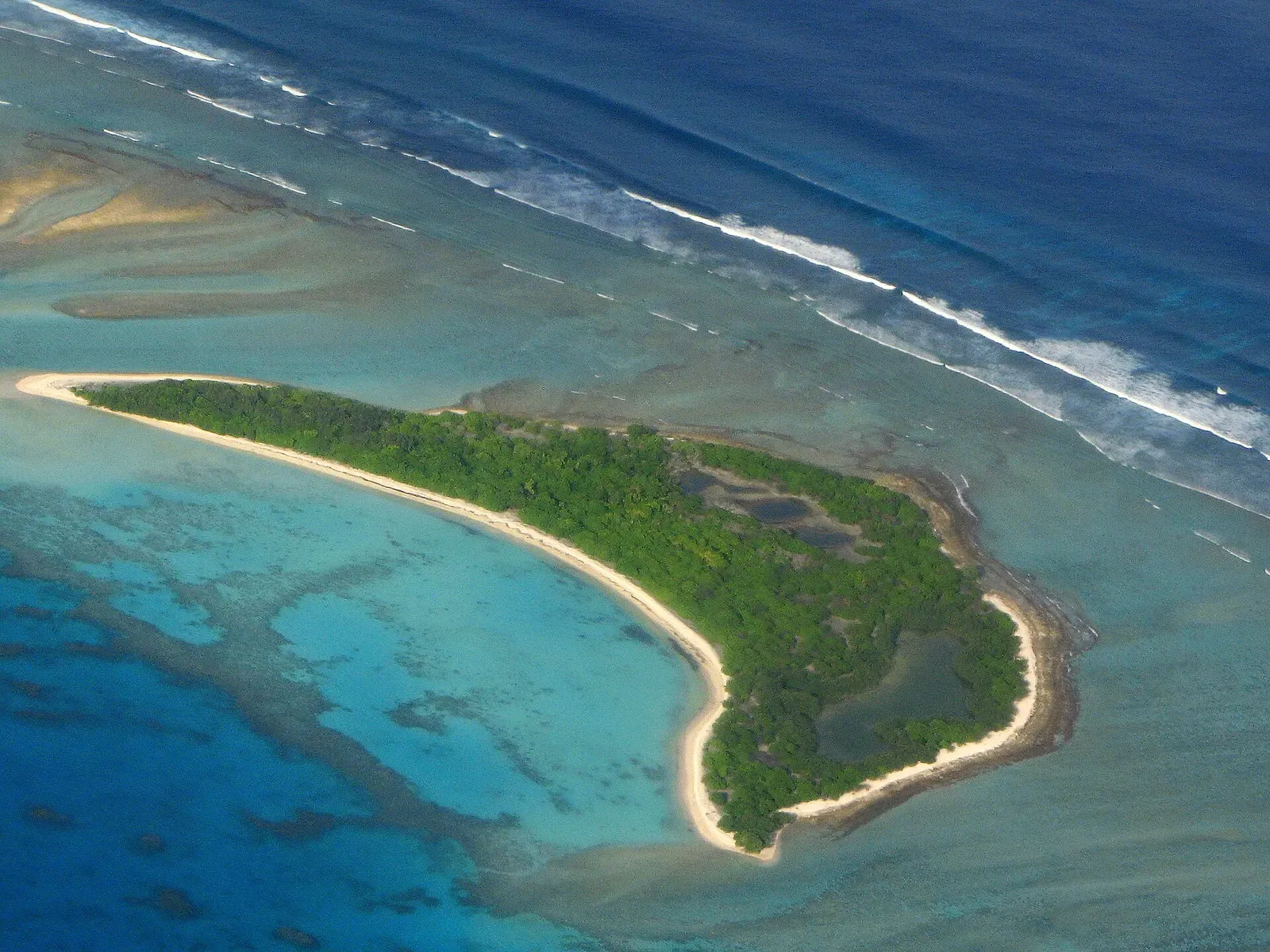
Permit-only Indian atolls with 30 m visibility and almost no divers

A lagoon twice the island's size, with passes that flush it twice a day

.jpg)
.jpg)
Drift out on the falling tide as an entire atoll empties past you