
Indian Ocean · Australia
Cocos (Keeling) Islands
Drift out on the falling tide as an entire atoll empties past you
Photo: photoboothrental.com · CC BY-SA 3.0
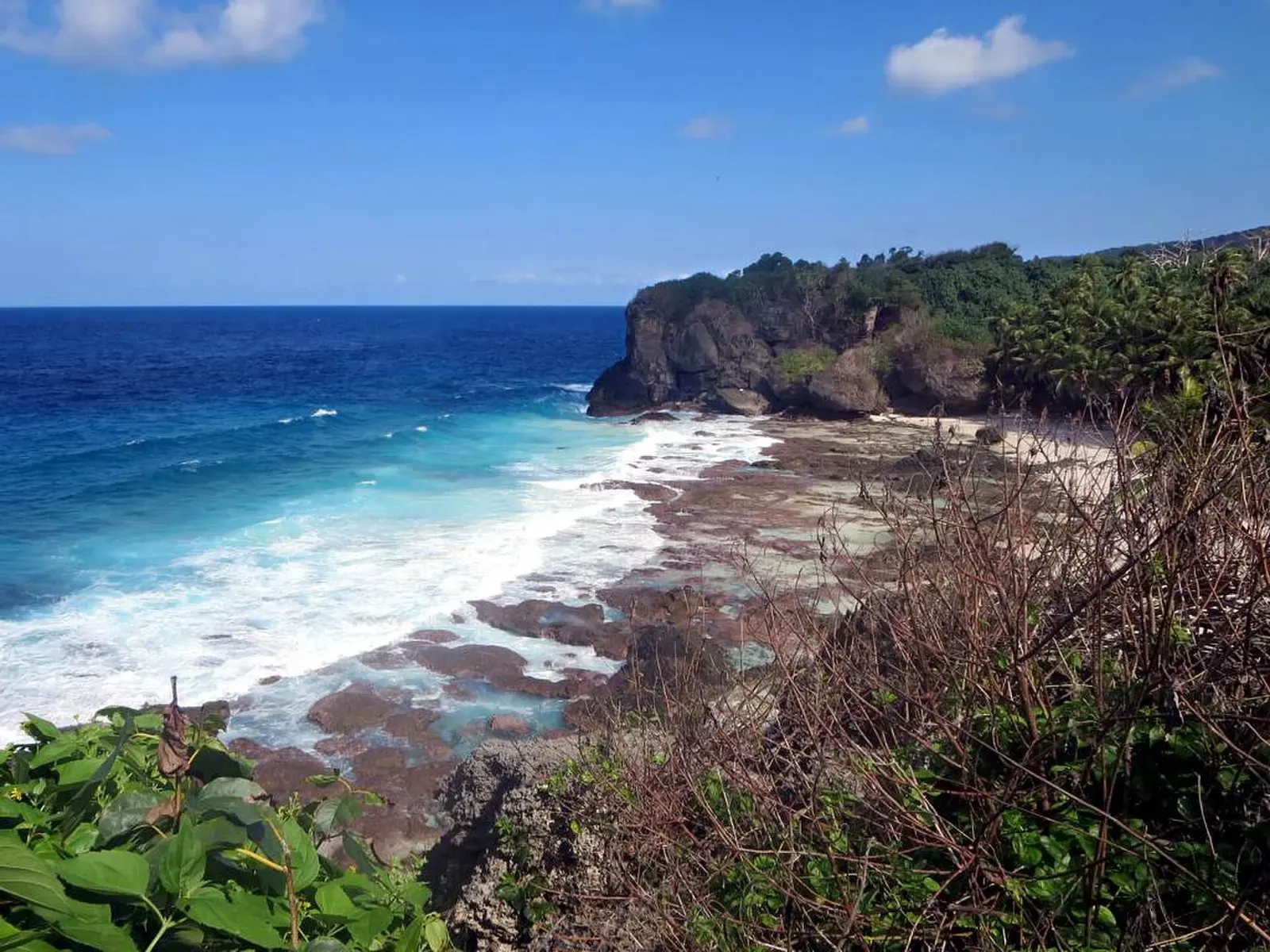
Cocos is an Australian atoll 2,750 km north-west of Perth, twenty-seven coral islands around a lagoon with roughly six hundred residents. Its isolation shows underwater: visibility past 40 m is routine, the hard coral is in excellent condition, and reef sharks and turtles are unbothered by divers. The Rip, where the lagoon empties on the falling tide, is the signature dive — a fast drift over coral gardens with the whole atoll's water moving with you.
About diving in Cocos (Keeling) Islands
Diving here runs off the tide table rather than the clock. The islands support one small dive operation, working out of West Island with small boats and smaller groups, and the day's plan comes from the state of the tide and from which side of the atoll the trade wind is pushing. A two-dive morning is the usual shape, with the surface interval spent ashore on a beach or a sandbar. Nothing about it is high volume, and you are unlikely to share a site with another boat.
The atoll offers three quite different kinds of dive. Inside the lagoon the water is shallow and sheltered, coral heads standing on clean sand, which makes an easy first day or a gentle afternoon. The passes cut through the rim, and that is where the water moves — you drop in, get carried, and tuck in behind the reef edge to watch what is holding station in the flow. Outside the rim the ground falls away into open ocean, and those outer profiles are where animals appear out of the blue with no warning.
The Rip is a one-way ride off Direction Island. The boat sets you in at the top and pickup happens wherever you surface, which is why it runs on the outgoing tide and why the rest of the day gets planned around it. Snorkellers can be dropped on the same water on the same tide, so non-divers in a group are not left ashore. It is short enough that repeating it across consecutive days makes more sense than treating it as a one-off.
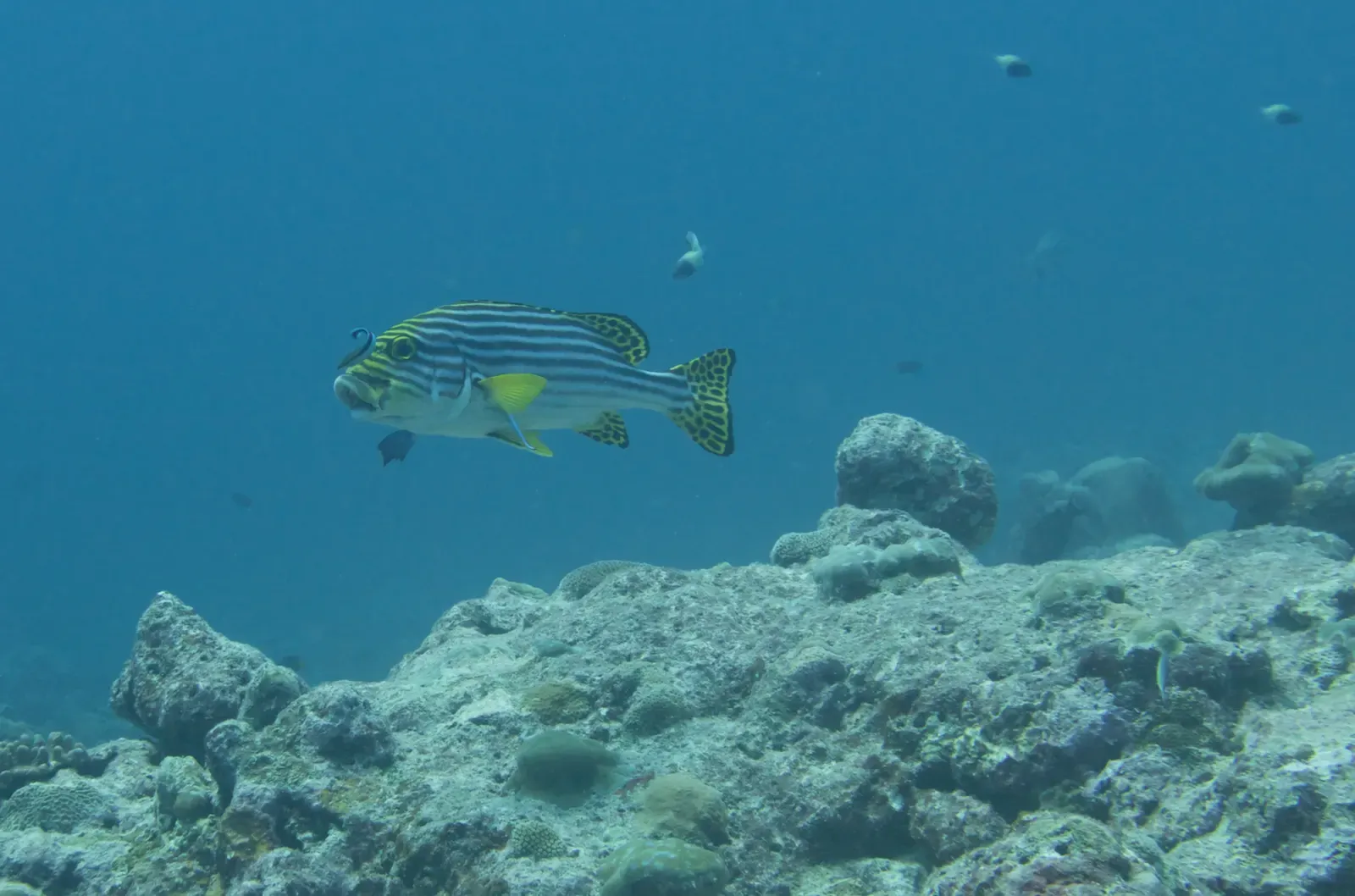
It suits divers content with a modest number of sites dived properly rather than a long site list. There is no recompression chamber on the islands and any evacuation is a long flight away, so conservative profiles and dive insurance matter more than usual. Fish watchers get a second reason to come: Cocos sits on the seam where Indian and Pacific reef fish ranges meet, and the resulting hybrids among butterflyfish, angelfish and surgeonfish are well documented here and at Christmas Island.
Best time to dive Cocos (Keeling) Islands
| Jan | Feb | Mar | Apr | May | Jun | Jul | Aug | Sep | Oct | Nov | Dec | |
|---|---|---|---|---|---|---|---|---|---|---|---|---|
| Season | Good | Good | Good | Prime | Prime | Prime | Good | Good | Good | Prime | Prime | Good |
| Sea surface | 28°C82°F | 29°C84°F | 29°C84°F | 29°C84°F | 29°C84°F | 28°C82°F | 28°C82°F | 27°C81°F | 27°C81°F | 27°C81°F | 27°C81°F | 28°C82°F |
| Daytime high | 29°C84°F | 29°C84°F | 29°C84°F | 29°C84°F | 29°C84°F | 28°C82°F | 28°C82°F | 27°C81°F | 27°C81°F | 27°C81°F | 27°C81°F | 28°C82°F |
| Rain | 137 mm5.4 in | 151 mm5.9 in | 203 mm8.0 in | 157 mm6.2 in | 120 mm4.7 in | 146 mm5.7 in | 101 mm4.0 in | 58 mm2.3 in | 42 mm1.7 in | 31 mm1.2 in | 72 mm2.8 in | 156 mm6.1 in |
| Jan | Feb | Mar | Apr | May | Jun |
|---|---|---|---|---|---|
| Good | Good | Good | Prime | Prime | Prime |
| Sea surface | |||||
| 28°C82°F | 29°C84°F | 29°C84°F | 29°C84°F | 29°C84°F | 28°C82°F |
| Daytime high | |||||
| 29°C84°F | 29°C84°F | 29°C84°F | 29°C84°F | 29°C84°F | 28°C82°F |
| Rain | |||||
| 137 mm5.4 in | 151 mm5.9 in | 203 mm8.0 in | 157 mm6.2 in | 120 mm4.7 in | 146 mm5.7 in |
| Jul | Aug | Sep | Oct | Nov | Dec |
|---|---|---|---|---|---|
| Good | Good | Good | Prime | Prime | Good |
| Sea surface | |||||
| 28°C82°F | 27°C81°F | 27°C81°F | 27°C81°F | 27°C81°F | 28°C82°F |
| Daytime high | |||||
| 28°C82°F | 27°C81°F | 27°C81°F | 27°C81°F | 27°C81°F | 28°C82°F |
| Rain | |||||
| 101 mm4.0 in | 58 mm2.3 in | 42 mm1.7 in | 31 mm1.2 in | 72 mm2.8 in | 156 mm6.1 in |
2011–2025 averages. Sea surface: NOAA Coral Reef Watch, measured at the surface, so deeper water can run colder. Daytime high and rain: NASA POWER.
Divable year-round; Apr–Jun and Oct–Nov are calmest, with the wet season from December to March bringing more wind.
Best months: April, May, June, October, November
Cocos Keeling Islands water temperature and weather by month
The sea surface stays between 27 and 29 °C (81–84 °F) all year. Most rain falls from December to June, peaking at about 200 mm (7.9 in) in March; August to October are the driest. Daytime highs sit around 28 °C (82 °F) all year. The coldest water here is about 26 °C (79 °F), so pack a 3 mm full suit.
Dive types & marine life
Reef sharks, turtles and eagle rays turn up on most dives year-round, sharks holding in the passes whenever the current runs, with trevally and Napoleon wrasse working the outer drop-offs. Manta rays and dolphins are luck rather than a schedule. The calmest windows, April to June and October to November, give the best odds on the exposed reef, though nothing shuts down at any point in the year.
- Reef
- Wall
- Drift
- Coral garden
- Pelagic & blue water
- Reef sharks
- Manta rays
- Sea turtles
- Napoleon wrasse
- Trevally & jacks
- Dolphins
- Pristine corals
- Eagle rays
Best dive sites in Cocos (Keeling) Islands
Wall
An undercut in the wall at 40 m, west of Ski Run
Wall
Drop to 40 m for sea fans, finish in a 9 m ocean pool
Reef
Sand at 5 m, coral to 9 m, and room to get buoyancy right
Coral garden
Cabbage coral from 5 to 20 m with a swim-through canyon alongside
Wall
A Montipora stand owning the wall from 16 to 35 m
Wall
Ridges to the drop-off with resident trevally and barracuda
Wall
Sea fans and a cave at 40 m under a reef top anyone can dive
Reef
An 8 m reef-and-rubble bottom out towards the drop-off
Reef
Reef top at 10 m, then a short drop to 18 m on the eastern side
Wall
Sharks called in over a wall that slopes past 40 m
Two coral heads at 9 m where local mantas come to be cleaned
Wall
A solid Montipora face from 14 m down past 30 m
Wall
Look up at the old plate corals from 22 m down the wall
Reef
Line up the two green trees on shore and anchor in 12–14 m
The Rip
Tidal outflow drifted at speed over coral gardens and sand chutes.
Cologne Passage
Channel through the atoll rim with sharks holding in the current.
Garden of Eden
Sheltered lagoon coral in 12 m, calm and exceptionally clear.
Two Cays
Outer reef drop-off falling past 40 m with passing pelagics.
How to get to Cocos (Keeling) Islands
Scheduled flights from Perth run a couple of times a week, some routing via Christmas Island, and there is no other regular way in. Most visitor accommodation is on West Island beside the airstrip, with a ferry across the lagoon to Home Island. All diving is by day boat, and little is available locally, so bring spares and anything specific you rely on.
Photos from Cocos (Keeling) Islands
photoboothrental.com · CC BY-SA 3.0
David Stanley · CC BY 2.0
David Stanley · CC BY 2.0
David Stanley · CC BY 2.0
Dive videos
Diving at the Cocos (Keeling) Islands with Cocos Dive · Cocos Dive on YouTube
Photo credits
- Turquoise lagoon water over a shallow coral reef at Cocos (Keeling) Islands, with a kitesurfer crossing the shallows by photoboothrental.com, CC BY-SA 3.0, via Wikimedia Commons
- Aerial view of a coral reef patch in the shallow lagoon at Cocos (Keeling) Islands by photoboothrental.com, CC BY-SA 3.0, via Wikimedia Commons
- White sand beach fringed with palm trees along the lagoon shore of Direction Island, Cocos (Keeling) Islands by David Stanley, CC BY 2.0, via Wikimedia Commons
- Palm-lined beach on the west coast of West Island, Cocos (Keeling) Islands, with surf breaking on the shore by David Stanley, CC BY 2.0, via Wikimedia Commons
- Leaning coconut palms along a lagoon beach near the north end of West Island, Cocos (Keeling) Islands by David Stanley, CC BY 2.0, via Wikimedia Commons
Embed
Run a dive centre, club or blog? Embed this map of 12 dive sites near Cocos Keeling Islands on your own page.
In The Logbook
- When is slack water? Tides for diversOcean science · 7 min read
- Do you need a safety stop? What it buys youBody & health · 11 min read
Similar destinations

An atoll wall dropping into open ocean, 400 km from the nearest island

Up to two hundred reef mantas barrel-roll inside a 200 m bay
Wall, cave and drift dives with whale sharks on the doorstep


.jpg)
.jpg)
.jpg)
Permit-only Indian atolls with 30 m visibility and almost no divers