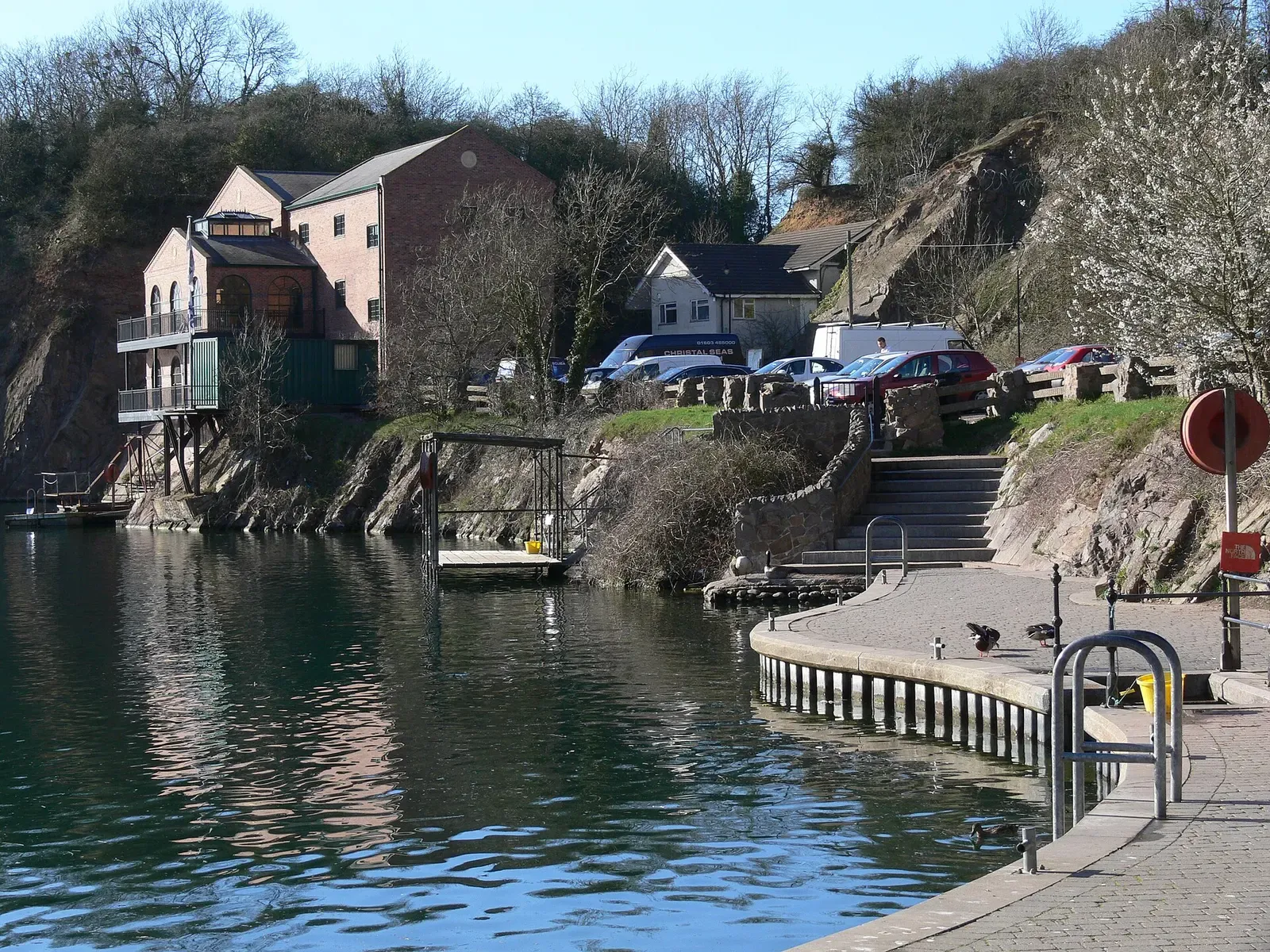
Stoney Cove · United Kingdom · Wreck · Freshwater
Stanegarth
The UK's largest inland wreck, a 1910 steam tug upright in 20 m of water
Area photo: Mat Fascione · CC BY-SA 2.0
Stanegarth is a steel tug built in Lancashire in 1910 and scuttled at Stoney Cove on 6 June 2000 to create an artificial reef; both Wikipedia and the dive centre call her the largest inland wreck in the UK. She lies upright in about 20 metres of fresh water with her anchor and chains run out towards the shore, and divers can get into her chart room, wheelhouse, engine room and aft cabin.
Where it is and how deep
No published position for this site — the map shows Stoney Cove and its other sites; operators know the mooring.
The dive
Stanegarth sits on the ledge Stoney Cove calls its 22-metre intermediate terrace, though the wreck herself lies in about 20 metres of fresh water, roughly east to west with her anchor and chains run out towards the shore and the hull sitting perfectly upright. At 18 metres long, she is the largest wreck at any inland dive centre in Britain, and the approach along her hull from bow to stern is a proper wreck profile rather than the quick look most of Stoney Cove's smaller attractions offer.
What makes her worth repeat visits is the access. The chart room, wheelhouse, engine room and aft cabin are all open to divers with the training and torches to go inside, rather than being sealed off as a shape to swim past. A buoy near the stern marks her position for the surface, and at night the effect of torchlight spilling out through her portholes from divers working through the engine room is one of the better reasons to book one of Stoney Cove's night-diving sessions.
Freshwater sponge grows on her stern in roundish grey clumps, and the wreck is popular enough that the dive centre describes her as the UK's most dived wreck, so expect other buddy pairs on the same bearings, particularly at weekends. The lake bed around her carries the same fine silt as the rest of the 22-metre terrace, so a careful approach that stays off the bottom keeps the visibility usable for whoever dives her next.
The wreck
- Vessel
- Stanegarth
- Type
- Steel-hulled tug, steam-powered then converted to diesel
- Length
- 18 m (59 ft)
- Built
- 1910
- Sunk
- 2000
- Cause
- Retired from towing service at Gloucester Docks, then deliberately scuttled at Stoney Cove as an artificial reef
- Lies
- Upright, lying roughly east-west, with her anchor and chains run out towards the shore in about 20 m of fresh water
Stanegarth was built in 1910 by the Lytham Ship Building & Engineering Company as a steam tug for the Rea Towing Company of Liverpool. The Sharpness New Docks and Gloucester and Birmingham Navigation Company bought her in 1933 and moved her to Gloucester, where she towed dredging hoppers to Purton and was converted to diesel power in 1957, later passing to British Waterways in 1963. Found laid up at Sharpness in 1999, she was brought to Stoney Cove as a Diver magazine project and scuttled on 6 June 2000 to create an artificial reef.
Marine life and season
The sources we used don't single out particular species here.
| Jan | Feb | Mar | Apr | May | Jun | Jul | Aug | Sep | Oct | Nov | Dec |
|---|---|---|---|---|---|---|---|---|---|---|---|
| Prime | Good | Fair | Good | Good | Fair | Fair | Fair | Good | Prime | Prime | Prime |
Season follows Stoney Cove: Open 362 days a year. Clearest from late October through winter, coldest in February-March, and a June-August algal bloom cuts visibility even at the warmest surface temperatures.
Know before you go
- The chart room, wheelhouse and engine room are a genuine overhead environment; enter only with appropriate training and a torch, and watch for entanglement on fittings inside.
- The wreck sits on Stoney Cove's silty 22-metre terrace; stay off the lake bed on the approach to avoid stirring up silt and cutting visibility for other divers on the same bearings.
Questions divers ask
How deep is the Stanegarth wreck?+
She lies upright in about 20 metres of fresh water, on the ledge Stoney Cove calls its 22-metre intermediate terrace, with her anchor and chains run out towards the shore.
Can you get inside the Stanegarth?+
Yes. Her chart room, wheelhouse, engine room and aft cabin are all accessible, though these are overhead spaces that call for wreck training and a torch rather than a casual look through a doorway.
Sources
- Stanegarth — Wikipedia
- Stanegarth — Dive & Swim Stoney Cove
- Under Water Map — Dive & Swim Stoney Cove
- The Diver's Guide to Stoney Cove — Stoney Cove
In The Logbook
- Freshwater diving: lakes, springs and quarriesFreshwater · 15 min read
More dive sites in Stoney Cove
Artificial reef
A 10 m steel submarine replica on the 7 m entry-level shelf
Artificial reef
A Wessex helicopter airframe sunk deliberately in 22 m near the north cliff
Artificial reef
An airliner cockpit on the 7 m shelf, placed around 1967
Similar dives elsewhere
Boilers in 7 m on the rocks that took a 1907 steamer
A flat bow-section wreck at 17 to 20 m with reef alongside


A 1940 Lunenburg schooner scuttled for divers at 17 m
An 1868 paddle steamer upright beside the Portland breakwater