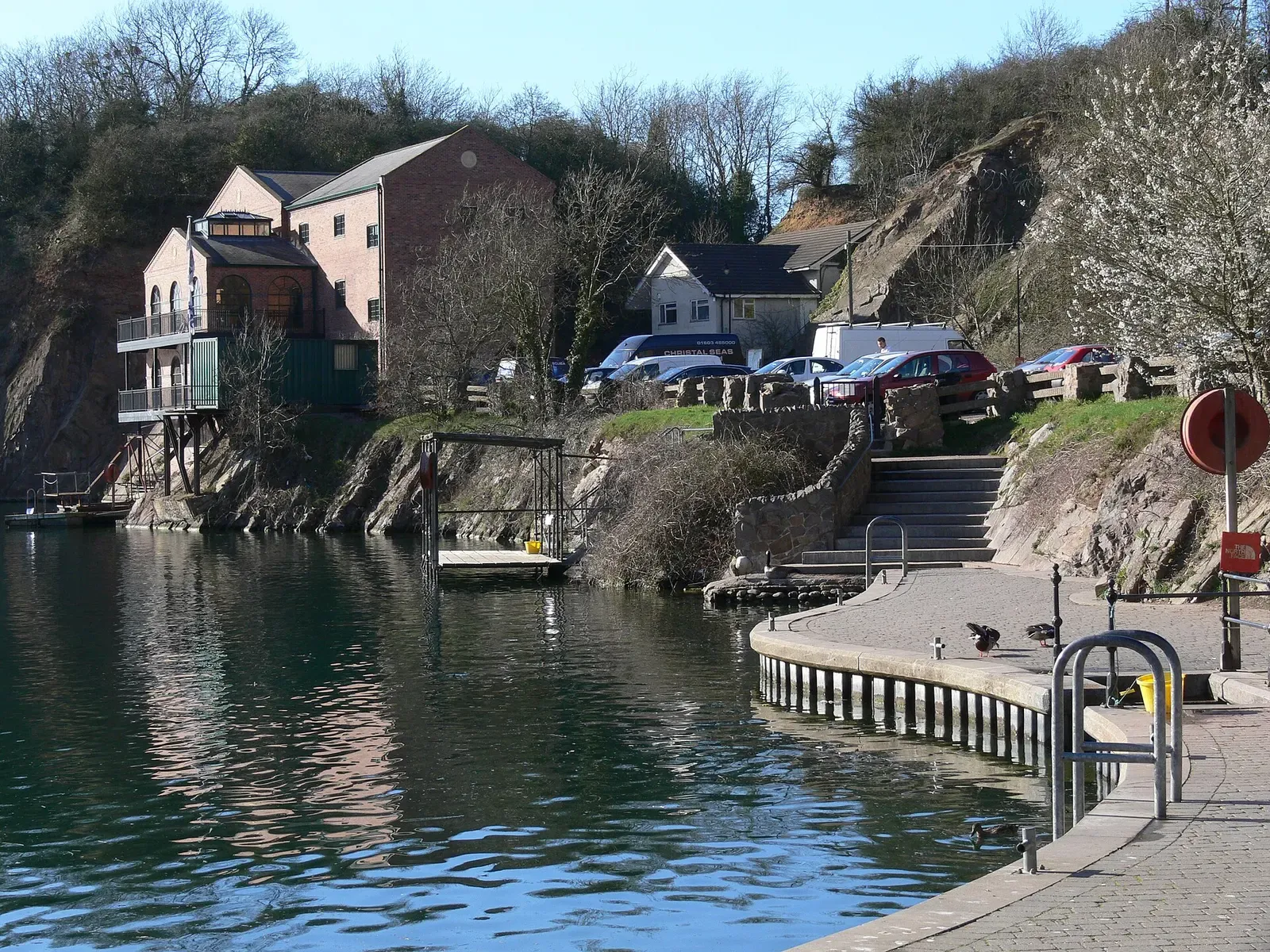
Stoney Cove · United Kingdom · Artificial reef · Freshwater
The Wessex Helicopter
A Wessex helicopter airframe sunk deliberately in 22 m near the north cliff
Area photo: Mat Fascione · CC BY-SA 2.0
The Wessex is a helicopter airframe deliberately sunk at Stoney Cove after its rotor blades were removed; it had flown for only 650 hours and was in immaculate condition when it went in. It now sits close to the northern cliff face in 22 metres of water, and although souvenir hunters have stripped many of its fittings over the years, it remains a popular introduction to Stoney Cove's deeper terrace.
Where it is and how deep
No published position for this site — the map shows Stoney Cove and its other sites; operators know the mooring.
The dive
The Wessex was in immaculate condition and had flown for only 650 hours when its rotor blades were removed and it was lowered into Stoney Cove, close to the northern cliff face on the 22-metre intermediate terrace. Descending the cliff line from the Bus Stop or Slipway brings you out almost on top of the airframe, and the drop from the 7-metre shelf above to this depth is most divers' first taste of Stoney Cove's darker, colder water.
Decades of souvenir hunting have stripped the cabin of most loose fittings, so this is a dive about the shape of the machine rather than an intact interior: the cockpit glazing, the tail boom and the mounting points where the rotor once turned. Pike are regularly seen holding station around the airframe, and the northern cliff behind it gives a wall of rock to follow back up if a diver wants to finish shallower.
Marine life and season
- Freshwater fish
| Jan | Feb | Mar | Apr | May | Jun | Jul | Aug | Sep | Oct | Nov | Dec |
|---|---|---|---|---|---|---|---|---|---|---|---|
| Prime | Good | Fair | Good | Good | Fair | Fair | Fair | Good | Prime | Prime | Prime |
Season follows Stoney Cove: Open 362 days a year. Clearest from late October through winter, coldest in February-March, and a June-August algal bloom cuts visibility even at the warmest surface temperatures.
Know before you go
- Souvenir hunting over the years has left sharp, cut edges on the airframe; keep gloves on and move around the structure rather than through it.
- At 22 metres the water is markedly colder than the entry-level shelf, averaging around 6 to 14 degrees Celsius through the year; plan exposure protection for the terrace, not the surface.
Questions divers ask
How deep is the Wessex helicopter?+
It sits close to Stoney Cove's northern cliff face in about 22 metres of water, on the terrace the dive centre grades as intermediate rather than entry-level.
Is the Wessex helicopter intact?+
Not much of one left to see: it had flown for only 650 hours and was immaculate when it was sunk, but souvenir hunters have since stripped most of the loose fittings, leaving the airframe and cockpit shape rather than a furnished interior.
Sources
- The Wessex — Dive & Swim Stoney Cove
- Under Water Map — Dive & Swim Stoney Cove
- The Diver's Guide to Stoney Cove — Stoney Cove
In The Logbook
- What wetsuit for what water temperatureGear & kit · 11 min read
- Freshwater diving: lakes, springs and quarriesFreshwater · 15 min read
More dive sites in Stoney Cove
Wreck
The UK's largest inland wreck, a 1910 steam tug upright in 20 m of water
Artificial reef
A 10 m steel submarine replica on the 7 m entry-level shelf
Artificial reef
An airliner cockpit on the 7 m shelf, placed around 1967
Similar dives elsewhere
A neon-yellow Piper once owned by astronaut Alan Shepard, hovering at 10 m
The ruined vibrating-screen plant of the old chalk works, at 20-35 m


Rockfish, greenling and giant anemones packed onto revetment boulders
Old Hood Canal Bridge slabs and I-beams turned into fish habitat