Sudanese Red Sea · Sudan · Wreck
Umbria Wreck
155 m steamer with wartime bombs still in her holds
Photo: Alexander Vasenin · CC BY-SA 4.0
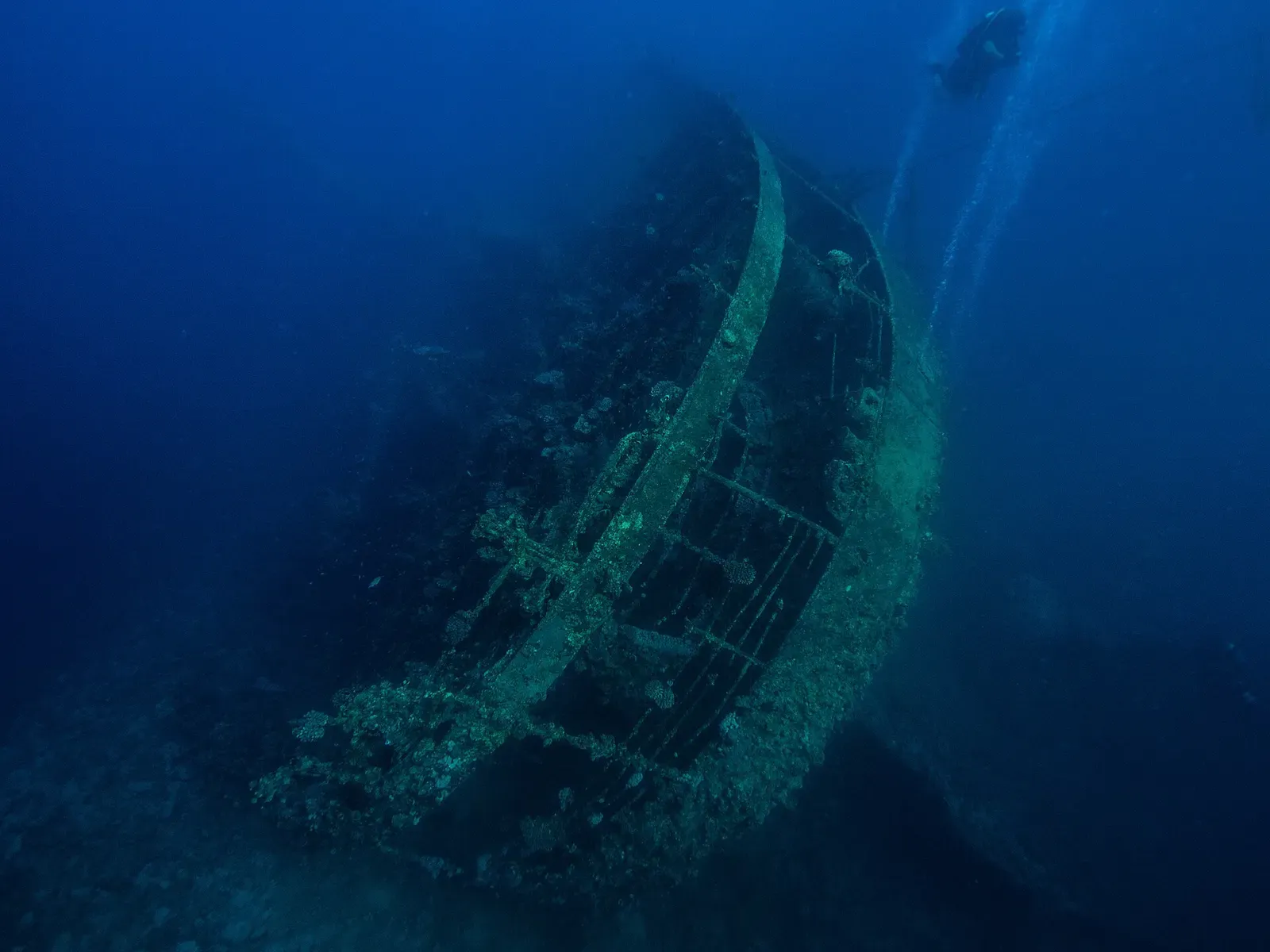
The Umbria is an Italian war supply steamer scuttled by her own crew at Wingate Reef on 9 June 1940, about twenty minutes out of Port Sudan. She lies on her port side at roughly 75 degrees in 5 to 35 metres, with five cargo holds still carrying Fiat cars, cement and thousands of bombs.
Also known as SS Umbria, Umbria.
Where it is and how deep
19.6434° N, 37.3041° EPublished position for this site.
The dive
The ship lies over on her port side at about 75 degrees, so the whole dive is done on the tilt: decks read as walls and companionways run sideways. The shallow side of the hull is at 5 m and the sand at 35 m, with the deepest point of the wreck at 38 m. At 155 metres long she is far more than one tank covers, which is why boats tend to spread the Umbria across several dives rather than trying to see it in one.
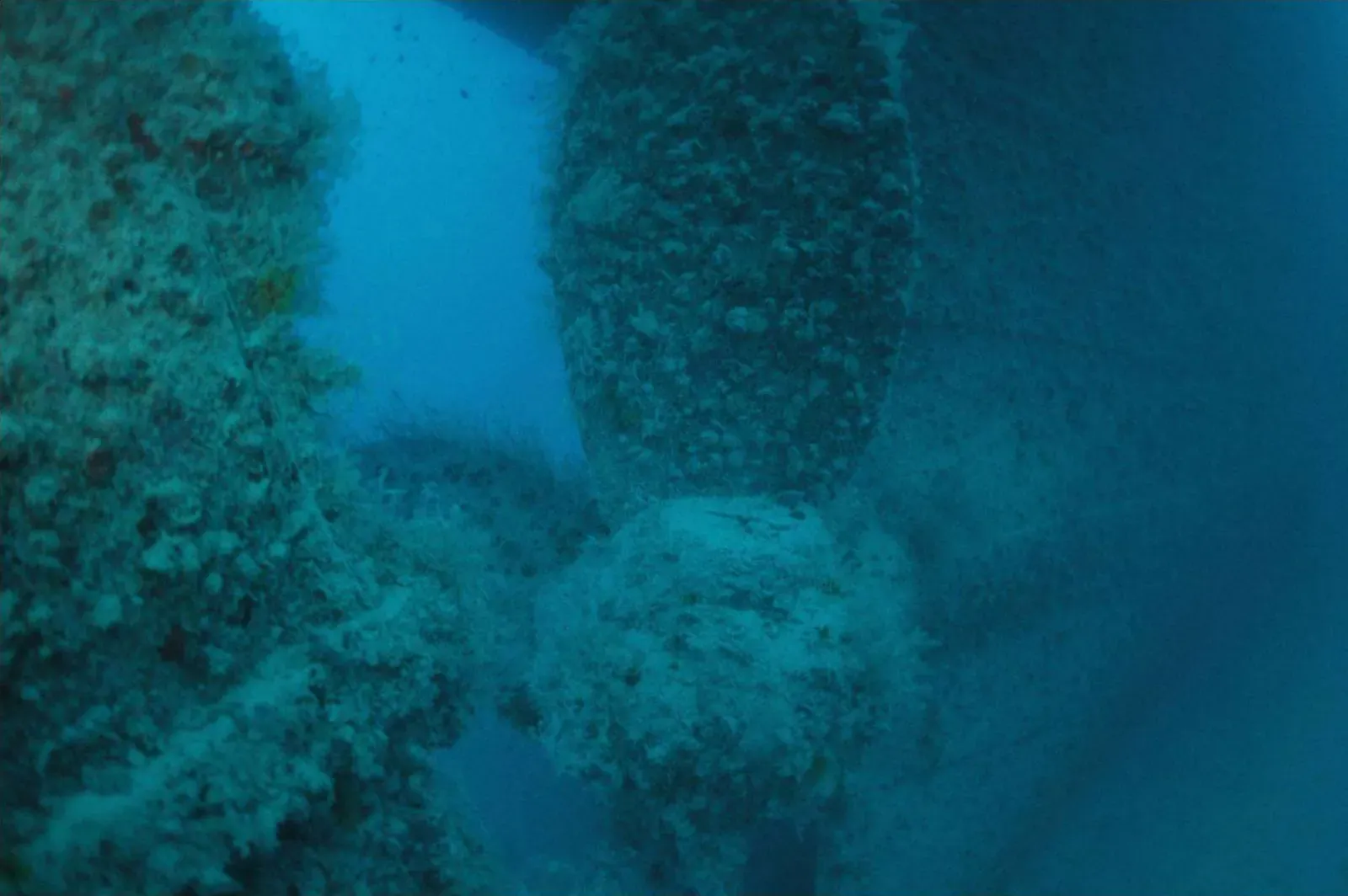
Penetration is the point of the site. The midships cargo holds have large deck openings and plenty of light, so they are an easy entry for most divers, with the bombs, the cases of detonators, the cement and three Fiat 1100 cars still where they were stowed in 1940. More experienced wreck divers can work the entirety of the ship, the engine room and the bakery included. Aft, the propeller stands at least three storeys high.
Marine life is a bonus rather than the reason to come: cleaner shrimps in numbers, a large school of snappers over the hull, butterflyfish and circling barracuda. Visibility is the trade-off for being this close to the harbour entrance — usually 10 to 20 metres, up to 30 on the best days — and it collapses fast if a fin stirs the silt inside the holds.
The wreck
- Vessel
- SS Umbria
- Type
- Italian cargo steamer
- Length
- 155 m (509 ft)
- Built
- 1912
- Sunk
- 1940
- Cause
- Scuttled by her own crew as Italy entered the Second World War
- Lies
- On her port side at about 75 degrees on Wingate Reef, in 5 to 35 m
Built in Hamburg in 1912, the Umbria was an Italian war supply vessel held at Port Sudan by the British. On 9 June 1940, learning that Italy had entered the war, her captain asked his British guards for permission to run a muster drill and used it to scuttle the ship with the crew's help. The manifest listed some 6,000 tons of bombs, 600 cases of detonators, 100 tons of assorted weapons, over 2,000 tons of cement and three Fiat 1100 cars; other accounts put the count at around 350,000 bombs. It is all still in the holds.
Marine life and season
- Barracuda
- Reef fish swarms
- Macro critters
| Jan | Feb | Mar | Apr | May | Jun | Jul | Aug | Sep | Oct | Nov | Dec |
|---|---|---|---|---|---|---|---|---|---|---|---|
| Fair | Fair | Good | Prime | Prime | Good | Fair | Fair | Good | Prime | Prime | Fair |
Season follows Sudanese Red Sea: Best conditions run April–June and October–November; the 2023 conflict has disrupted Port Sudan liveaboard departures — verify operators.
Know before you go
- The holds still hold live wartime ordnance, bombs and detonators alike. Nothing is touched, moved, or used as a handhold.
- Fine silt inside the wreck wipes out visibility for everyone behind you; stay flat, use a frog kick and keep well off the floor.
- Midships holds are open and daylit, but the engine room and the deeper compartments are true overhead: line, redundant lights and wreck training or stay out.
Photos from Umbria Wreck
Alexander Vasenin · CC BY-SA 4.0
Alexander Vasenin · CC BY-SA 4.0
Alexander Vasenin · CC BY-SA 4.0
Dive videos
SS Umbria, one of the best wrecks in the world · Paradise Films by Attila Ott on YouTube
Questions divers ask
How deep is the Umbria wreck?+
The wreck lies between 5 and 35 metres, with its deepest point at about 38 metres. Because she is on her side with the shallow plating just under the surface, most of the diving is shallow and long, and the midships holds that divers usually visit are well inside recreational depths.
Are the bombs on the Umbria still dangerous?+
The cargo has never been removed — reported as some 6,000 tons of bombs and 600 cases of detonators, or around 350,000 bombs depending on the account. Divers touch and move nothing, and guides run the inside of the wreck conservatively for that reason.
Sources
- SS Umbria — Wikipedia
- Umbria Wreck dive site — PADI
- Diving in Sudan: The Red Sea - Umbria Wreck, Cousteau's Conshelf — Dive The World
- MY Odyssey — Sudan Red Sea — Bluewater Dive Travel
- Sudan's Red Sea — EZDIVE Magazine
Photo credits
- Stern of the SS Umbria wreck lying on its side in blue water by Alexander Vasenin, CC BY-SA 4.0, via Wikimedia Commons
- Stacked wartime bombs still in a cargo hold of the SS Umbria by Alexander Vasenin, CC BY-SA 4.0, via Wikimedia Commons
- Corroded Fiat 1100 cars stacked in a cargo hold of the SS Umbria by Alexander Vasenin, CC BY-SA 4.0, via Wikimedia Commons
- Corroded electrical switch panel inside the engine room of the SS Umbria by Alexander Vasenin, CC BY-SA 4.0, via Wikimedia Commons
In The Logbook
- Deep wreck diving: where recreational stopsWrecks · 8 min read
- WWII wrecks you can dive, by theatreWrecks · 7 min read
- Liveaboard vs resort diving: which suits you?Trip planning · 6 min read
More dive sites in Sudanese Red Sea
Pinnacle
Mother of Sharks: hammerheads and tigers on a lone pinnacle
Wall
Two plateaus on the Red Sea's only atoll, hammerheads at 45 m
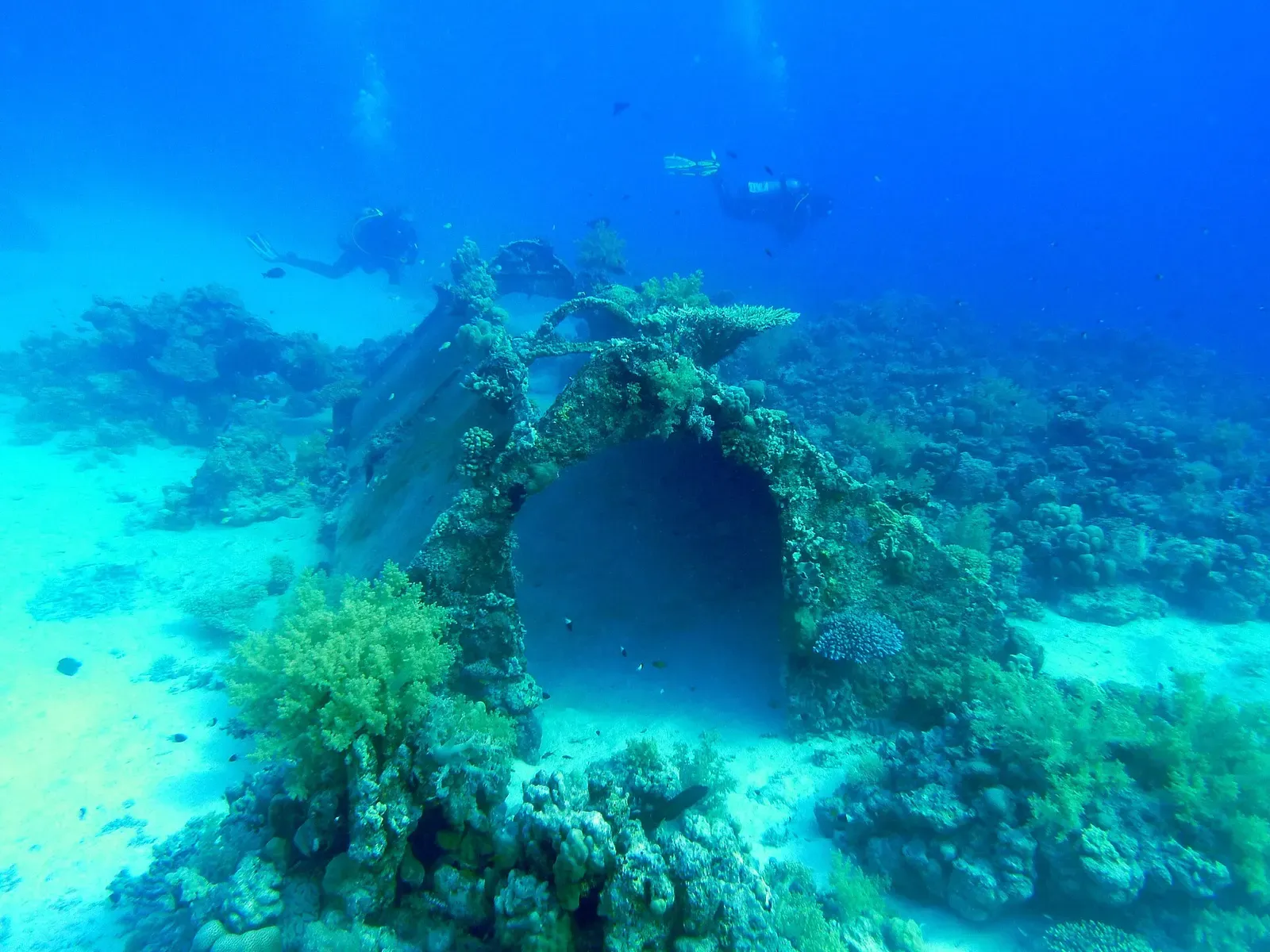
Cousteau's diving-saucer hangar still on the sand at 13 m
Similar dives elsewhere
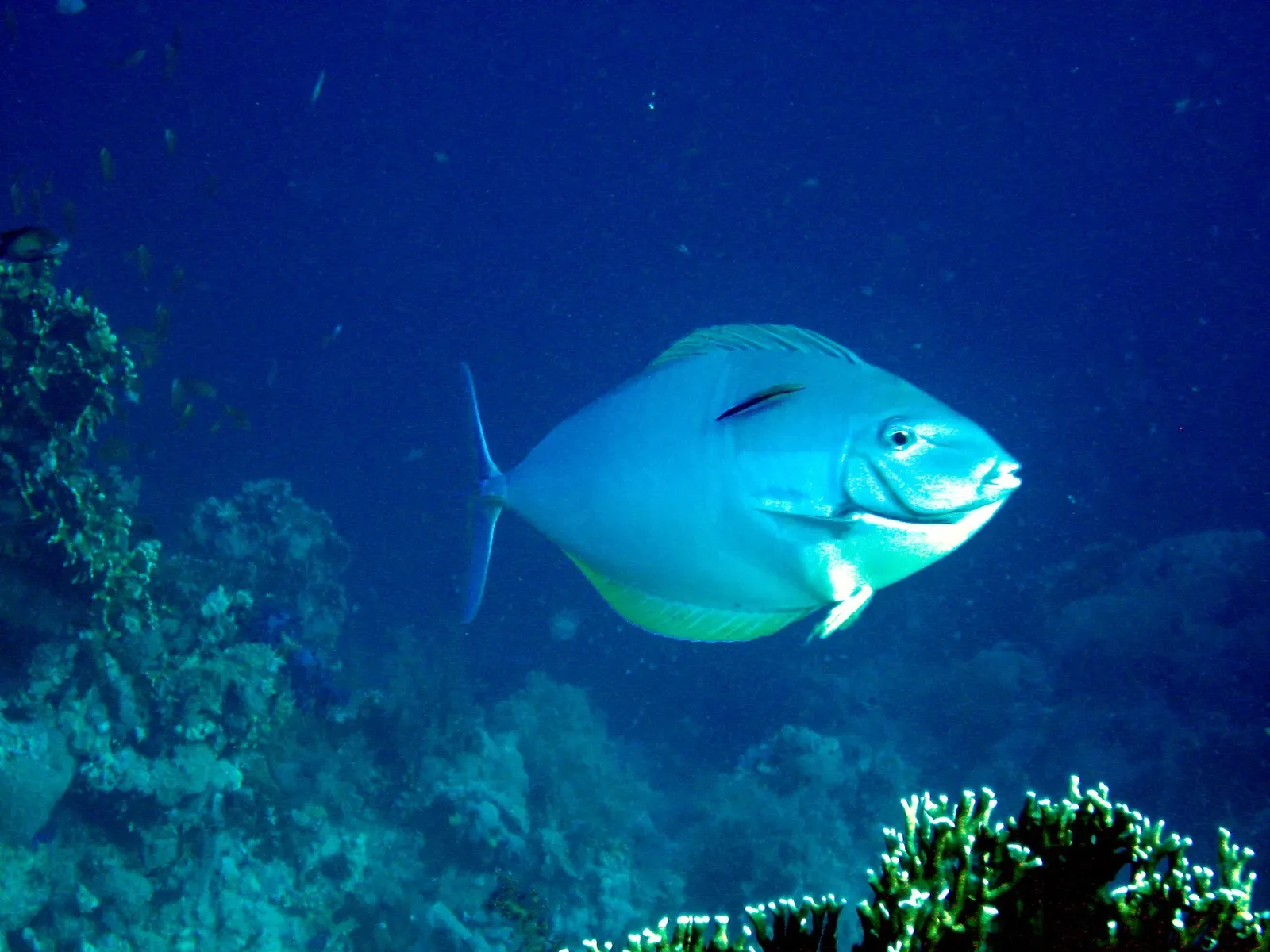
BSA motorcycles and Bedford trucks still stowed in the holds since 1941
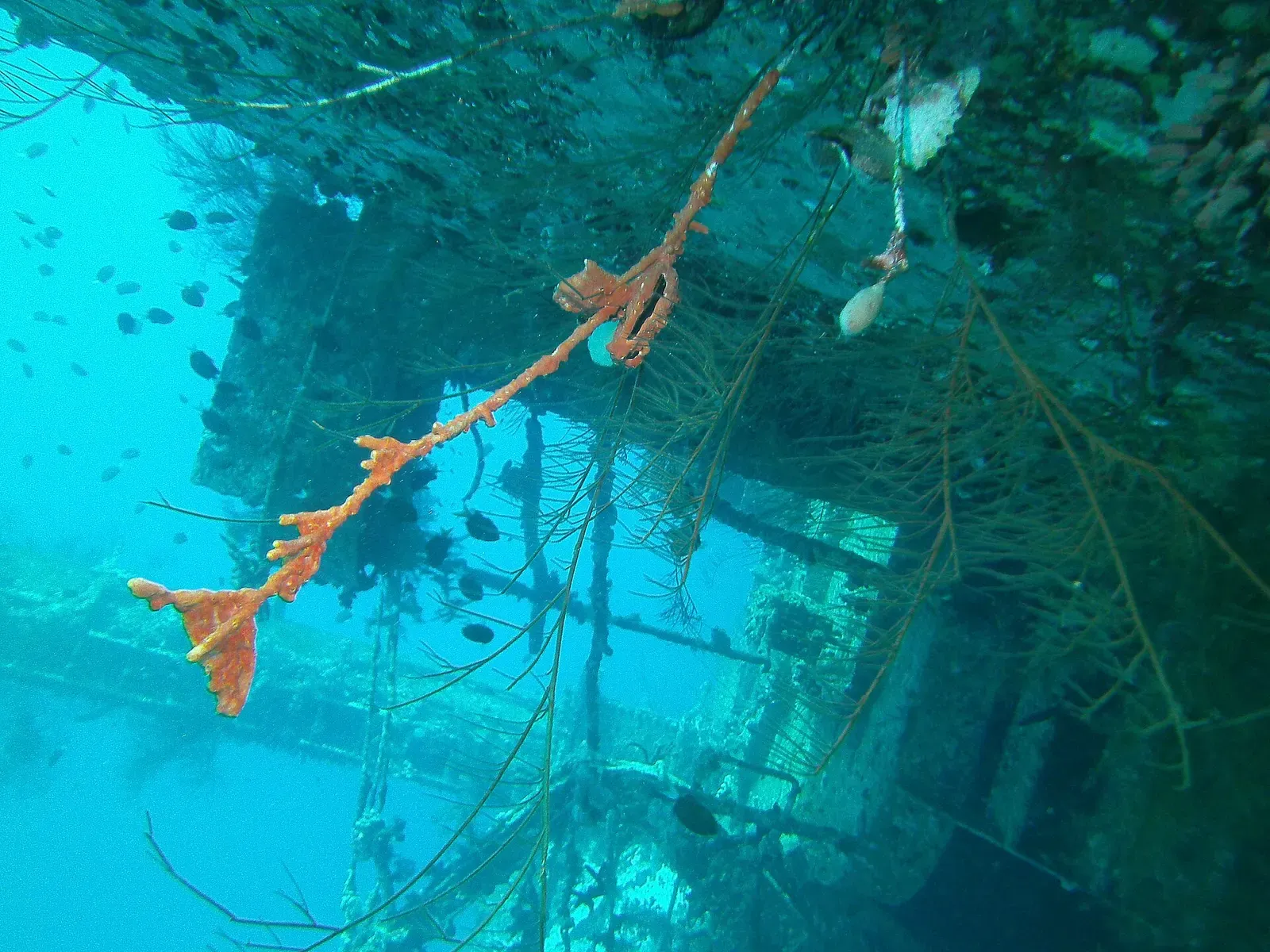
An air pocket in the rear cargo hold big enough to surface in

Railway wheels at 8 m on a hull that runs down to 80 m


The Thistlegorm's sister ship, upright and intact below 30 m