Sharm El Sheikh · Egypt · Wreck
SS Thistlegorm
BSA motorcycles and Bedford trucks still stowed in the holds since 1941
Photo: This photo has been taken by Matthieu Sontag (User:Mirgolth) and released under the licenses stated below. You are free · CC BY-SA 3.0
A British armed merchant ship bombed at anchor in the Strait of Gubal on 6 October 1941, lying upright about 40 km from Sharm El Sheikh with her wartime cargo still in the holds. The shallowest plating is at 16 m and the propeller at about 32 m, so a typical dive works the deck between 18 and 30 m. Divers come for the cargo, from motorcycles and trucks to two steam locomotives, more than for the reef growing over it.
Also known as Thistlegorm Wreck.
Where it is and how deep
27.8141° N, 33.9200° EPublished position for this site.
The dive
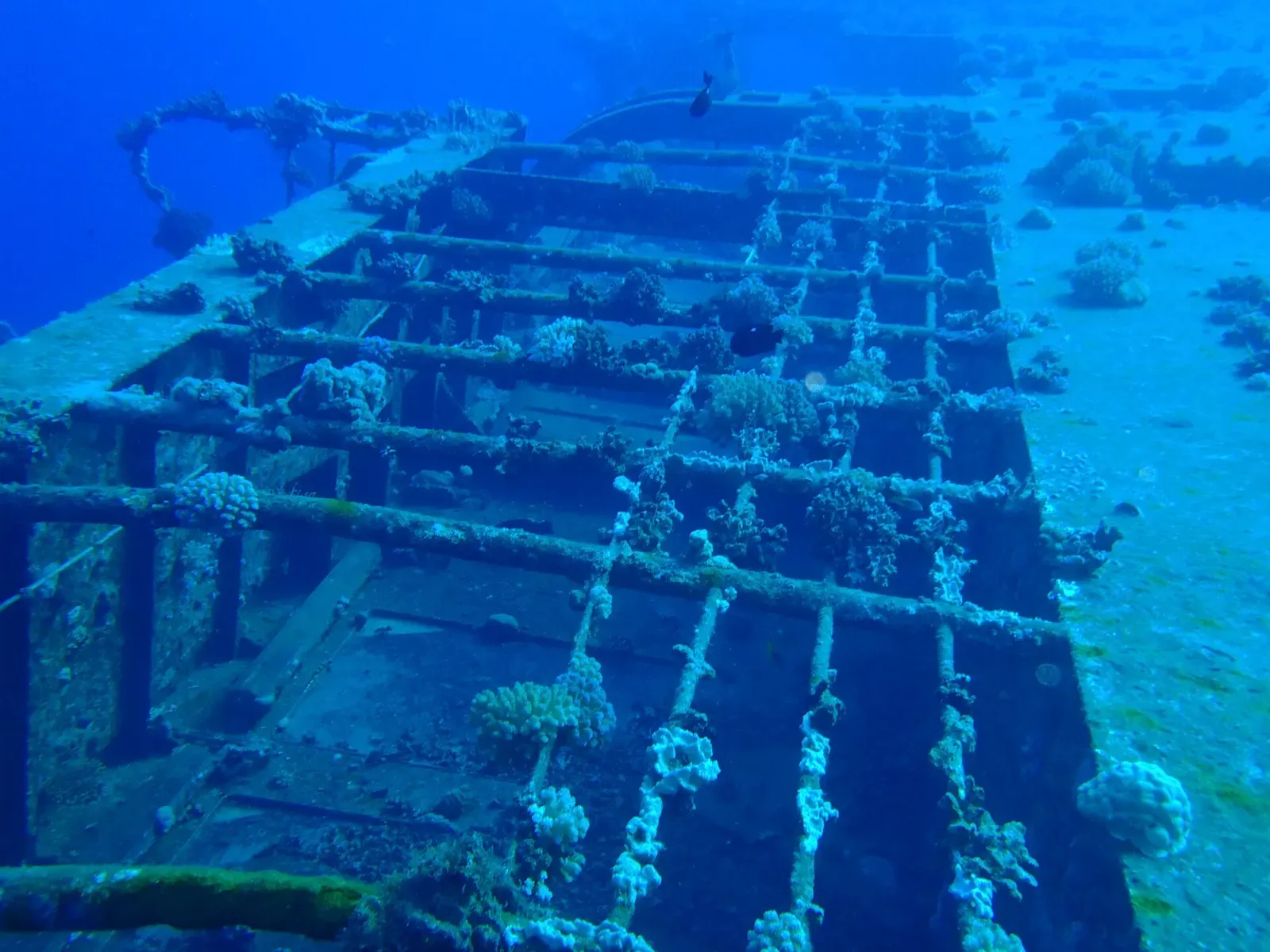
Dive boats moor directly to the wreck, and the first dive is usually a tour of the outside. From the bow and its anchor chains, the route runs aft over the holds to the blast zone, where the hull is peeled open and ammunition boxes and artillery shells lie among the torn plating. An upturned Bren Carrier sits on the port side, and one of the two steam locomotives thrown off the deck lies on the sand to port, level with the blast; the other is off the starboard side, level with Hold 2.
The stern broke away in the explosion and lies twisted about 90 degrees to the main hull, its guns still mounted and hanging out over the port side. The propeller, at about 32 m, is the deepest point most divers reach. The second dive goes inside. Hold 1 opens from a large square hatch near the anchor chains, and the holds run on two levels that connect through internal doorways from Hold 1 to Hold 3 at no more than 25 m.
Hold 1 has boots and motorcycles. Hold 2 is the dense one: Bedford trucks, BSA and Norton motorcycles, Wellington boots, rifles, Westland Lysander wings, Bristol Mercury engine exhaust rings and Bristol Blenheim tailplanes, stowed where they were loaded in 1941. Hold 3 has bombs, munitions crates and anti-tank mines. Nothing grows in the silted holds beyond soldierfish and sweepers, and so many divers pass through each day that air collects in pockets against the ceilings.
Outside, eighty years of growth have turned the steelwork into a reef: nudibranchs on the plating, scorpionfish and crocodilefish on the deck, lionfish and blackspotted sweetlips sheltering in the blast zone, and batfish following divers. Tuna and barracuda hunt over the wreck and turtles pass by. Currents across the site can reach two knots, so the dive runs at the guide's pace.
The wreck
- Vessel
- SS Thistlegorm
- Type
- Armed merchant steamship
- Length
- 126.5 m (415 ft)
- Built
- 1940
- Sunk
- 1941
- Cause
- Bombed at anchor by two German Heinkel He 111 aircraft on 6 October 1941
- Lies
- Upright on sand at about 33 m, stern broken off and twisted about 90 degrees to the hull
J.L. Thompson and Sons launched Thistlegorm in Sunderland on 9 April 1940. She left Glasgow on 2 June 1941 for Alexandria by way of Cape Town, carrying supplies for the Allied forces in Egypt, and with the Suez Canal blocked she waited at Safe Anchorage F. At 01:30 on 6 October two bombs struck hold 4 and set off the ammunition there; four sailors and five gunners died. Jacques Cousteau found her in the 1950s and raised a motorcycle, the captain's safe and the bell. Recreational divers relocated her in the early 1990s. Surveys in 2017 and 2022 mapped a debris field of 21.9 hectares and recorded artefacts removed in between.
Marine life and season
- Barracuda
- Tuna
- Sea turtles
- Nudibranchs
- Reef fish swarms
- Macro critters
| Jan | Feb | Mar | Apr | May | Jun | Jul | Aug | Sep | Oct | Nov | Dec |
|---|---|---|---|---|---|---|---|---|---|---|---|
| Fair | Fair | Good | Good | Prime | Prime | Prime | Prime | Prime | Prime | Good | Fair |
April to November gives the most reliable seas for the long boat ride; December to February often brings rough water that cancels day trips.
Know before you go
- Currents across the wreck can reach two knots, which is why the dive is run with a guide who knows the site.
- The wreck has claimed divers who went further in than their training. The engine room, the captain's cabin and the deeper holds need wreck training, redundant gas and a line.
- Diver-stirred silt drops the visibility inside the holds fast; float clear of the floor and the cargo rather than finning near them.
- The hull is rusting through, and boats mooring to weak parts of it have brought sections down. Treat plating and overhangs as fragile, never as handholds.
- Nine men died in the sinking and the wreck is a war grave. Taking anything from it is illegal under Egyptian antiquities law.
Dive videos
Scuba Diving WORLD's Greatest Wreck Dive The SS Thistlegorm · Blue Horizon Diving on YouTube
SS Thistlegorm - The Red Sea's most legendary wreck · Dive and tell a story on YouTube
🇪🇬 #Wreck Diving: SS Thistlegorm (Red Sea, Egypt) · International Scuba Divers Club on YouTube
Questions divers ask
How deep is the Thistlegorm?+
The main deck runs between 18 and 30 m, with the shallowest plating at 16 m and the propeller, the deepest point on the site, at about 32 m. Most dive plans keep you on the deck and in the upper holds.
Where is the Thistlegorm wreck?+
At Safe Anchorage F in the northern Strait of Gubal, near Ras Mohammed National Park and about 40 km from Sharm El Sheikh. Day boats take about three hours each way from Sharm; from Hurghada it is usually dived on a two- or three-day safari.
What cargo is on the Thistlegorm?+
Supplies for the Allied forces in Egypt: Bedford trucks, Universal Carrier armoured vehicles, Norton and BSA motorcycles, Bren guns, rifles, ammunition, Wellington boots and aircraft parts, plus two Stanier 8F steam locomotives carried on deck for Egyptian National Railways. The locomotives now lie on the sand either side of the hull.
What certification do I need to dive the Thistlegorm?+
PADI Advanced Open Water or equivalent, because the dive exceeds 18 m. Going into the holds calls for a Wreck Specialty or equivalent training, plus the line-handling competence to use it.
Sources
- SS Thistlegorm — Wikipedia
- Thistlegorm Wreck dive site — PADI
- SS Thistlegorm: Red Sea Wreck Diving - Egypt — Dive The World
- Diving the Thistlegorm - Complete 2026 Wreck Guide — Aquarius Red Sea
- Documenting Change on the SS Thistlegorm, Red Sea, Egypt — Heritage (MDPI)
- SS Thistlegorm (wreck) — OpenStreetMap
Photo credits
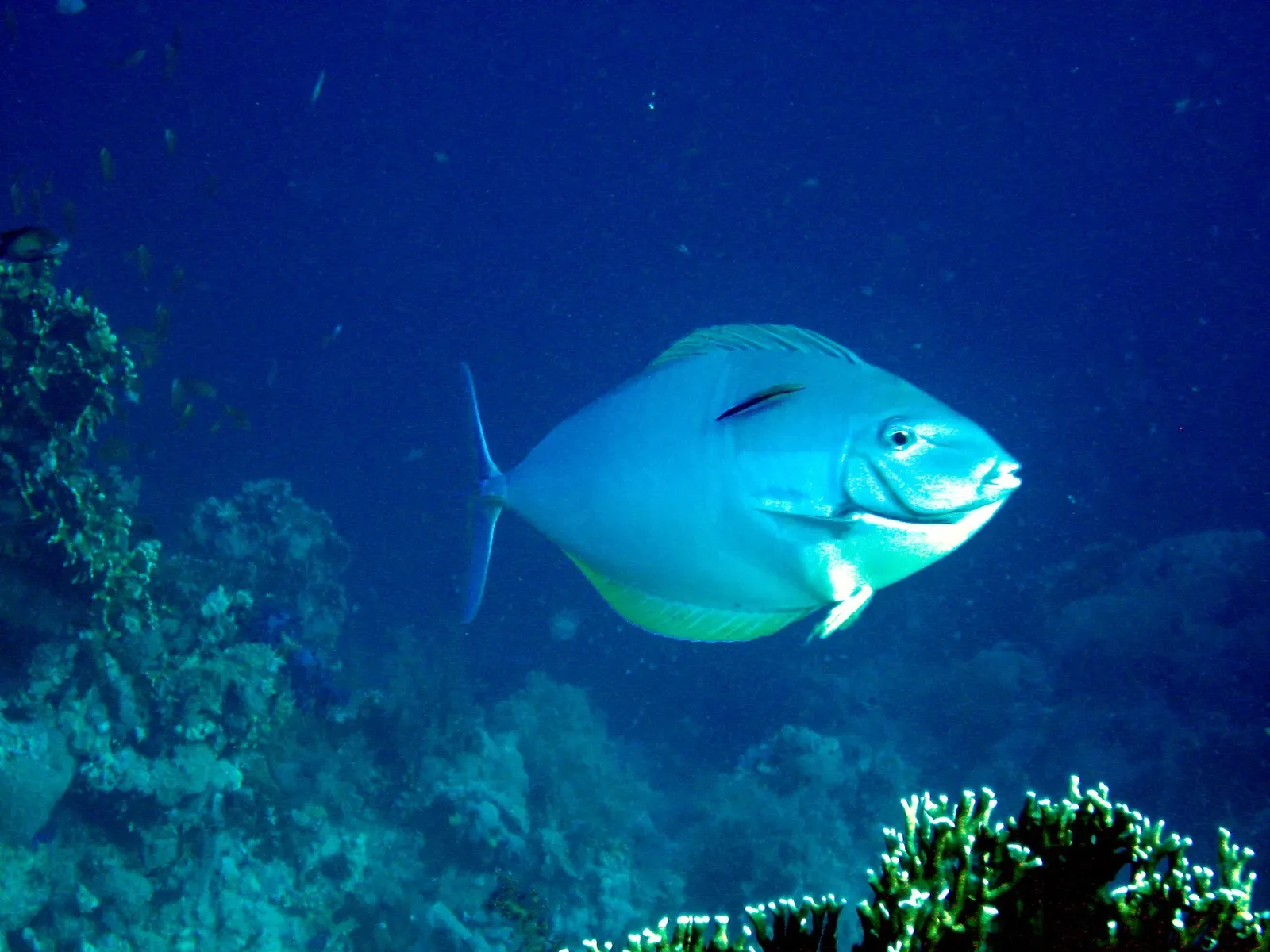
- A pale trevally with a cleaner wrasse on its back swimming over the reef at the Thistlegorm site. by This photo has been taken by Matthieu Sontag (User:Mirgolth) and released under the licenses stated below. You are free , CC BY-SA 3.0, via Wikimedia Commons
In The Logbook
- Where to dive in every month of the yearTrip planning · 14 min read
- How long does a tank of air last?Gear & kit · 9 min read
- How a dive computer calculates no-stop timeBody & health · 10 min read
- WWII wrecks you can dive, by theatreWrecks · 7 min read
More dive sites in Sharm El Sheikh
Reef
Anemones holding a permanent population of anemonefish
Reef
The freighter Loullia aground on the reef since 1981
Reef
Two enormous caves filled with shoaling glassfish
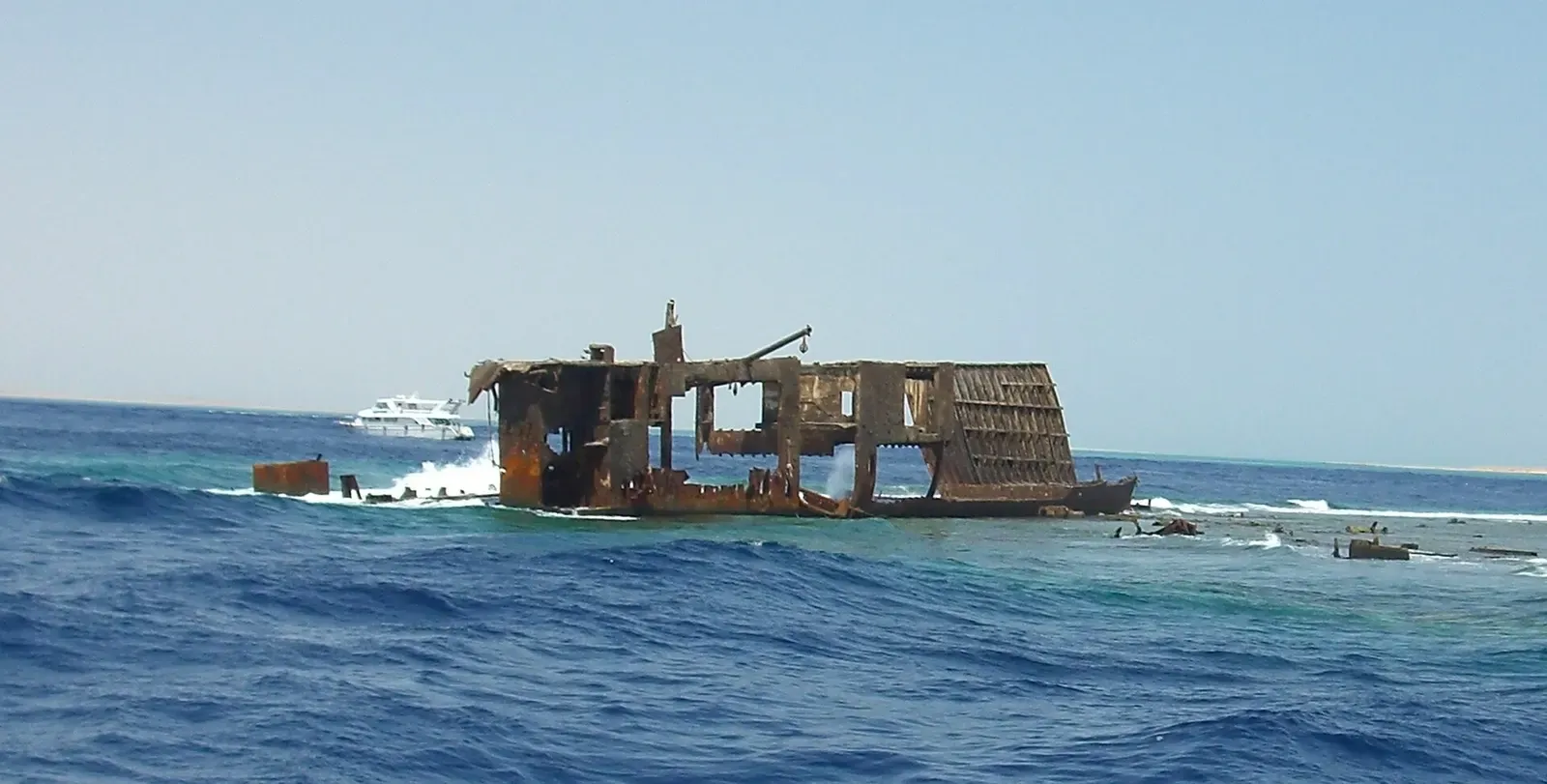
Scalloped hammerheads off the back of the reef in late summer
A 1984 freighter broken up in 10 to 12 m of water
Lagoon
Shallow hard coral lagoon on the west side of Tiran Island
Wreck
A 175 m bulk carrier aground off Nabq since 1996
Coral blocks from 2 to 40 m on a sea-grass bottom
Similar dives elsewhere
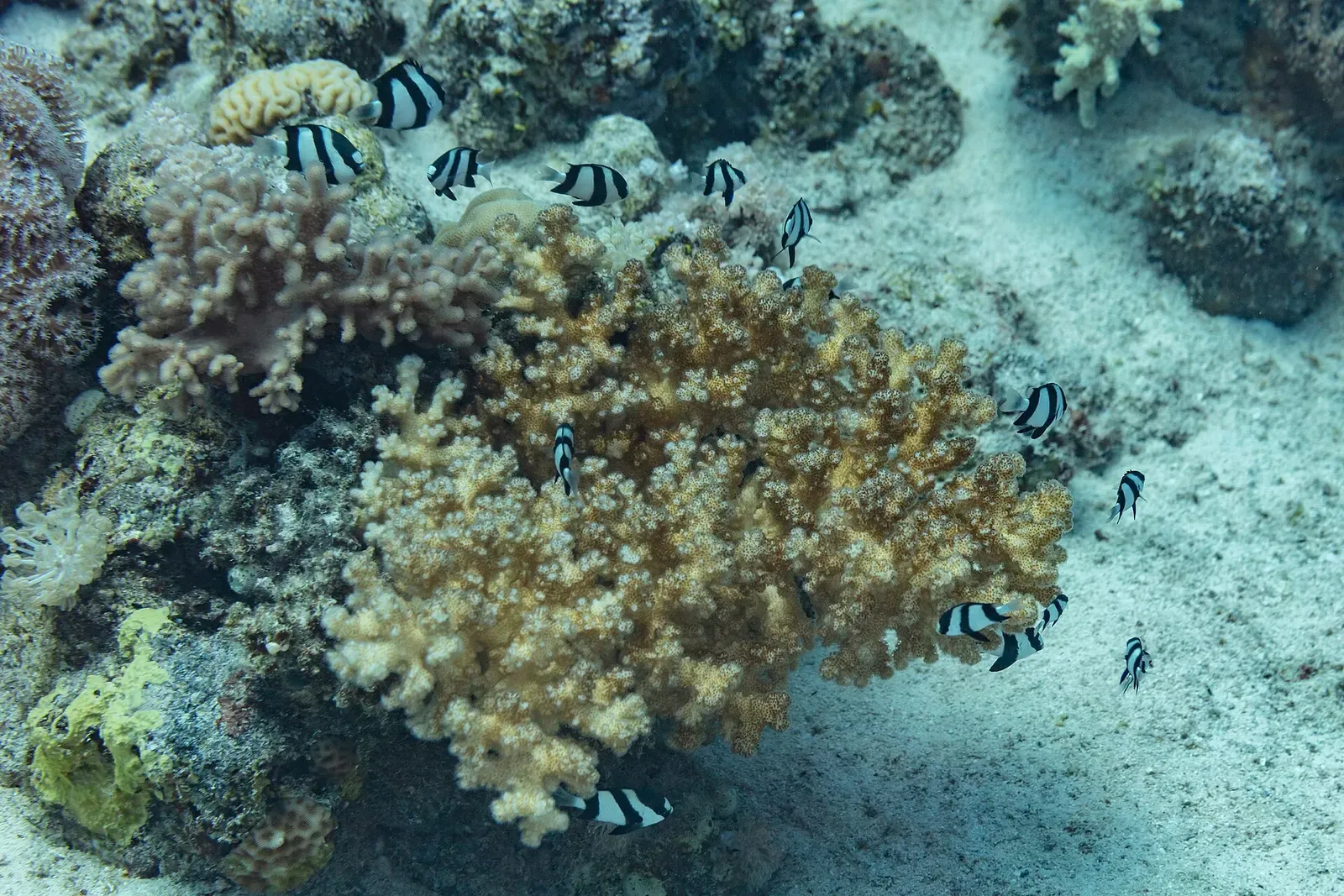
Jeddah's biggest wreck, on its side between two reefs since 2022
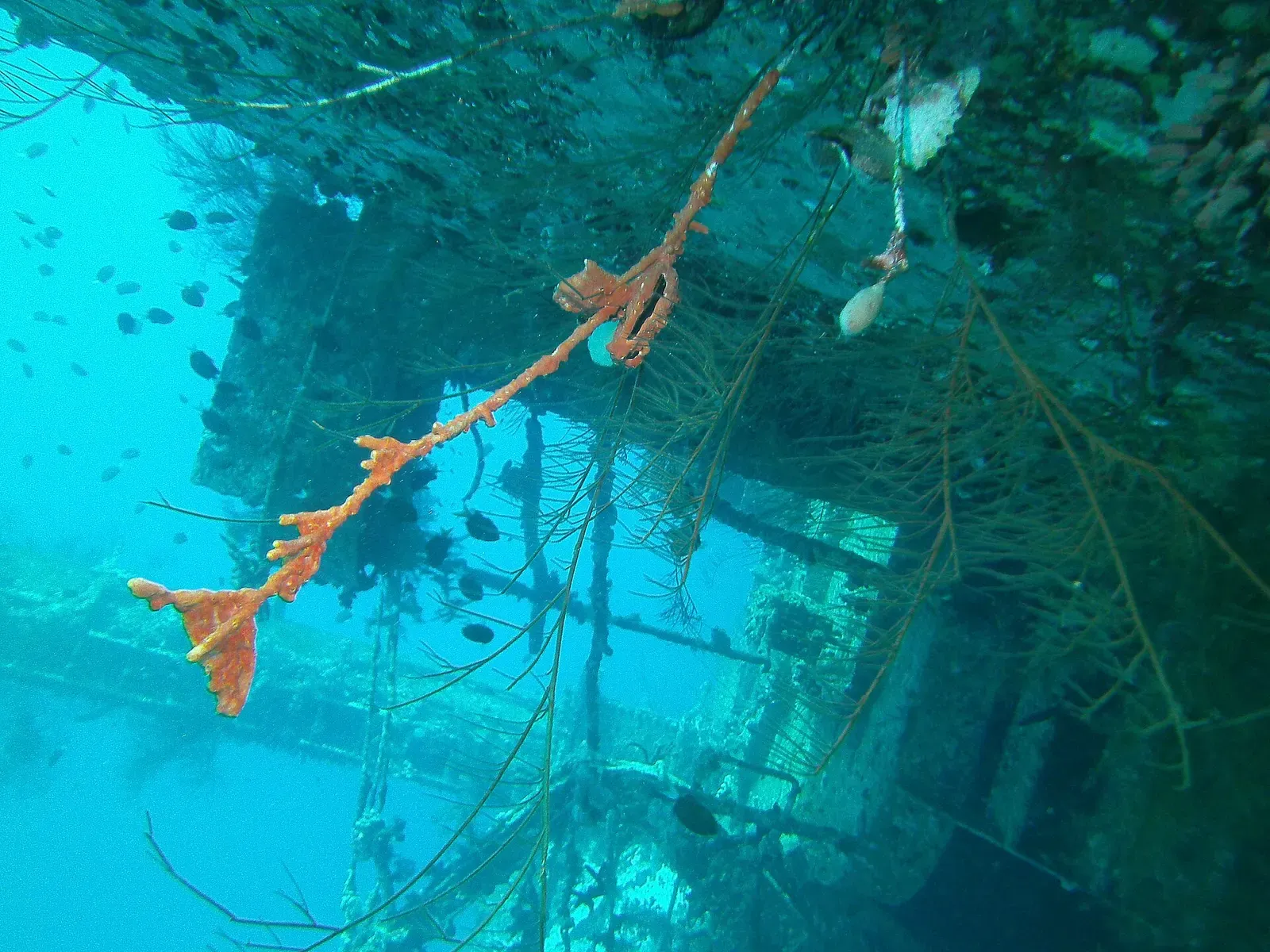
An air pocket in the rear cargo hold big enough to surface in

A 115 m ferry lost in 1991, dived as a memorial without entry
Wreck
Cement Wreck
Labuan & Brunei Wrecks · Malaysia
MV Tung Hwang: a 92 m freighter standing upright off Labuan from 8 m to 32 m