The line, and why wrecks keep crossing it
Recreational diving stops at 40 metres (130 feet). An entry-level certificate is good for 18, an advanced one takes you to 30, and a deep specialty gets you the last ten — but the ceiling on the whole system is the same: you must be able to swim straight up at any moment. Past that line you are diving with a roof over your head made of decompression obligation, and the training, gas and team all change.
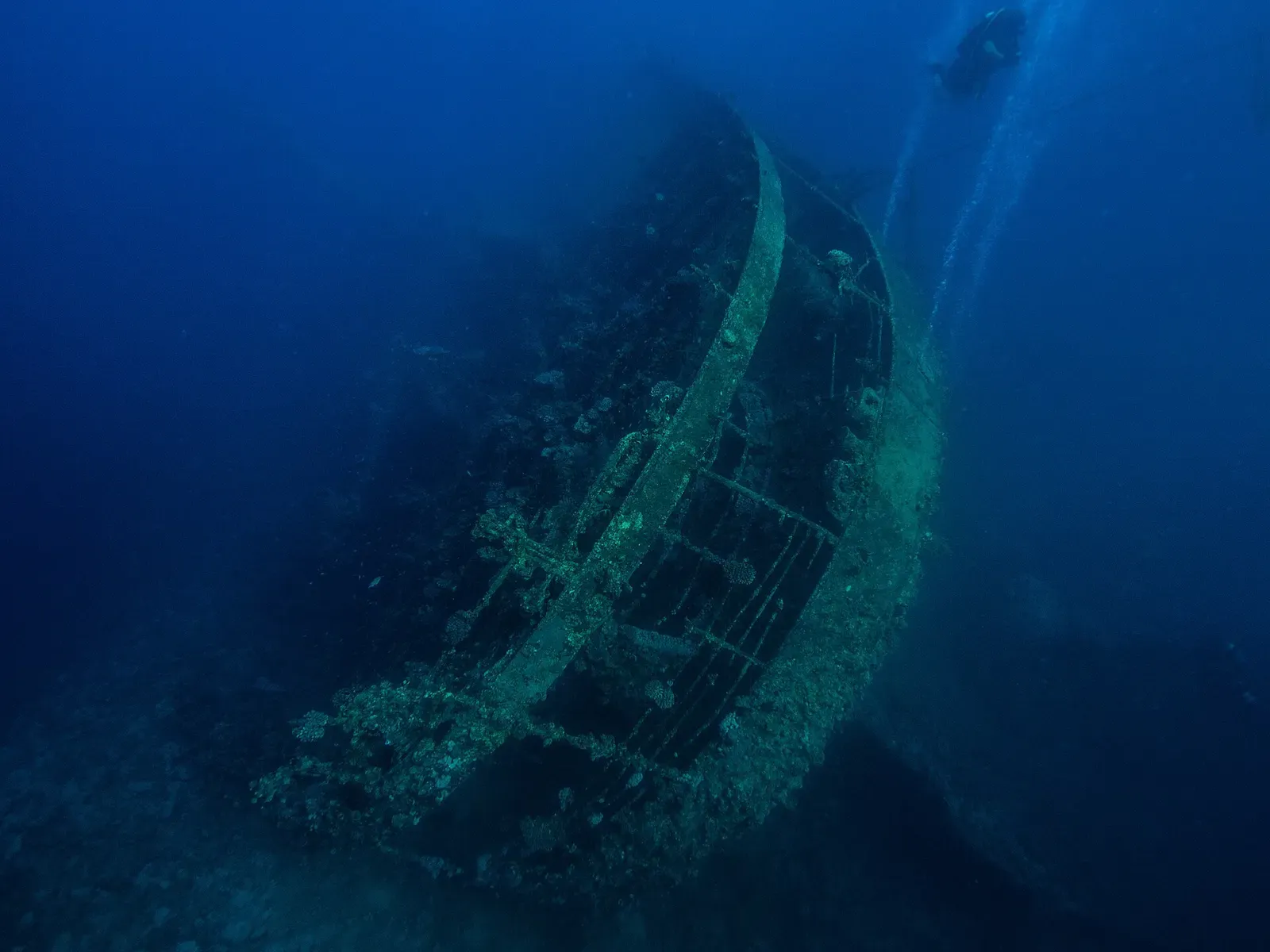
Wrecks keep crossing the line because ships are big and the seabed is not flat. A ship is tens of metres of structure lying on a slope, so the top of it and the bottom of it are frequently in different worlds. Nowhere shows this better than the Numidia on Big Brother in the Red Sea: her famous railway wheels sit at 8 m, well within any certification, and her stern is at 80 m, which is serious technical ground. It is one wreck and one mooring. The only thing separating the two dives is a decision you make while you are narced.
That decision is the subject of this guide. The wrecks below are sorted by the depth they actually ask of you, not by fame.
The recreational edge: 30 to 40 metres
These are the wrecks that fit inside recreational limits but spend all their margin doing it. No-stop time at 35 m is a handful of minutes, and gas goes roughly four and a half times faster than at the surface, so the plan has to be made on the boat.
The Zenobia off Larnaca is the template. She is a 172 m ro-ro ferry that capsized in 1980 after a ballast-computer error, lying on her port side with 104 articulated lorries still chained to her decks. Newly qualified divers dive her starboard side at 16 m; the car decks need wreck training; the engine room needs a great deal more. One wreck, three certifications, and everything below the top rail runs toward 42 m.
Elsewhere in the band: Chuuk’s Fujikawa Maru, upright with the sole surviving A5M Claude stacked in a cargo hold, from 15 down to 40 m. Malta’s Um El Faroud, a 115 m tanker broken in two with her bridge at 15 to 18 m and the sand in the low-to-mid thirties, where no-stop time on the lower hull is the constraint. The U-352 off North Carolina, a Type VIIC U-boat at a 45-degree list on sand at 35 m, dived as an exterior swim because the outer hull is too corroded to enter. Bonaire’s Hilma Hooker, which you can walk into from the road and which still sits at 30 m with the site rated to 40 — the only wreck here where the entry is a kerbside and the profile is not.
And the shallow end of some deep wrecks belongs here too. Norway’s Hermann Künne is a German destroyer lying from the low-water line down to 40 m, so the first third of her is available to anyone with a drysuit and the rest is a different dive entirely.
| Site | Depth | Level | Best months |
|---|---|---|---|
| Zenobia Wreck Larnaca · Cyprus | 16–42 m | Intermediate | Jun–Oct |
| Umbria Wreck Sudanese Red Sea · Sudan | 5–35 m | Intermediate | Apr–May |
| Fujikawa Maru Chuuk Lagoon · Micronesia | 15–40 m | Advanced | Nov–May |
| Um El Faroud Malta & Gozo · Malta | 28–35 m | Advanced | Jun–Sep |
| Hilma Hooker Bonaire · Caribbean Netherlands | to 30 m | Advanced | Dec–Apr |
| USS Spiegel Grove Florida Keys · United States | 21–40 m | Advanced | Apr–Aug |
| SMS Dresden Scapa Flow · United Kingdom | 25–38 m | Advanced | Jun–Aug |
| SMS Köln Scapa Flow · United Kingdom | 22–36 m | Advanced | Jun–Aug |
| Hermann Künne Narvik · Norway | 0–40 m | Intermediate | Jun–Aug |
| U-352 North Carolina Wrecks · United States | 27–34 m | Advanced | Sep–Oct |
| Irako Wreck Coron · Philippines | 28–35 m | Advanced | Dec–Apr |
| Akitsushima Wreck Coron · Philippines | to 35 m | Advanced | Dec–Apr |
| Doña Marilyn Malapascua · Philippines | 25–40 m | Advanced | Apr–May |
| Le Liban Marseille & the Calanques · France | 28–36 m | Advanced | Jun–Sep |
| Keystorm Brockville · Canada | 6–36 m | Advanced | Jul–Sep |
| HMNZS Canterbury Bay of Islands · New Zealand | 20–36 m | Advanced | Dec–Apr |
| SMS Cormoran & Tokai Maru Guam · Guam | 24–37 m | Advanced | Dec–May |
| O'Keefe's Passage Yap · Micronesia | 9–37 m | Advanced | Dec–Mar |
The gap between the deck and the keel
The single most useful number on a wreck page is not the maximum depth. It is the difference between the shallowest structure and the seabed, because that gap is where divers get into trouble.
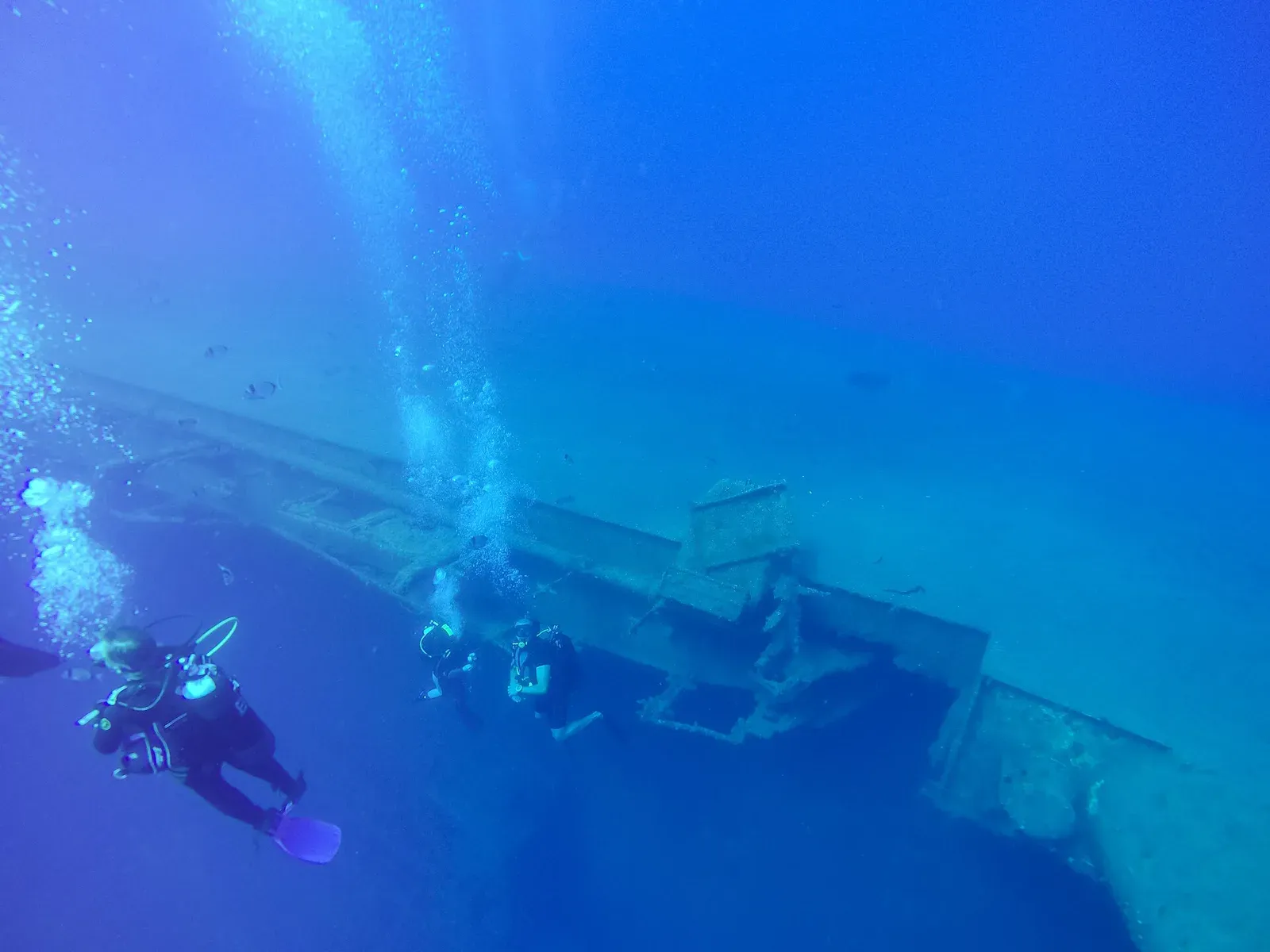
Follow the numbers on five ships. Tobermory’s Forest City lies down a steep incline with her broken bow at 18 m and her intact — and far more interesting — stern at 46 m, and the site is rated Advanced at one end and technical at the other. The Rosalie Moller, the Thistlegorm’s sister ship, has masts reaching to 18 m above a hull that sits below 30 with the seabed at 50 or more. The Aida hangs almost vertically off Big Brother from 15 m to below 45. The Sophie Rickmers in Sumatra has her wheelhouse at 37 m, her decks at 45 and her bow past 55. And Labuan’s Cement Wreck is the trap in its friendliest form: masts within about 8 m of the surface, wheelhouse roof at 14 m, main deck at 19 to 22 m and the sand alongside the hull at 30 to 32 m, a ship that looks like an Open Water dive from the boat and is rated for wreck training at the top.
In every case the structure keeps going down and there is no natural place to stop. Depth creep on a wreck is not carelessness, it is the shape of the object: you are following a handrail, the handrail slopes, and the next interesting thing is always slightly deeper. The site notes for Forest City, the Aida and the Numidia all say the same thing in different words — fix a turn depth on the boat and hold it.
Where decompression stops being optional: 40 to 60 metres
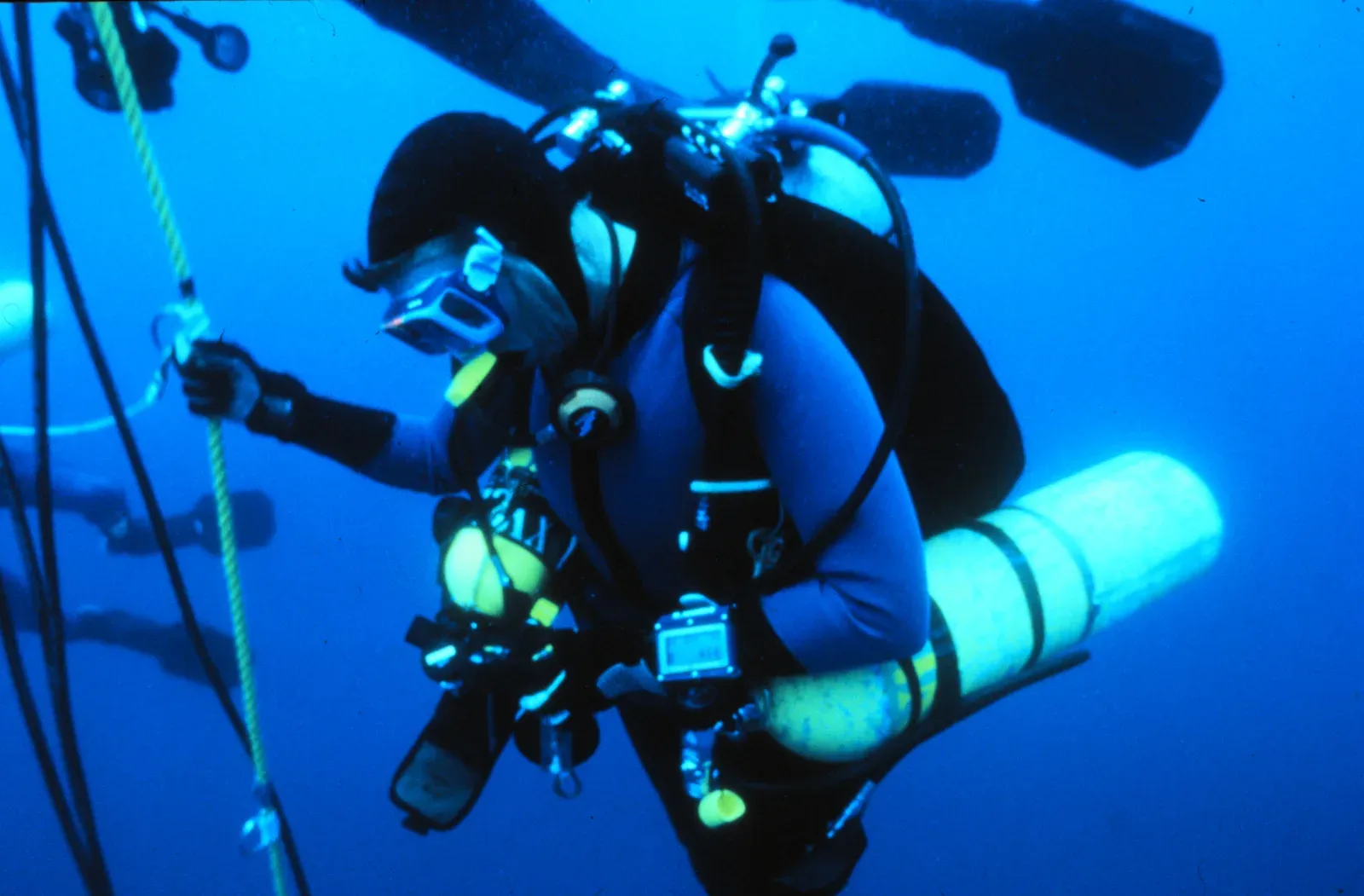
In this band the dive is planned around the ascent rather than the bottom. There is no direct route to the surface, the gas plan includes a reserve for someone else’s problem, and narcosis at 45 m is doing measurable damage to your judgement even if it does not feel like it.
Some of the best-known wrecks in the world live here. SMS Markgraf, the most involved of the Scapa Flow battleships, bottoms out at 45 m in cold, dark water. Okinawa’s USS Emmons, hit by five kamikaze aircraft in 1945, lies at 34 to 46 m in current fast enough that the depth commits the dive to planned decompression. Bikini’s USS Saratoga has her flight deck at 27 m and her hangar at 38, with the lagoon floor at 58, and the charters hang a decompression bar as standard. Sri Lanka’s HMS Hermes, the first purpose-built aircraft carrier, is at 53 m and is a designated war grave with 307 men lost aboard.
Two cold-water entries are worth singling out. Sweden’s Antares lies broken at 53 to 55 m with trucks, motorcycles and horse bones still in her holds, and divers have reported small drums aboard that may hold residual mustard gas — a diver account rather than a confirmed survey, which is its own reason for care. And the Cornelia B. Windiate sits upright in 56 m of cold Lake Huron fresh water with her masts still standing and her lifeboat on the bottom beside her, which makes her one of the most photographed wrecks in the world and, at that depth with standing rigging, one of the least forgiving.
| Site | Depth | Level | Best months |
|---|---|---|---|
| Nippo Maru Chuuk Lagoon · Micronesia | 15–46 m | Advanced | Nov–May |
| USNS Vandenberg Key West · United States | 12–45 m | Advanced | Apr–May |
| Bianca C Grenada · Grenada | 28–40 m | Advanced | Jan–Apr |
| SMS König Scapa Flow · United Kingdom | 25–40 m | Advanced | Jun–Aug |
| SMS Markgraf Scapa Flow · United Kingdom | 25–45 m | Advanced | Jun–Aug |
| SS Laurentic Malin Head · Ireland | 30–40 m | Advanced | Jun–Aug |
| USS Emmons Okinawa · Japan | 34–46 m | Advanced | Mar–May |
| MT Hephaestus Malta & Gozo · Malta | to 46 m | Advanced | Jun–Sep |
| Forest City Tobermory · Canada | 18–46 m | Advanced | Jul–Sep |
| Vrouw Maria Gulf of Finland · Finland | to 41 m | Advanced | Jun–Aug |
| RFA Darkdale St Helena · United Kingdom | to 45 m | Advanced | Dec–Mar |
| Black Jack B-17 Tufi · Papua New Guinea | to 45 m | Advanced | Apr–Jun |
| Le Donator Port-Cros & Îles d'Hyères · France | 35–51 m | Advanced | Jun–Sep |
| Le Grec Port-Cros & Îles d'Hyères · France | 35–47 m | Advanced | Jun–Sep |
| Ría de Vigo Illas Cíes & Ría de Vigo · Spain | 14–39 m | Advanced | Jun–Aug |
| Rosalie Moller Abu Nuhas & Gubal Strait · Egypt | 18–50 m | Advanced | Apr–Jun |
| Sophie Rickmers Pulau Weh · Indonesia | 37–45 m | Advanced | Oct–Apr |
| USS Saratoga Bikini Atoll · Marshall Islands | 27–38 m | Advanced | Apr–Nov |
| Ennerdale Wreck Seychelles · Seychelles | to 55 m | Advanced | Mar–Apr |
| Antares Bohuslän & Gullmarsfjord · Sweden | 53–55 m | Advanced | Jul–Sep |
| HMS Hermes Trincomalee & Kalpitiya · Sri Lanka | to 53 m | Advanced | Apr–Aug |
| Cornelia B. Windiate Thunder Bay · United States | to 56 m | Advanced | Jul–Sep |
| USS John Penn Iron Bottom Sound · Solomon Islands | 35–60 m | Advanced | Apr–Jun |
| Aida Wreck Brothers & Daedalus · Egypt | 15–45 m | Advanced | May–Jun |
Past 60 metres: the trimix ground
Below about 60 m air is no longer a sensible breathing gas, and everything on this list is done on helium mixes with staged decompression, surface support and a team. The dives are short, the run times are long, and the ships are extraordinary.
Ireland’s Malin Head holds three of them within a few miles of each other: the troopship Justicia at 70 m with her starboard anchor still in the hawse, the tanker Empire Heritage at about 70 with the Sherman tanks she was carrying scattered beside her, and the dreadnought HMS Audacious, upside down between 58 and 68 m with ‘B’ turret blown clear of the hull. All three need trimix and staged decompression; the Justicia additionally needs a state licence, because she is a national monument.
The Dardanelles holds the 1915 battleships — Irresistible at 65 m, Bouvet inverted at 68, HMS Triumph at 73 — dived with a park guide, treated as war graves, with the strait’s current on top of the depth. Croatia’s SMS Szent István lies upside down at 66 m, deteriorating fast enough that she is being surveyed by ROV. And in the warm water: the stern of the President Coolidge at 73 m in Vanuatu, and Chuuk’s San Francisco Maru, with Type 93 torpedoes still stowed in her holds, her stern at 64 m and the lagoon floor at 70.
| Site | Depth | Level | Best months |
|---|---|---|---|
| Corveta Ipiranga Fernando de Noronha · Brazil | to 62 m | Advanced | Aug–Oct |
| San Francisco Maru Chuuk Lagoon · Micronesia | 27–64 m | Advanced | Nov–May |
| HMS Irresistible Gallipoli · Turkey | to 65 m | Advanced | Jun–Sep |
| SMS Szent István Premuda · Croatia | to 66 m | Advanced | Jun–Sep |
| Bouvet Gallipoli · Turkey | to 68 m | Advanced | Jun–Sep |
| HMS Audacious Malin Head · Ireland | 58–68 m | Advanced | Jun–Aug |
| SS Justicia Malin Head · Ireland | to 70 m | Advanced | Jun–Aug |
| SS Empire Heritage Malin Head · Ireland | to 70 m | Advanced | Jun–Aug |
| The Stern Espiritu Santo · Vanuatu | to 73 m | Advanced | Apr–Nov |
| HMS Triumph Gallipoli · Turkey | to 73 m | Advanced | Jun–Sep |
| Numidia Wreck Brothers & Daedalus · Egypt | 8–40 m | Advanced | May–Jun |
What actually goes wrong
Depth is rarely the thing that hurts people. It is depth combined with something else.
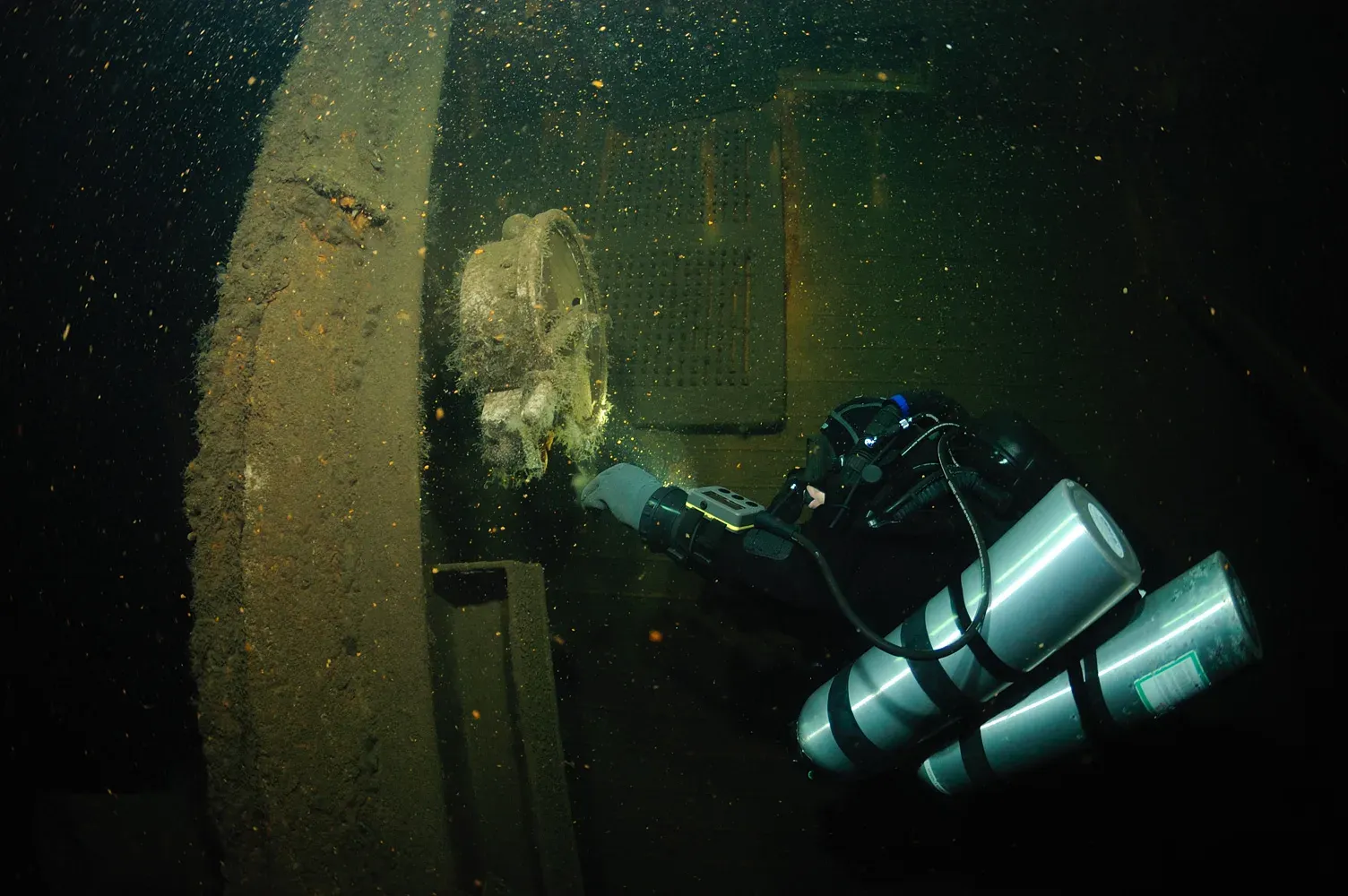
Penetration at depth. An overhead environment costs you the direct ascent; depth costs you the time to solve problems. Together they are the classic wreck fatality. At least eight diving deaths have been recorded on the Spiegel Grove since 2003, from medical emergencies and penetration incidents both, on a wreck whose top deck is at a benign 18 m.
Silt. Fine sediment inside a hull will take 20 m of visibility to nothing in seconds and it will do it behind you, where you cannot see it happening. The Rosalie Moller’s silt routinely cuts her usual 10 to 20 m to almost nothing.
Following the structure. See the section above. Every wreck on a slope is an invitation.
Rules you did not read. A surprising number of these ships are graves, monuments or both, and the restrictions are real: the Justicia needs a licence, the Vrouw Maria sits inside a protection zone under camera surveillance where even anchoring is forbidden, HMS Hermes and RFA Darkdale are war graves, and the US Navy still holds custody of the Emmons — divers who removed her data plate in 2010 caused a diplomatic problem, and a Naha dive shop publicly apologised in 2022 for photographs of divers touching her.
Getting there
The path from the first table to the last is longer than most divers expect and shorter than they fear. Deep training to 40 m, then a decompression procedures course, then helium: each step adds redundancy — twin cylinders or sidemount, two independent gas supplies, a reel and a lift bag, a backup computer — and each step adds a buddy who has done the same course.
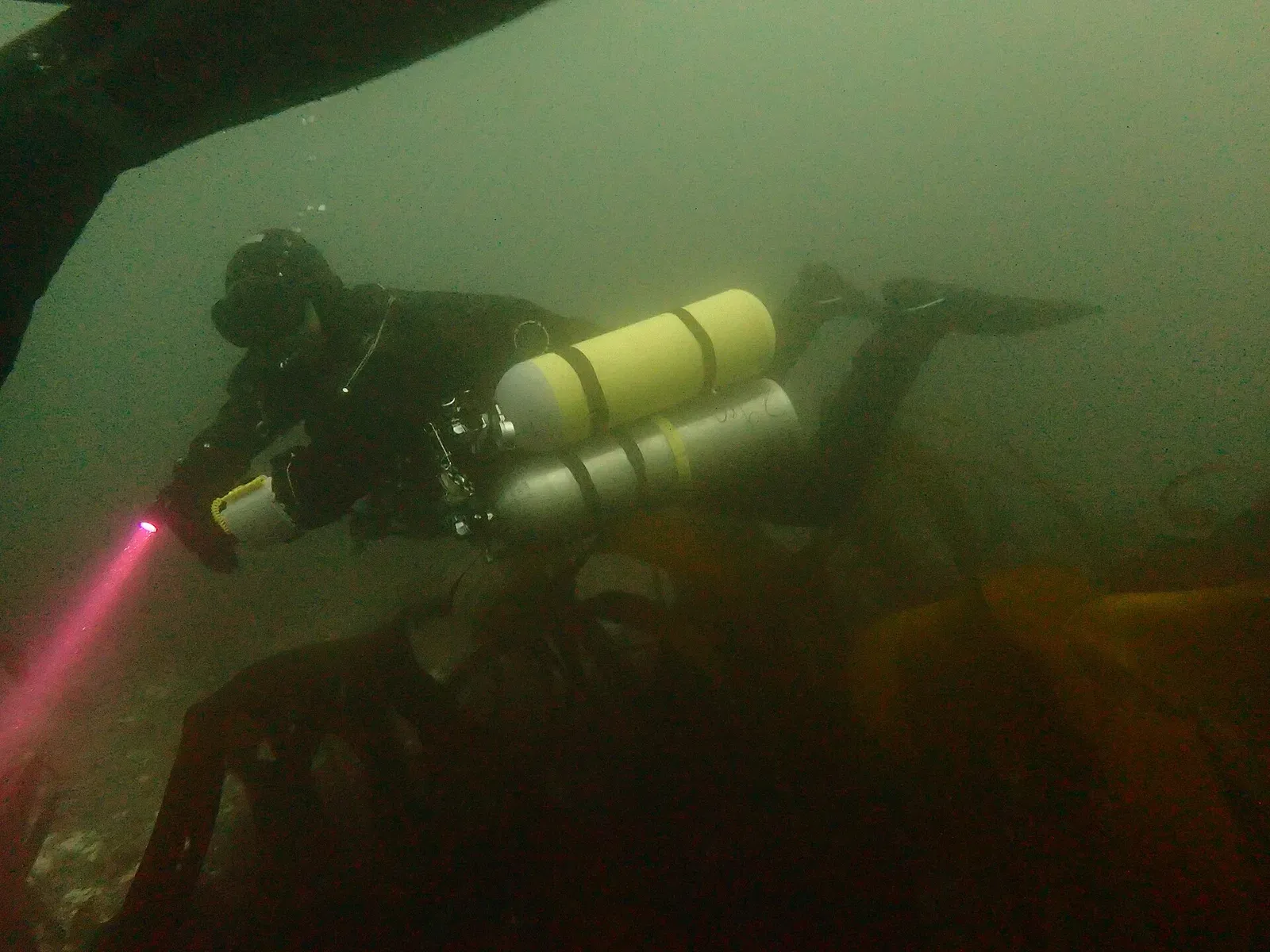
The best preparation is not a certification at all. It is diving the shallow end of deep wrecks, repeatedly, until you can hold a turn depth on a sloping hull without thinking about it. The Zenobia’s starboard rail, the Hermann Künne’s shallows and the Fujikawa Maru’s deck teach the same lesson the Numidia’s stern will test.