Tobermory · Canada · Wreck · Freshwater
James C. King
A split 1867 hull down a slope from 8 m to 28 m
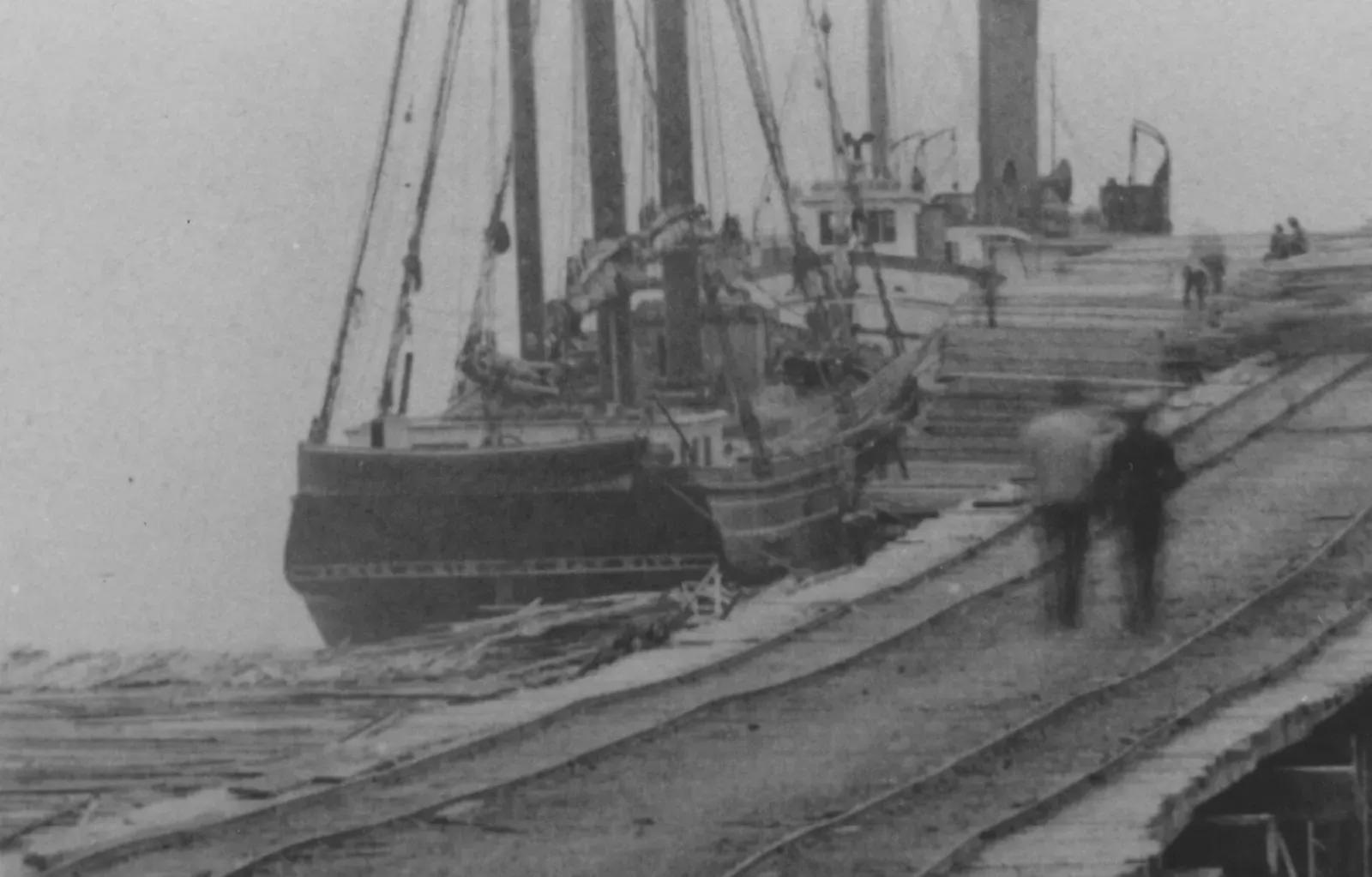
The James C. King went aground on Russel Reef in a November 1901 snowstorm while under tow of the W.L. Wetmore, and the 53.4 m hull now lies down a slope from 8 m to 28 m, split with the bow at the bottom and the keel at the top. A short swimthrough at the midpoint and that spread of depth give the wreck more shape than most of the shallow sites nearby.
Where it is and how deep
45.2678° N, 81.7091° WPublished position for this site.
Site maps published elsewhere
The dive
The wreck rests on a slope, and the split in the hull sorts the dive out for you: the bow lies at the bottom in 28 m, the keel at the top in about 8 m where she broke. Most divers take the mooring line to the deep end first and look at the bow while they still have the no-stop time for it, then work back up the slope with the wreckage as a handrail.
At the midpoint there is a short swimthrough — brief, and open at both ends, but still an overhead and worth treating as one. Higher up, in the shallower water near the mooring anchor block, the rudder and steering gear are the pieces most divers finish on, and at that depth the safety stop takes care of itself. Bass and salmon work the timbers.
The wreck
- Vessel
- James C. King
- Type
- Barque, converted to schooner in 1876
- Length
- 53.4 m (175 ft)
- Built
- 1867
- Sunk
- 1901
- Cause
- Ran aground on Russel Reef in a snowstorm while in tow of the W.L. Wetmore
- Lies
- Down a slope from 8 m to 28 m, split with the bow at the bottom and the keel at the top
The James C. King was built in 1867 at East Saginaw, Michigan as a barque and converted to a schooner in 1876. By 1901 she was working under tow: in November of that year she was behind the W.L. Wetmore, alongside the barge Brunette, running through Devil's Island Channel when heavy wind and snow cut the visibility and put the vessels on Russel Reef. The Wetmore's wreckage lies on the same reef in shallower water.
Marine life and season
- Freshwater fish
| Jan | Feb | Mar | Apr | May | Jun | Jul | Aug | Sep | Oct | Nov | Dec |
|---|---|---|---|---|---|---|---|---|---|---|---|
| Off-season | Off-season | Off-season | Off-season | Fair | Good | Good | Good | Good | Fair | Off-season | Off-season |
Season follows Tobermory: Public charters run May to October; the water is coldest in February and March and warmest in August.
Know before you go
- The 8 m to 28 m spread makes it easy to spend longer at the deep end than planned; set a turn depth and pressure before you get in.
- The swimthrough at the midpoint is a genuine overhead — leave it alone unless you are trained for it and carrying a light.
- Carry a light, SMB, compass and cold-water exposure protection; conditions here change quickly with wind direction.
Photos from James C. King
Francine Pallister · CC BY-SA 3.0
Dive videos
James C. King, Shipwreck- Tobermory, Ontario · Lee Miller on YouTube
Questions divers ask
How deep is the James C. King?+
The wreck runs from about 8 m at the top of the slope to 28 m at the bow, so it can be dived at either end — the deep half is an advanced dive, the shallow half is not.
Is there a swimthrough on the James C. King?+
Yes, a short one at the midpoint of the wreck where the hull split. It is brief, but it is still an overhead environment and is best left alone without the training and a light.
Sources
- James C. King dive site — Dive Life Tobermory
- Tobermory Dive Sites — Dive Life Tobermory
- Fathom Five National Marine Park — Wikipedia
Photo credits
- Black-and-white photograph of the three-masted schooner James C. King under sail by Unknown authorUnknown author, Public domain, via Wikimedia Commons
- Rocky Bruce Peninsula shoreline overlooking Russel and Devils Island in Georgian Bay by Francine Pallister, CC BY-SA 3.0, via Wikimedia Commons
More dive sites in Tobermory
Bowsprit still extending from an 1852 hull at 32 m
Wreck
A 1940 Lunenburg schooner scuttled for divers at 17 m
Wreck
A steamer down a slope from 18 m to an intact stern at 46 m
Wreck
A 55.5 m sand dredge scuttled for divers in 1999
An 1867 schooner hull still intact in 6 m of harbour water
Wreck
Steamer machinery scattered in 9 m, shallow enough to snorkel
Similar dives elsewhere

A tug broken in two by her own fuel tanks, at 29 m off Brockville
Steam-barge machinery off Grand Island, with game fish around it


Three moorings: bow, stern and amidships at the crack in the hull
Twin propellers at the shot line, then the length of an upturned keel