Tobermory · Canada · Wreck · Freshwater
Arabia
Bowsprit still extending from an 1852 hull at 32 m
The Arabia is the deep prize of Fathom Five: a three-masted sailing vessel of 1852 that foundered off Echo Island in a gale in 1884 and now lies at 32 m with her bow and bowsprit still extending into the water ahead of her. The wheel, windlass, anchors, centreboard trunk and steering gear are all still recognisable, and the dive itself is short and demanding.
Where it is and how deep
45.3120° N, 81.6733° WPublished position for this site.
Site maps published elsewhere
The dive
The descent runs to 32 m, and bottom time at that depth is short, so most divers pick one half of the wreck and stay with it. The hull is very intact, and the first thing most head for is the bow, with the bowsprit still extending out into the waters of Georgian Bay ahead of it — the single image the wreck is known for.
Working aft along the collapsed deck brings you past the windlass and the anchors and on to the centreboard trunk and the two masts lying with the wreckage. The wheel and the steering mechanism are still recognisable towards the stern, where the hull is split and broken rather than intact. Currents here can run strong, so descents and ascents are normally run on the line rather than free in open water.
The wreck
- Vessel
- Arabia
- Type
- Three-masted sailing vessel (barque or barkentine)
- Length
- 40.1 m (132 ft)
- Built
- 1852
- Sunk
- 1884
- Cause
- Caught by gale-force winds carrying corn from Chicago to Midland and foundered off Echo Island
- Lies
- Hull intact with the bow and bowsprit extending forward; deck collapsed and the stern split
Built at Kingston, Ontario in 1852, the Arabia had a long career marked by multiple groundings and repairs. In October 1884 she left Chicago for Midland carrying 20,290 bushels of corn, was hit by gale-force winds and foundered off Echo Island. How she was rigged is still recorded two ways: the local dive record calls her a barkentine, the park's shipwreck list a three-masted barque.
Marine life and season
- Freshwater fish
| Jan | Feb | Mar | Apr | May | Jun | Jul | Aug | Sep | Oct | Nov | Dec |
|---|---|---|---|---|---|---|---|---|---|---|---|
| Off-season | Off-season | Off-season | Off-season | Fair | Good | Good | Good | Good | Fair | Off-season | Off-season |
Season follows Tobermory: Public charters run May to October; the water is coldest in February and March and warmest in August.
Know before you go
- Current can run strong over the wreck and conditions change quickly with wind direction, so descents and ascents are usually run on the line.
- At 32 m in cold fresh water the no-stop time is short; a drysuit, a redundant light and honest gas planning are standard on this site.
- The deck has collapsed and the stern is split and broken — treat the openings as an overhead environment and stay out unless you are trained for it.
Dive videos
Arabia Wreck Dive - Tobermory, ON. · cgeorge420 on YouTube
Freediving The Arabia Shipwreck | 37m/120ft dive Tobermory · Androopr Freediving on YouTube
Questions divers ask
How deep is the Arabia wreck in Tobermory?+
She lies at 32 m, and the operator rates the site Advanced and warns of strong currents. That depth in cold fresh water keeps bottom times short and makes an Advanced card and cold-water experience the practical minimum.
What is there to see on the Arabia?+
The bow and bowsprit are the wreck's signature. Along the hull you pass the windlass, the anchors, the centreboard trunk, two masts, and the wheel and steering mechanism, with the deck collapsed and the stern split open.
Sources
- Arabia dive site — Dive Life Tobermory
- Tobermory Dive Sites — Dive Life Tobermory
- Fathom Five National Marine Park — Wikipedia
Photo credits
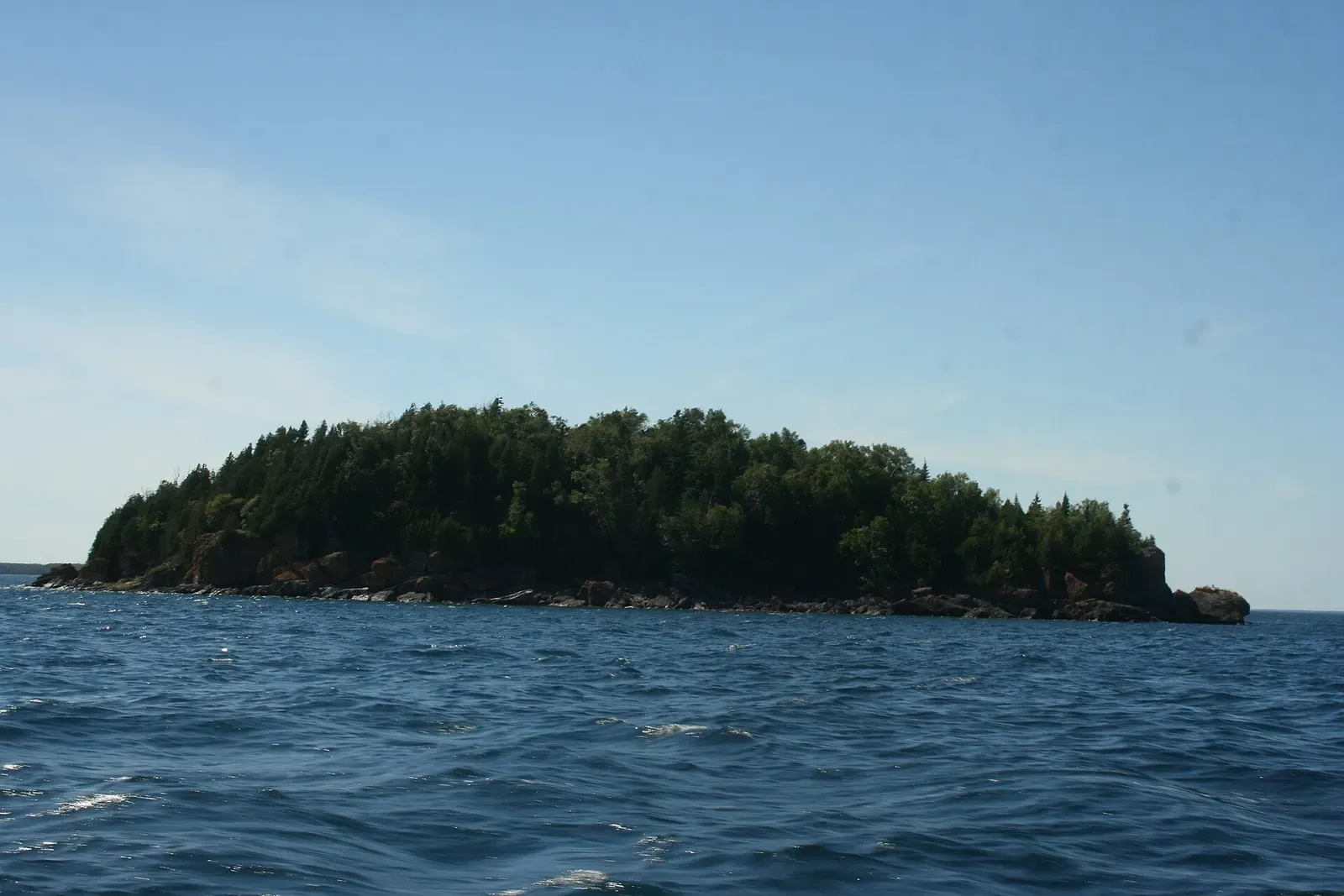
- Echo Island's tree-lined shoreline seen from a boat crossing Georgian Bay by Robert Taylor from Stirling, ON, Canada, CC BY 2.0, via Wikimedia Commons
In The Logbook
- Cold-water diving: is it worth the drysuit?Cold water · 8 min read
- Freshwater diving: lakes, springs and quarriesFreshwater · 15 min read
More dive sites in Tobermory
Wreck
A 1940 Lunenburg schooner scuttled for divers at 17 m
Wreck
A steamer down a slope from 18 m to an intact stern at 46 m
A split 1867 hull down a slope from 8 m to 28 m
Wreck
A 55.5 m sand dredge scuttled for divers in 1999
An 1867 schooner hull still intact in 6 m of harbour water
Wreck
Steamer machinery scattered in 9 m, shallow enough to snorkel
Similar dives elsewhere

A tug broken in two by her own fuel tanks, at 29 m off Brockville
Steam-barge machinery off Grand Island, with game fish around it
.jpg)
Three moorings: bow, stern and amidships at the crack in the hull
Twin propellers at the shot line, then the length of an upturned keel