Tufi · Papua New Guinea · Reef · Wall
Cyclone Reef
Walls from 7 m to beyond 40 m under a seabird island
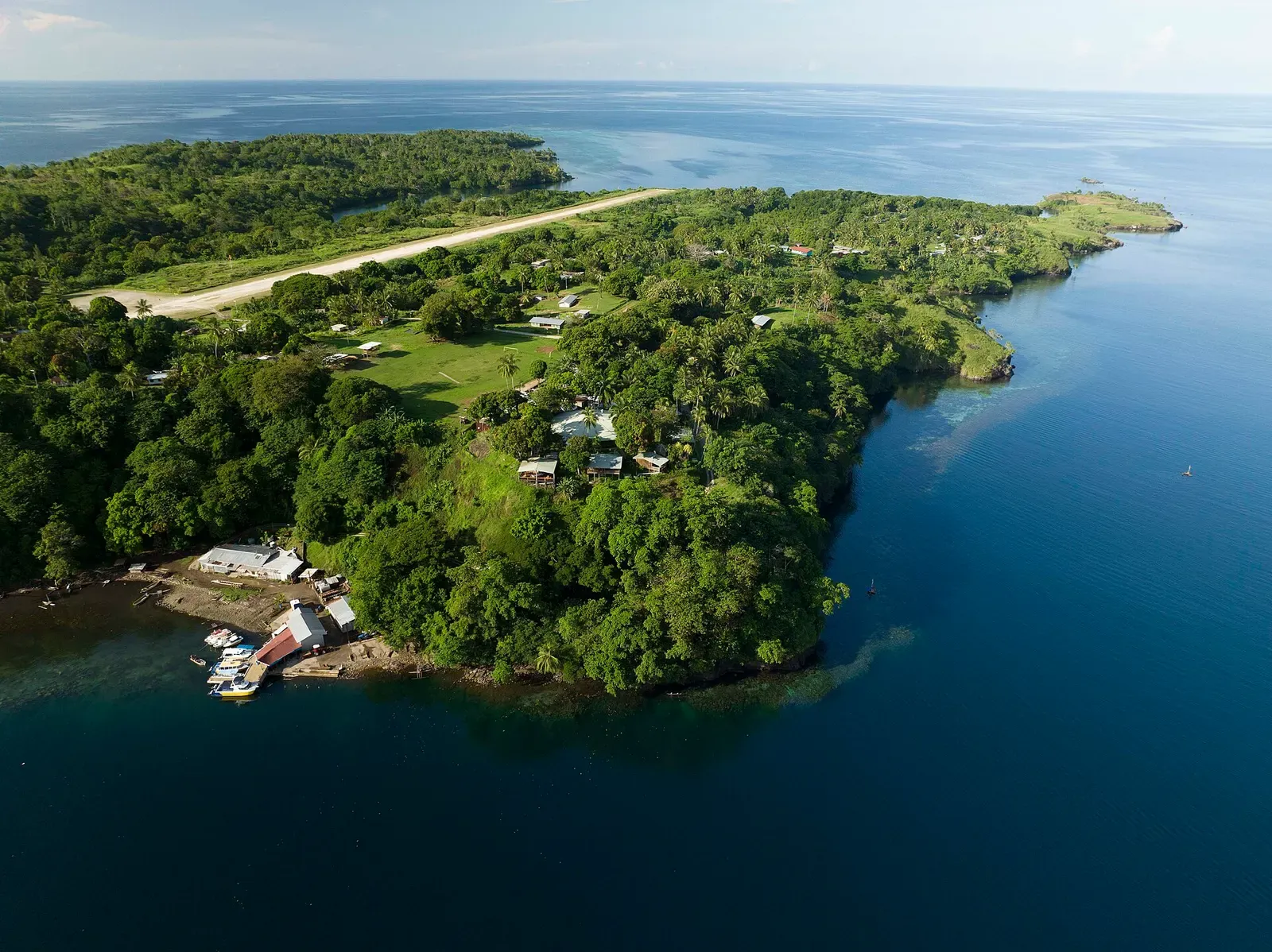
Area photo: Larry V. Dumlao · CC BY-SA 4.0
Cyclone Reef lies about 15 km southeast of Tufi and holds three distinct dive sites: a wall that starts at 7 m and drops beyond 40 m, a bommie whose top is at 5 m, and nearly a kilometre of sheer outer wall. The small island on the reef was piled up out of broken coral by the 1972 cyclone, and its lee shelters both the boat's mooring and the coral growing behind it.
Where it is and how deep
9.1789° S, 149.4135° EApproximate position — the dashed circle shows where the site lies; your operator's briefing has the mooring.
The dive
The run out is about 15 km southeast of Tufi, past the wartime dive sites, and it happens on the days the sea allows. What waits at the end is not one dive but three: the resort counts three distinct sites on this reef. The wall is the headline of them. It begins at 7 m and drops vertically to beyond 40 m, then slopes away past the limit of visibility, with hard and soft corals and lichens on the face and nudibranchs of every size scattered across it.
The bommie sits off to one side, its far wall perpendicular and cut with swim-throughs and deep caves. Turtles are usually on it and unbothered by divers, tropical reef fish work the coral, and hammerheads occasionally come up out of the deep to look at whoever is there. The top of the bommie is at 5 m, which makes the safety stop a dive in itself; patient searchers sometimes turn up the rare Rhinopias, a scorpionfish relative that sheds its skin every twelve to thirteen weeks.
The outer wall is the long one, sheer and overhung for nearly a kilometre. The way it is dived is to level off at 20-plus metres and run half a tank along it, then come back at a shallower level with air left to spend on the reef top, where hawksbill and green turtles hang about and brain corals reach up to just under the surface. The island above all this was formed from broken coral in the 1972 cyclone and is now a seabird breeding ground.
Marine life and season
- Sea turtles
- Nudibranchs
- Hammerheads
- Macro critters
| Jan | Feb | Mar | Apr | May | Jun | Jul | Aug | Sep | Oct | Nov | Dec |
|---|---|---|---|---|---|---|---|---|---|---|---|
| Fair | Fair | Good | Prime | Prime | Prime | Good | Good | Good | Prime | Prime | Good |
Season follows Tufi: Apr–Jun and Oct–Dec are calmest for the offshore reefs; the fjords stay divable year-round whatever the weather does.
Know before you go
- The wall runs past 40 m and then slopes out of sight, so depth creeps up on you: set a turn depth before you drop and watch gas over the drop-off.
Dive videos
Tufi Cyclone Reef · Rory Veevers-Carter on YouTube
Questions divers ask
How deep is Cyclone Reef?+
It depends which of the three sites you dive. The wall starts at 7 m and falls beyond 40 m, the outer wall is usually run at 20-plus metres, and the bommie tops out at 5 m, shallow enough to spend a safety stop on.
Sources
- Reef Diving — Tufi Resort
- Tufi — Wikivoyage
More dive sites in Tufi
Wreck
A near-intact Flying Fortress on white sand at 45 m
Wreck
A 99 m wartime steamship at 49 m, found in 1986
Muck & macro
Wartime scrap, a dumped Land Rover and mandarinfish under one jetty
Similar dives elsewhere
A drop-off 80 m off the beach, from under 2 m to past 40 m
A wide shield reef with the wall starting at 5–7 m
Table corals from 3 m down to 40, and nudibranchs on all of it


An easy north-coast reef on the Napaling and Doljo road trip