South America · Brazil
Alcatrazes Archipelago
A refuge closed to divers for three decades, reopened in December 2018
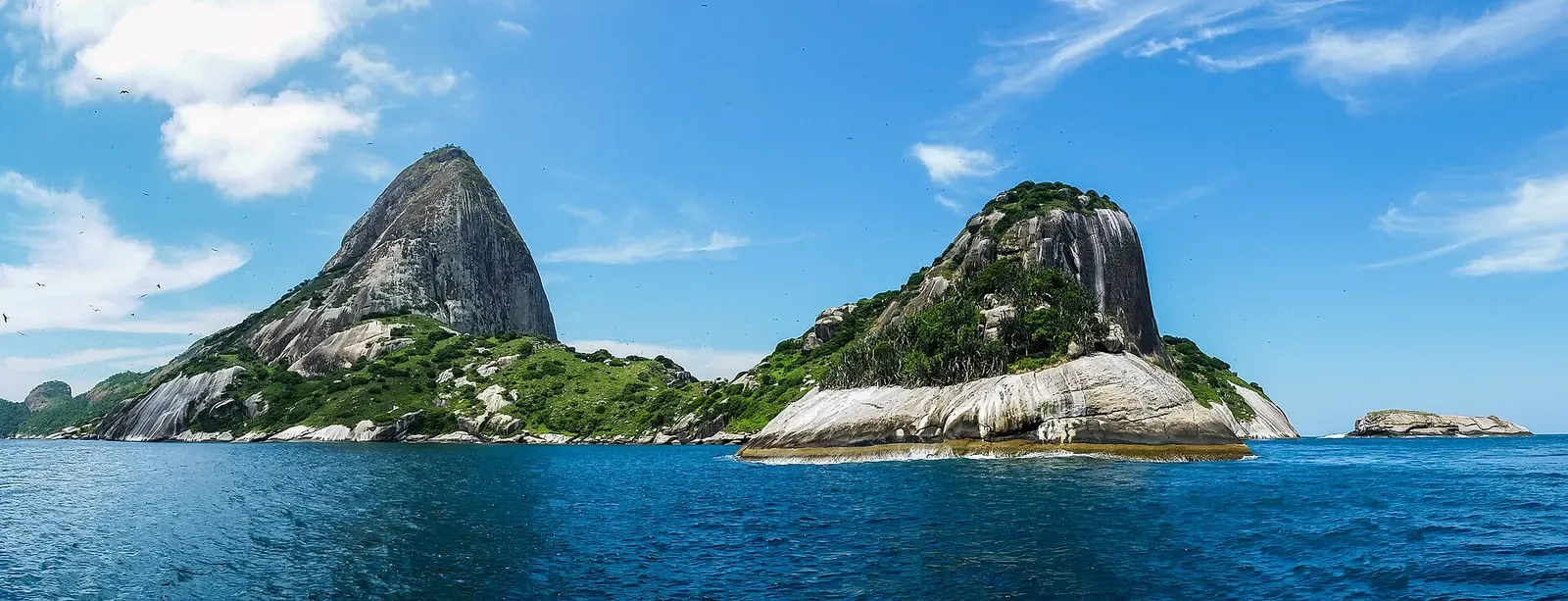
Photo: Marcos Simanovic · CC BY-SA 3.0
Alcatrazes is an island wildlife refuge about 40 km off the São Paulo coast, closed to divers for more than three decades and reopened in December 2018. Authorised boats from Ilhabela moor at numbered buoys in Saco do Funil and Portinho, where rocky reef with brain coral, turtles and nudibranchs runs from 4 to 30 m. The open-sea Parcel das 5 milhas drops to 60 m for technical divers when the swell stays under a metre.
About diving in Alcatrazes Archipelago
A dive day here is long. Boats leave Ilhabela, where the dive centres that run the trip are based, and the islands sit about 45 km away, a crossing of two to three hours each way depending on the sea. Nobody lands on the islands, so the whole day runs from the deck, with dives made from numbered moorings in Saco do Funil and Portinho. Departures are confirmed only once enough divers have booked and the forecast allows.
The ground is rocky shore covered in algae and coral, with colourful reef fish, turtles, nudibranchs, anemones, crabs, shrimps and urchins. Granite walls with large boulders form valleys grown over with algae and bryozoans, where passing fish, big schools and larger species gather. One site holds the densest brain coral cover in the archipelago, and at Farol large anemones of many colours sit on the sand at the foot of the rock.
The sheltered moorings suit a wide range of divers, from try-dives at Baba de Boi to medium-difficulty sites reaching 30 m; Farol, an exposed mooring in Portinho, runs from 10 to 25 m. Parcel das 5 milhas is a different undertaking: open sea from 8 to 60 m, strong currents and no mooring, so boats drift above the divers, and it runs only when the swell stays under 1 m.
Best time to dive Alcatrazes Archipelago
| Jan | Feb | Mar | Apr | May | Jun | Jul | Aug | Sep | Oct | Nov | Dec |
|---|---|---|---|---|---|---|---|---|---|---|---|
| Good | Prime | Prime | Prime | Fair | Fair | Fair | Fair | Fair | Good | Good | Good |
October to April is the better half of the year; February to April brings calmer sea and weaker currents, and September the coldest water.
Dive types & marine life
Turtles, nudibranchs, anemones and colourful reef fish are the regular sightings on the rocky reef, with big schools and larger fish along the granite walls. Brain coral (Mussismilia hispida) covers parts of the rock, so fins and hands stay well off the bottom.
- Reef
- Wall
- Sea turtles
- Nudibranchs
- Reef fish swarms
Best dive sites in Alcatrazes Archipelago
- 1
Parcel das 5 milhas
Open-sea granite walls and boulders from 8 to 60 m with strong currents, dived only when swell is under 1 m.
- 2
Farol – Poita 16
Exposed Portinho mooring, 10–25 m, with large anemones of many colours on the sand.
- 3
Raia – Poita 8
Saco do Funil mooring sheltered from the southwest wind, 4–30 m, of medium difficulty.
- 4
Badejo Quadrado – Poita 9
Portinho mooring sheltered from the east wind, 4–25 m, of medium difficulty.
- 5
Jardim de Corais – Poita 10
Portinho mooring sheltered from the east wind, rocky reef from 4 to 20 m.
Site guides
The refuge's low-difficulty mooring, shallow enough for try-dives
Portinho mooring out of the east wind, reef and walls to 25 m
Reef
The exposed mooring, with walls and boulders from 10 to 25 m
The densest brain coral cover in the Alcatrazes archipelago
Open-sea granite walls to 60 m with big schools and strong current
Reef
Reef, walls and a cave on one mooring, from 4 to 30 m
How to get to Alcatrazes Archipelago
The closest major airports are São Paulo Guarulhos (GRU) and Congonhas (CGH). From there the route runs by road to São Sebastião and across to Ilhabela, where the operators are based; the archipelago is a two- to three-hour boat ride beyond.
Photos from Alcatrazes Archipelago
Saul.grinberg · CC BY-SA 4.0
Marcos Simanovic · CC BY-SA 3.0
Saul.grinberg · CC BY-SA 4.0
Dive videos
(INÉDITO) Mergulho em Alcatrazes: O 1º Mergulho Noturno da História · Dive Lovers on YouTube
Arquipélago de Alcatrazes - Episódio 16 · Mar Sem Fim on YouTube
Questions divers ask
What certification does Alcatrazes diving need?+
The sheltered moorings suit a wide range of divers, with medium-difficulty sites reaching 30 m. Parcel das 5 milhas, to 60 m, is for technical divers and runs only when the swell stays under 1 m.
How long is the boat ride to Alcatrazes from Ilhabela?+
The crossing takes two to three hours each way depending on the sea. Nobody lands on the islands, and departures are confirmed only once enough divers have booked and the forecast allows.
When is the best season to dive Alcatrazes?+
October to April is the better half of the year, and February to April brings calmer sea and weaker currents. Water runs from 18 to 24 °C over the year, coldest in September.
Is Alcatrazes open to divers?+
Alcatrazes is a wildlife refuge that was closed to divers for more than three decades and reopened in December 2018. Authorised boats from Ilhabela moor at numbered buoys in Saco do Funil and Portinho.
Sources
- Alcatrazes - Narwhal — Narwhal Mergulho
- Rosa do Mar Mergulho — Rosa do Mar Mergulho
- Ilha do Farol - Alcatrazes — Dive Champ
- Diving Ilhabela — PADI
- Arquipélago de Alcatrazes: novo ponto de mergulho e turismo náutico — ilhabela.com.br
- Saco do Funil - Alcatrazes — Scubago
Photo credits
- Rocky granite islands of the Alcatrazes archipelago with forested slopes and pale bare rock above deep blue sea by Marcos Simanovic, CC BY-SA 3.0, via Wikimedia Commons
- Distant view of Alcatrazes island with its twin rocky peaks across calm turquoise sea from a boat by Saul.grinberg, CC BY-SA 4.0, via Wikimedia Commons
- Steep rounded granite islet with patches of green vegetation rising from blue water by Marcos Simanovic, CC BY-SA 3.0, via Wikimedia Commons
- Small rocky islet topped by a white lighthouse structure with seabirds flying overhead by Saul.grinberg, CC BY-SA 4.0, via Wikimedia Commons
Embed
Run a dive centre, club or blog? Embed this map of 10 dive sites near Alcatrazes Archipelago on your own page.
Similar destinations
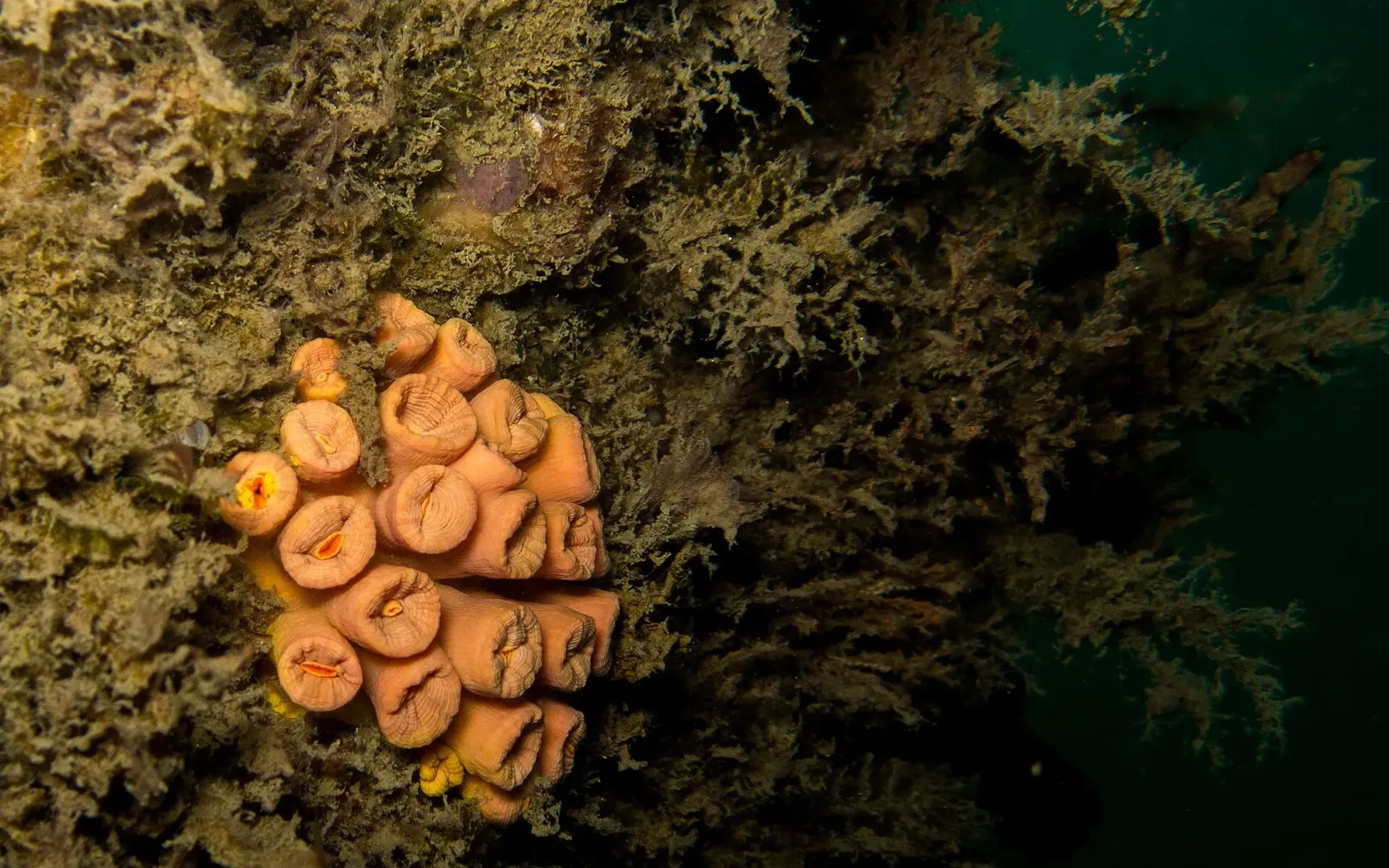
Historic steamer wrecks and a no-fishing islet worked by six island dive centres
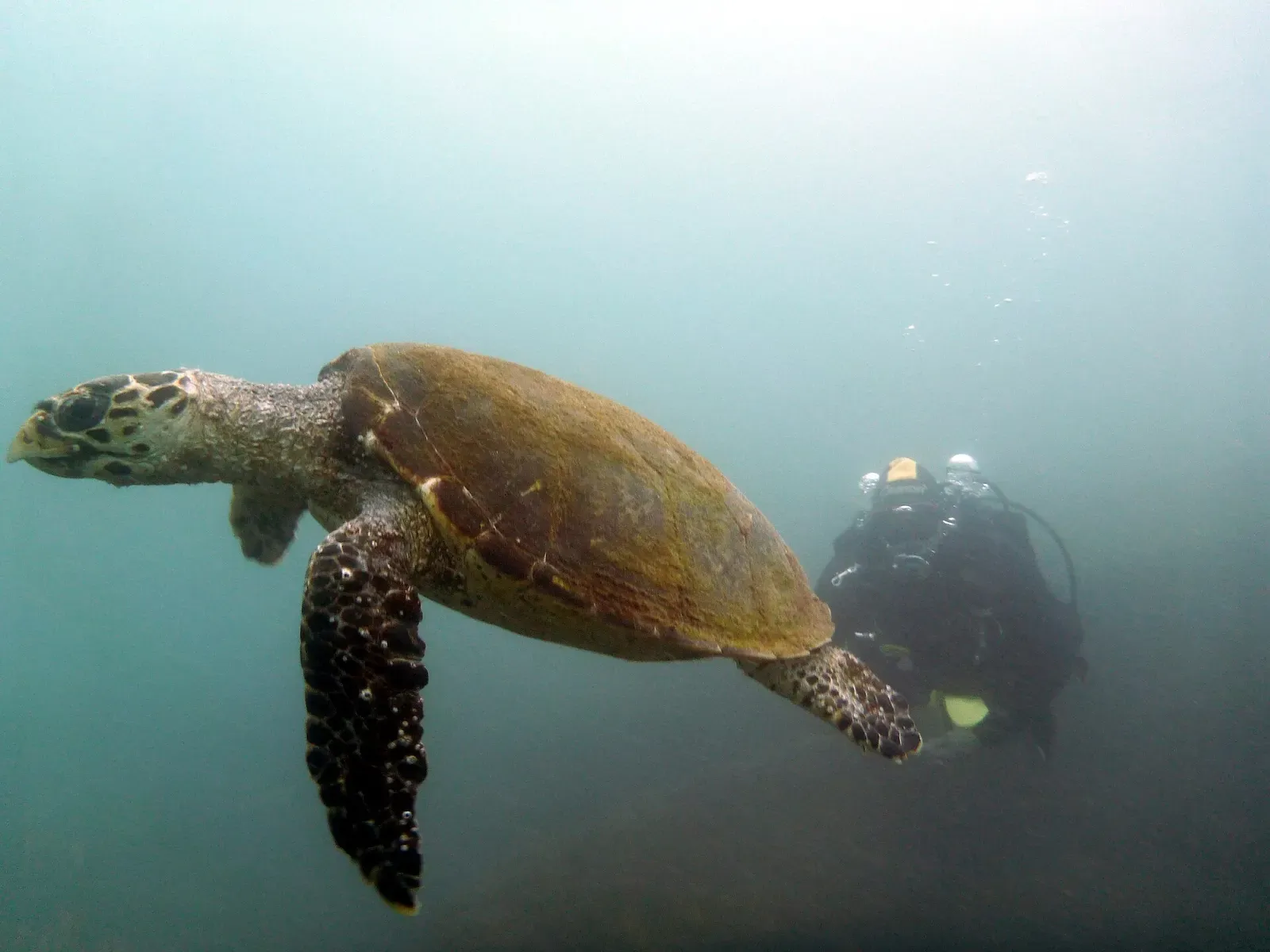
Cold upwelling packs granite walls with fish an hour from Rio

Granite reefs where tropical and temperate species overlap


Divers swim among and inside chapeirões, Brazil's mushroom-shaped coral towers.