Ambon · Indonesia · Muck & macro · Sand slope
Rhino City
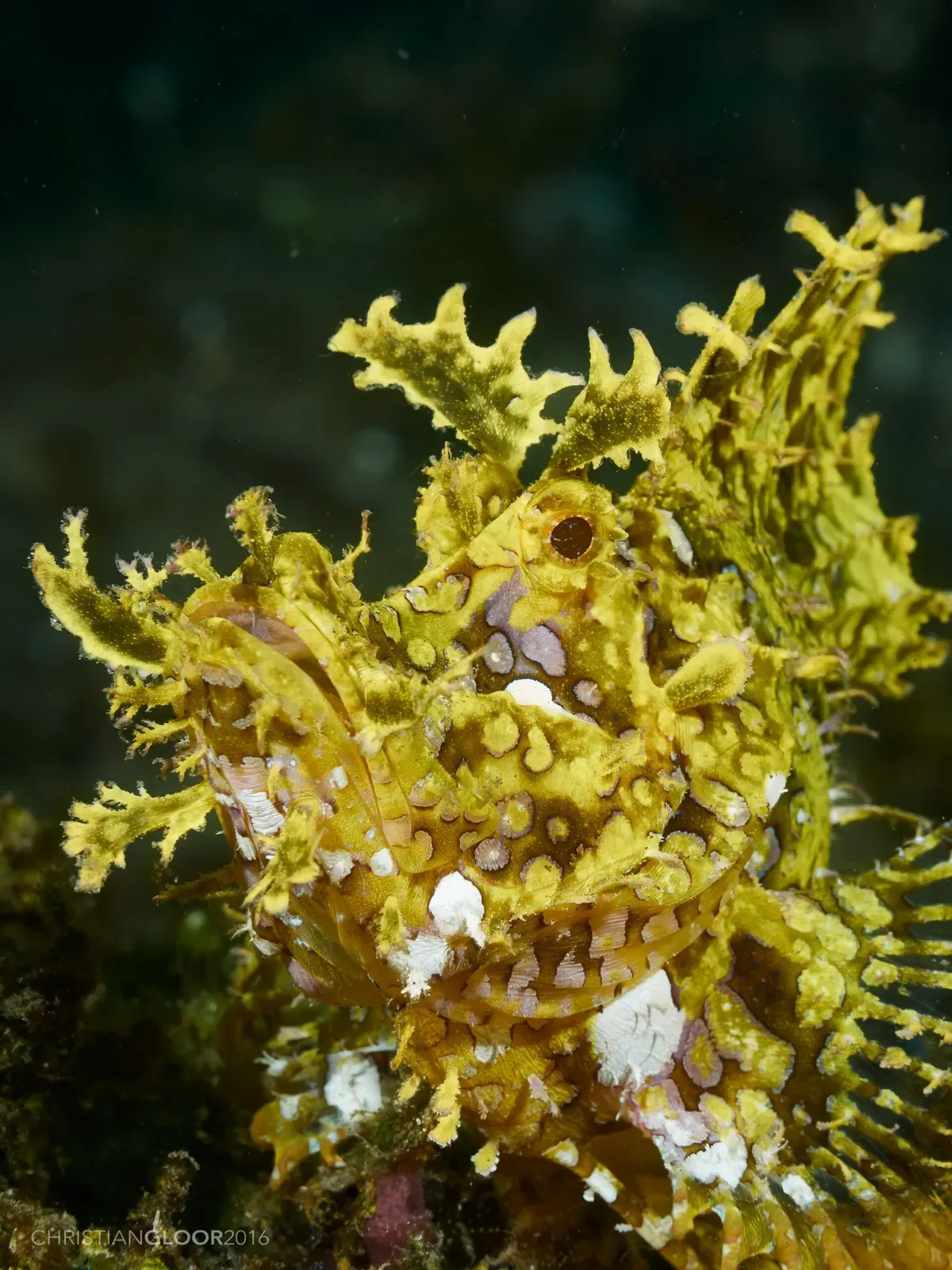
Named for the rhinopias on the sand slope west of Laha
Photo: Christian Gloor from Wakatobi Dive Resort, Indonesia · CC BY 2.0
Rhino City is the continuation of the Laha slope directly to the west, and it is named after the rhinopias, the rare cryptic weedy scorpionfish found on it. Carpet and bulb-tentacle anemones are dotted across the sand, and the guide works between them for shrimps, crabs, ribbon eels and ghost pipefish rather than covering ground.
Where it is and how deep
3.7082° S, 128.1016° EApproximate position — the dashed circle shows where the site lies; your operator's briefing has the mooring.
The dive
The site lies directly to the west of Laha and is an extension of the same sandy slope, so it is dived the same way: in over the shallows, then a slow traverse while the guide checks patches he already knows. The slope is dotted with anemones, usually carpet or bulb-tentacle varieties, each home to the local anemonefish — black and white striped with pale yellow on the belly — and each worth a stop for the anemone shrimps and porcelain crabs living among the tentacles.
Ribbon eels burrow close to the anemones, and the sand around them holds commensal and emperor shrimps, arrow crabs, hairy crabs and orang-utan crabs, jawfish cleaning debris out of their burrows, and robust ghost pipefish and short-snout pipefish over the sea grasses. Most of the dive is spent in the shallows searching for nudibranchs, moray eels and dragonets. Visibility is 5 to 15 metres and the current gentle, though it can occasionally run strong.
Marine life and season
- Macro critters
- Nudibranchs
| Jan | Feb | Mar | Apr | May | Jun | Jul | Aug | Sep | Oct | Nov | Dec |
|---|---|---|---|---|---|---|---|---|---|---|---|
| Good | Good | Prime | Prime | Fair | Fair | Fair | Fair | Good | Prime | Prime | Good |
Season follows Ambon: Oct–Apr is the main season; June to August brings wind and rain that make the outer sites rough, though the bay stays divable.
Know before you go
- The bottom is fine sand: one careless fin stroke clouds it and ends the search for everyone behind you, so stay horizontal and off the slope.
Photos from Rhino City
Christian Gloor from Wakatobi Dive Resort, Indonesia · CC BY 2.0
Christian Gloor from Wakatobi Dive Resort, Indonesia · CC BY 2.0
Christian Gloor from Wakatobi Dive Resort, Indonesia · CC BY 2.0
Dive videos
Muck dive in Rhino City - Ambon - Maluku Islands - Indonesia · Lolo viajero y buzo on YouTube
Questions divers ask
How is Rhino City different from Laha?+
It is the same sandy slope, directly west of the Laha sites, and it is dived in the same slow way. It takes its name from the rhinopias found here, and its other draw is anemone life — anemone shrimps, porcelain crabs, commensal and emperor shrimps — alongside ribbon eels, ghost pipefish, dragonets and nudibranchs.
Sources
- Ambon Dive Sites — Dive The World
- OpenStreetMap: Laha, Ambon — OpenStreetMap
Photo credits
- A yellow weedy scorpionfish with frilly, leaf-like skin appendages resting motionless. by Christian Gloor from Wakatobi Dive Resort, Indonesia, CC BY 2.0, via Wikimedia Commons
- Close-up of a striped bumblebee shrimp gripping a soft coral branch. by Christian Gloor from Wakatobi Dive Resort, Indonesia, CC BY 2.0, via Wikimedia Commons
- A bright yellow and black striped nudibranch crawling along a pink whip coral. by Christian Gloor from Wakatobi Dive Resort, Indonesia, CC BY 2.0, via Wikimedia Commons
- A red-striped clingfish perched on the feathery arm of a crinoid. by Christian Gloor from Wakatobi Dive Resort, Indonesia, CC BY 2.0, via Wikimedia Commons
In The Logbook
- The best muck diving in the worldMacro & muck · 6 min read
More dive sites in Ambon
Cave & cavern
A skylight hole lights the chamber at 12 metres
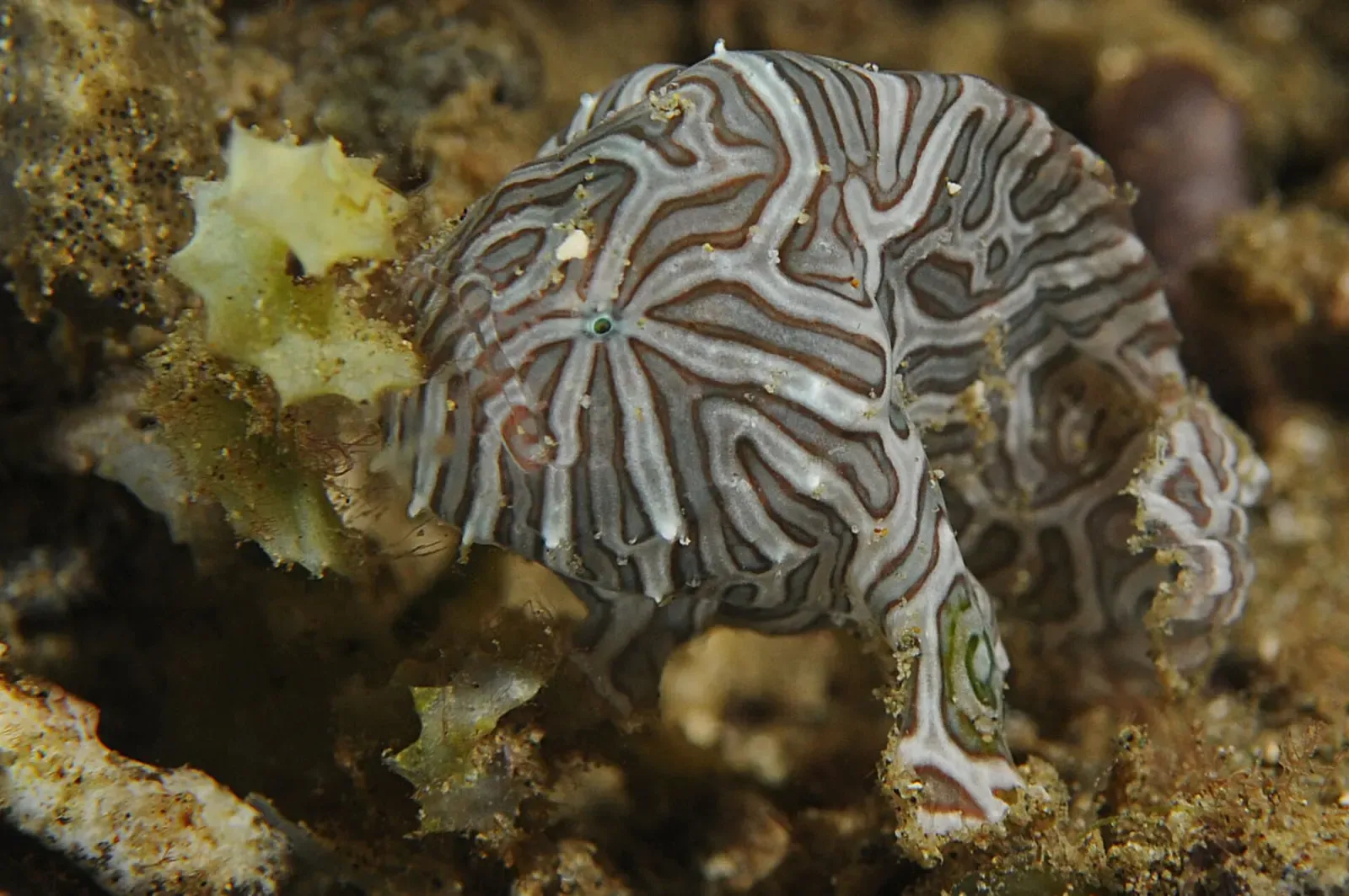
Where the holotype of the psychedelic frogfish was collected in 2008
Wall
A wall past 30 m below the city-gate arch
Similar dives elsewhere

Crocodilefish and leaf scorpionfish frozen against the rubble

Coral-grown structures at nine metres, dived for shrimp and nudibranchs

Shallow sand and boulders in 5 to 10 m, minimal current

.jpg)
.jpg)
.jpg)
.jpg)
Black sand to 20 metres with regular rhinopias sightings