
Mabul & Kapalai · Malaysia · Muck & macro · Sand slope
Crocodile Lair
Crocodilefish and leaf scorpionfish frozen against the rubble
Area photo: Bernard DUPONT from FRANCE · CC BY-SA 2.0
Kapalai's ambush-predator site, named for the crocodilefish that lie on the bottom looking like odd-shaped rocks. It is a 14-metre dive over sand, small coral bommies and rubble, worked slowly for leaf scorpionfish, moray eels, blue-spotted stingrays and the robust ghost pipefish that cling to crinoids in the shallows.
Where it is and how deep
4.2266° N, 118.6837° EApproximate position — the dashed circle shows where the site lies; your operator's briefing has the mooring.
The dive
Descend to around 14 metres and move slowly. The site is a gentle sandy slope scattered with small coral bommies and rubble patches, perfect hunting grounds for ambush predators, and everything on it is built to be overlooked. That odd-shaped rock with the whiskered jaw is a crocodilefish, frozen mid-stalk — the well-camouflaged fish, rather than any estuarine reptile, is what the name refers to.
Look closer at the sandy patches and leaf scorpionfish are rocking gently with the surge, their tasselled fins almost indistinguishable from debris; it usually takes a second pass over the same patch before your eye separates them out. Moray eels peer from crevices, blue-spotted stingrays glide just ahead of your fins, and the shallows hold the real prize — several pairs of robust ghost pipefish, often pale pink or yellow, clinging to crinoids.
Night dives here are a different site again: hermit crabs marching across the sand, parrotfish asleep in the bommies and, with luck, the slow deliberate hunt of a Spanish dancer. Nothing about the place rewards speed in daylight or dark — work one patch of bottom at a time rather than trying to cover ground.
Marine life and season
- Macro critters
- Stingrays
- Nudibranchs
| Jan | Feb | Mar | Apr | May | Jun | Jul | Aug | Sep | Oct | Nov | Dec |
|---|---|---|---|---|---|---|---|---|---|---|---|
| Good | Good | Prime | Prime | Prime | Prime | Prime | Prime | Prime | Prime | Good | Good |
Season follows Mabul & Kapalai: Diveable year-round with little seasonal variation; muck subjects are present in all months.
Know before you go
- Scorpionfish and crocodilefish sit motionless on the bottom and are easy to kneel or push off on; hover clear of the sand rather than touching down.
Sources
- Diving Sites Malaysia - Kapalai — Dive The World
- Sipadan Kapalai Dive Resort — OpenStreetMap
More dive sites in Mabul & Kapalai
Reef
Resident turtles around an old wooden boat wreck
Sand slope
Hundreds of garden eels swaying over an open sand flat
Muck & macro
Frogfish and flamboyant cuttlefish on rubble inside 10 metres
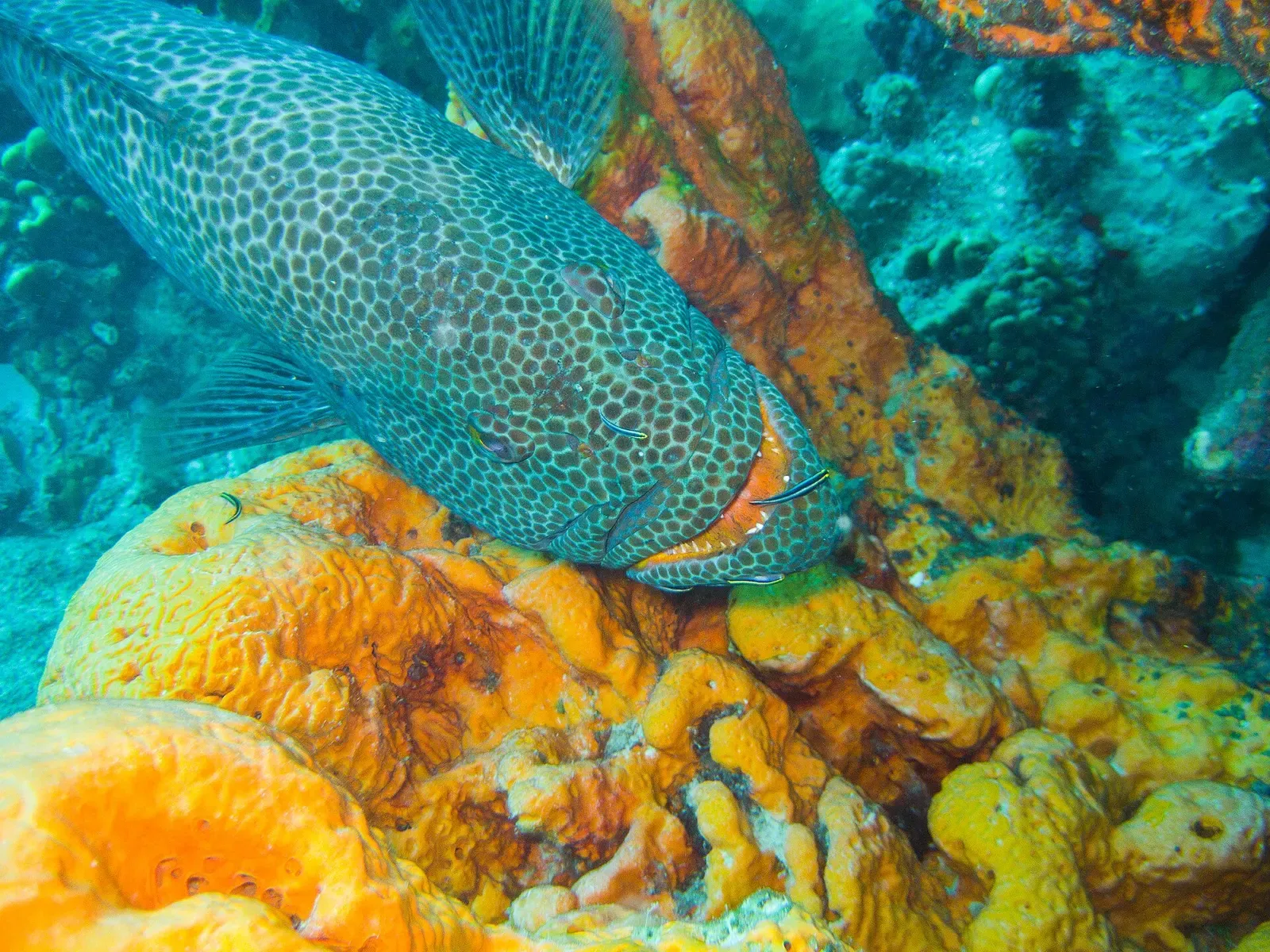
Resident turtles around an old wooden boat wreck on the slope
Wall
Cracks full of lobsters and tunnels behind the reef face
Reef
Mandarinfish dancing at dusk among black sea urchin spines
Muck & macro
Chromodoris, phyllidia and pyjama slugs over sand and rubble
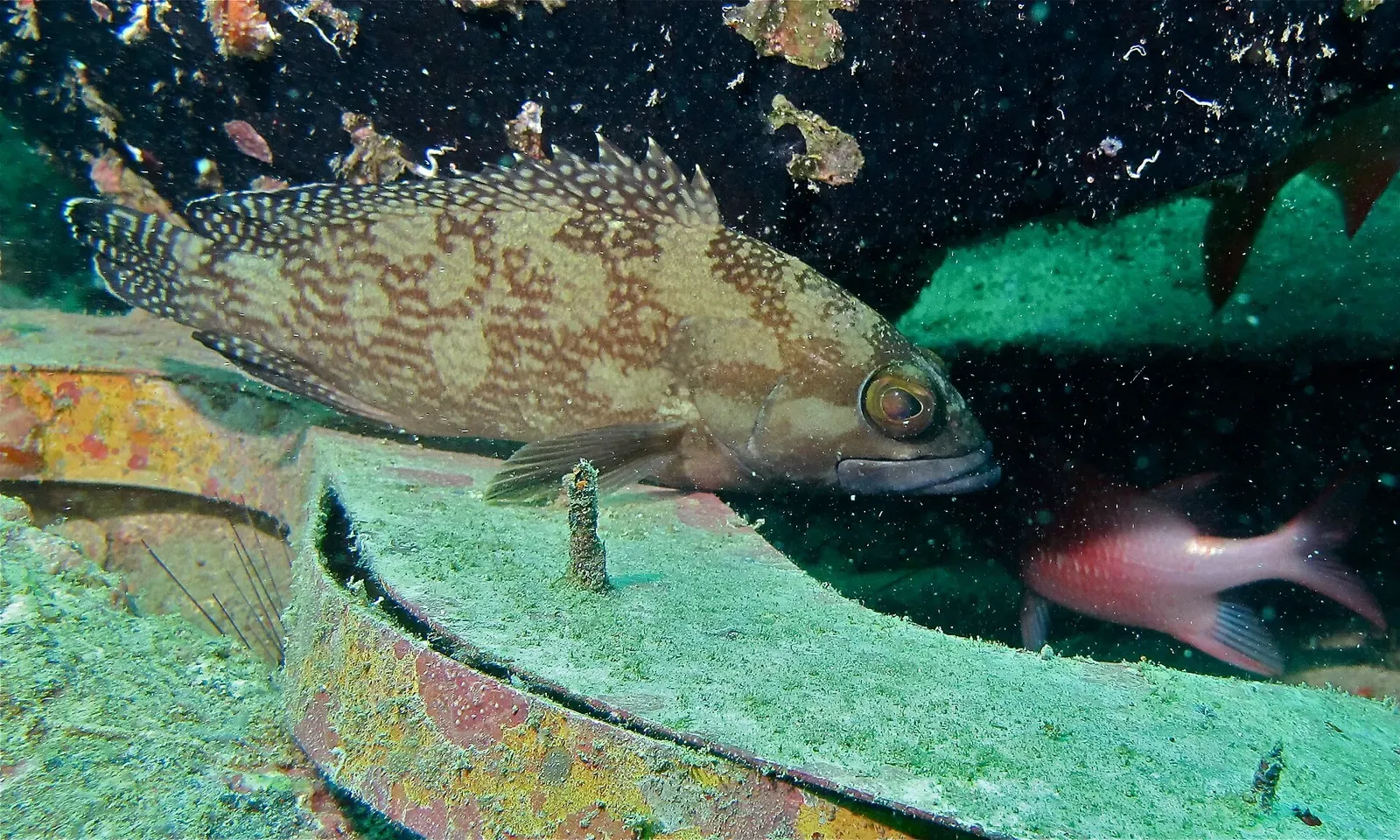
Frogfish in red, yellow and black under the platform legs
Similar dives elsewhere
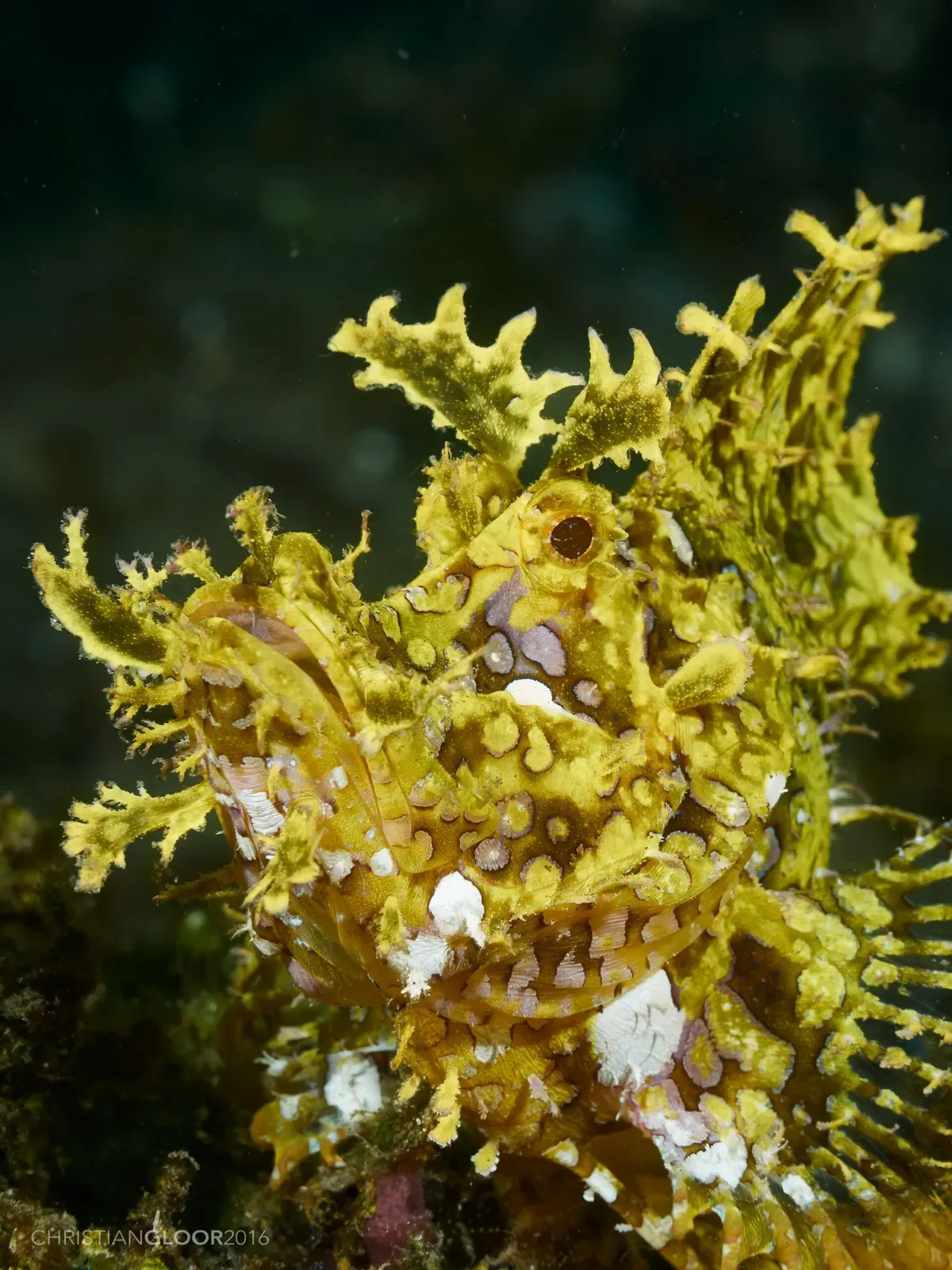
Named for the rhinopias on the sand slope west of Laha

Coral-grown structures at nine metres, dived for shrimp and nudibranchs
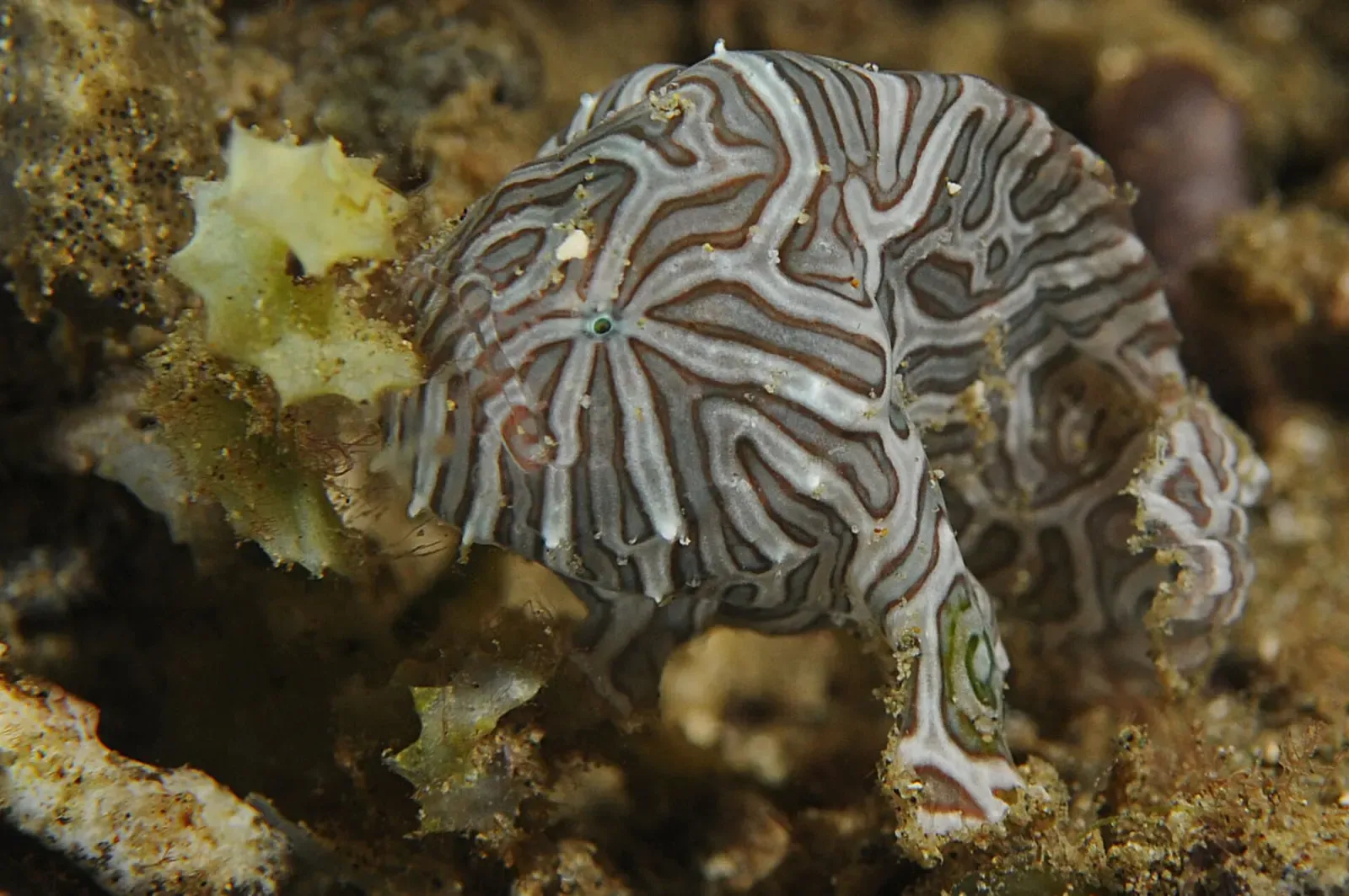
Where the holotype of the psychedelic frogfish was collected in 2008

_(8503559970).jpg)
Shallow sand and boulders in 5 to 10 m, minimal current