What muck diving is
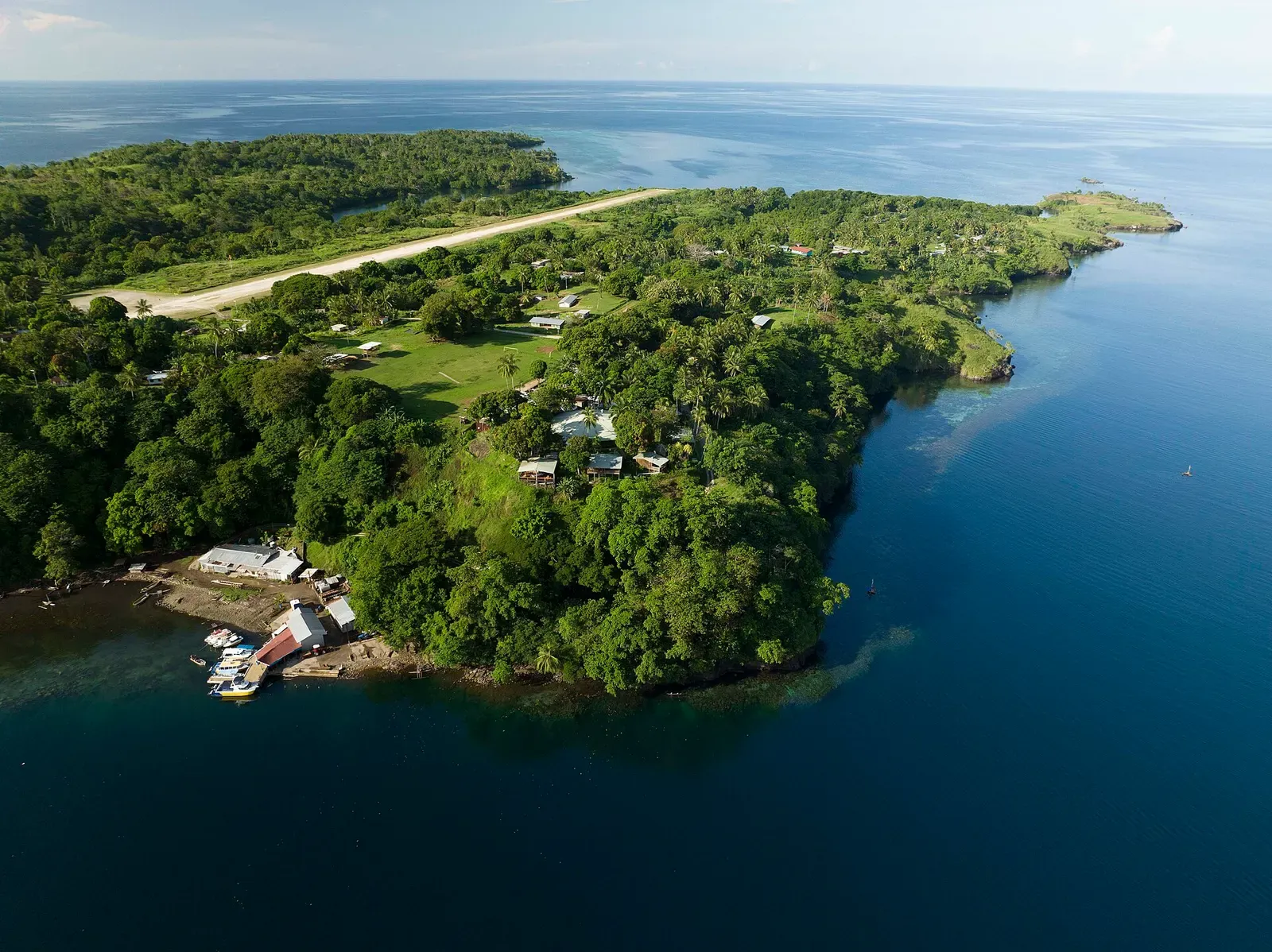
The name describes the ground, not the diving. Divers in the sheltered bays of Papua New Guinea in the 1980s found that the silty, featureless slopes they had been ignoring on the way to the reef held animals nobody had seen on the reef at all, and the practice of deliberately diving the muck spread from there to the volcanic sand of northern Sulawesi, the harbours of the Moluccas and the black beaches of the Philippines. Forty years on it is a discipline with its own guides, its own photographers and its own capitals.
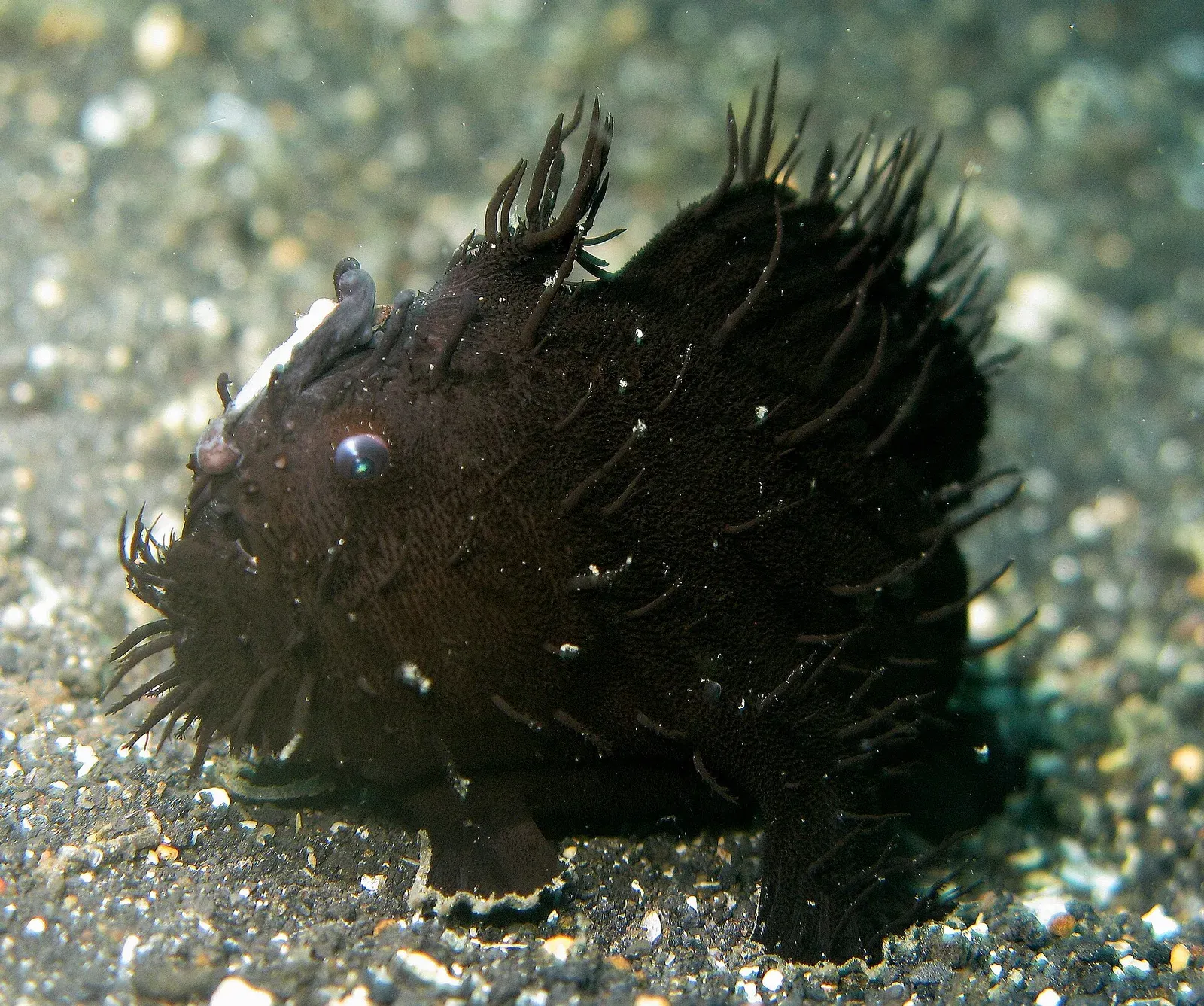
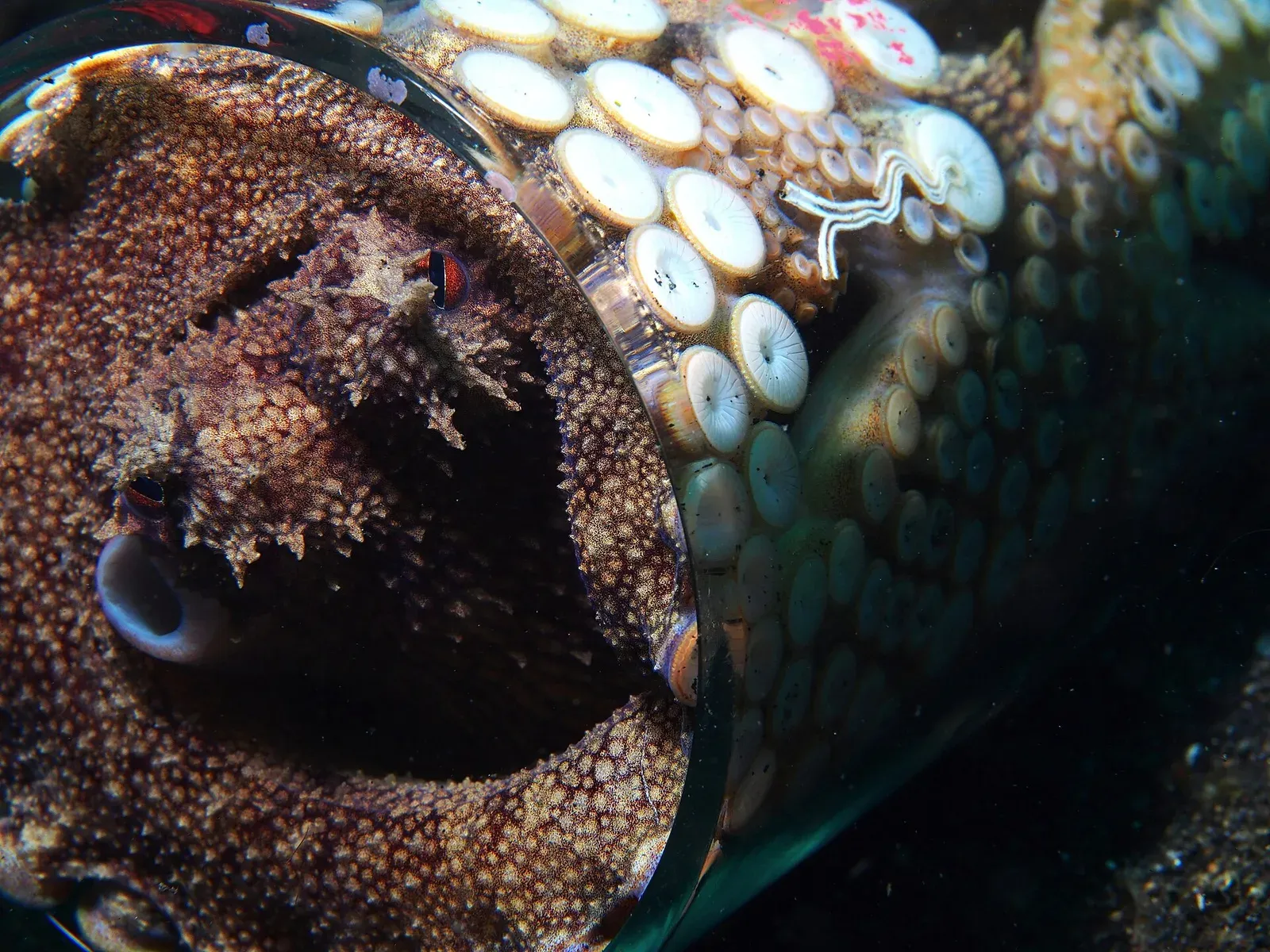
The logic is simple. Open sand and rubble offer no shelter, so the animals that live on them survive by looking like something else: a frogfish like a sponge, a ghost pipefish like a drifting leaf, a mimic octopus like a flounder, a lionfish, a sea snake. There is no scenery, visibility is often modest, and the whole dive happens within an arm’s length of the bottom at a pace that would bore a reef diver in five minutes. What it produces is the strangest cast in the sea, and a photographer’s log that fills faster here than anywhere else.
The Coral Triangle capitals
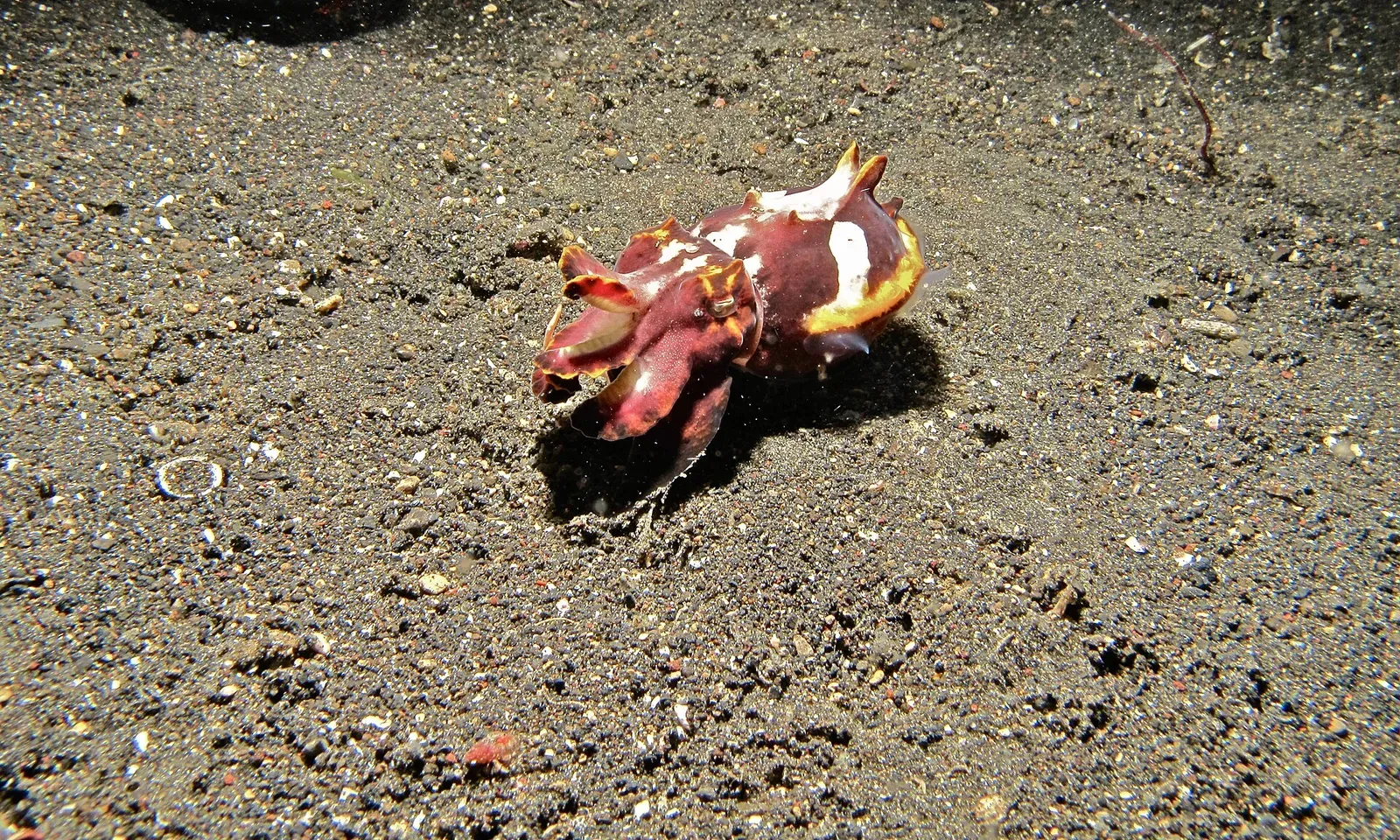
Lembeh Strait is where most people learn the word. The strait between the tip of North Sulawesi and Lembeh Island is dived almost entirely over black volcanic sand, and resorts line both shores so that the boat is back at the jetty minutes after the safety stop; three or four dives a day with long, image-downloading surface intervals is the pattern. Jahir is the archetype, a site with nothing to navigate by where mimic octopus, hairy frogfish and ornate ghost pipefish turn up among purple heart urchins sheltering zebra crabs; Nudi Falls adds a sponge-covered mini-wall for the nudibranchs and pygmy seahorses; and Police Pier is dived after dark for flamboyant cuttlefish, stargazers, snake eels and hundreds of Banggai cardinalfish.
Ambon is a working harbour with a rubbish-strewn black-sand bottom and one of the two or three best macro slopes on earth. The psychedelic frogfish, a species found nowhere else, was described from Laha 1 after its holotype was collected there in 2008, and the slope carries on west as Rhino City, named for the rhinopias found on it. Both sit in 2 to 12 m (40 ft), are graded beginner, and reward a diver who can hover for an hour without touching anything.
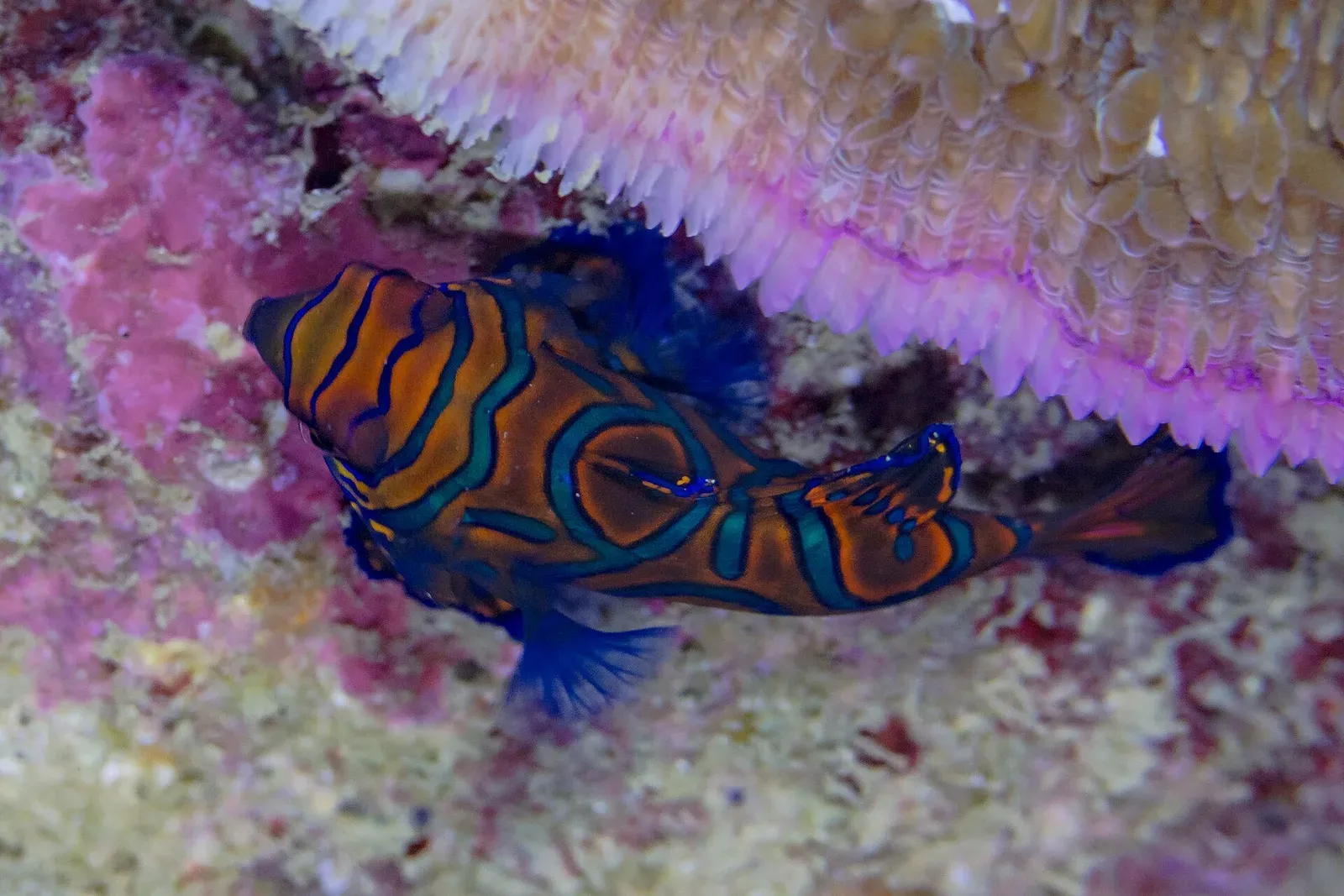
The Philippines has two muck coasts. Dauin on Negros is the shore-diving one, a run of black-sand slopes walked into from the resorts, where Ducomi Pier is called the most popular macro site on the island for the mimic, wonderpus and blue-ringed octopus under its pillars, Masaplod Muck has mandarinfish spawning at sunset, Pyramids produces three or four frogfish colour morphs on a dive, Lipayo Point is the cephalopod site, with blue-ringed octopus and wonderpus on the rubble, and Dauin Sur holds the coast’s smallest finds, Coleman shrimp on fire urchins among them. Anilao, a few hours south of Manila, was one of the original muck destinations and remains the weekend base for Philippine photographers, its rubble slopes packed with nudibranchs and seahorses by the nutrient flow through the Verde Island Passage; across that passage, Puerto Galera’s Sabang Wrecks puts small wrecks, sea-pen sand and frogfish five minutes off the beach.
The rest of the region has muck wherever there is a sheltered black-sand bay. Bali’s Seraya Secrets is a 10 m slope with no current at all and mimic octopus, frogfish and cuttlefish for anyone patient enough to find them. Off Sabah, Mandarin Valley and the pilings of Seaventures Jetty give divers between Sipadan permit days their frogfish and mandarinfish. Papua New Guinea’s Milne Bay is where the term was popularised in the 1980s and is still liveaboard-only, and Tufi Wharf up the coast has wartime scrap, a dumped Land Rover and mandarinfish under one jetty. Even Komodo has its muck: Cannibal Rock in the cold south of the park trades the pinnacle sharks for frogfish, pygmy seahorses and a huge variety of nudibranchs.
| Site | Depth | Level | Best months |
|---|---|---|---|
| Jahir Lembeh Strait · Indonesia | to 30 m | Intermediate | May–Oct |
| Nudi Falls Lembeh Strait · Indonesia | to 25 m | Intermediate | May–Oct |
| Police Pier Lembeh Strait · Indonesia | 8–15 m | Intermediate | May–Oct |
| Laha 1 Ambon · Indonesia | 2–12 m | Beginner | Mar–Apr |
| Rhino City Ambon · Indonesia | 2–12 m | Beginner | Mar–Apr |
| Ducomi Pier Dauin · Philippines | to 12 m | Beginner | Apr–May |
| Masaplod Muck Dauin · Philippines | to 15 m | Beginner | Apr–May |
| Pyramids Dauin · Philippines | 10–20 m | Beginner | Apr–May |
| Dauin Sur Dauin · Philippines | to 18 m | Beginner | Apr–May |
| Lipayo Point Dauin · Philippines | 12–18 m | Beginner | Apr–May |
| The Cars Dauin · Philippines | 24–28 m | Intermediate | Apr–May |
| Seraya Secrets Tulamben · Indonesia | to 10 m | Advanced | May–Oct |
| Mandarin Valley Mabul & Kapalai · Malaysia | to 10 m | Beginner | Mar–Oct |
| Seaventures Jetty Mabul & Kapalai · Malaysia | 12–17 m | Beginner | Mar–Oct |
| Sabang Wrecks Puerto Galera · Philippines | to 20 m | Beginner | Jan–Apr |
| Tufi Wharf Tufi · Papua New Guinea | to 10 m | Beginner | Apr–Jun |
| Cannibal Rock Komodo · Indonesia | 10–25 m | Advanced | Jun–Oct |
Muck beyond the tropics
Some of the best muck diving in the world is cold, or under a road bridge. Florida’s Blue Heron Bridge is a dive in under 6 m of water beneath a highway, worked in the hour either side of high tide, and its sand, rubble and pilings hold frogfish, batfish, flying gurnards, seahorses and octopus at a density that rivals the tropics; the East Bridge Span has a submerged sailboat and a resident school of spadefish. On St Croix, Frederiksted Pier is a 7 m pier dive that photographers run day and night.
Australia’s piers are the temperate answer. Under Melbourne’s Blairgowrie Pier more than a hundred nudibranch species have been identified, and each winter thousands of spider crabs mass on the sand around it and Rye Pier; Old Rapid Bay Jetty in South Australia holds a resident population of leafy seadragons; and The Pipeline puts blue-lined octopus and pyjama squid along a submerged pipe. Japan has Osezaki Bay, a sand slope three hours from Tokyo whose cast turns over completely through the year and is briefed off laminated sheets of what is currently on it, and Mystery Circles, where male pufferfish sculpt two-metre nests into open sand. And in the Netherlands, Bergse Diepsluis is where northern Europe goes each spring for cuttlefish courting in water with almost no current.
| Site | Depth | Level | Best months |
|---|---|---|---|
| West Bridge Span Blue Heron Bridge · United States | 1.5–6 m | Beginner | Apr–Aug |
| East Bridge Span Blue Heron Bridge · United States | 1.5–6 m | Beginner | Apr–Aug |
| Frederiksted Pier St. Croix · U.S. Virgin Islands | to 7 m | Beginner | Dec–May |
| Blairgowrie Pier Port Phillip · Australia | to 7 m | Beginner | May–Jul |
| Rye Pier Port Phillip · Australia | 2–6 m | Beginner | May–Jul |
| Old Rapid Bay Jetty Rapid Bay · Australia | to 9 m | Intermediate | Dec–Mar |
| The Pipeline Nelson Bay · Australia | to 18 m | Intermediate | Apr–Aug |
| Osezaki Bay Izu Peninsula · Japan | to 40 m | Intermediate | Sep–Nov |
| Mystery Circles Amami Ōshima · Japan | 10–27 m | Intermediate | Apr–Jun |
| Bergse Diepsluis Zeeland · Netherlands | to 19 m | Beginner | Apr–Jun |
What you will find
The cast is remarkably consistent from Sulawesi to Florida, and it is worth knowing before you go what the guide is scanning for. Frogfish are the universal muck animal: sponge-coloured, motionless, in three or four colour morphs on one dive at Pyramids and in red, yellow and black under the Seaventures jetty. Cephalopods are the prize — mimic octopus and wonderpus at Ducomi Pier, Lipayo Point and Seraya Secrets, blue-ringed octopus under the same pillars, flamboyant cuttlefish at Police Pier, and giant cuttlefish and squid under the Australian piers. Ghost pipefish drift like leaves over Ambon’s rubble; pygmy seahorses hold on the sea fans at the deeper end of most slopes; nudibranchs are everywhere, from Nudi Falls to the hundred-plus species logged under Blairgowrie Pier. Then there are the residents no reef diver expects: Coleman shrimp on fire urchins at Dauin Sur, zebra crabs in the urchin spines at Jahir, rhinopias at Rhino City, and the psychedelic frogfish known only from Ambon’s harbour slope.
When to go
Muck is the least seasonal diving there is. The animals are resident, not migratory, so the calendar is about water rather than wildlife: Lembeh’s May-to-October dry season brings marginally clearer water, Ambon’s outer sites want the October-to-April window, Dauin’s trade winds put chop on the shallow slopes from December to February, and Anilao’s typhoon season can cancel boats between July and October. The temperate sites are the exception: Port Phillip’s spider crabs run May to July, Zeeland’s cuttlefish April to June, and Osezaki’s widest cast arrives in autumn on the Kuroshio.
| Site | Jan | Feb | Mar | Apr | May | Jun | Jul | Aug | Sep | Oct | Nov | Dec |
|---|---|---|---|---|---|---|---|---|---|---|---|---|
| JahirLembeh Strait | Good | Good | Good | Good | Prime | Prime | Prime | Prime | Prime | Prime | Good | Good |
| Laha 1Ambon | Good | Good | Prime | Prime | Fair | Fair | Fair | Fair | Good | Prime | Prime | Good |
| Masaplod MuckDauin | Fair | Fair | Good | Prime | Prime | Good | Good | Good | Good | Good | Good | Fair |
| Seraya SecretsTulamben | Good | Good | Good | Good | Prime | Prime | Prime | Prime | Prime | Prime | Good | Good |
| Mandarin ValleyMabul & Kapalai | Good | Good | Prime | Prime | Prime | Prime | Prime | Prime | Prime | Prime | Good | Good |
| Cannibal RockKomodo | Good | Good | Good | Good | Good | Prime | Prime | Prime | Prime | Prime | Good | Good |
| West Bridge SpanBlue Heron Bridge | Good | Good | Good | Prime | Prime | Prime | Prime | Prime | Good | Good | Good | Good |
| Blairgowrie PierPort Phillip | Good | Good | Good | Good | Prime | Prime | Prime | Good | Good | Good | Good | Good |
| Osezaki BayIzu Peninsula | Good | Prime | Prime | Good | Good | Fair | Good | Good | Prime | Prime | Prime | Good |
| Bergse DiepsluisZeeland | Good | Good | Good | Prime | Prime | Prime | Good | Good | Good | Good | Good | Good |
How to dive muck
Hire the guide, not the site. The animals are invisible until someone who dives the same slope every day points at a patch of sand that looks like every other patch. Every good muck operation works the same way: a guide marks a find and holds position while each diver settles, frames and shoots it in turn. Groups are small and dives end on air, not at a turnaround.
Buoyancy is the whole skill. One careless fin stroke on black sand ends the search for everyone behind you, and the animals you came for are the ones buried in it. Trim horizontal, frog kick, and hold position with a pointer stick on bare sand rather than a hand; Ambon’s slopes hold fire urchins, stonefish and lionfish exactly where a hand would go.
Go slow, go shallow, go at dusk. Most muck sites bottom out between 10 and 20 m, so the dive is limited by patience rather than gas. The best of it happens in the last minutes of daylight, when mandarinfish spiral off the rubble to spawn, and after dark, when the cephalopods come out to hunt. Police Pier, Masaplod and Seraya Secrets are night dives first.
Bring the right lens, or none. Muck rewards a macro lens and a good torch far more than a wide-angle rig. If you are not photographing, bring a slate: the finds come faster than you can remember them.