Ambon · Indonesia · Muck & macro · Sand slope · Night
Laha 1
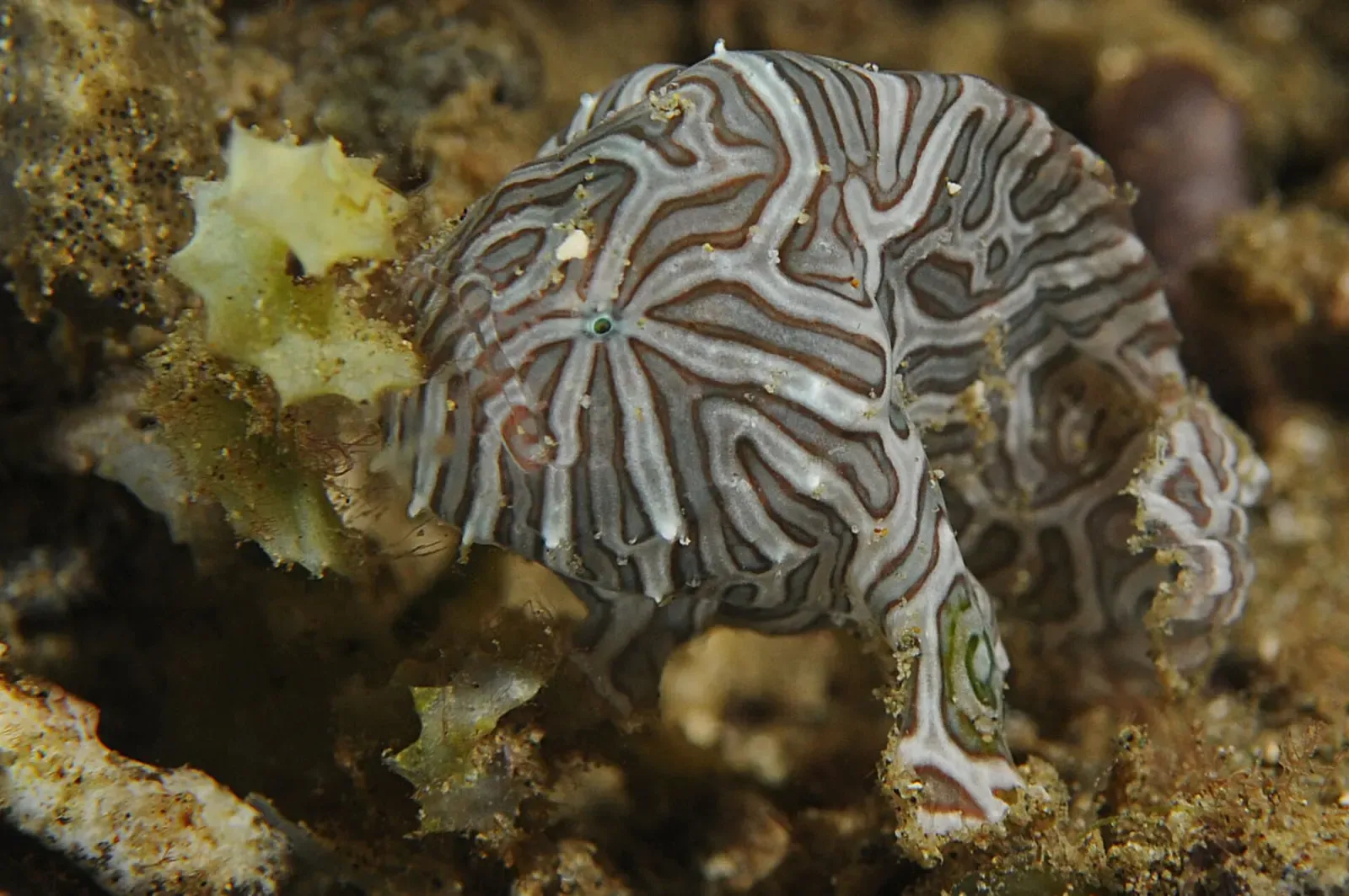
Where the holotype of the psychedelic frogfish was collected in 2008
Photo: Truite agile · CC BY-SA 4.0
Laha 1 lies about 3 kilometres inside Ambon Bay on its northern coast, on the slope its guides call the best macro diving on the island. The holotype of the psychedelic frogfish was collected here in 2008. The bottom is rubble, sea squirts and sand rather than reef, and the dive is slow work over a few square metres of ground while a guide turns up frogfish, waspfish and moray eels.
Where it is and how deep
3.7082° S, 128.1016° EApproximate position — the dashed circle shows where the site lies; your operator's briefing has the mooring.
The dive
You drop onto the top of the slope in about 2 metres of water, onto a bottom of a few simple corals and rubble substrate on a sandy bed, studded with featherstars, fire urchins and sea squirts. The dive works down and along the slope rather than out from it: black-saddled tobies watch your movements, ringtail cardinalfish lurk motionless in the rubble, and small orange painted frogfish perch on the coral branches while shrimpfish and white cockatoo waspfish sway over the sand.
The slope levels off a little at 12 metres before continuing down again into Ambon Bay's murky depths. Further into the dive you reach the jetty used by local fishermen, where discarded rubbish and fish remnants across the seabed draw the life the site is known for: up to ten species of moray eel in that small area alone, several species of lionfish and stonefish, fingered dragonets crawling over the sand, and striped fangblennies living in discarded glass bottles.
Take your time over the spiny sponge branches in this section, where pink thorny seahorses hide, and over the rubble where sandperches squat and large trumpetfish stalk past. Visibility runs 5 to 15 metres and the current is gentle, though it can occasionally turn strong, so long and slow is the normal way to dive it. At around 10 metres as dusk approaches, the mandarinfish come out to perform their mating dance.
Background
Buck Randolph, Fitrie Randolph and Toby Fadirsyair of Maluku Divers photographed the psychedelic frogfish in the wild here in January 2008, on the animal's second recorded sighting. The ichthyologists Pietsch, Arnold and Hall then collected a holotype from the Laha I dive site at Maluku Divers on 2 April 2008. The species has so far been positively identified only at Ambon Island.
Marine life and season
- Frogfish
- Mandarinfish
- Macro critters
| Jan | Feb | Mar | Apr | May | Jun | Jul | Aug | Sep | Oct | Nov | Dec |
|---|---|---|---|---|---|---|---|---|---|---|---|
| Good | Good | Prime | Prime | Fair | Fair | Fair | Fair | Good | Prime | Prime | Good |
Season follows Ambon: Oct–Apr is the main season; June to August brings wind and rain that make the outer sites rough, though the bay stays divable.
Know before you go
- Fire urchins sit in the rubble alongside several species of stonefish and lionfish, so keep hands off the bottom and use a pointer rather than fingers to steady yourself.
- The current is gentle most days but can occasionally run strong on the slope, so agree a direction and a turn point with the guide before you drop in.
Photos from Laha 1
Arne Kuilman from Amsterdam, The Netherlands <o((((>< · CC BY 2.0
Christian Gloor from Wakatobi Dive Resort, Indonesia · CC BY 2.0
Arne Kuilman from Amsterdam, The Netherlands <o((((>< · CC BY 2.0
Dive videos
#dailyvlog Keseruan Scuba diving di Laha, Ambon | Spesial Endemik Psychedelic Frogfish · Jurnal Billa on YouTube
Questions divers ask
What lives at Laha 1?+
It is a muck site: orange painted frogfish, shrimpfish, white cockatoo waspfish, ringtail cardinalfish, black-saddled tobies, up to ten species of moray eel and several species of lionfish and stonefish, plus mandarinfish that perform their mating dance as dusk approaches.
When is visibility best at Laha 1?+
In the dry season from October to April, when there is less rain and a better chance of clear water. Visibility on the slope typically runs 5 to 15 metres, with water temperatures of 26 to 29°C.
Sources
- Ambon Dive Sites — Dive The World
- Psychedelic frogfish — Wikipedia
Photo credits
- Psychedelic frogfish on the sand, its skin patterned in maze-like brown and white stripes. by Truite agile, CC BY-SA 4.0, via Wikimedia Commons
- A pipefish on sand with two tails trailing side by side, a rare genetic anomaly. by Arne Kuilman from Amsterdam, The Netherlands <o((((><, CC BY 2.0, via Wikimedia Commons
- A pink and white candy crab clinging to bright red soft coral. by Christian Gloor from Wakatobi Dive Resort, Indonesia, CC BY 2.0, via Wikimedia Commons
- A whip coral shrimp with long white antennae camouflaged against an orange whip coral. by Arne Kuilman from Amsterdam, The Netherlands <o((((><, CC BY 2.0, via Wikimedia Commons
In The Logbook
- Frogfish: species, behaviour and where to diveMacro & muck · 12 min read
- What stings you underwater, and how to avoid itBody & health · 8 min read
- Night diving: the best night dives in the worldNight diving · 12 min read
- The best muck diving in the worldMacro & muck · 6 min read
More dive sites in Ambon
Cave & cavern
A skylight hole lights the chamber at 12 metres
Wall
A wall past 30 m below the city-gate arch
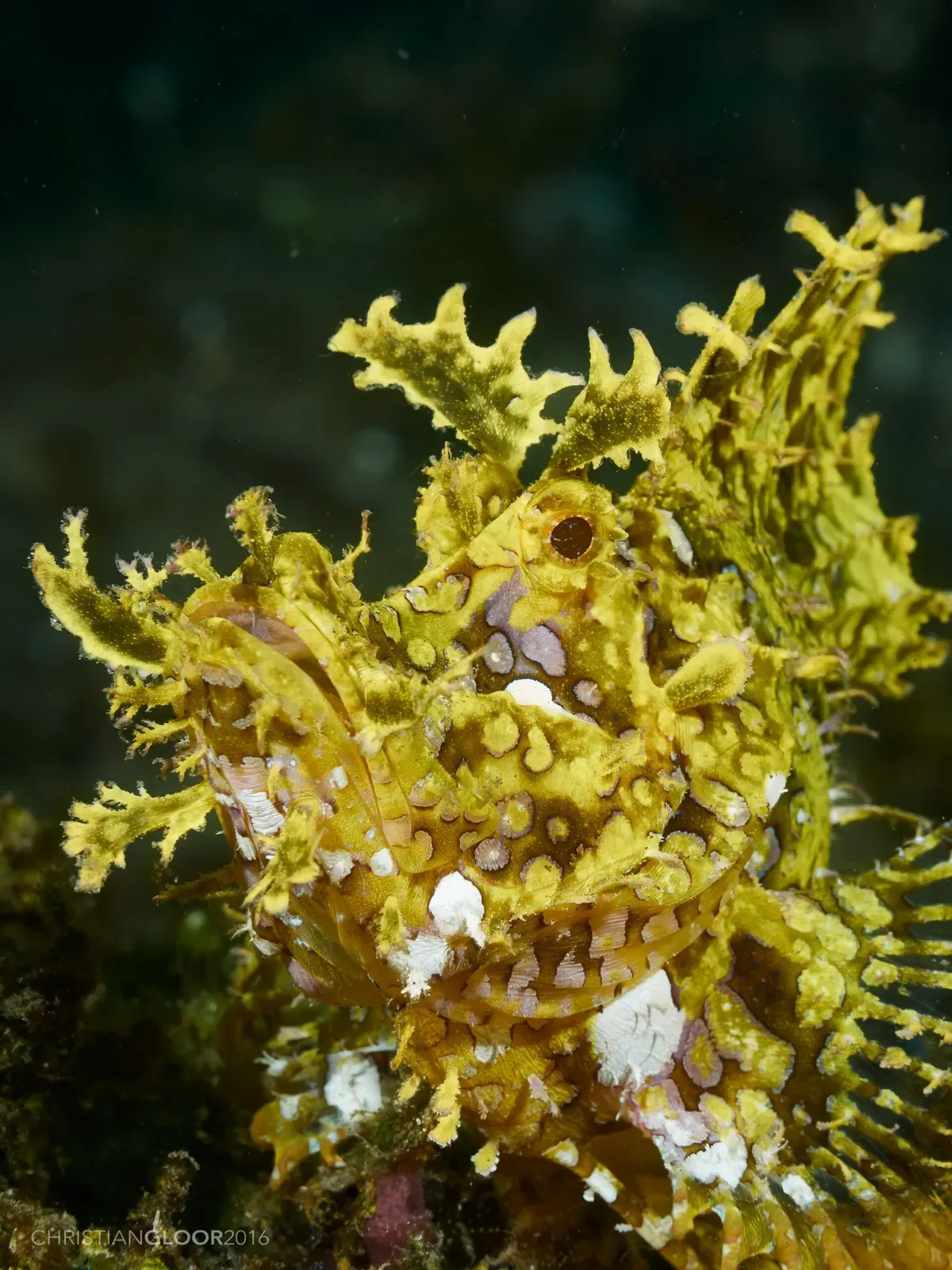
Named for the rhinopias on the sand slope west of Laha
Similar dives elsewhere

Zebra crabs sheltering in the spines of purple heart urchins
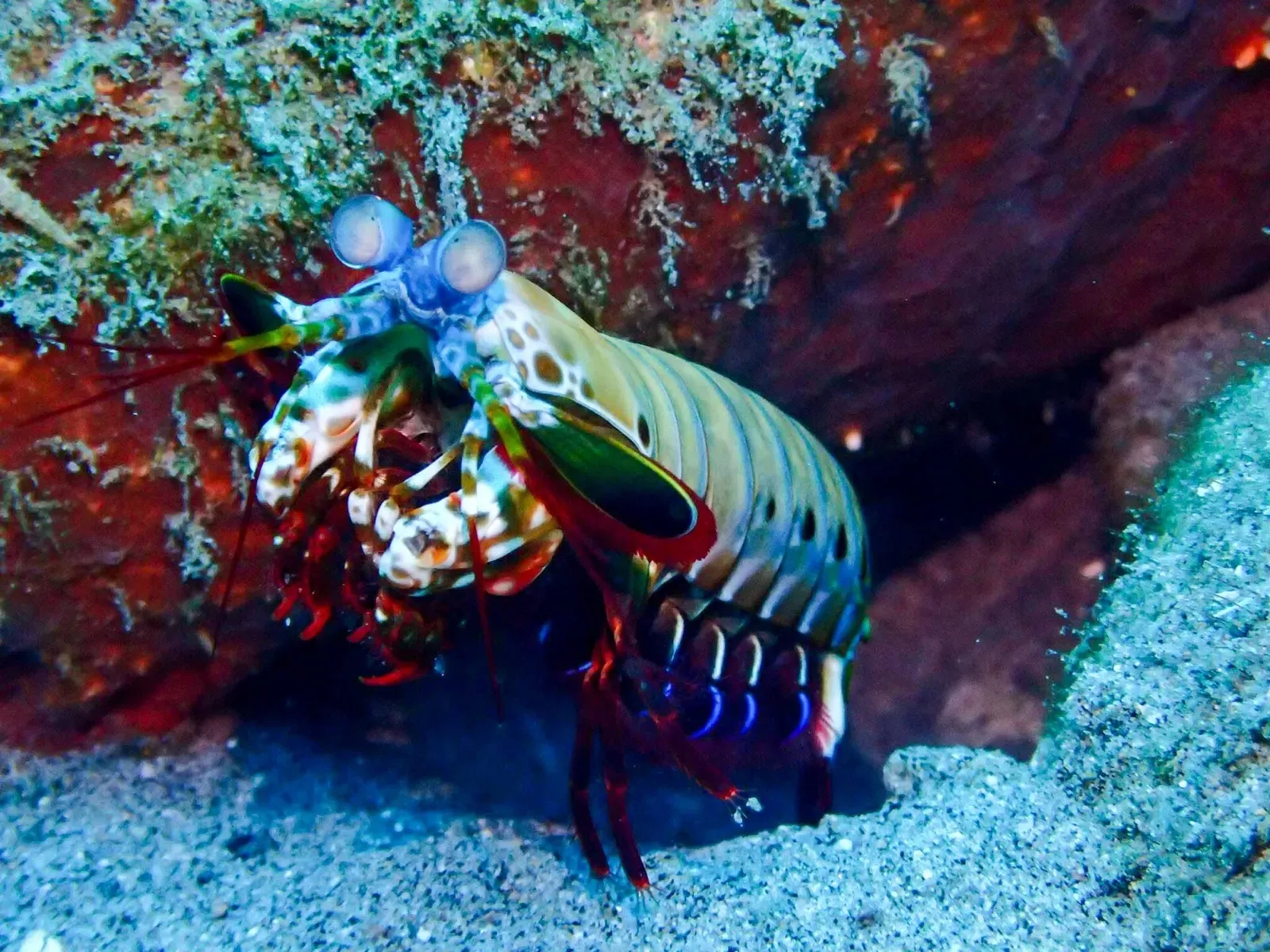
Mandarinfish spawning over black sand in the last light

Black sand to 27 metres, at its best after dark


_(8444664466).jpg)
.jpg)
_(8444683306).jpg)
Mimic and blue-ringed octopus over Anilao's best-known muck slope