
Coral Triangle · Timor-Leste
Ataúro Island
A 2016 survey found the world's highest average reef fish count per site here.
Photo: Joshvdbroek · CC BY 3.0
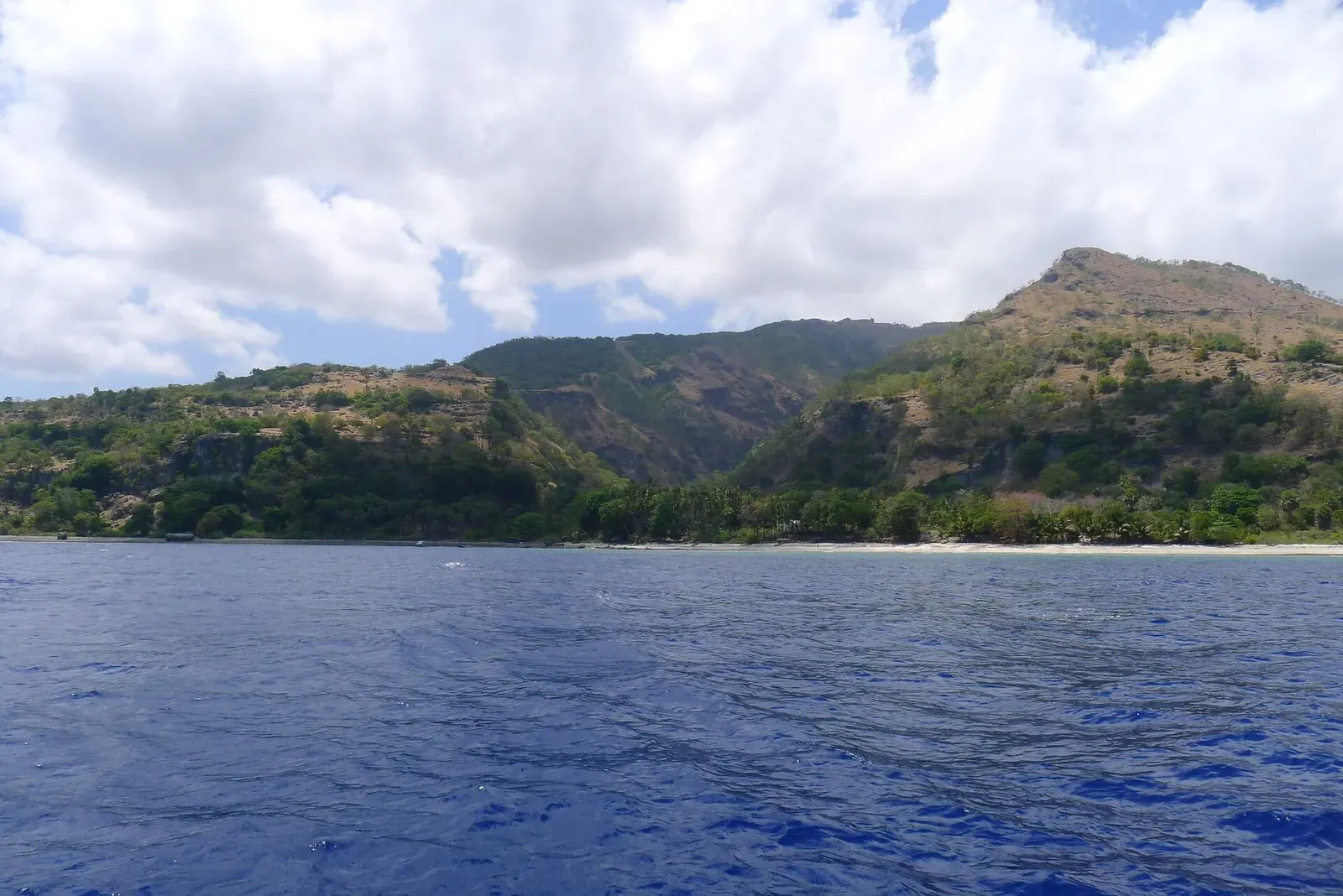
Ataúro Island sits in the Wetar Strait roughly 30 kilometers off Dili, Timor-Leste, in water a 2016 Conservation International survey found held the highest average reef fish count per site recorded anywhere in the world. The island's steep volcanic slopes drop quickly into deep water, producing wall and drift dives with dense schools of fusiliers and reef fish just offshore from small, community-run guesthouses. Tourism infrastructure remains basic, and diving here is a recent addition to Southeast Asian dive travel.
About diving in Ataúro Island
Diving Ataúro is low-friction. A number of sites are walk-in entries from the beach, so a tank goes to the water rather than onto a boat, and boat dives are short runs along the coast in small local craft rather than half-day expeditions. Days stay loose: two dives, a walk through the village, another entry at dusk if anyone is keen. Crossing from Dili for the day works too, but it trades away the early-morning and late-afternoon water.
The island is a volcanic ridge and the underwater profile follows it. The shelf in front of the shore is narrow, so a short swim out and the bottom tips over into a steep slope or wall falling away into the strait, which stays deep enough that the drop continues well past anything you will dive. Walls are worked with blue on one shoulder and coral on the other, with flow running along the contour on bigger tides; between the drop-offs, dark sand patches make for straightforward critter dives close to the villages.
The trade-off is services. Only a handful of operations work the island, spares and specialist gear are limited, and there is no recompression facility here, so anything serious means getting back to Dili and onward. Conservative profiles and your own well-serviced kit matter more than at a resort destination. Current along the drop-offs builds with the tide and runs parallel to the wall, so entries are timed and dives run as drifts rather than as swims back to a fixed exit. It pairs naturally with the shore diving along Timor-Leste's north coast either side of the crossing.
Best time to dive Ataúro Island
| Jan | Feb | Mar | Apr | May | Jun | Jul | Aug | Sep | Oct | Nov | Dec | |
|---|---|---|---|---|---|---|---|---|---|---|---|---|
| Season | Fair | Fair | Fair | Good | Prime | Prime | Prime | Prime | Prime | Good | Good | Fair |
| Sea surface | 29°C84°F | 29°C84°F | 29°C84°F | 30°C86°F | 29°C84°F | 29°C84°F | 28°C82°F | 27°C81°F | 28°C82°F | 29°C84°F | 30°C86°F | 30°C86°F |
| Daytime high | 30°C86°F | 29°C84°F | 30°C86°F | 31°C88°F | 31°C88°F | 30°C86°F | 29°C84°F | 30°C86°F | 30°C86°F | 31°C88°F | 32°C90°F | 31°C88°F |
| Rain | 266 mm10.5 in | 212 mm8.3 in | 150 mm5.9 in | 94 mm3.7 in | 55 mm2.2 in | 34 mm1.3 in | 14 mm0.6 in | 5 mm0.2 in | 4 mm0.2 in | 19 mm0.7 in | 64 mm2.5 in | 188 mm7.4 in |
| Jan | Feb | Mar | Apr | May | Jun |
|---|---|---|---|---|---|
| Fair | Fair | Fair | Good | Prime | Prime |
| Sea surface | |||||
| 29°C84°F | 29°C84°F | 29°C84°F | 30°C86°F | 29°C84°F | 29°C84°F |
| Daytime high | |||||
| 30°C86°F | 29°C84°F | 30°C86°F | 31°C88°F | 31°C88°F | 30°C86°F |
| Rain | |||||
| 266 mm10.5 in | 212 mm8.3 in | 150 mm5.9 in | 94 mm3.7 in | 55 mm2.2 in | 34 mm1.3 in |
| Jul | Aug | Sep | Oct | Nov | Dec |
|---|---|---|---|---|---|
| Prime | Prime | Prime | Good | Good | Fair |
| Sea surface | |||||
| 28°C82°F | 27°C81°F | 28°C82°F | 29°C84°F | 30°C86°F | 30°C86°F |
| Daytime high | |||||
| 29°C84°F | 30°C86°F | 30°C86°F | 31°C88°F | 32°C90°F | 31°C88°F |
| Rain | |||||
| 14 mm0.6 in | 5 mm0.2 in | 4 mm0.2 in | 19 mm0.7 in | 64 mm2.5 in | 188 mm7.4 in |
2011–2025 averages. Sea surface: NOAA Coral Reef Watch, measured at the surface, so deeper water can run colder. Daytime high and rain: NASA POWER.
May–November dry season gives calmer crossings from Dili; December–April monsoon roughens seas.
Best months: May, June, July, August, September
Ataúro Island water temperature and weather by month
The sea surface runs from 27 °C (81 °F) in August to 30 °C (86 °F) in November. Most rain falls from December to April, peaking at about 270 mm (11 in) in January; it stays largely dry from May to October. Daytime highs sit around 30 °C (86 °F) all year. The coldest water here is about 26 °C (79 °F), so pack a 3 mm full suit.
Dive types & marine life
Fusiliers and other reef fish school along the walls on most dives, with turtles over shallow coral, reef sharks deeper along the drop-offs, and nudibranchs and small critters on the sand patches between. Dolphins are regularly seen on the crossing, and reports of larger cetaceans in the strait cluster in the second half of the year, overlapping the calmer months through November.
- Reef
- Wall
- Muck & macro
- Drift
- Reef fish swarms
- Dolphins
- Sea turtles
- Nudibranchs
- Reef sharks
- Macro critters
Best dive sites in Ataúro Island
Coral outcrops one side of the village, a wall past 40 m on the other.
Beloi House Reef
Village shore reef with steep drop-off and dense fish.
Vasco
Reef slope with pristine coral cover close to shore.
How to get to Ataúro Island
Dili is the jumping-off point: a public ferry runs on set days and faster small boats cross more often, both landing at Beloi on the east coast, and Dili dive centres also run day trips over. Beloi and the neighbouring villages hold the guesthouses and dive operations, and the coast road between them is walkable or covered by shared truck.
Photos from Ataúro Island
Joshvdbroek · CC BY 3.0
Kate Dixon · CC BY 2.0
Dive videos
Most Biodiverse Reef on Earth: Atauro Island [4K] | Timor-Leste from Below (S01E03) | SZtv · SZtv on YouTube
Photo credits
- Aerial view of Beloi village on Atauro Island, its shoreline dropping straight into deep water by Joshvdbroek, CC BY 3.0, via Wikimedia Commons
- Fishing boats lined along a black-sand beach beneath Atauro's volcanic ridge by Joshvdbroek, CC BY 3.0, via Wikimedia Commons
- A patterned reef crab (Zosimus aeneus) resting on sand near Atauro's shoreline by Kate Dixon, CC BY 2.0, via Wikimedia Commons
Embed
Run a dive centre, club or blog? Embed this map of 8 dive sites near Ataúro Island on your own page.
Similar destinations
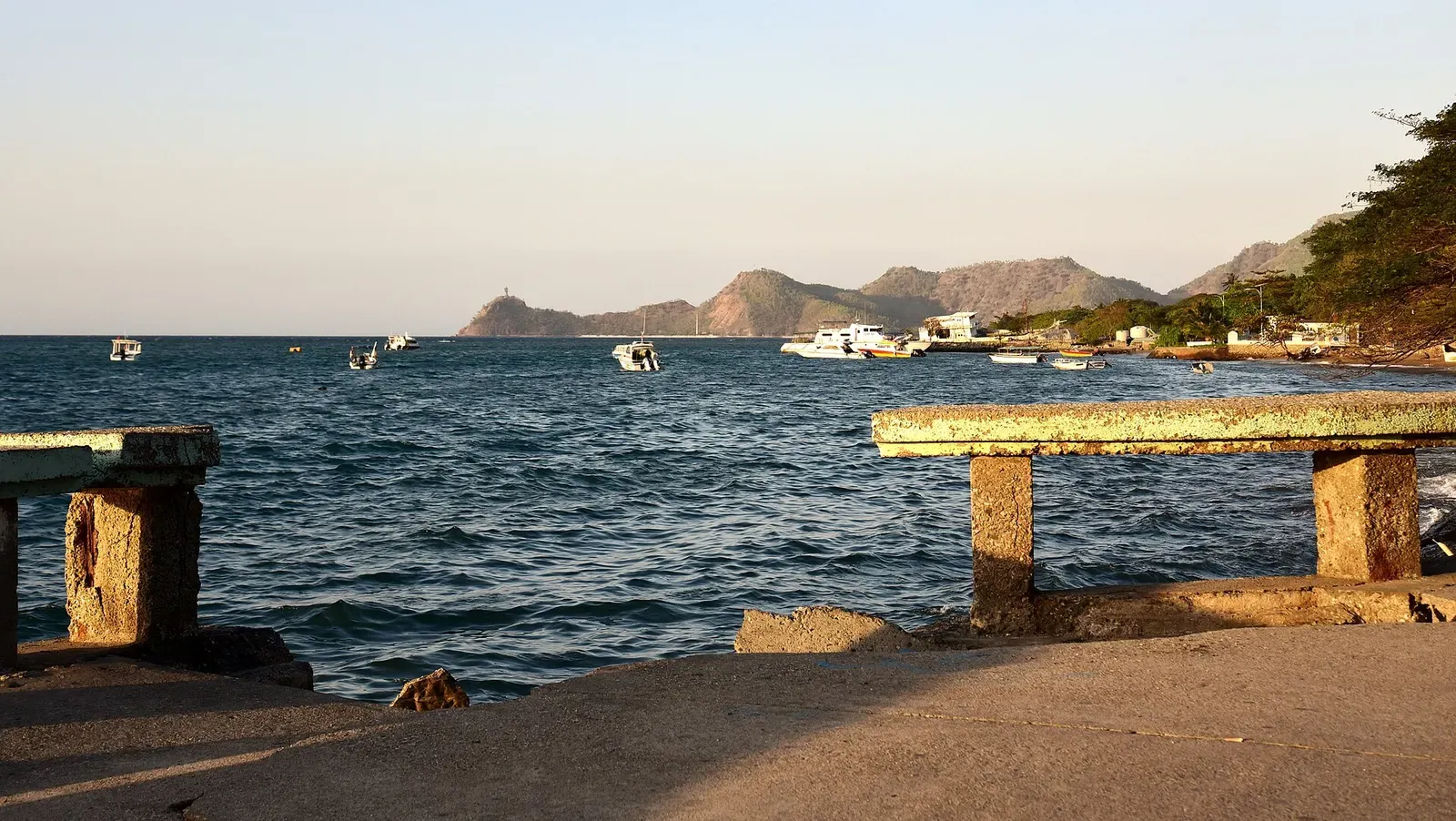
Wall and muck dives start a few steps from the beach along Timor's north coast.

Shore-accessible walls from 5 m into blue, dived one boat at a time

Whale sharks in the shallows and a sanctuary wall almost nobody dives

.jpeg)
.jpeg)

Soft coral grows so thick on Sahaung's pinnacles the rock disappears