
Coral Triangle · Indonesia
Bangka Island
Soft coral grows so thick on Sahaung's pinnacles the rock disappears
Photo: Fabio Achilli · CC BY 2.0
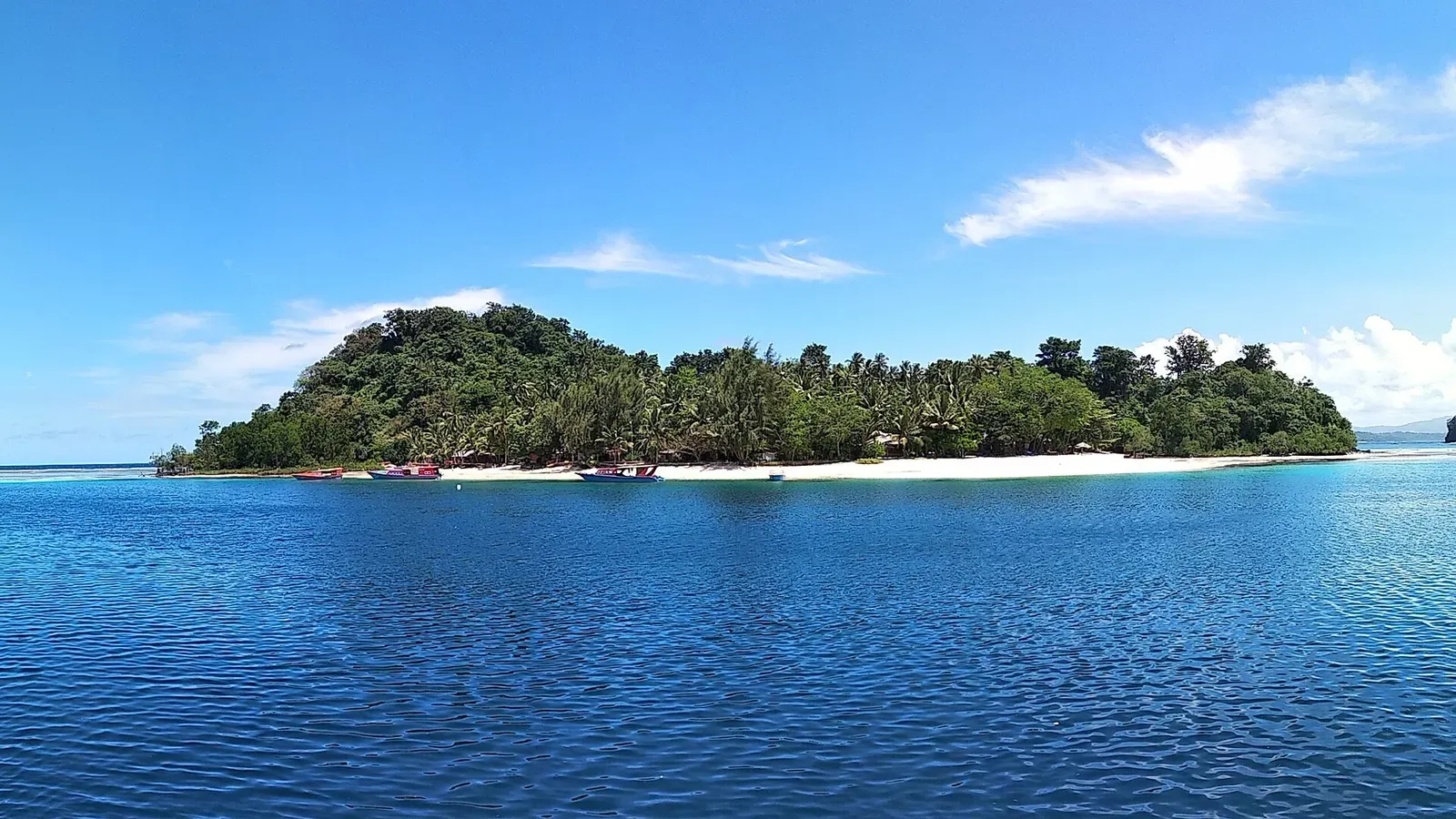
Bangka sits off the north-eastern tip of Sulawesi, an hour from Lembeh and a world away in character: volcanic pinnacles rising out of current-swept channels, upholstered in soft coral so dense the rock disappears. Sahaung is the one people photograph — a cluster of bommies in 15 m where orange and pink alcyonarians grow over every surface. An iron-ore mining concession threatened the reef for years until Indonesia's Supreme Court revoked the permit in 2017.
About diving in Bangka Island
Bangka is dived from a handful of small resorts on the island itself rather than from a town, and the boats are short-range. Sites sit close enough that crews run two dives, come back for lunch and go out again, with the house reef available on foot for a third tank or a night dive. Because the exposed rocks only work properly on moving water, guides plan the day around the tide rather than the clock, so the same site can be a gentle swim in the morning and a firm drift a few hours later.
The terrain is rock rather than reef flat: boulders and pinnacles standing in the channels between islands, a few breaking the surface, most rising off a sand or rubble base. That splits the diving in two. The exposed rocks take the water moving through the channels and are dived as short, committed drifts; the sheltered bays and sand slopes behind the islands are calm and silty, and take the macro, the check dives and the night dives. Visibility splits the same way — roughly 10 m inshore against something nearer 30 m out on the rocks.
Most people arrive with Lembeh or Bunaken on the same itinerary, and Bangka sits between them in character: more colour than the muck coast, more current and small life than the marine-park walls. It suits photographers shooting reefscape and macro rather than divers chasing big animals, since pelagic traffic here is passing rather than dependable. Resorts are small and schedules flexible, which works for anyone who wants to dive a lot without much structure around it.
Best time to dive Bangka Island
| Jan | Feb | Mar | Apr | May | Jun | Jul | Aug | Sep | Oct | Nov | Dec | |
|---|---|---|---|---|---|---|---|---|---|---|---|---|
| Season | Fair | Fair | Good | Prime | Prime | Prime | Prime | Prime | Prime | Good | Good | Fair |
| Sea surface | 29°C84°F | 29°C84°F | 29°C84°F | 29°C84°F | 29°C84°F | 29°C84°F | 29°C84°F | 29°C84°F | 29°C84°F | 29°C84°F | 29°C84°F | 29°C84°F |
| Daytime high | 29°C84°F | 29°C84°F | 29°C84°F | 29°C84°F | 30°C86°F | 30°C86°F | 29°C84°F | 30°C86°F | 30°C86°F | 30°C86°F | 30°C86°F | 29°C84°F |
| Rain | 246 mm9.7 in | 179 mm7.0 in | 187 mm7.4 in | 154 mm6.1 in | 164 mm6.5 in | 182 mm7.2 in | 159 mm6.3 in | 104 mm4.1 in | 104 mm4.1 in | 140 mm5.5 in | 162 mm6.4 in | 207 mm8.1 in |
| Jan | Feb | Mar | Apr | May | Jun |
|---|---|---|---|---|---|
| Fair | Fair | Good | Prime | Prime | Prime |
| Sea surface | |||||
| 29°C84°F | 29°C84°F | 29°C84°F | 29°C84°F | 29°C84°F | 29°C84°F |
| Daytime high | |||||
| 29°C84°F | 29°C84°F | 29°C84°F | 29°C84°F | 30°C86°F | 30°C86°F |
| Rain | |||||
| 246 mm9.7 in | 179 mm7.0 in | 187 mm7.4 in | 154 mm6.1 in | 164 mm6.5 in | 182 mm7.2 in |
| Jul | Aug | Sep | Oct | Nov | Dec |
|---|---|---|---|---|---|
| Prime | Prime | Prime | Good | Good | Fair |
| Sea surface | |||||
| 29°C84°F | 29°C84°F | 29°C84°F | 29°C84°F | 29°C84°F | 29°C84°F |
| Daytime high | |||||
| 29°C84°F | 30°C86°F | 30°C86°F | 30°C86°F | 30°C86°F | 29°C84°F |
| Rain | |||||
| 159 mm6.3 in | 104 mm4.1 in | 104 mm4.1 in | 140 mm5.5 in | 162 mm6.4 in | 207 mm8.1 in |
2011–2025 averages. Sea surface: NOAA Coral Reef Watch, measured at the surface, so deeper water can run colder. Daytime high and rain: NASA POWER.
Mar–Nov is the settled season with the calmest channels; the north-west monsoon from December to February brings wind and swell.
Best months: April, May, June, July, August, September
Bangka Island water temperature and weather by month
The sea surface stays around 29 °C (84 °F) all year. Rain falls through the year, about 170 mm (6.7 in) a month on average, with January the wettest. Daytime highs sit around 29 °C (84 °F) all year. The coldest water here is about 27 °C (81 °F), so pack a 3 mm, or even a 2 mm, suit.
Dive types & marine life
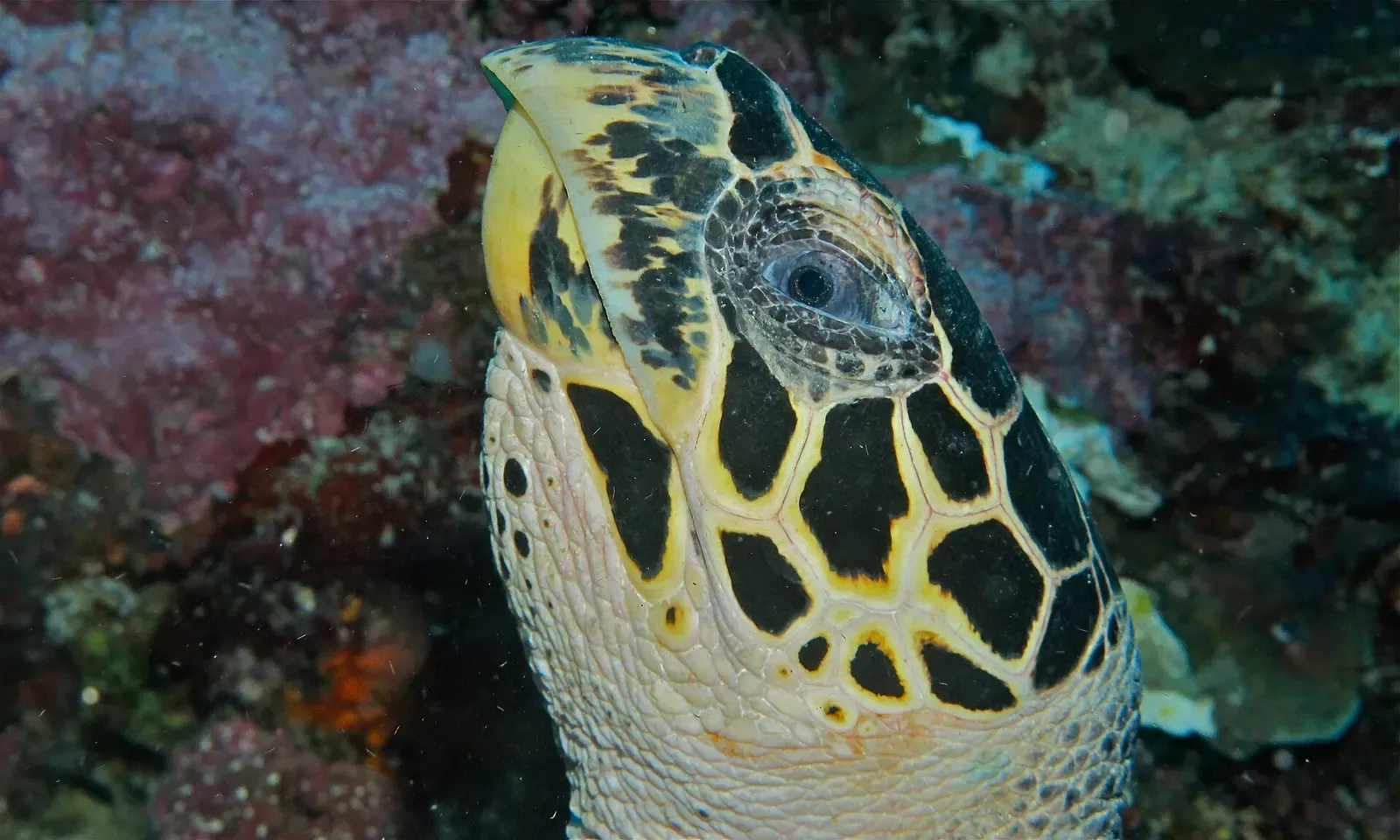
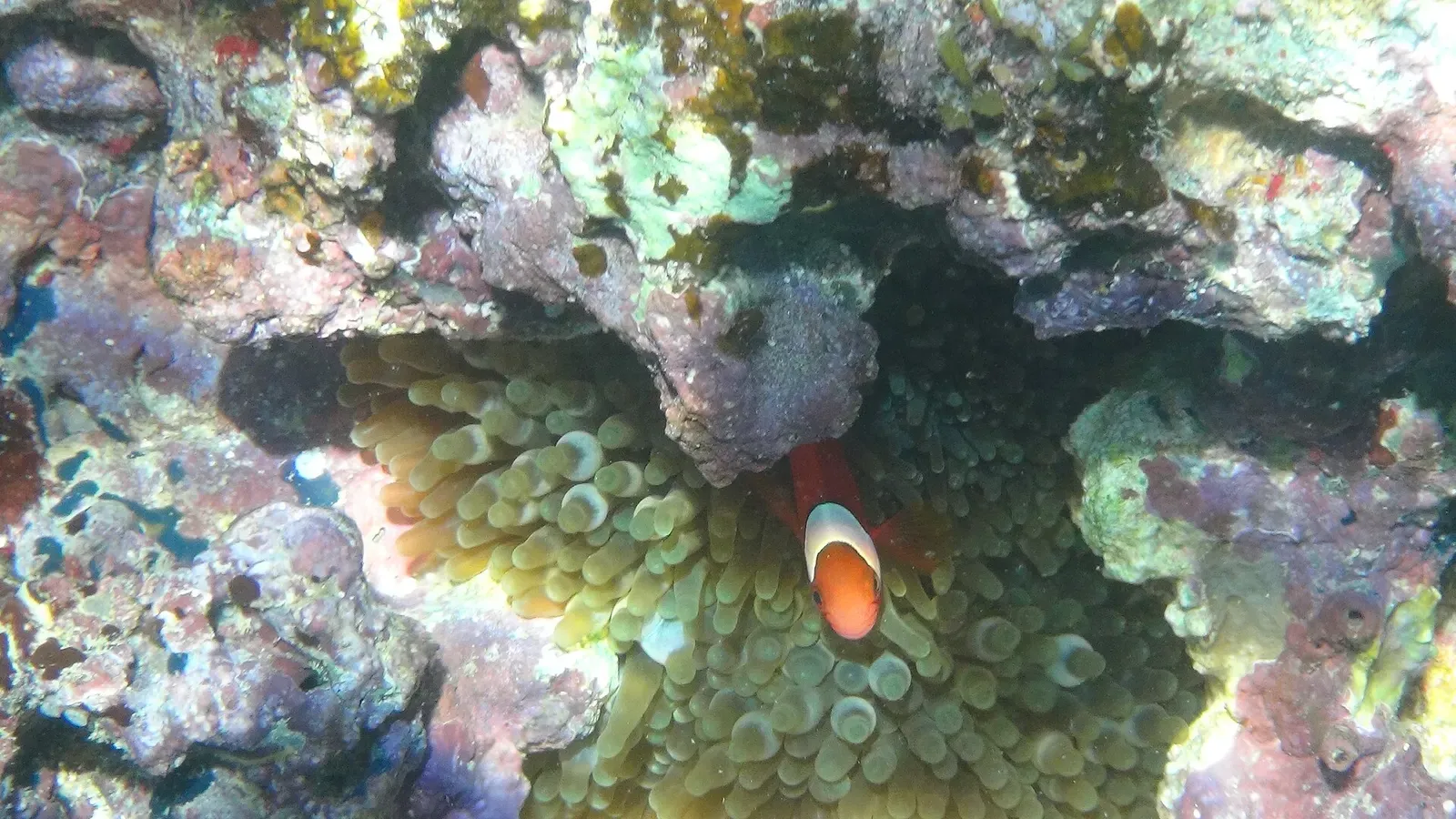
Soft coral, sea fans and shoaling fusiliers are the constant, and the macro runs all year: nudibranchs, frogfish, pygmy seahorses on the fans, cuttlefish and octopus, with turtles over the shallower reef. April to September rates highest, when the channels are calmest and the current-fed rocks fish best; December to February still dives, though wind decides which side of the island you get.
- Reef
- Wall
- Drift
- Muck & macro
- Night
- Coral garden
- Pristine corals
- Nudibranchs
- Macro critters
- Pygmy seahorses
- Frogfish
- Octopus & cuttlefish
- Reef fish swarms
- Sea turtles
Best dive sites in Bangka Island
Pinnacle
Vertical cracks and caves in volcanic pinnacles, sharks below
Wall
Coral slope from 3 m to a wall that drops to 30 m
Pinnacle
A canyon-cut plateau at 15 m before the drop to 40 m
Pinnacle
Three pinnacles stepping from 5 m down to a base near 30 m
Coral garden
Three coral blocks on a garden falling from 3 m to sand at 30 m
Coral garden
Healthy coral garden from 3 m down to 18 m off the village
Reef
Coral blocks on sand, with schooling fish over a slow slope
Coral garden
Coral garden from 1 m to sand at 13 m, straight off the beach
Elephant ear sponges and soft coral on rocks that break the surface
Muck & macro
A sandy incline from 3 m to 25 m, dived for the small stuff
Muck & macro
Muck diving on a sand slope, without crossing to Lembeh
Lihaga
Sheltered island with a white-sand slope, used for macro and check dives.
How to get to Bangka Island
Manado is the gateway. Resorts arrange the road transfer north to Likupang and the boat crossing from there, and it is worth taking theirs rather than improvising, as public boats run to their own schedule. Diving is by day boat with the house reef reachable from shore, and the crossing is the part the December-to-February wind affects most, so leave slack around flights.
Photos from Bangka Island
Jean-Paul Boerekamps · CC0
Jean-Paul Boerekamps · CC0
Jean-Paul Boerekamps · CC0
Jean-Paul Boerekamps · CC0
Dive videos
Bangka Island Diving | Incredible Marine Life of North Sulawesi | Indonesia 2025 · Diver's Lens on YouTube
The Best Dive Site on Bangka Island: Sahaung #scubadiving #indonesia #bangka · Scuba Diving and Dogs on YouTube
Photo credits
- Wooden jetty stretching over clear turquoise water toward a palm-lined beach on Bangka Island by Fabio Achilli, CC BY 2.0, via Wikimedia Commons
- Painted spiny lobster with long banded antennae tucked among coral rubble by Jean-Paul Boerekamps, CC0, via Wikimedia Commons
- Magnificent anemone shrimp perched on the frilled, spotted tentacles of its host anemone by Jean-Paul Boerekamps, CC0, via Wikimedia Commons
- Translucent anemone shrimp with blue-tipped claws camouflaged among striped tentacles by Jean-Paul Boerekamps, CC0, via Wikimedia Commons
- Close-up of finger coral polyps with pale centers covering a reef boulder by Jean-Paul Boerekamps, CC0, via Wikimedia Commons
Embed
Run a dive centre, club or blog? Embed this map of 12 dive sites near Bangka Island on your own page.
Similar destinations
Sheer walls drop from the surface, patrolled by turtles and napoleon wrasse.

Slow scans over black sand reveal mimic octopus and hairy frogfish.
Walls from 5 m past 60, and a dive base of its own
.jpg)


A limestone wall the length of the coast, dived by almost nobody