
Atlantic · Portugal
Azores — Pico & Faial
Open-water mobula ray carousels at Princess Alice Bank each summer
Photo: Diego Delso · CC BY-SA 4.0
Small boats run far offshore from Faial and Pico to submerged seamounts like Princess Alice Bank and Condor, where divers wait in open blue water for migratory sharks and, from July through September, carousels of dozens of giant mobula rays rising from deep water to cleaning stations. Sperm whales are resident year-round and dolphins are common on the ride out. There is no fringing reef here — this is current-driven, open-ocean diving over volcanic banks far from shore, with a scattering of calmer coastal sites near Horta.
About diving in Azores — Pico & Faial
A day on the offshore banks is a commitment rather than a dive slot. Boats leave the harbour early, run for hours across open ocean, and the group dives, eats and waits on board before covering the same distance home; there is nowhere to shelter in between. Skippers make the call on the morning from the swell and the forecast, so book a week rather than a single trip and treat a lost day or two as normal. Shorter coastal runs and whale-watching trips fill the gaps.
The diving asks for discipline more than technique. Once you are in, there is often no bottom in sight and nothing to hold, so depth is managed on your computer, the group stays tight around the guide, and everyone moves with whatever the water is doing. Entries are quick and the wait before anything shows can be long. Divers used to working along a reef or a wall often find the first blue-water dive disorienting, and most settle into it within a couple of days.
Close to the islands the character changes. The rock is black basalt cut into arches, ledges and boulder slopes, with algae and encrusting growth in place of coral, so the palette runs grey-green rather than tropical, and one of the sheltered Faial sites sits inside a volcanic crater breached by the sea. These runs are short, cheap and far less exposed, which makes them the fallback when an offshore trip is scrubbed and the sensible place to shake gear down at the start of a week. Training and check dives happen here too.
It suits divers already comfortable in open water who would rather have one strong encounter than a high dive count. Bring more exposure protection than the latitude suggests: the water stays cool by holiday standards even at its late-summer peak, and thermoclines offshore can be sharp. Anyone after easy shallow reef, macro subjects or a guaranteed two dives every morning will be happier elsewhere. Non-divers are well served, with whale-watching boats leaving the same harbours and Pico's volcano across the water from Horta.
Best time to dive Azores — Pico & Faial
| Jan | Feb | Mar | Apr | May | Jun | Jul | Aug | Sep | Oct | Nov | Dec | |
|---|---|---|---|---|---|---|---|---|---|---|---|---|
| Season | Off-season | Off-season | Off-season | Fair | Good | Prime | Prime | Prime | Prime | Good | Fair | Off-season |
| Sea surface | 17°C63°F | 16°C61°F | 16°C61°F | 16°C61°F | 17°C63°F | 20°C68°F | 22°C72°F | 24°C75°F | 23°C73°F | 21°C70°F | 19°C66°F | 18°C64°F |
| Daytime high | 18°C64°F | 17°C63°F | 17°C63°F | 18°C64°F | 19°C66°F | 22°C72°F | 24°C75°F | 25°C77°F | 25°C77°F | 23°C73°F | 21°C70°F | 19°C66°F |
| Rain | 95 mm3.7 in | 81 mm3.2 in | 87 mm3.4 in | 71 mm2.8 in | 75 mm3.0 in | 36 mm1.4 in | 34 mm1.3 in | 51 mm2.0 in | 70 mm2.8 in | 96 mm3.8 in | 102 mm4.0 in | 110 mm4.3 in |
| Jan | Feb | Mar | Apr | May | Jun |
|---|---|---|---|---|---|
| Off-season | Off-season | Off-season | Fair | Good | Prime |
| Sea surface | |||||
| 17°C63°F | 16°C61°F | 16°C61°F | 16°C61°F | 17°C63°F | 20°C68°F |
| Daytime high | |||||
| 18°C64°F | 17°C63°F | 17°C63°F | 18°C64°F | 19°C66°F | 22°C72°F |
| Rain | |||||
| 95 mm3.7 in | 81 mm3.2 in | 87 mm3.4 in | 71 mm2.8 in | 75 mm3.0 in | 36 mm1.4 in |
| Jul | Aug | Sep | Oct | Nov | Dec |
|---|---|---|---|---|---|
| Prime | Prime | Prime | Good | Fair | Off-season |
| Sea surface | |||||
| 22°C72°F | 24°C75°F | 23°C73°F | 21°C70°F | 19°C66°F | 18°C64°F |
| Daytime high | |||||
| 24°C75°F | 25°C77°F | 25°C77°F | 23°C73°F | 21°C70°F | 19°C66°F |
| Rain | |||||
| 34 mm1.3 in | 51 mm2.0 in | 70 mm2.8 in | 96 mm3.8 in | 102 mm4.0 in | 110 mm4.3 in |
2011–2025 averages. Sea surface: NOAA Coral Reef Watch, measured at the surface, so deeper water can run colder. Daytime high and rain: NASA POWER.
Jun–Sep brings warm water, calmer Atlantic swell, and peak mobula and shark activity at the seamounts; winter storms shut down offshore boat trips.
Best months: June, July, August, September
Azores water temperature and weather by month
The sea surface runs from 16 °C (61 °F) in March to 24 °C (75 °F) in August. It is 24 °C (75 °F) or warmer from August. Most rain falls from October to March, peaking at about 110 mm (4.3 in) in December; June and July are the driest. Daytime highs reach 25 °C (77 °F) in August and drop to 17 °C (63 °F) in February. The coldest water here is about 16 °C (61 °F), so pack a 7 mm suit with a hood, or a semi-dry.
Dive types & marine life
Big-animal odds track the season. Blue shark trips run through the prime June-to-September window, when the sea is calm enough to reach the banks, and use chum to hold the sharks; the mobula gathering is narrower still, a mid-to-late-summer event. Mola mola, tuna, jacks and barracuda show across the same stretch, dolphins often on the crossing, and whales stay through the closed winter months.
- Seamount
- Pelagic & blue water
- Drift
- Reef
- Blue & mako sharks
- Whales
- Dolphins
- Mobula rays
- Mola mola
- Tuna
- Trevally & jacks
- Barracuda
Best dive sites in Azores — Pico & Faial
Pelagic & blue water
Baited blue-water dives with blue sharks and makos
Pinnacle
A swimthrough under the longer of the two islets
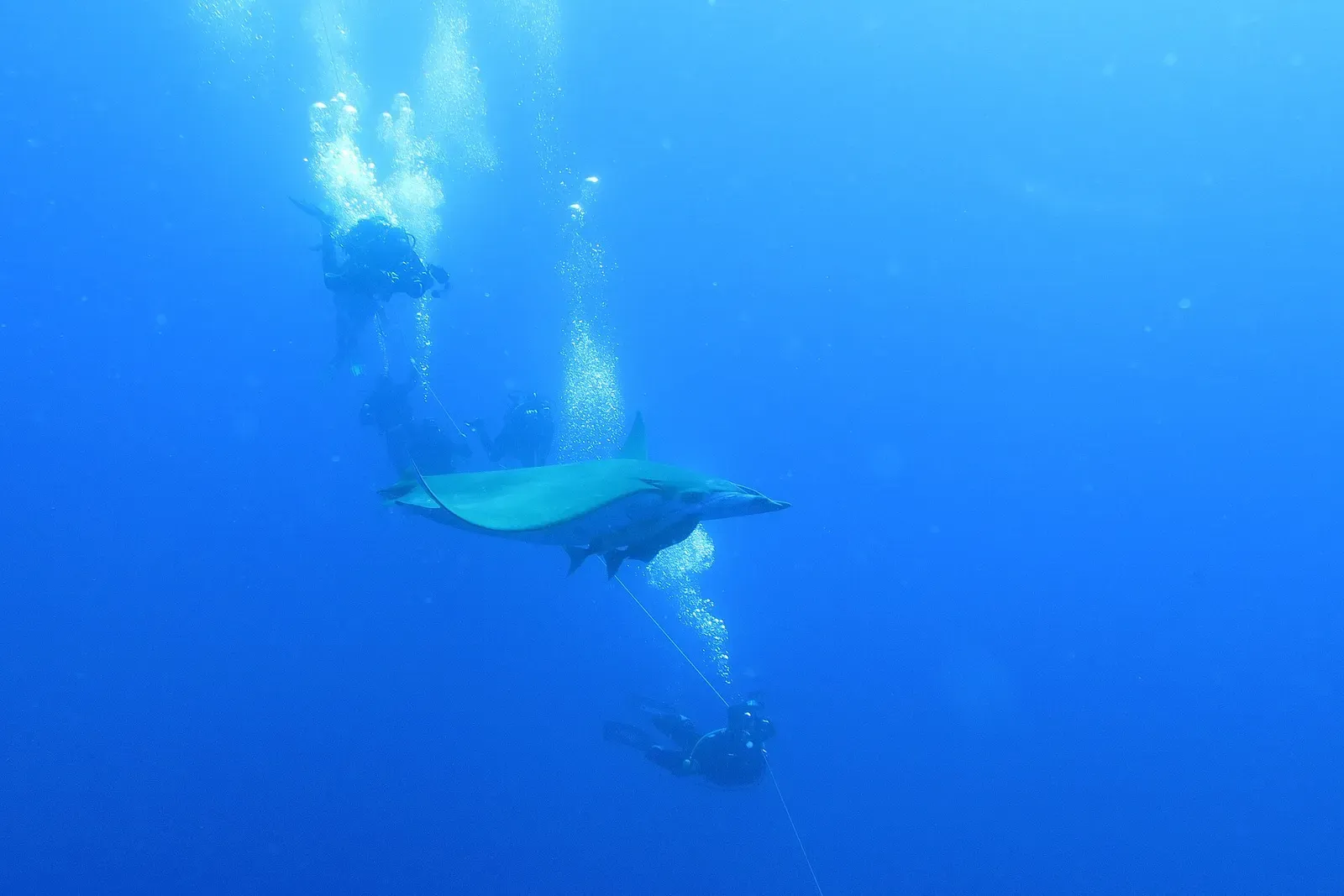
A seamount summit 45 nautical miles out, dived on a descent line
Monte da Guia
Sheltered volcanic bay reserve off Faial for easier reef dives
Arcos do Pocinho
Twin volcanic rock arches off Pico thick with schooling fish
How to get to Azores — Pico & Faial
Horta on Faial and Madalena on Pico are the two bases, linked by a short ferry across the channel that runs several times a day in season, and both islands have small airports reached via Lisbon or Ponta Delgada. All diving is by boat and the offshore banks are sold as full-day trips, so staying near the harbour saves early transfers.
Photos from Azores — Pico & Faial
Josep M. Gracia · CC BY-SA 4.0
Dive videos
Mobula Rays & Ocean Giants: Diving The Princess Alice Seamount In The Azores · Dive SAGA - Scuba diving on YouTube
Blue Sharks at Condor Bank Azores Portugal HD · Pieter Offringa on YouTube
Photo credits
- A diver swims alongside a blue shark in open blue water in the Fayal-Pico channel, Azores by Diego Delso, CC BY-SA 4.0, via Wikimedia Commons
- Panoramic view of Horta's marina, bay and the green slopes of Faial Island by Josep M. Gracia, CC BY-SA 4.0, via Wikimedia Commons
Embed
Run a dive centre, club or blog? Embed this map of 7 dive sites near Azores on your own page.
In The Logbook
- Where to dive in every month of the yearTrip planning · 14 min read
- Where can you legally swim with whales?Big animals · 14 min read
Similar destinations
Atlantic
Azores — São Jorge & Graciosa
Portugal
Pelagic schools on Rosais Reef and resident groupers in Pesqueiro Alto's caves
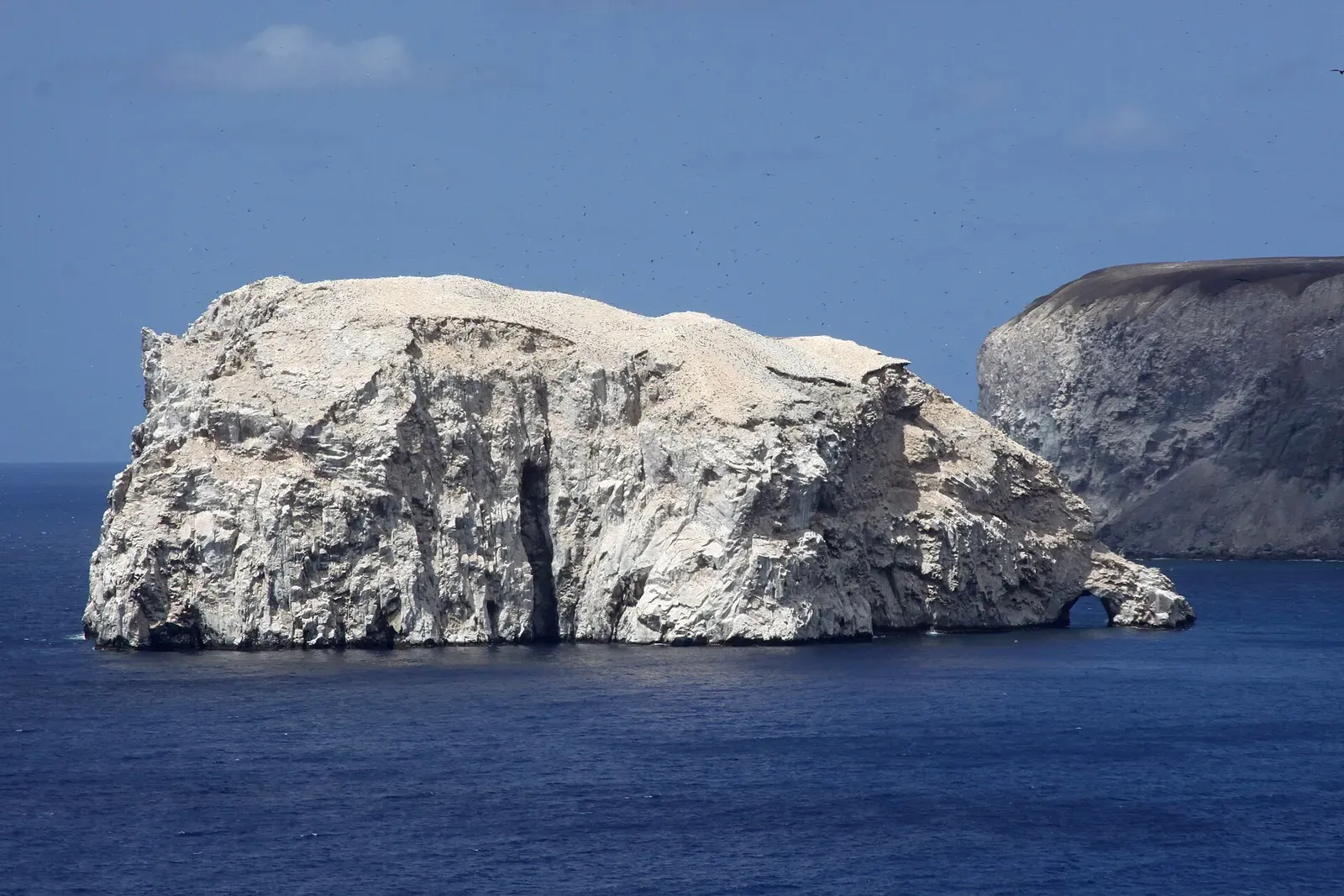
Black triggerfish swarm thick enough to block out the light
Atlantic
Azores — Santa Maria
Portugal
Mobula rays over the Baixa do Ambrósio seamount each summer

_y_submarinista,_canal_Fayal-Pico,_islas_Azores,_Portugal,_2020-07-27,_DD_08.jpg)

Hannibal Bank rises from 400 m and pulls in billfish and tuna