Bayahibe · Dominican Republic · Cave & cavern · Freshwater
Cueva Padre Nuestro
Taíno artefacts in place in a 9 m freshwater cave
Area photo: Pc.wiki4 · CC BY-SA 4.0
A flooded freshwater cave in the limestone behind Bayahibe, inside Cotubanamá National Park, reached on foot along about 1.9 km of forest trail from the park gate. The diving is shallow — around 6 m on average and 9 m at the deepest — but it is fully overhead, and Taíno artefacts are still in place in a cave the Taíno drew drinking water from.
Where it is and how deep
18.3739° N, 68.8135° WPublished position for this site.
The dive
Getting there is part of the dive. There is an entrance fee at the park gate, and then about 1.9 km of forest trail with tanks and kit before you reach the water, so groups are small and the pace of the day is set by the walk rather than by the diving. Everything you dive with goes in on your back.
The entry is a freshwater pool that opens into passage below. Depths stay modest — around 6 m on average and 9 m at the deepest point — but the environment is overhead from the moment you leave the entrance pool, and the dives are guided: cavern certification or an intro-to-cavern course is the entry requirement, and full cave training is what takes you further in.
The cave is a named part of the Padre Nuestro complex, the sector of the park that also holds Cueva de Chicho, Cueva El Toro and Cueva Brujo, all freshwater pools the Taíno used as a source of drinking water. The walls carry Taíno carvings and paintings, and artefacts remain on the floor, which is why the diving here is permitted, guided and firmly hands-off.
Marine life and season
The sources we used don't single out particular species here.
| Jan | Feb | Mar | Apr | May | Jun | Jul | Aug | Sep | Oct | Nov | Dec |
|---|---|---|---|---|---|---|---|---|---|---|---|
| Prime | Prime | Prime | Prime | Good | Good | Good | Fair | Fair | Fair | Good | Good |
Season follows Bayahibe: January to April is the driest stretch and October the wettest; Atlantic hurricane season runs June to November and peaks from late August into September.
Know before you go
- Fully overhead from the entrance pool: cavern training, a local guide, a torch each and a continuous guideline are entry requirements here, not extras.
- Archaeological material is still in place on the floor. Silting out a passage is a conservation problem here as well as a visibility one.
- Fresh water changes your weighting: one diver who needs four pounds of lead in salt water with a 3 mm suit carried none at all in this cave.
Questions divers ask
How deep is Cueva Padre Nuestro?+
Shallow: about 6 m on average and 9 m at the deepest point. What makes the dive demanding is the overhead environment, the guideline and the 1.9 km walk in with kit, not the depth.
Do you need cave certification for Padre Nuestro?+
Cavern certification, or an intro-to-cavern course, is the usual requirement, and the dive has to be done with a local guide. How far into the system you go decides whether full cave certification is needed.
Sources
- Cueva Padre Nuestro Dive Site Guide — Divemaster Austin
- Cueva de Chicho: Bayahibe's Hidden Underground Cave — HolaBayahibe
- Cotubanamá National Park — Wikipedia
- Cueva Padre Nuestro (position) — OpenStreetMap
More dive sites in Bayahibe
Wreck
A whole ship at 12 m, in water bright enough to read it from above
Wall
A 6 m coral slope that reaches an edge and drops away
Reef
A FUNDEMAR coral nursery and sunken statues at 12 m
Reef
A park reef 25 minutes out, split into three dive points
Reef
Cannons and a musket rack set out on a park reef
Wreck
Top of the wreck at 15 m, bow on the sand at 44 m
Similar dives elsewhere
Cave & cavern
Dan's Cave
South Abaco Blue Holes · Bahamas
Cascade Room entrance leads to crystal rooms with names like Fangorn Forest
Cave & cavern
Ralph's Cave
South Abaco Blue Holes · Bahamas
Formations 13,000 to 350,000 years old inside a deep, roller-coaster passage
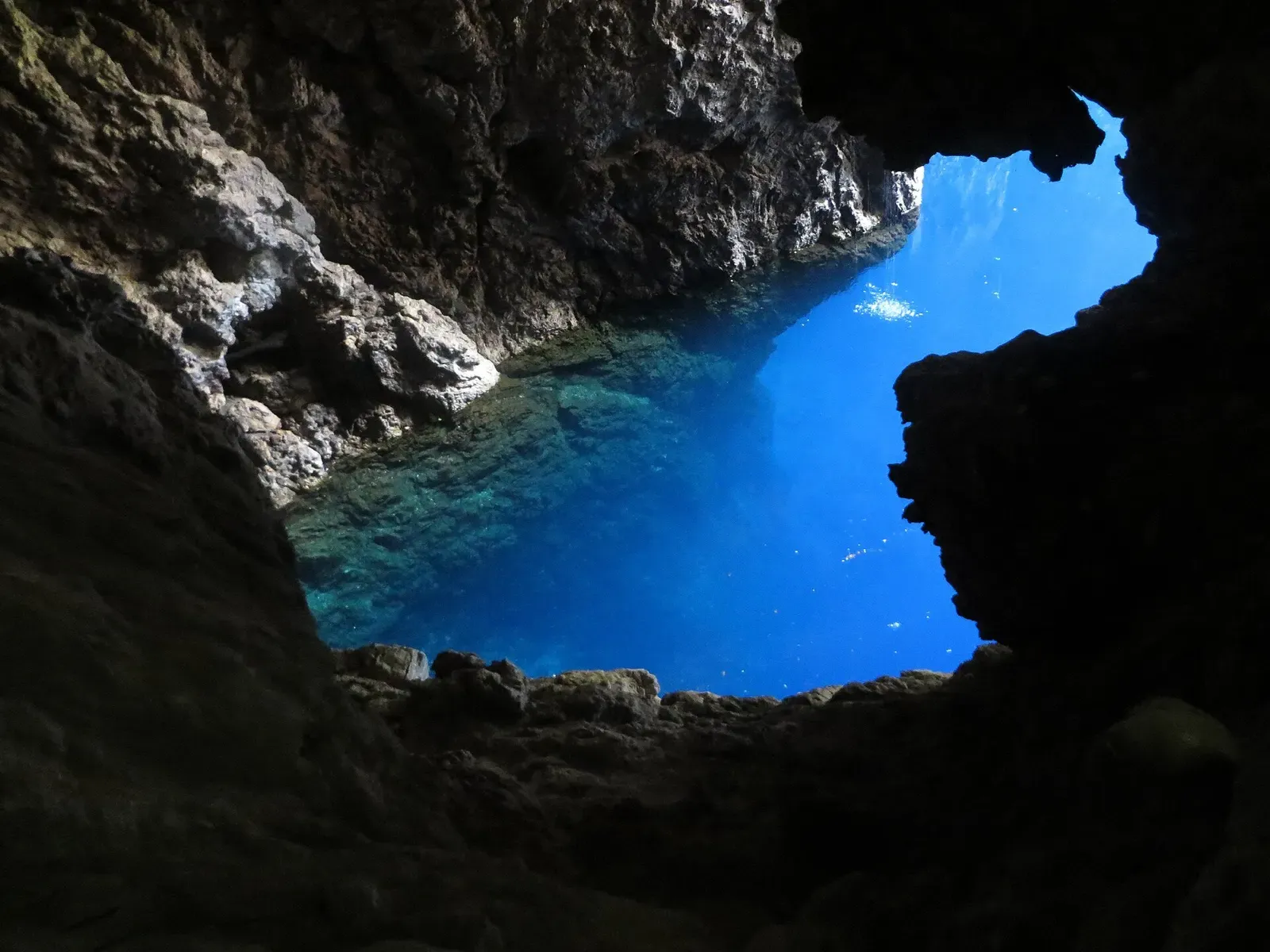
A guano-floored side pool linked underwater to the main Sleeping Pool shaft


A shallow air-filled cavern next to Mushroom Forest