Belize Barrier Reef · Belize · Blue hole · Cave & cavern
Great Blue Hole
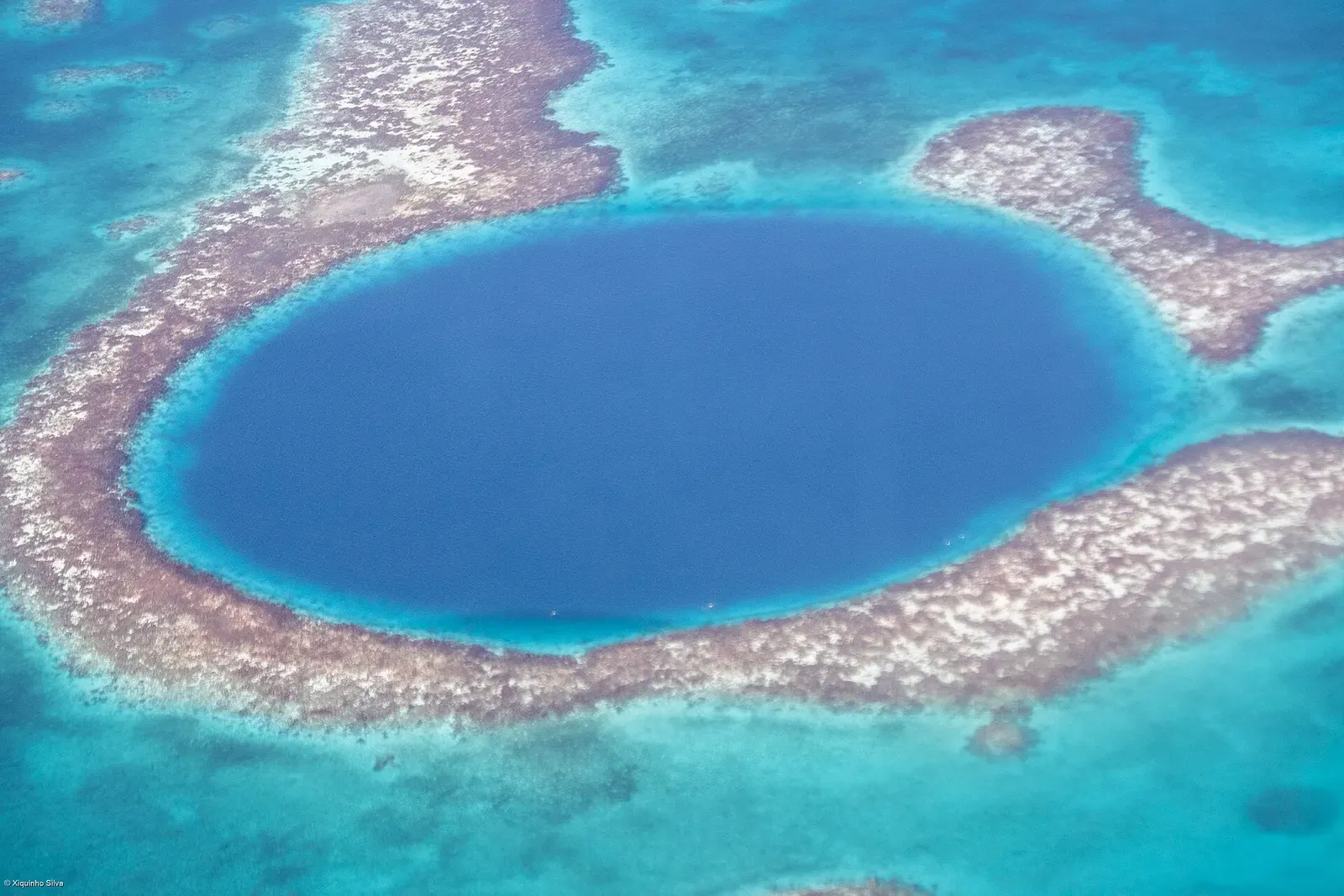
Ice-age stalactites hanging from 30 m inside a 124-metre shaft
Photo: xiquinhosilva · CC BY 4.0
The Great Blue Hole is a circular marine sinkhole near the centre of Lighthouse Reef, an atoll about 70 km off the Belize mainland: 318 metres across, 124 metres deep and ringed by shallow coral. Divers come for the geology rather than the reef, a short, dark drop down a near-vertical wall to limestone stalactites that grew in open air during the ice ages, before the sea rose and drowned the shaft.
Also known as Blue Hole, Belize Blue Hole, Blue Hole Natural Monument.
Where it is and how deep
17.3153° N, 87.5344° WPublished position for this site.
The dive
Day boats tie up to the monument's mooring buoys, and the Blue Hole is the first dive of a three-dive day. Groups settle on the rim, where the reef edge sits at about 5 metres and slopes to 10, then drop down the near-vertical wall on the north or the south side, depending on the weather. Staying close to the wall is what keeps you oriented: the light turns blue-grey fast, the water temperature barely changes, and below the lip there is little coral, only algae, sea plants and feather-duster worms.
On the south wall the shallowest cave systems start at about 30 metres (100 ft), where the wall cuts back into an overhang hung with stalactites more than a metre (3 ft) across and up to 6 metres (20 ft) long. Fallen stalactites litter a lower ledge about 15 metres further down, with stalagmites rising from it and a cavern entrance beyond. The north wall carries stalactites at 30 to 42 metres but no lower ledge. Guides turn at about 40 metres (130 ft), and the whole dive lasts about 25 minutes.
The climb back up the same face is when the sharks usually appear: Caribbean reef sharks and bull sharks often rise out of the depths as groups ascend, and nurse sharks and blacktips patrol the upper wall. The safety stop is spent on the rim reef among groupers, angelfish, butterflyfish and midnight parrotfish, with Pederson's cleaner shrimp and neon gobies on the coral heads. Great hammerheads and lemon sharks are occasional visitors, and green, hawksbill and loggerhead turtles are seen from the rim.
The monument has no land and no facilities beyond the mooring buoys, so the rest of the day happens elsewhere on the atoll. After the surface interval boats make two more dives, chosen on the day by weather and tide, and commonly Half Moon Caye Wall and the Aquarium, with a lunch stop on Half Moon Caye in between.
Background
The shaft formed in stages during the Quaternary ice ages, when the sea stood far lower. Stalactites date its dry spells to 153,000, 66,000, 60,000 and 15,000 years ago, and many hang tilted, a sign the plateau itself shifted. Jacques Cousteau charted it from Calypso in 1971. A 1997 expedition of cave-certified mixed-gas divers cored the floor, a 2018 submarine survey mapped the interior by sonar, and a 30-metre sediment core drilled in 2022 recorded 574 storms over 5,700 years. The Blue Hole Natural Monument was declared in 1996 and is part of the Belize Barrier Reef Reserve System World Heritage Site.
Marine life and season
- Reef sharks
- Bull sharks
- Hammerheads
- Lemon sharks
- Groupers
- Sea turtles
| Jan | Feb | Mar | Apr | May | Jun | Jul | Aug | Sep | Oct | Nov | Dec |
|---|---|---|---|---|---|---|---|---|---|---|---|
| Fair | Fair | Prime | Prime | Prime | Fair | Fair | Fair | Fair | Fair | Fair | Fair |
Season follows Belize Barrier Reef: March to May is the dry season, when visibility at Turneffe can pass 30 m (100 ft); rain and northerly winds take the shine off the other months.
Know before you go
- Below roughly 91 metres a layer of hydrogen sulfide leaves the water dark, anoxic and devoid of life, and the shaft continues to 124 metres, far past any recreational limit.
- The dive goes to about 40 m (130 ft), well past the 18 m (60 ft) an Open Water card covers; it needs solid buoyancy control and easy equalising.
- The profile is deep and short with no reef to finish on until the rim: plan gas and ascent before you drop, because the way out is a long climb back up an open wall.
- In December 2018 a submarine survey found the bodies of two divers on the floor, two of three believed lost in the hole. They were left there out of respect.
- Trips run only with enough divers booked, and rough seas can make the crossing to Lighthouse Reef impossible.
Photos from Great Blue Hole
Axelspace Corporation · CC BY-SA 4.0
jayhem from Antibes, France · CC BY-SA 2.0
Dive videos
DIVING THE GREAT BLUE HOLE - Belize · UNDERWATER EXPLORATIONS on YouTube
Questions divers ask
How deep is the Great Blue Hole?+
The shaft is 124 metres (407 feet) deep. Recreational dives stay in the upper section, to about 40 metres: the rim reef sits at about 5 metres and slopes to 10 before the wall drops away, and the stalactites start at about 30. Below roughly 91 metres a hydrogen sulfide layer leaves the water anoxic and lifeless.
Where is the Great Blue Hole?+
Near the centre of Lighthouse Reef, an atoll about 70 km (43 mi) off the Belize mainland and Belize City, roughly halfway between Half Moon Caye and Northern Caye. Boats take about three hours from Ambergris Caye and four from Placencia.
Can a beginner dive the Great Blue Hole?+
Not as a first deep dive. Guides take groups to about 40 m (130 ft), well past the 18 m (60 ft) an Open Water certification covers, so Advanced Open Water or a deep-diving course comes first. Snorkellers can swim the rim, where the reef is only a few feet below the surface.
What will I see in the Blue Hole?+
Limestone stalactites and stalagmites rather than coral. Groupers, angelfish, butterflyfish and midnight parrotfish live around the rim, and Caribbean reef, bull, nurse and blacktip sharks are seen on the wall. Great hammerheads, lemon sharks and three species of turtle are occasional visitors.
Sources
- Great Blue Hole — Wikipedia
- Blue Hole Natural Monument — Belize Audubon Society
- Great Blue Hole dive site — Dive The World
- Diving The Great Blue Hole in Belize: What You Need to Know — PADI
- Belize Blue Hole Diving Requirements — Sandy Point Resorts
- 5,700-Year Storm Archive Shows Rise in Tropical Storms and Hurricanes in the Caribbean — Goethe University Frankfurt
Photo credits
- Aerial view of the Great Blue Hole's dark circular sinkhole ringed by pale turquoise reef flats. by xiquinhosilva, CC BY 4.0, via Wikimedia Commons
- Satellite photo of the Great Blue Hole as a dark circle set within Lighthouse Reef's turquoise flats. by Axelspace Corporation, CC BY-SA 4.0, via Wikimedia Commons
- Yellow brain coral and tube sponges on the shallow rim of the Great Blue Hole in deep blue water. by jayhem from Antibes, France, CC BY-SA 2.0, via Wikimedia Commons
In The Logbook
- How deep can you scuba dive?Body & health · 13 min read
- What are thermoclines and haloclines?Ocean science · 8 min read
- What is a blue hole, and what's down there?Caves & caverns · 13 min read
- Why is 1.4 bar the oxygen limit in diving?Body & health · 13 min read
- Gas density: why deep air gets hard to breatheBody & health · 8 min read
- Cavern and cenote diving without cave trainingCaves & caverns · 8 min read
More dive sites in Belize Barrier Reef
Reef
Gullies cut across a submerged spur-and-groove reef
Reef
One big coral bommie ringed by schooling bar jacks
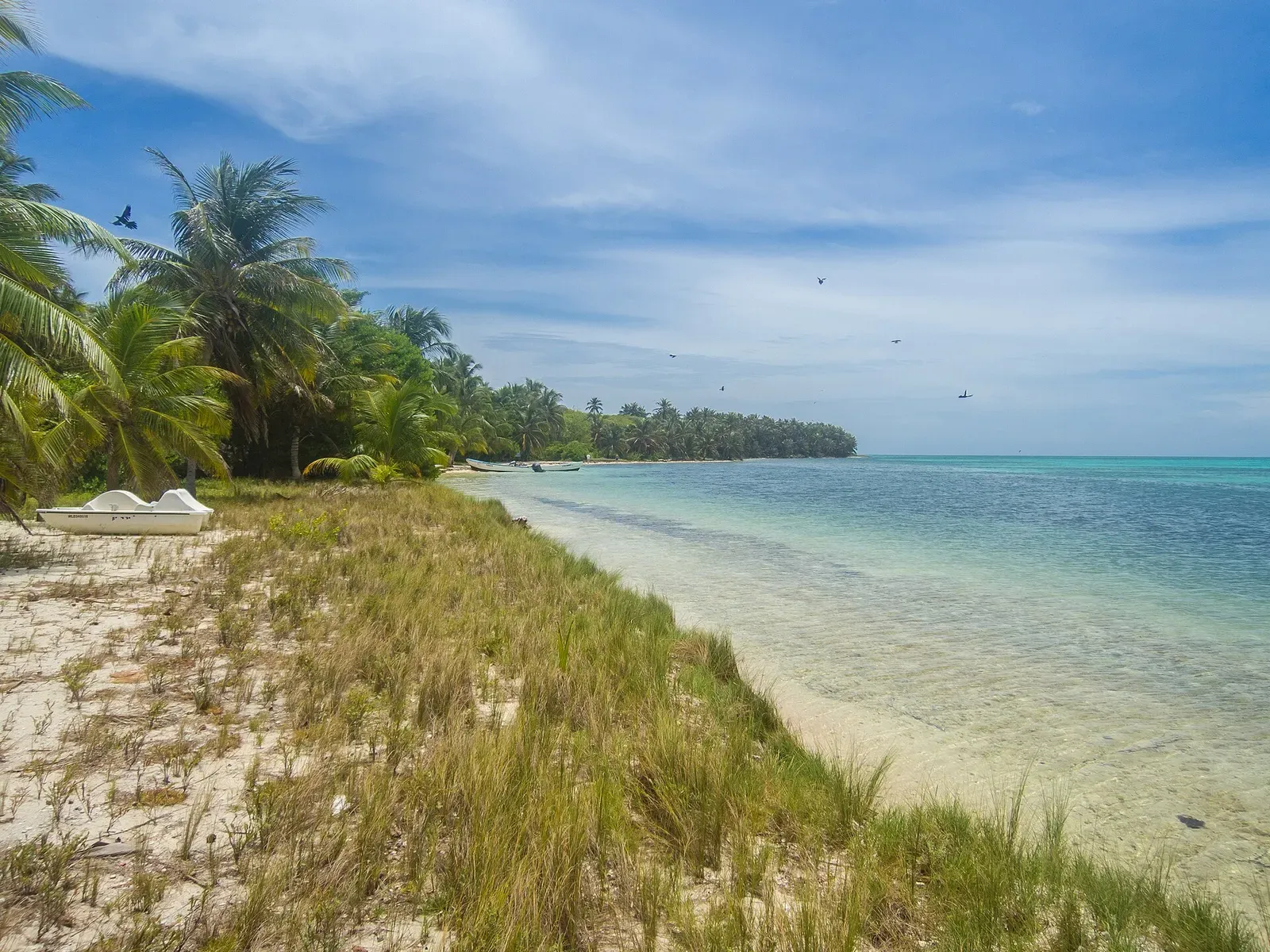
Caribbean reef sharks and bull sharks patrolling a vertical wall
Wall
Eagle rays off a sponge-hung wall on Turneffe's east coast
Pelagic & blue water
Whale sharks feeding on snapper spawn between March and June
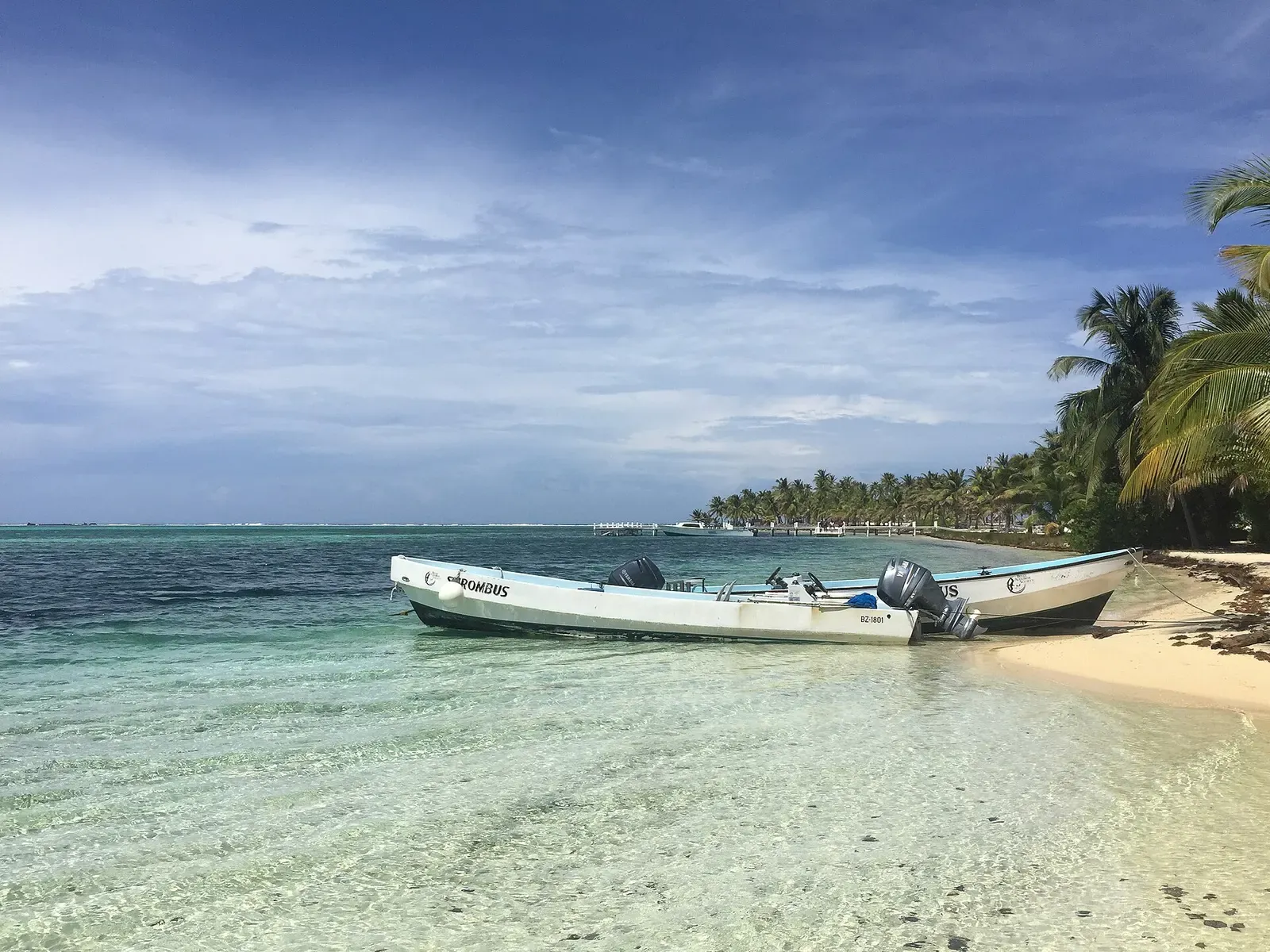
Garden eels on the sand, then a wall that falls past 914 m (3,000 ft)
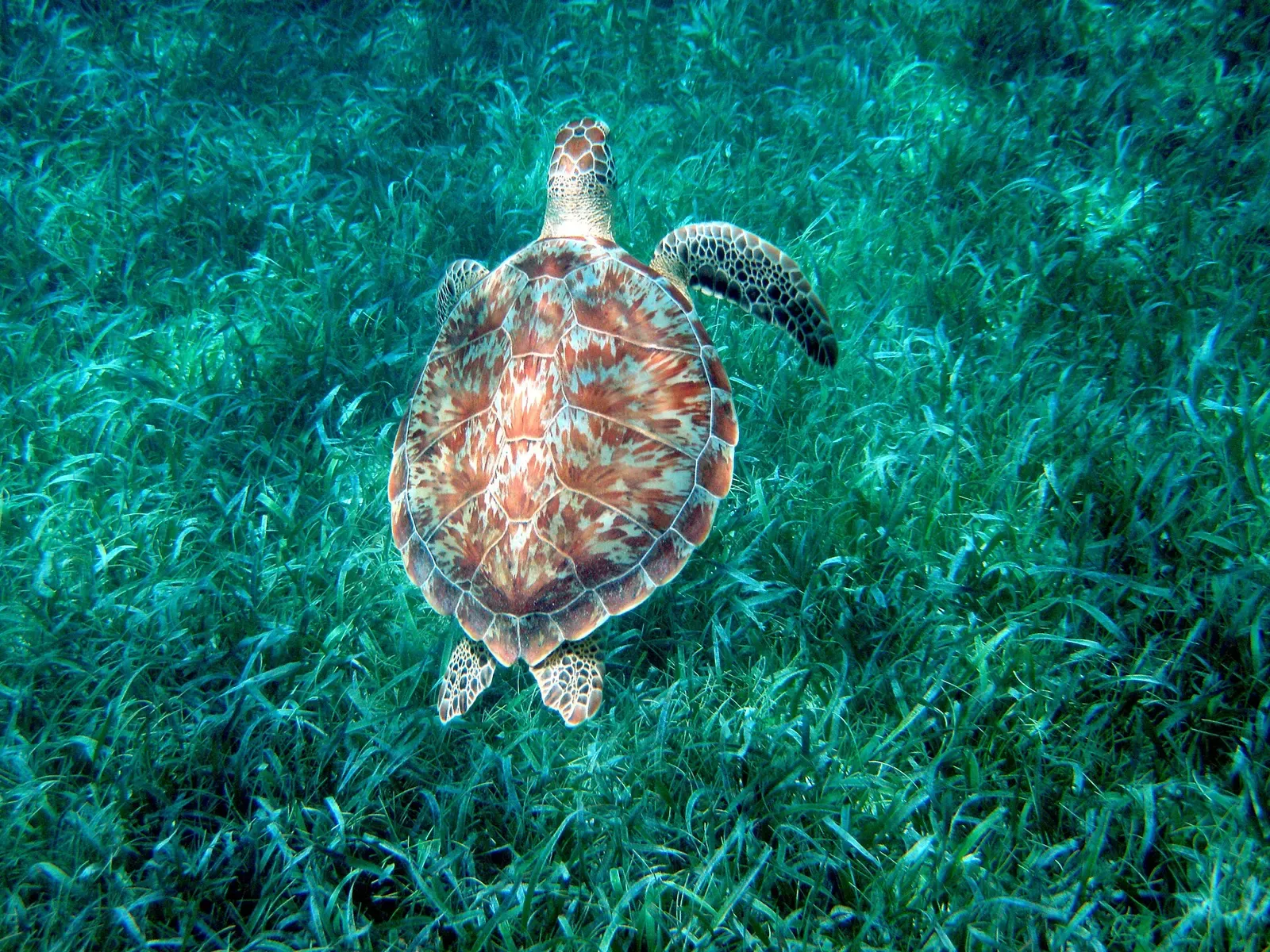
A 9-metre reef cut, with nurse sharks and stingrays next door
Three big parrotfish species along the top of the wall
Similar dives elsewhere
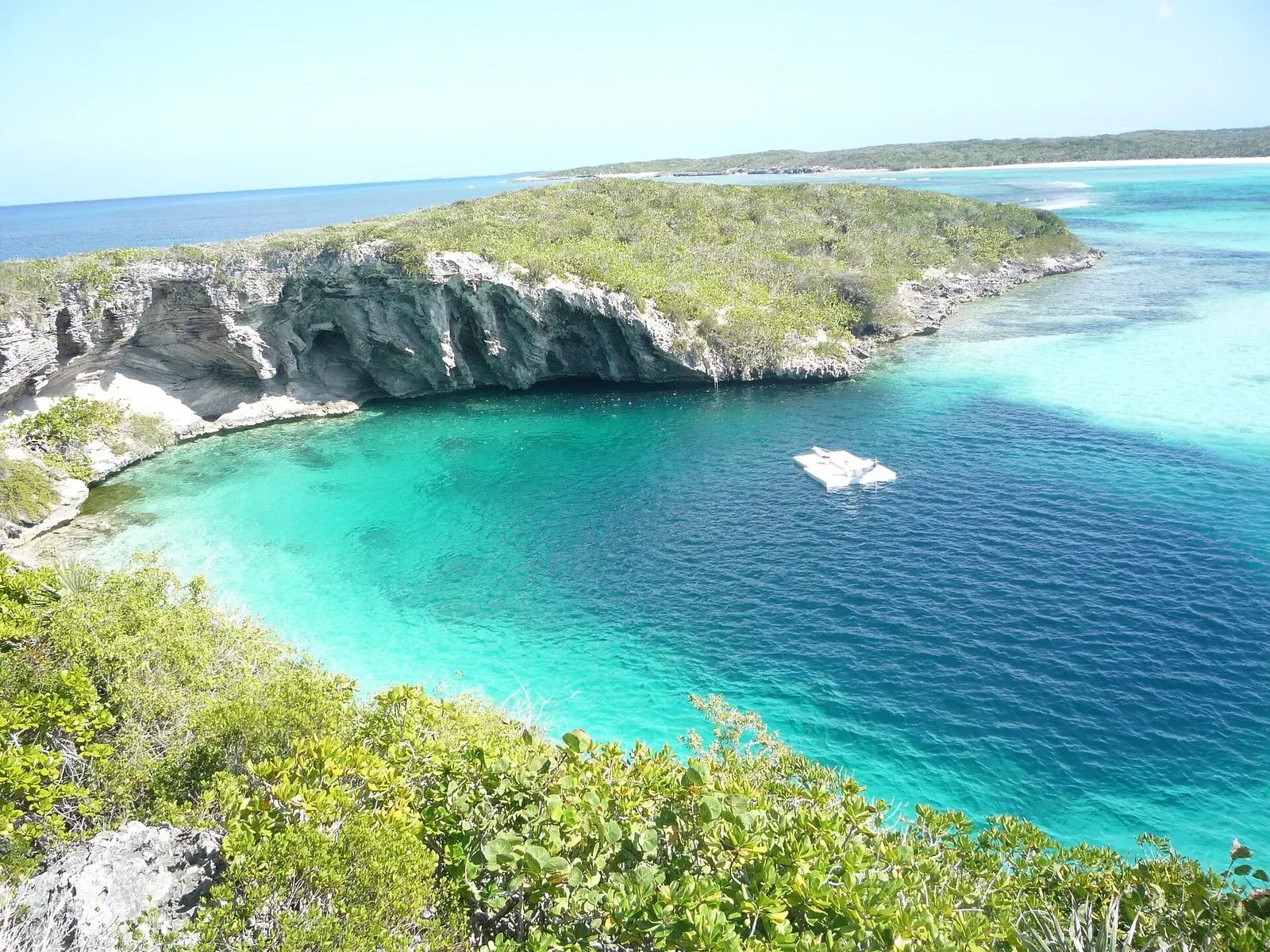
A 202 m blue hole off a beach, home of the Vertical Blue freediving contest

A vertical shaft with side caverns at its 18 m base

A 30 m-wide hole rimmed with coral at 12 m, dropping to 60 m


A vertical chimney through the reef with a cave exit