
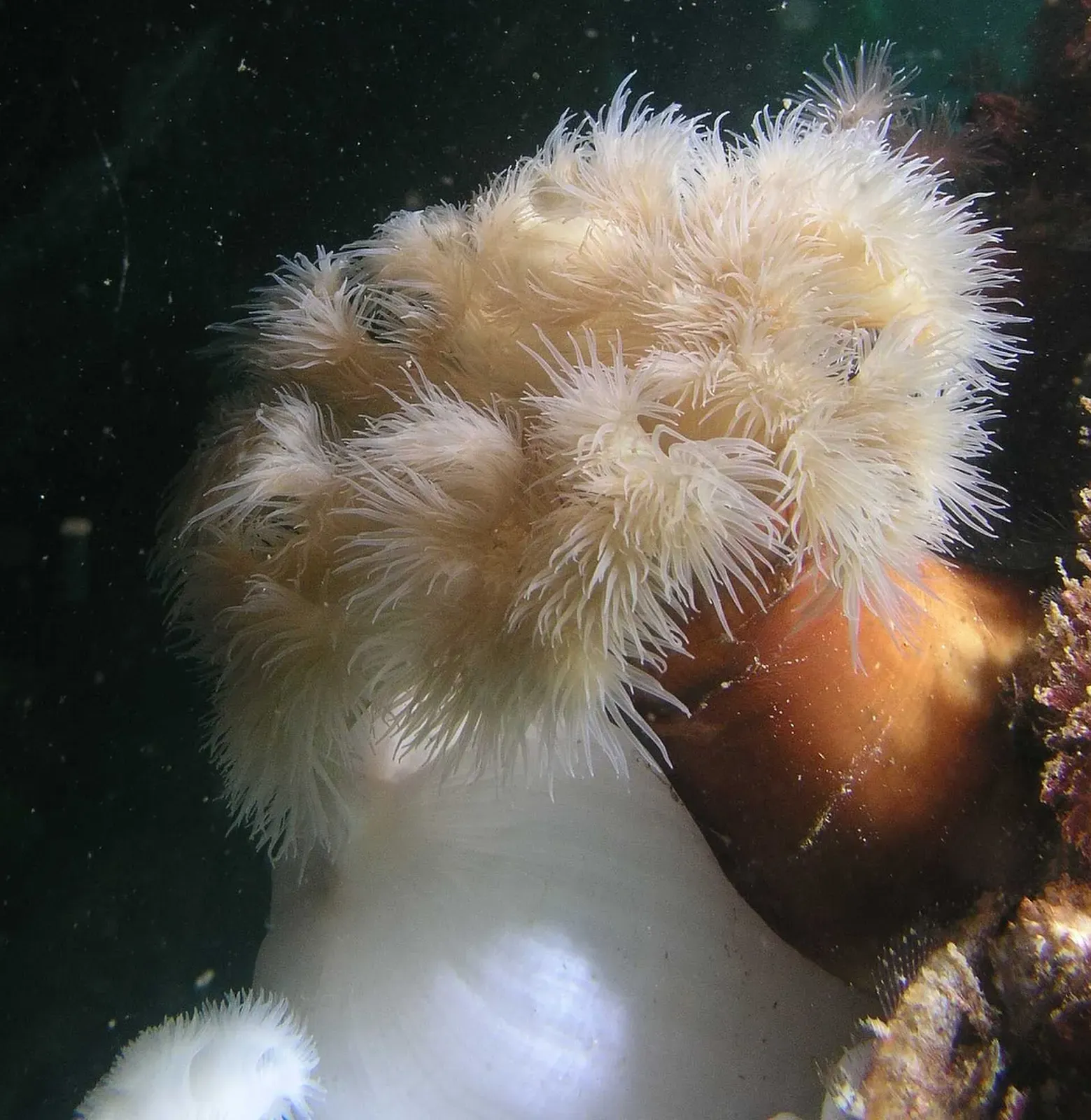
Browning Pass, off the north end of Vancouver Island near Port Hardy, is cold, nutrient-rich water nicknamed the 'Emerald Sea' for its green tint and dense marine growth. Vertical walls are packed with white and orange plumose anemones, giant Pacific octopus den in rock crevices, and bull kelp forests line the shallows. The area, home to lodges like God's Pocket, is often cited among the best cold-water diving anywhere for its combination of density, color, and megafauna.
About diving in British Columbia — Browning Pass
Almost everyone dives this from a lodge rather than a town: a boat transfer out of Port Hardy, then three dives a day, sometimes a fourth after dark, off a small aluminium boat with runs measured in minutes rather than hours. The tide book writes the schedule, since the current-swept sites only work near slack, so dives land at odd hours and meals move to suit, and the crew will change a plan at short notice if the flood arrives early. You stay in the drysuit between dives; the run home is rarely long enough to be worth peeling out of it.
Sites sort into three kinds. The walls start within a couple of metres of the surface and the cover is dense from the top down, so a whole dive can pass inside the first fifteen metres without missing much, which is unusual for diving of this reputation. Pinnacles and boulder reefs off the passes are den country, undercut and occupied. Then there are the tidal rapids over on the mainland side, a much longer run and less a dive than a timed insertion into the few minutes when the water stops moving.
Colour is what people come back for, and it is not only the anemone banks. Strawberry anemones carpet the rock between them in pink and red, encrusting sponge fills what is left in yellow and orange, and bare stone is hard to find on a good wall. In the rapids, gooseneck barnacles crust the rock at Turret Rock, where they are locally noted for unusually red flesh, fed by the same flow that makes the site awkward to dive at all. Photographers shoot wide for the walls and macro for everything else, and still surface with a list of things they had no lens for.
It is a demanding trip in the ordinary sense rather than the technical one. Getting there costs a full travel day, the running season is a summer one, and everything hinges on the crew reading the tide correctly. The diving itself stays shallow, most of it inside 30 m, so what ends a dive is cold and the closing tide window rather than depth or decompression. It suits photographers, divers who care about invertebrates, and anyone who has done enough warm reef and wants something with more texture to it.
Best time to dive British Columbia — Browning Pass
| Jan | Feb | Mar | Apr | May | Jun | Jul | Aug | Sep | Oct | Nov | Dec | |
|---|---|---|---|---|---|---|---|---|---|---|---|---|
| Season | Off-season | Off-season | Off-season | Fair | Good | Prime | Prime | Prime | Prime | Good | Fair | Off-season |
| Sea surface | 8°C46°F | 8°C46°F | 8°C46°F | 8°C46°F | 9°C48°F | 10°C50°F | 12°C54°F | 12°C54°F | 11°C52°F | 10°C50°F | 9°C48°F | 8°C46°F |
| Daytime high | 10°C50°F | 9°C48°F | 13°C55°F | 17°C63°F | 21°C70°F | 22°C72°F | 23°C73°F | 24°C75°F | 23°C73°F | 18°C64°F | 12°C54°F | 10°C50°F |
| Rain | 228 mm9.0 in | 170 mm6.7 in | 166 mm6.5 in | 131 mm5.2 in | 90 mm3.5 in | 101 mm4.0 in | 76 mm3.0 in | 84 mm3.3 in | 151 mm5.9 in | 206 mm8.1 in | 260 mm10.2 in | 239 mm9.4 in |
| Jan | Feb | Mar | Apr | May | Jun |
|---|---|---|---|---|---|
| Off-season | Off-season | Off-season | Fair | Good | Prime |
| Sea surface | |||||
| 8°C46°F | 8°C46°F | 8°C46°F | 8°C46°F | 9°C48°F | 10°C50°F |
| Daytime high | |||||
| 10°C50°F | 9°C48°F | 13°C55°F | 17°C63°F | 21°C70°F | 22°C72°F |
| Rain | |||||
| 228 mm9.0 in | 170 mm6.7 in | 166 mm6.5 in | 131 mm5.2 in | 90 mm3.5 in | 101 mm4.0 in |
| Jul | Aug | Sep | Oct | Nov | Dec |
|---|---|---|---|---|---|
| Prime | Prime | Prime | Good | Fair | Off-season |
| Sea surface | |||||
| 12°C54°F | 12°C54°F | 11°C52°F | 10°C50°F | 9°C48°F | 8°C46°F |
| Daytime high | |||||
| 23°C73°F | 24°C75°F | 23°C73°F | 18°C64°F | 12°C54°F | 10°C50°F |
| Rain | |||||
| 76 mm3.0 in | 84 mm3.3 in | 151 mm5.9 in | 206 mm8.1 in | 260 mm10.2 in | 239 mm9.4 in |
2011–2025 averages. Sea surface: NOAA Coral Reef Watch, measured at the surface, so deeper water can run colder. Daytime high and rain: NASA POWER.
Most operators run June through September for reliable weather and access; water is famously clearer in winter but few trips run then, and conditions turn harsh.
Best months: June, July, August, September
British Columbia water temperature and weather by month
The sea surface runs from 8 °C (46 °F) in February to 12 °C (54 °F) in August. Most rain falls from October to March, peaking at about 260 mm (10 in) in November; July and August are the driest. Daytime highs reach 24 °C (75 °F) in August and drop to 9 °C (48 °F) in February. The coldest water here is about 7 °C (45 °F), so pack a drysuit.
Dive types & marine life
Giant Pacific octopus turn up on ordinary sites rather than being saved for one signature dive, and wolf-eels sit in paired dens beneath the boulders. Nudibranchs are reliable on the walls right through the season. Harbour seals and Steller sea lions use nearby rocks and sometimes come to look. Orcas are a boat-deck sighting rather than an in-water one, most likely across July to September.
- Wall
- Kelp forest
- Muck & macro
- Drift
- Octopus & cuttlefish
- Seals & sea lions
- Orcas
- Nudibranchs
- Macro critters
Best dive sites in British Columbia — Browning Pass
Wreck
Broken freighter wreck half in kelp, half on the reef, 8 to 24 m
Browning Wall
Vertical wall coated in soft corals and giant anemones.
Seven Tree Island
Wall and pinnacle dive known for octopus and nudibranch sightings.
Nakwakto Rapids
One of the fastest tidal rapids in the world, dived only at slack water.
God's Pocket
Sheltered home reef near the main lodge, used for shallower check dives.
How to get to British Columbia — Browning Pass
Port Hardy is the jumping-off point, reached by a short flight from Vancouver or a drive of roughly five hours up Vancouver Island from the Nanaimo ferry terminals. Lodges such as God's Pocket collect divers there by boat, and a few liveaboards work the same water. There is no shore diving worth the trip, and a drysuit is not optional.
Photos from British Columbia — Browning Pass
Len@Loblolly Photo · CC BY 2.0
Dive videos
Scuba Diving Browning Pass (4K) | Jewel of the Emerald Sea | Port Hardy, Vancouver Island · Uncharted Odyssey on YouTube
Diving God's Pocket 2024 (4k) · Bronson Folz-Edwards on YouTube
Photo credits
- Forested islets sit in the calm water of Queen Charlotte Strait with layered coast mountains behind by Roy Luck, CC BY 2.0, via Wikimedia Commons
- A red-roofed lighthouse station sits on a forested point above the water near Port Hardy by Len@Loblolly Photo, CC BY 2.0, via Wikimedia Commons
Similar destinations
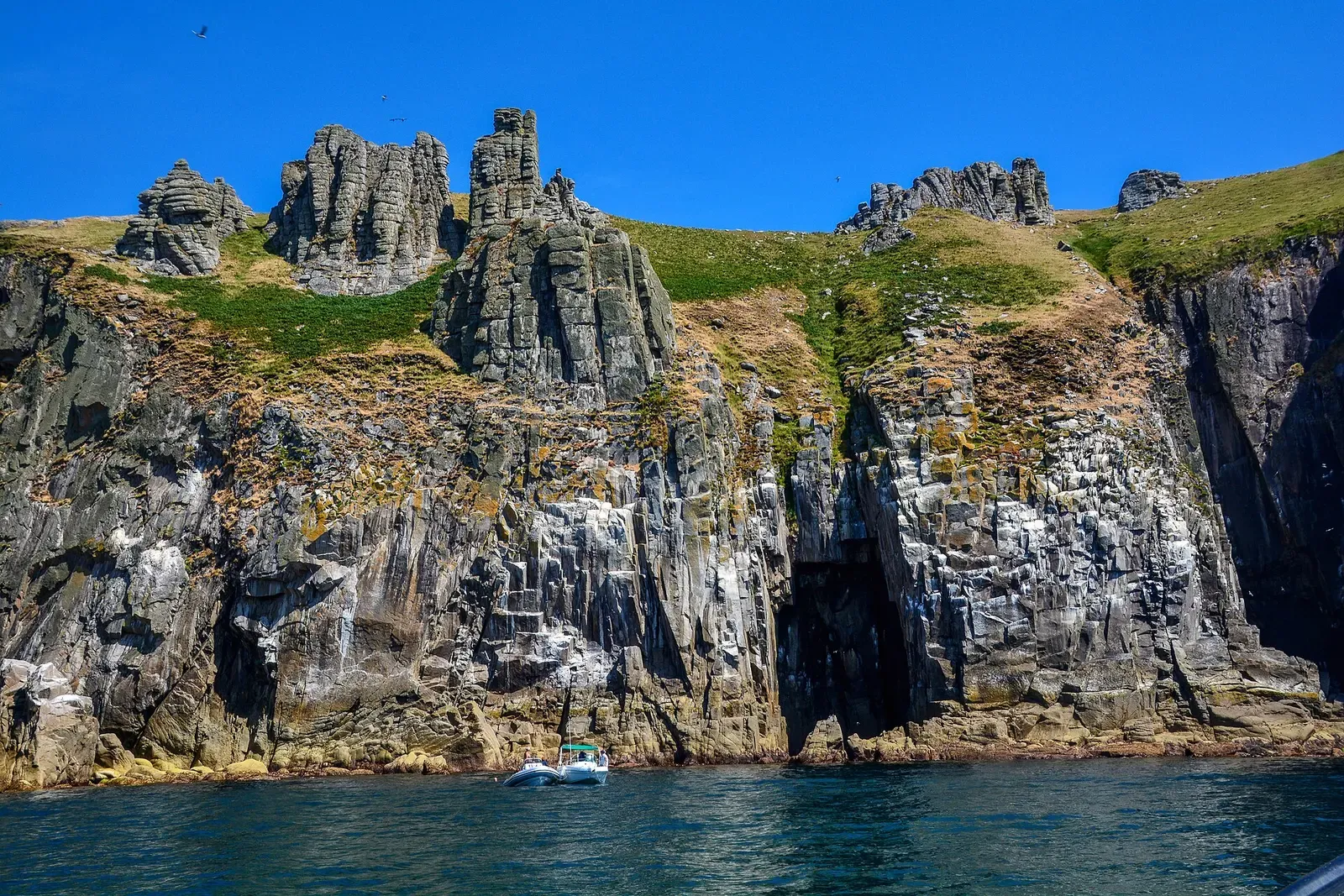
England's first marine reserve, and its grey seals follow divers around
Cold-water walls, wrecks and wolf eels in Puget Sound and Hood Canal

The Rondo stands almost vertical, stern at 15 m and bow at 50


Basalt cliffs continuing underwater into surprisingly clear Atlantic water