
Cold Water · Faroe Islands
Faroe Islands
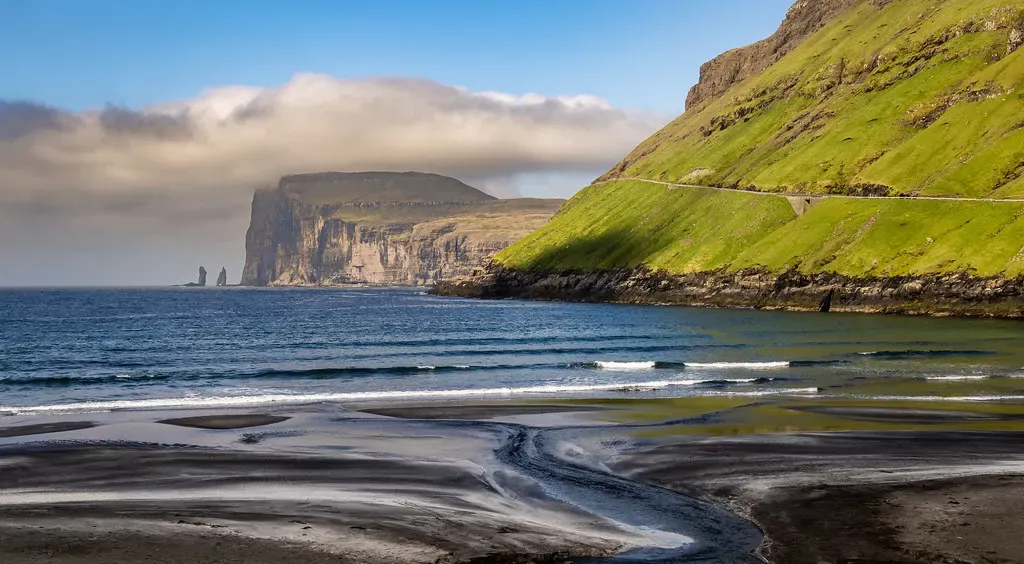
Basalt cliffs continuing underwater into surprisingly clear Atlantic water
Photo: Karsten Koehn karstenkoehn · CC0
The Faroes are eighteen basalt islands halfway between Norway and Iceland, and their cliffs continue underwater as sheer walls into water that is startlingly clear for the latitude — 25 m is common. Tidal streams between the islands are enormous and dictate everything: slack windows are short, and the same flow that makes planning difficult feeds dense kelp and invertebrate growth. The scene is tiny, weather-dependent and entirely expedition-flavoured.
About diving in Faroe Islands
The day is built backwards from the tide table. Briefing, drive and launch are all timed off the window the skipper is aiming at, so a dive can fall at breakfast or late in the evening, which at 62°N in midsummer is still daylight. Boats are small and run short crossings from sheltered harbours, and plenty of sites are reached by road instead, with kit in the back of a van and a walk down to the water.
Underwater the rock reads as what it is: stacked lava flows stepping down in ledges, with the sea cut in along the softer beds between them to leave overhangs, arches and blind cuts. Sites divide by exposure more than by depth. Headlands and islets out in the stream carry the densest growth and are dived on the turn of the tide; the fjords and sounds behind them stay workable when the outside is not, and take the check dives, the training, and the days when the forecast collapses.
Plans stay provisional right up to the water. Wind and swell decide which coast is diveable, so operators keep alternates on different sides of the group and reshuffle in the morning; a week inside the May-to-September season can produce a run of good days or a run of blown-out ones. Visibility splits the same way, with the flow-fed outside usually the clearer water while sheltered fjords green up when the plankton is running. At its best the dive is a basalt face falling away, kelp still laid flat by the last of the stream, seabird colonies working the cliff overhead.
This suits self-sufficient divers travelling as a group, comfortable being turned around and content to plan around tides rather than be handed a schedule. It rewards anyone who values structure, kelp and cold Atlantic water over animal encounters, and who would rather log a few hard-won dives than a full week of them. It is a poor choice for a first cold-water trip, for anyone on fixed dates who needs the dives to happen, or for divers wanting a taught progression.
Best time to dive Faroe Islands
| Jan | Feb | Mar | Apr | May | Jun | Jul | Aug | Sep | Oct | Nov | Dec | |
|---|---|---|---|---|---|---|---|---|---|---|---|---|
| Season | Off-season | Off-season | Off-season | Fair | Good | Prime | Prime | Prime | Good | Fair | Off-season | Off-season |
| Sea surface | 7°C45°F | 6°C43°F | 6°C43°F | 7°C45°F | 8°C46°F | 9°C48°F | 10°C50°F | 10°C50°F | 10°C50°F | 10°C50°F | 9°C48°F | 8°C46°F |
| Daytime high | 9°C48°F | 9°C48°F | 9°C48°F | 9°C48°F | 11°C52°F | 12°C54°F | 13°C55°F | 13°C55°F | 13°C55°F | 12°C54°F | 10°C50°F | 10°C50°F |
| Rain | 119 mm4.7 in | 110 mm4.3 in | 96 mm3.8 in | 71 mm2.8 in | 74 mm2.9 in | 76 mm3.0 in | 80 mm3.1 in | 89 mm3.5 in | 111 mm4.4 in | 126 mm5.0 in | 111 mm4.4 in | 144 mm5.7 in |
| Jan | Feb | Mar | Apr | May | Jun |
|---|---|---|---|---|---|
| Off-season | Off-season | Off-season | Fair | Good | Prime |
| Sea surface | |||||
| 7°C45°F | 6°C43°F | 6°C43°F | 7°C45°F | 8°C46°F | 9°C48°F |
| Daytime high | |||||
| 9°C48°F | 9°C48°F | 9°C48°F | 9°C48°F | 11°C52°F | 12°C54°F |
| Rain | |||||
| 119 mm4.7 in | 110 mm4.3 in | 96 mm3.8 in | 71 mm2.8 in | 74 mm2.9 in | 76 mm3.0 in |
| Jul | Aug | Sep | Oct | Nov | Dec |
|---|---|---|---|---|---|
| Prime | Prime | Good | Fair | Off-season | Off-season |
| Sea surface | |||||
| 10°C50°F | 10°C50°F | 10°C50°F | 10°C50°F | 9°C48°F | 8°C46°F |
| Daytime high | |||||
| 13°C55°F | 13°C55°F | 13°C55°F | 12°C54°F | 10°C50°F | 10°C50°F |
| Rain | |||||
| 80 mm3.1 in | 89 mm3.5 in | 111 mm4.4 in | 126 mm5.0 in | 111 mm4.4 in | 144 mm5.7 in |
2011–2025 averages. Sea surface: NOAA Coral Reef Watch, measured at the surface, so deeper water can run colder. Daytime high and rain: NASA POWER.
May–Sep is the practical season; North Atlantic weather closes the islands for days at a time even in midsummer.
Best months: June, July, August
Faroe Islands water temperature and weather by month
The sea surface runs from 6 °C (43 °F) in February to 10 °C (50 °F) in August. Rain falls through the year, about 100 mm (3.9 in) a month on average, with December the wettest. Daytime highs reach 13 °C (55 °F) in July and drop to 9 °C (48 °F) in February. The coldest water here is about 6 °C (43 °F), so pack a drysuit.
Dive types & marine life
Kelp and invertebrate turf carry most of the interest, with nudibranchs and small crustaceans on the flow-fed rock and shoals of saithe over the shallows through the June-to-August peak. Grey seals are regular around the islets. Whales, pilot whales among them, are a summer sighting from the boat rather than something you dive with.
- Wall
- Kelp forest
- Reef
- Cave & cavern
- Drift
- Seals & sea lions
- Macro critters
- Nudibranchs
- Reef fish swarms
- Whales
Best dive sites in Faroe Islands
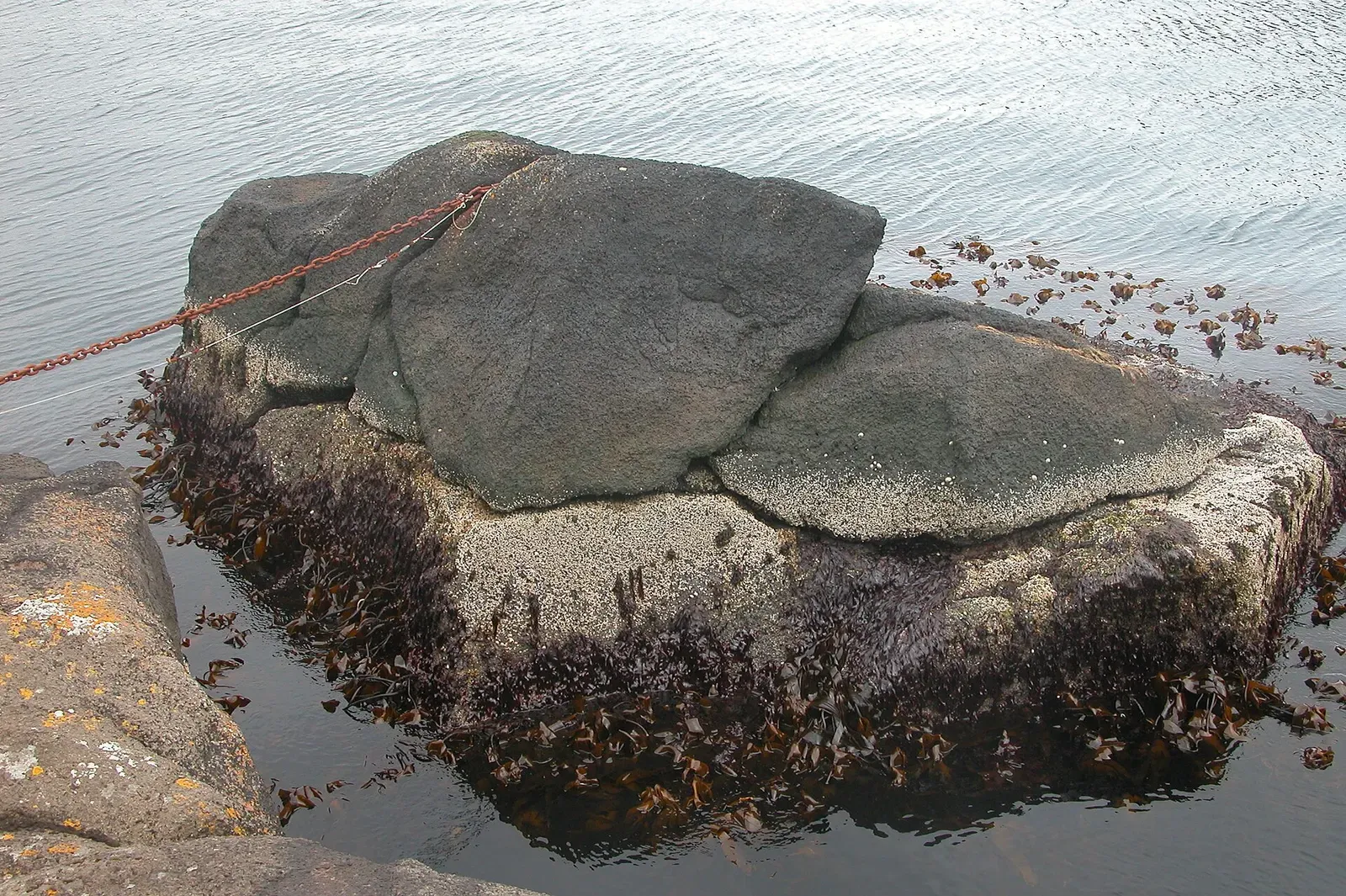
Rock fissures near the end of the Tjørnuvík jetty
An overhang on a boulder you can hear moving
Vestmanna
Sea-cliff coast with caves, arches and walls dropping into clear water.
Tindhólmur
Jagged islet off Vágar with vertical basalt and heavy current.
Hestur
Island with sea caves and kelp walls, dived on short slack windows.
Klaksvík
Sheltered northern fjord used as the base and for training dives.
How to get to Faroe Islands
Flights land at Vágar, the only airport, and the Smyril Line ferry from Hirtshals in Denmark calls at Tórshavn. Tórshavn is the usual base, with Klaksvík in the north reached by subsea tunnel and ferries and helicopters covering the outer islands. Diving is small boats and shore entries arranged with local operators well ahead; no liveaboards work here.
Dive videos
Scuba Diving Faroe Islands - Faroe Islands Above & Below · Global Dive Media on YouTube
Wreck diving Faroe Islands Ása II · North Atlantic Diving on YouTube
Photo credits
- A single road winds through a grassy valley toward the Atlantic, with a steep island rising offshore in the Faroes. by Karsten Koehn karstenkoehn, CC0, via Wikimedia Commons
Embed
Run a dive centre, club or blog? Embed this map of 2 dive sites near Faroe Islands on your own page.
In The Logbook
- Wetsuit thickness by water temperatureGear & kit · 11 min read
- What is surge in diving, and how deep it goesOcean science · 8 min read
- Cold-water diving: is it worth the drysuit?Cold water · 8 min read
Similar destinations
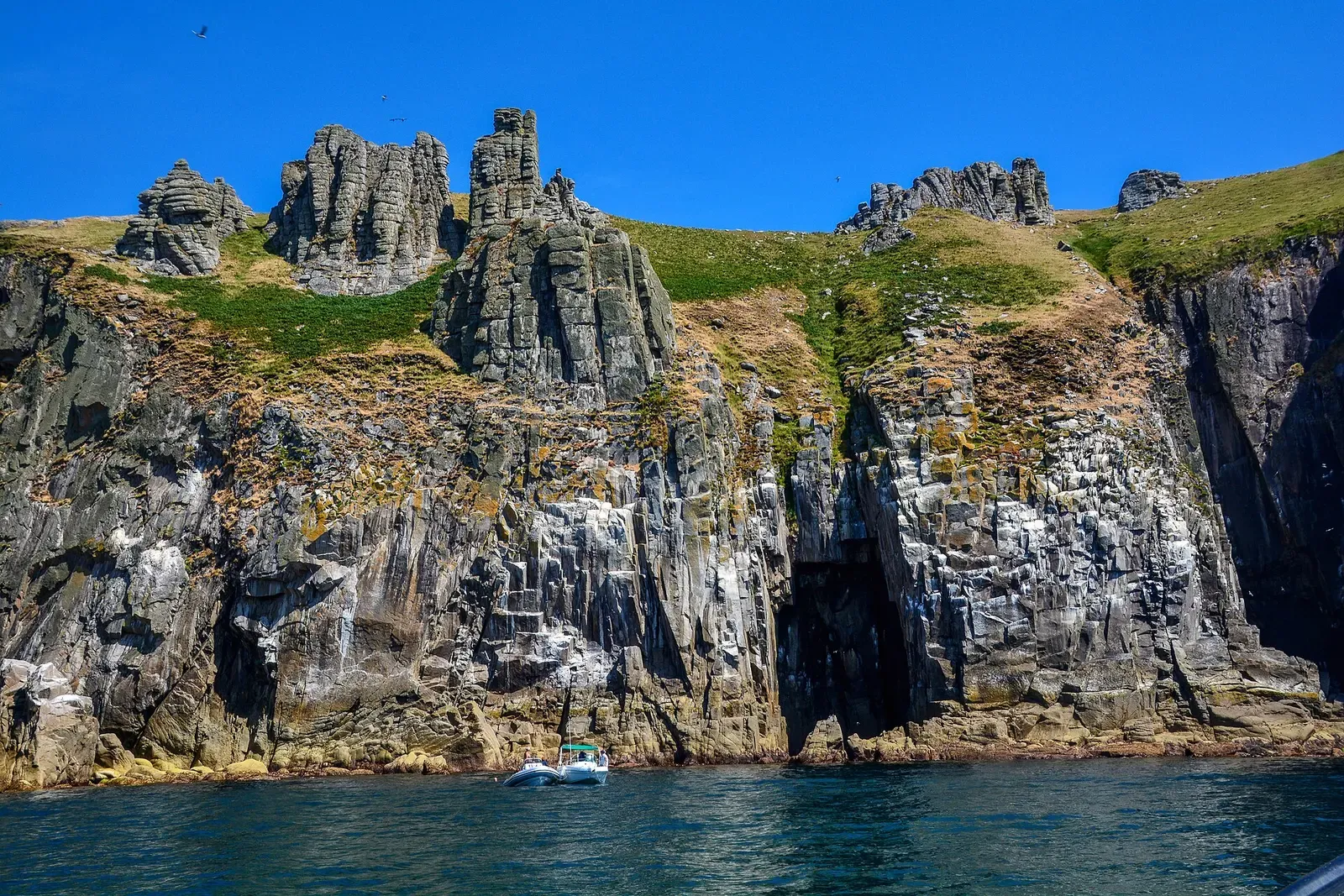
England's first marine reserve, and its grey seals follow divers around

The Rondo stands almost vertical, stern at 15 m and bow at 50

.jpg)
Jewel anemones and grey seals on a Berwickshire volcanic coast
Cold Water
Kinlochbervie & the North-West Highlands
United Kingdom
Gullies, swim-throughs and a blowhole cave on Scotland's far north-west coast