Cape Peninsula Kelp Forests · South Africa · Reef · Kelp forest
Castle Rocks
Granite ridges and gullies in about 18 m
Photo: Peter Southwood · CC BY-SA 3.0
Castle Rocks is a shore dive on the False Bay coast of the Cape Peninsula, inside a restricted zone of its own where a permit is required to dive. Average bottom depth is around 10 m and the maximum is approximately 18 m, and the site is well known for the variety and size of its fish and for a diversity of invertebrates.
Also known as Castle Rock.
Where it is and how deep
34.2392° S, 18.4765° EPublished position for this site.
The dive
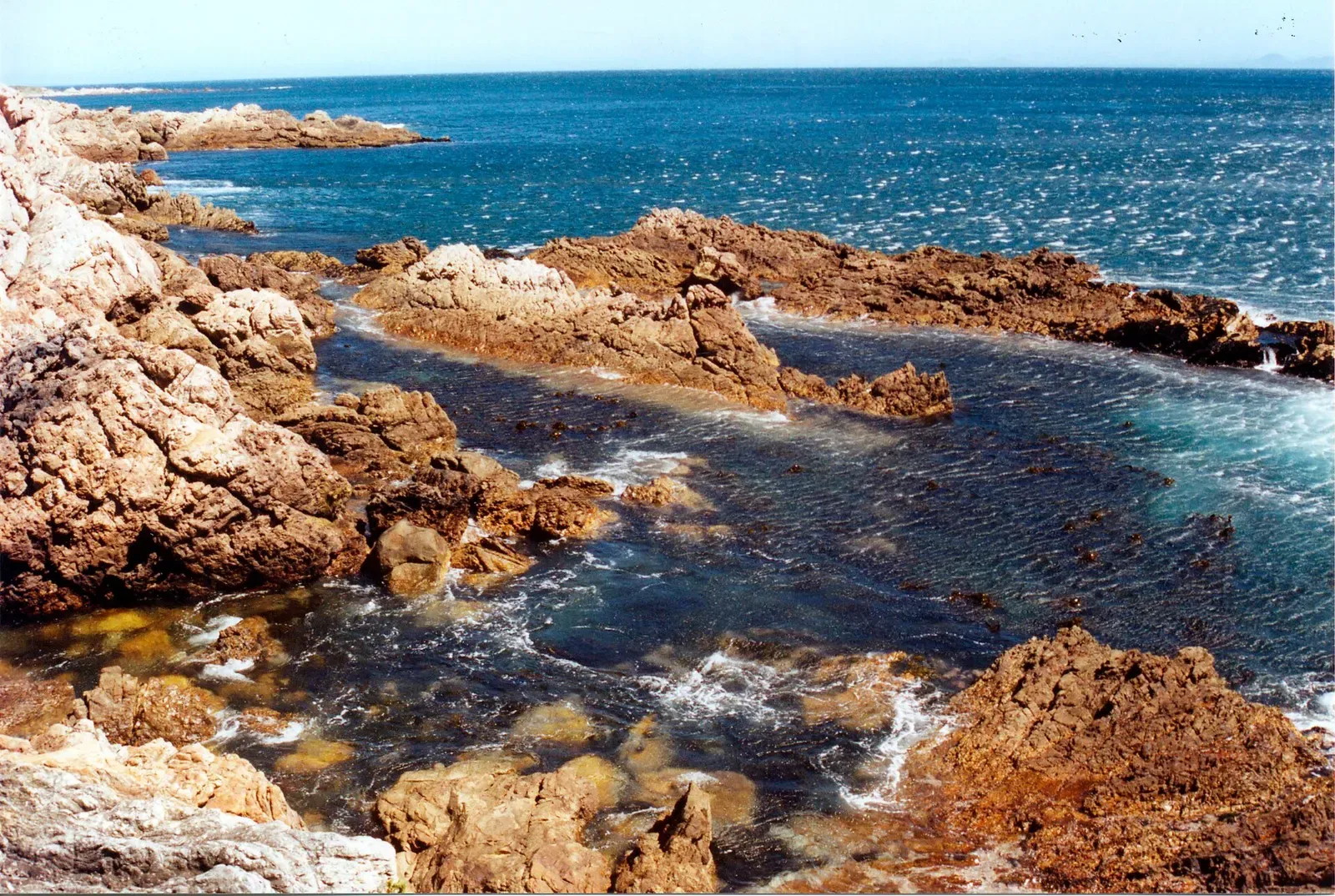
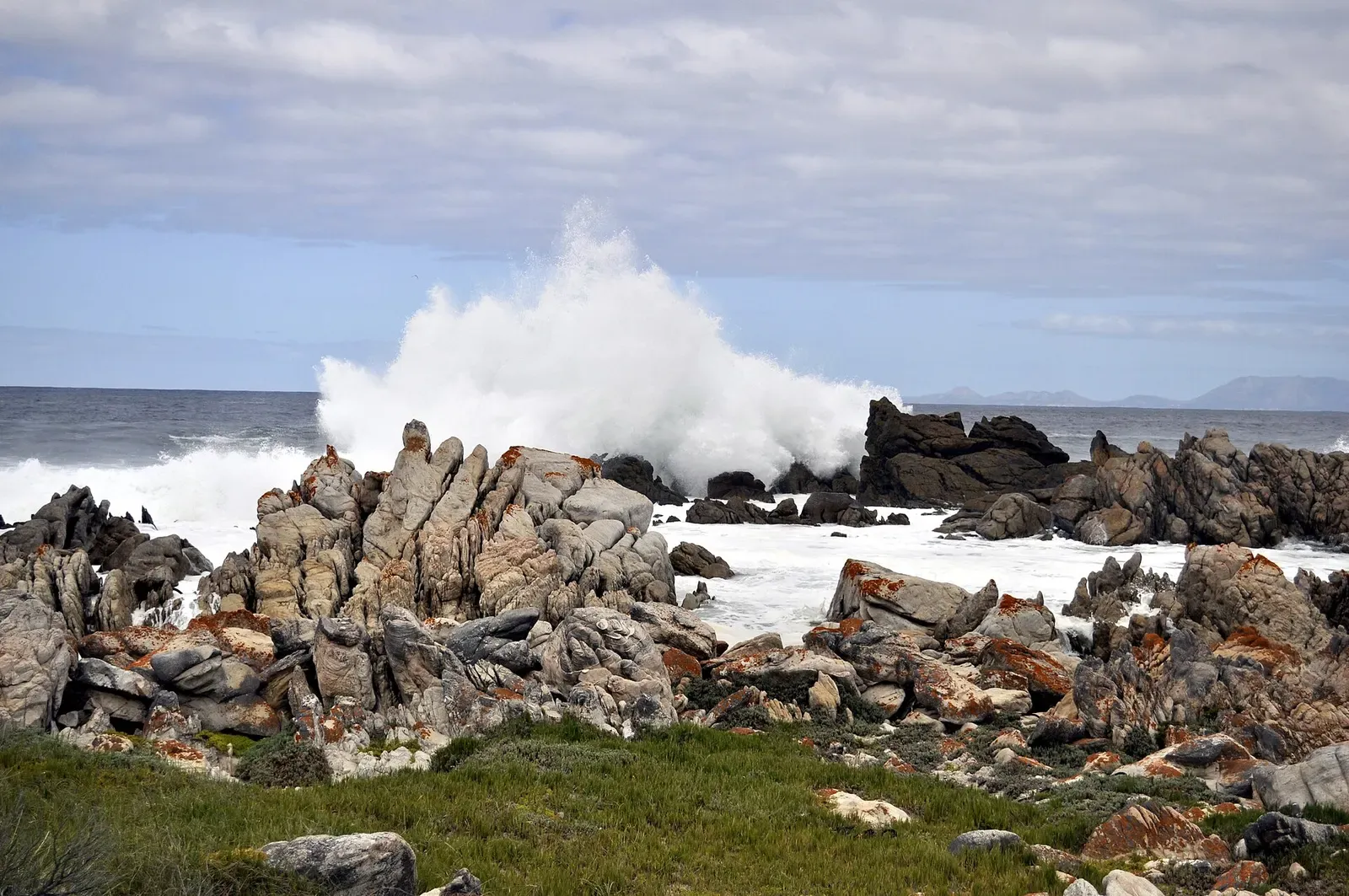
The entry is the first decision. There are multiple entry and exit points on the north and south sides, all over irregular rock and through fairly dense kelp forest in the north entry area, and a moderate level of fitness and agility is what shore access here is described as needing. Once you are in, the reef sorts itself out: granite ridges and gullies run parallel, north to south, with boulder formations and sandy gaps between them, so following a gully out and a ridge back is the obvious way to cover it.
Average bottom depth is around 10 m and the maximum is approximately 18 m, so this is a long dive rather than a deep one and the whole reef is workable on a single tank. Castle Rocks is well known for variety and size of fish and a diversity of invertebrates, which is the company you are looking for along those gullies. It is usually considered to be a winter dive, with occasional opportunities in other seasons, and the swell direction on the day decides whether it happens at all.
Marine life and season
- Macro critters
| Jan | Feb | Mar | Apr | May | Jun | Jul | Aug | Sep | Oct | Nov | Dec |
|---|---|---|---|---|---|---|---|---|---|---|---|
| Good | Good | Good | Good | Good | Good | Fair | Fair | Fair | Fair | Good | Good |
Season follows Cape Peninsula Kelp Forests: The Atlantic side is mainly a summer dive, the western shore of False Bay a winter one, when the South-Easter drops; shifting spring winds (Sep-Oct) can blow out both coasts.
Know before you go
- Swell from the southwest or southeast puts surge through the gullies and over the shallow rock, so pick a flat forecast rather than trying to dive around it.
- A strong southeast wind produces an uncomfortable surface chop and cuts visibility, so a reef that was worth diving early can be off by the afternoon.
- Entries and exits are over irregular rock on both the north and south sides and need moderate fitness, so scout the exit you intend to use before getting in.
Photos from Castle Rocks
Peter Southwood · CC BY-SA 3.0
Peter Southwood · CC BY-SA 3.0
Dive videos
Castle Rocks, Simons Town, Cape Town August 20 2017 · Vaughn Dickson on YouTube
CASTLE ROCKS Dive - March 2022 · Gordon Hiles on YouTube
Questions divers ask
Do you need a permit to dive Castle Rocks?+
Yes. Castle Rocks lies within its own restricted zone in the Table Mountain National Park Marine Protected Area, proclaimed in 2004, and a permit is required for diving there.
How deep is Castle Rocks?+
Average bottom depth is around 10 m and the maximum is approximately 18 m, so the whole reef sits inside a comfortable single-tank profile.
Sources
- Diving the Cape Peninsula and False Bay/Castle Rocks — Wikivoyage
- Castle Rock, Cape Town, South Africa — SSI MyDiveGuide
Photo credits
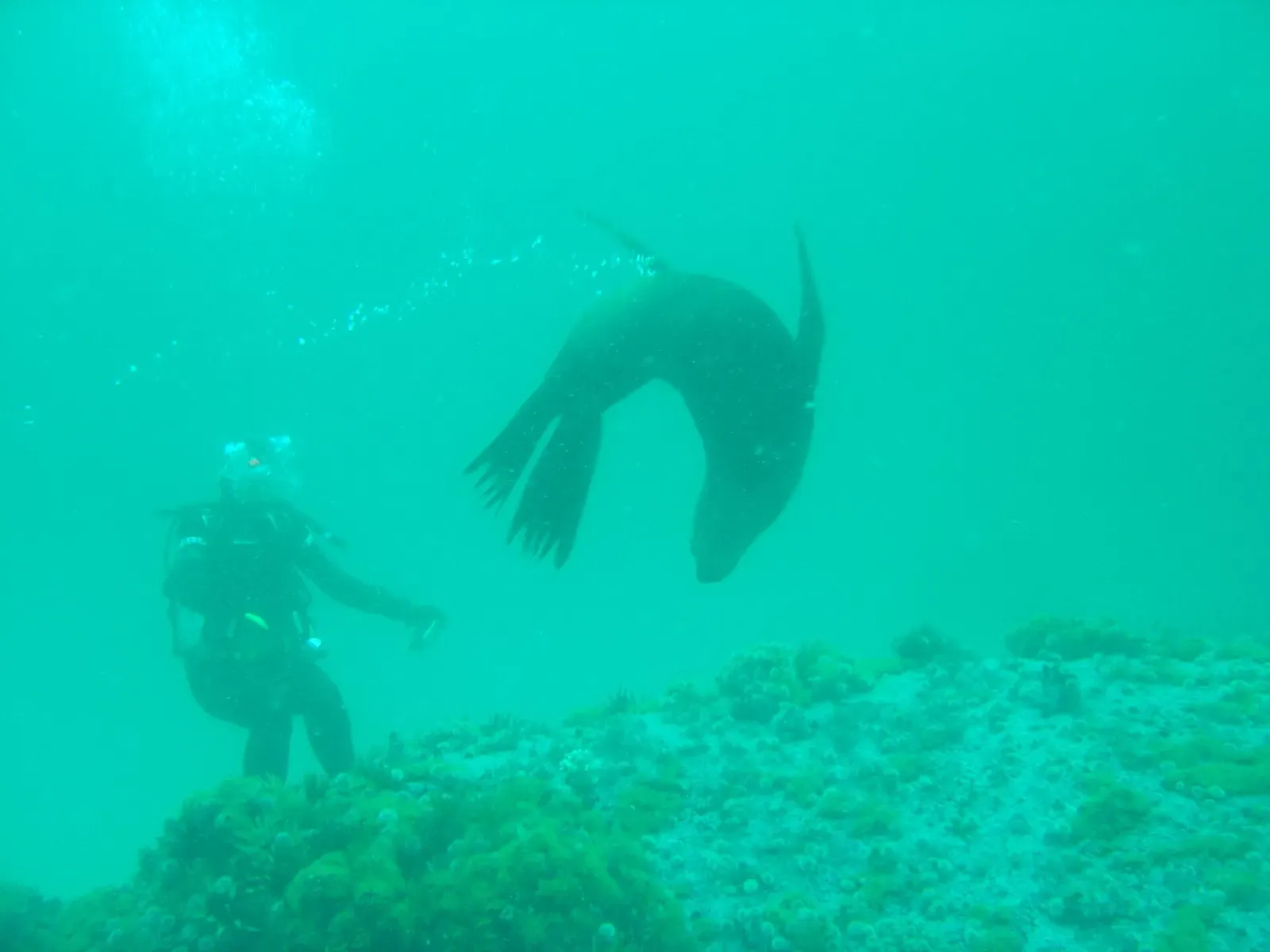
- A Cape fur seal swims over a diver among the rocks at Castle Rocks by Peter Southwood, CC BY-SA 3.0, via Wikimedia Commons
- Rocky shoreline and calm inlet at the south entry point of Castle Rocks by Peter Southwood, CC BY-SA 3.0, via Wikimedia Commons
- Overcast coastal view over rocks and sea at the north entry to Castle Rocks by Peter Southwood, CC BY-SA 3.0, via Wikimedia Commons
In The Logbook
- Kelp forest diving, and where it still growsCold water · 13 min read
- What is surge in diving, and how deep it goesOcean science · 8 min read
- Cold-water diving: is it worth the drysuit?Cold water · 8 min read
More dive sites in Cape Peninsula Kelp Forests
Reef
Ridges of medium height running out to a seaward pinnacle
Sevengill sharks in the cove, kelp over granite

Air-trap overhangs and swim-throughs on a granite boulder reef
Marked as Photographer's reef on the SAN charts
Protected water and an easy walk-in for first sea dives
Similar dives elsewhere
Steep shoreline walls and a boulder swim-through close to the gully
Kelp forest and broken sandstone ridges off the Rooi-els point
Three sponge-covered pinnacles off the Rooi-els shore


Frogfish, ribbon eels and mantis shrimp at 16 m