
Africa · South Africa
Cape Peninsula Kelp Forests
Cape fur seals and sevengill sharks weave through towering kelp canopies.
Photo: Peter Southwood · CC BY-SA 3.0
The Cape Peninsula's Great African Seaforest is a cold-water kelp forest made famous by the documentary My Octopus Teacher, with shore and boat dives on both the Atlantic seaboard and False Bay. Cape fur seals play through the fronds, common octopus and dozens of nudibranch species work the granite reef, and broadnose sevengill sharks patrol sites like Miller's Point. Visibility and temperature swing with the wind, and the two coasts trade good conditions depending on the season.
About diving in Cape Peninsula Kelp Forests
A day here starts with a wind check rather than a boat booking. Centres watch the forecast overnight, decide in the morning which coast is worth driving to, and meet divers at a slipway or a car park above the rocks. A lot of the diving is walked in: kit up beside the vehicle, cross a beach or a boulder field, and swim out over the shallows. Boats run short hops from harbour on either side of the peninsula when the offshore reefs and pinnacles come good.
Underwater, much of the peninsula is granite. Rounded boulders stack into swim-throughs and gullies that funnel surge, with pale sand between them. Sea bamboo takes hold on the tops of those boulders, and in the shallows its stipes reach the surface, so a dive becomes a matter of finding channels through the stalks while the canopy filters the light overhead. Nothing is deep, roughly 5 to 20 m, and the interest is close-in work: holdfasts, undercut rock, and the animals living in both.
Sites separate by exposure more than by depth. Sheltered coves with easy entries carry the courses and the first kelp dives, while open rocky points take the swell and reward divers who can hold position in surge. False Bay's inshore reefs are the ones associated with sevengill sharks, though that aggregation has been far less predictable since orca were reported preying on sevengills in the bay. The same rock at night turns up a different cast, with octopus out hunting and the small stuff easier to pick out under torchlight.
This suits divers who came for an environment rather than a species list: photographers shooting wide-angle and macro on the same dive, freedivers, and anyone content to spend a week in the top 20 m. Water sits somewhere between 8 and 20 degrees depending on coast and wind, and the Atlantic side can drop to the bottom of that after an upwelling, so thermal kit decides how much of the day you enjoy. Divers hoping for warm water and blue-water schooling fish are on the wrong coast.
Best time to dive Cape Peninsula Kelp Forests
| Jan | Feb | Mar | Apr | May | Jun | Jul | Aug | Sep | Oct | Nov | Dec | |
|---|---|---|---|---|---|---|---|---|---|---|---|---|
| Season | Good | Good | Good | Good | Good | Good | Fair | Fair | Fair | Fair | Good | Good |
| Sea surface | 19°C66°F | 19°C66°F | 18°C64°F | 16°C61°F | 16°C61°F | 15°C59°F | 15°C59°F | 15°C59°F | 15°C59°F | 16°C61°F | 17°C63°F | 18°C64°F |
| Daytime high | 35°C95°F | 34°C93°F | 33°C91°F | 31°C88°F | 27°C81°F | 22°C72°F | 21°C70°F | 22°C72°F | 25°C77°F | 28°C82°F | 30°C86°F | 32°C90°F |
| Rain | 22 mm0.9 in | 17 mm0.7 in | 37 mm1.5 in | 47 mm1.9 in | 84 mm3.3 in | 184 mm7.2 in | 154 mm6.1 in | 131 mm5.2 in | 72 mm2.8 in | 43 mm1.7 in | 35 mm1.4 in | 20 mm0.8 in |
| Jan | Feb | Mar | Apr | May | Jun |
|---|---|---|---|---|---|
| Good | Good | Good | Good | Good | Good |
| Sea surface | |||||
| 19°C66°F | 19°C66°F | 18°C64°F | 16°C61°F | 16°C61°F | 15°C59°F |
| Daytime high | |||||
| 35°C95°F | 34°C93°F | 33°C91°F | 31°C88°F | 27°C81°F | 22°C72°F |
| Rain | |||||
| 22 mm0.9 in | 17 mm0.7 in | 37 mm1.5 in | 47 mm1.9 in | 84 mm3.3 in | 184 mm7.2 in |
| Jul | Aug | Sep | Oct | Nov | Dec |
|---|---|---|---|---|---|
| Fair | Fair | Fair | Fair | Good | Good |
| Sea surface | |||||
| 15°C59°F | 15°C59°F | 15°C59°F | 16°C61°F | 17°C63°F | 18°C64°F |
| Daytime high | |||||
| 21°C70°F | 22°C72°F | 25°C77°F | 28°C82°F | 30°C86°F | 32°C90°F |
| Rain | |||||
| 154 mm6.1 in | 131 mm5.2 in | 72 mm2.8 in | 43 mm1.7 in | 35 mm1.4 in | 20 mm0.8 in |
2011–2025 averages. Sea surface: NOAA Coral Reef Watch, measured at the surface, so deeper water can run colder. Daytime high and rain: NASA POWER.
The Atlantic side is mainly a summer dive, the western shore of False Bay a winter one, when the South-Easter drops; shifting spring winds (Sep-Oct) can blow out both coasts.
Best months: January, February, March, April, May, June, November, December
Cape Town water temperature and weather by month
The sea surface runs from 15 °C (59 °F) in August to 19 °C (66 °F) in January. Most rain falls from May to September, peaking at about 180 mm (7.1 in) in June; it stays largely dry from November to March. Daytime highs reach 35 °C (95 °F) in January and drop to 21 °C (70 °F) in July. Below the surface the water can drop to about 8 °C (46 °F), so pack a drysuit.
Dive types & marine life
Cape fur seals are the constant, curious on almost any dive, and octopus, cuttlefish and nudibranchs work the rock year-round, with night dives the best way to find the smallest of them. Broadnose sevengills are the False Bay headline but never a given on the day, and galjoen and other endemic reef fish fill in around them. What you see is set largely by which coast is clear that morning.
- Kelp forest
- Reef
- Night
- Seals & sea lions
- Octopus & cuttlefish
- Nudibranchs
- Reef sharks
- Macro critters
Best dive sites in Cape Peninsula Kelp Forests
Reef
Ridges of medium height running out to a seaward pinnacle
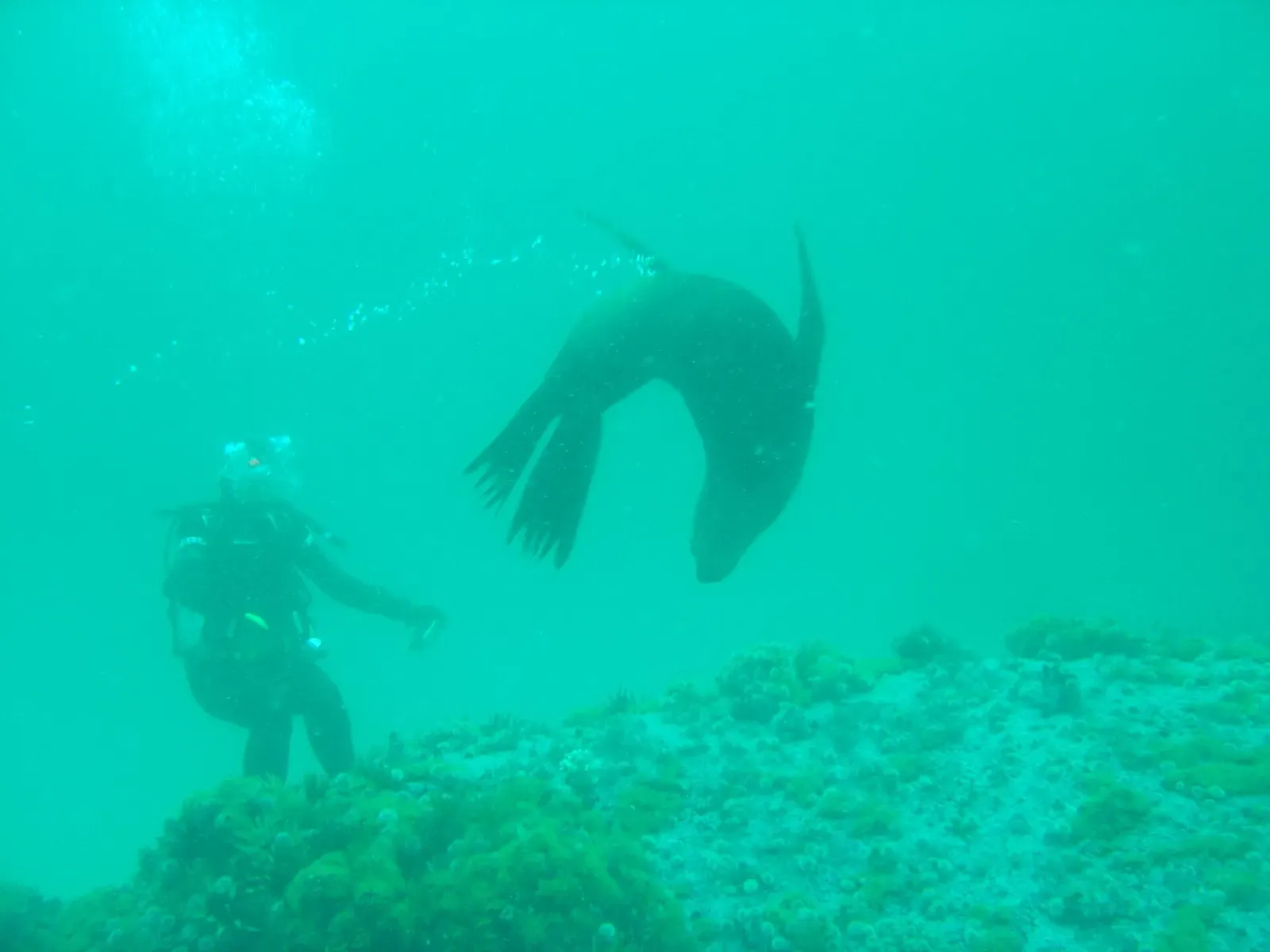
Granite ridges and gullies in about 18 m
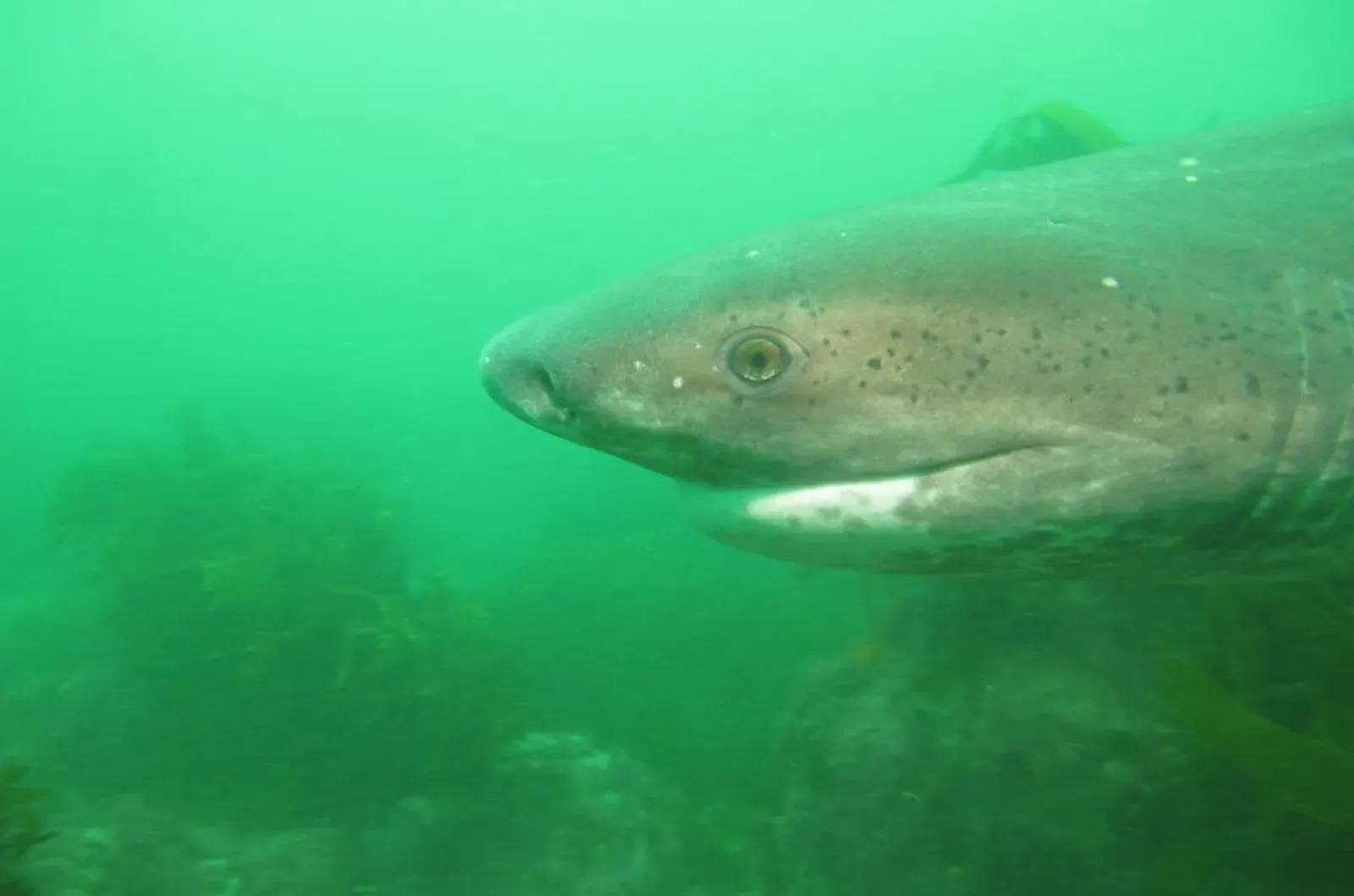
Sevengill sharks in the cove, kelp over granite
Air-trap overhangs and swim-throughs on a granite boulder reef
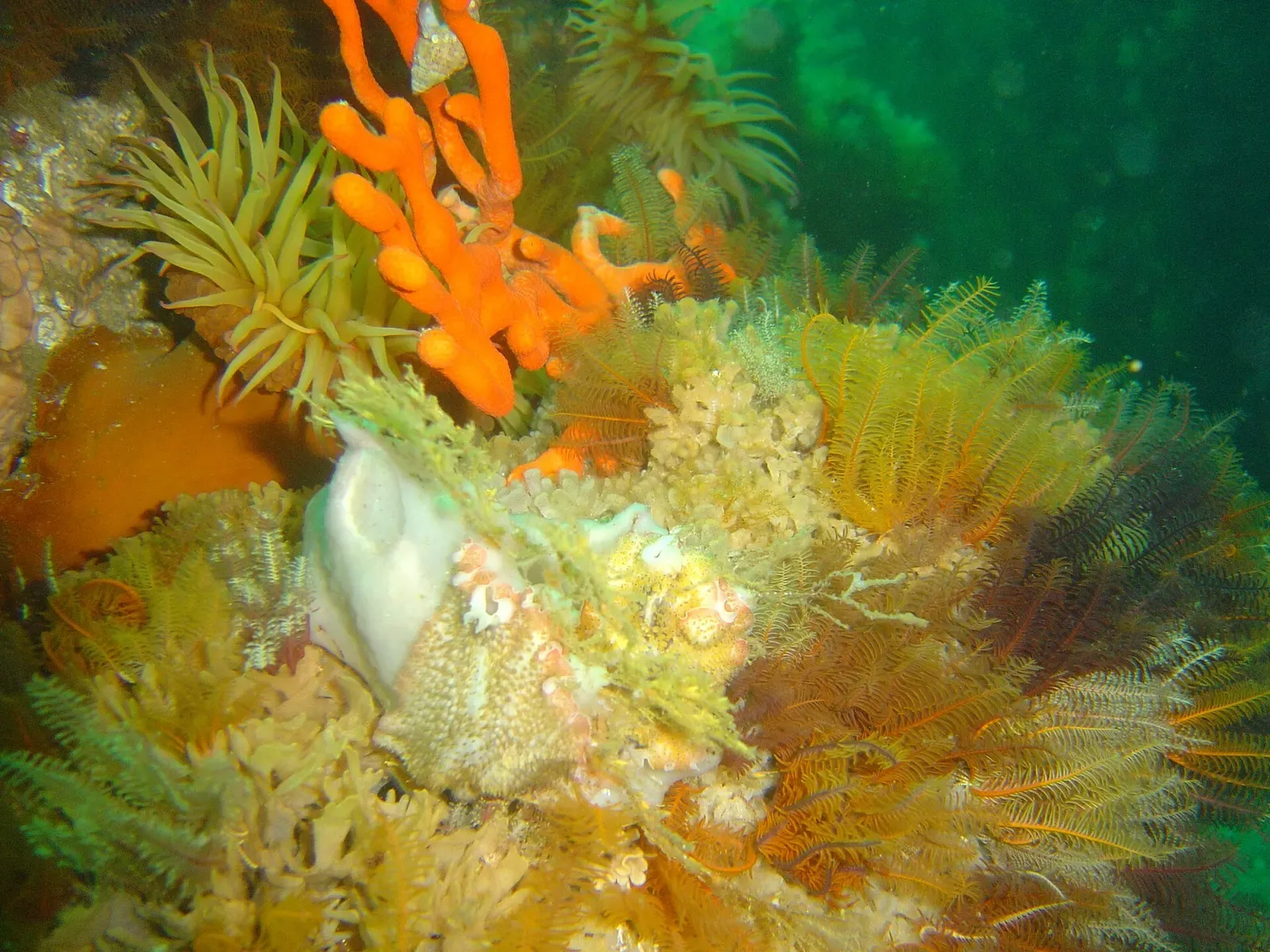
Marked as Photographer's reef on the SAN charts
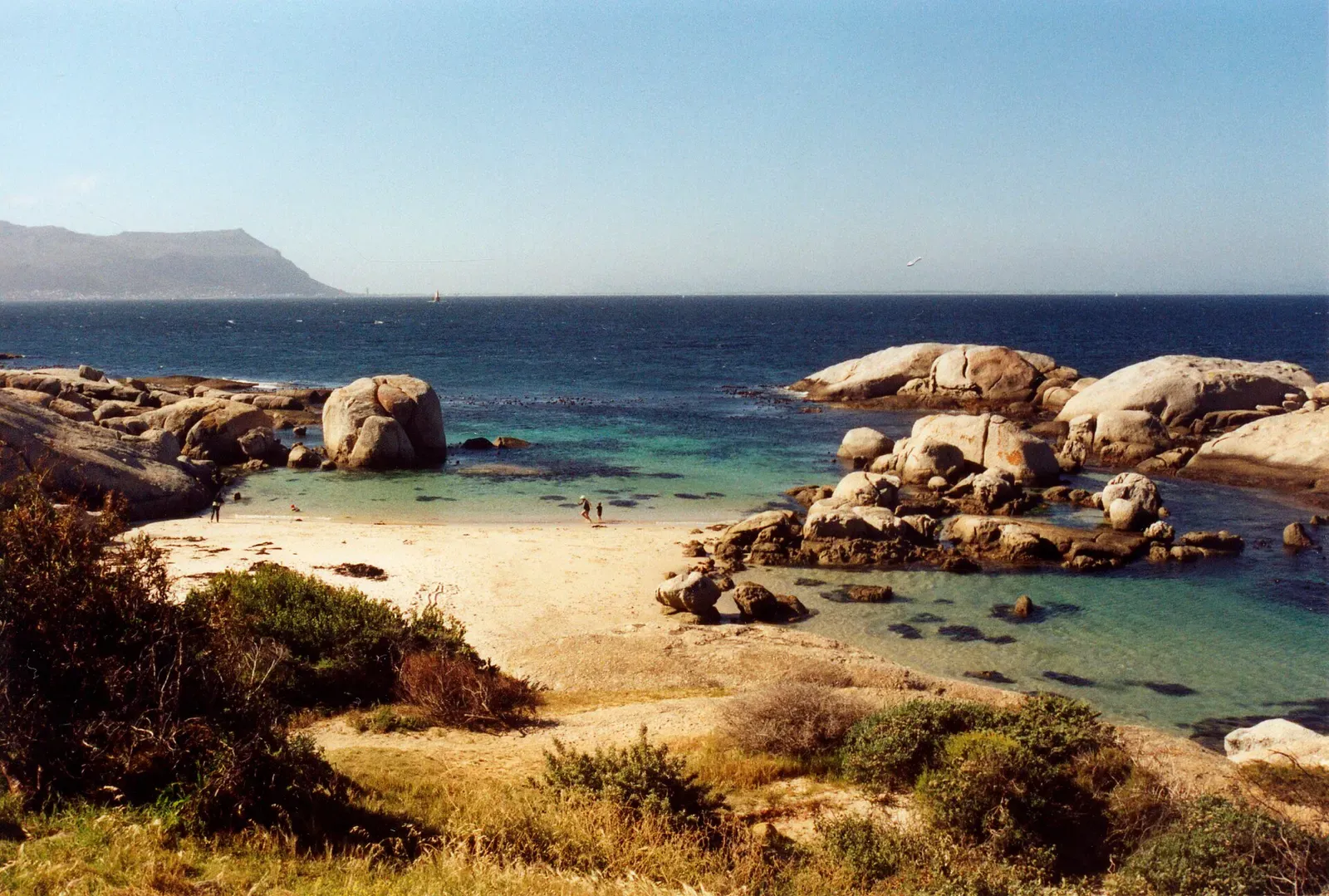
Protected water and an easy walk-in for first sea dives
How to get to Cape Peninsula Kelp Forests
Cape Town International is the arrival point, and a hire car matters more than anything booked in advance, since the entries are strung along both coasts of the peninsula and the choice is made on the morning's wind. Simon's Town and Fish Hoek sit closest to the False Bay sites, under an hour from the city on a clear run; boat dives leave from harbours on both sides.
Photos from Cape Peninsula Kelp Forests
Peter Southwood · CC BY-SA 3.0
Peter Southwood · CC BY-SA 4.0
Peter Southwood · CC BY-SA 4.0
Peter Southwood · CC BY-SA 4.0
Dive videos
Scuba Diving KELP FORESTS OF CAPE TOWN South Africa 🇿🇦 · Blue Horizon Diving on YouTube
Kelp Forests, Sharks and Cape Fur Seals 4K - South Africa · The Traveling Frogfish on YouTube
Photo credits
- Sunlight filters through a Cape Peninsula kelp forest seen through a rocky overhang, with reef fish schooling beyond. by Peter Southwood, CC BY-SA 3.0, via Openverse
- Kelp stipes rise through green water toward the surface at A-Frame, framed by a rocky crevice. by Peter Southwood, CC BY-SA 3.0, via Openverse
- A patchwork cuttlefish rests camouflaged against encrusted reef rock off the Cape Peninsula. by Peter Southwood, CC BY-SA 4.0, via Wikimedia Commons
- A cluster of spiny starfish in varied colors covers a rock encrusted with pink coralline algae. by Peter Southwood, CC BY-SA 4.0, via Wikimedia Commons
- Golden feather stars unfurl their feathery arms across the reef substrate. by Peter Southwood, CC BY-SA 4.0, via Wikimedia Commons
Embed
Run a dive centre, club or blog? Embed this map of 12 dive sites near Cape Town on your own page.
In The Logbook
- Why things look bigger underwaterOcean science · 12 min read
- Kelp forest diving, and where it still growsCold water · 13 min read
- How far you can see underwaterOcean science · 12 min read
- Where to dive with seals and sea lionsBig animals · 17 min read
- Why is some sea green instead of blue?Ocean science · 8 min read
- What is surge in diving, and how deep it goesOcean science · 8 min read
- Cold-water diving: is it worth the drysuit?Cold water · 8 min read
- The best shore dives in the worldShore diving · 8 min read
Similar destinations
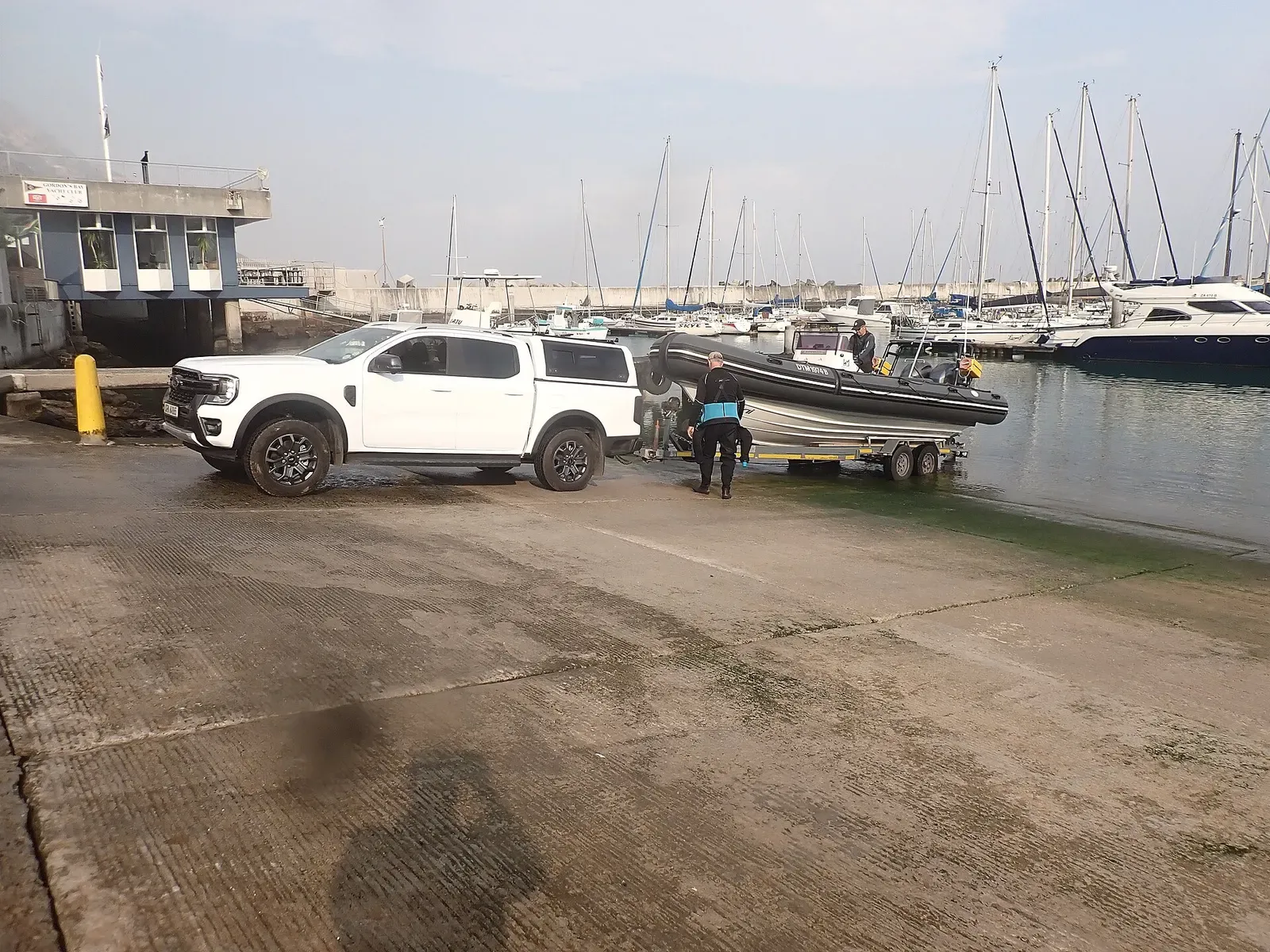
Nudibranch-rich rocky reefs and kelp forest dived by boat from Gordon's Bay

An atoll wall and easy coral slopes off Zanzibar's north-east corner

Half a century of protection on one of Africa's oldest marine reserves
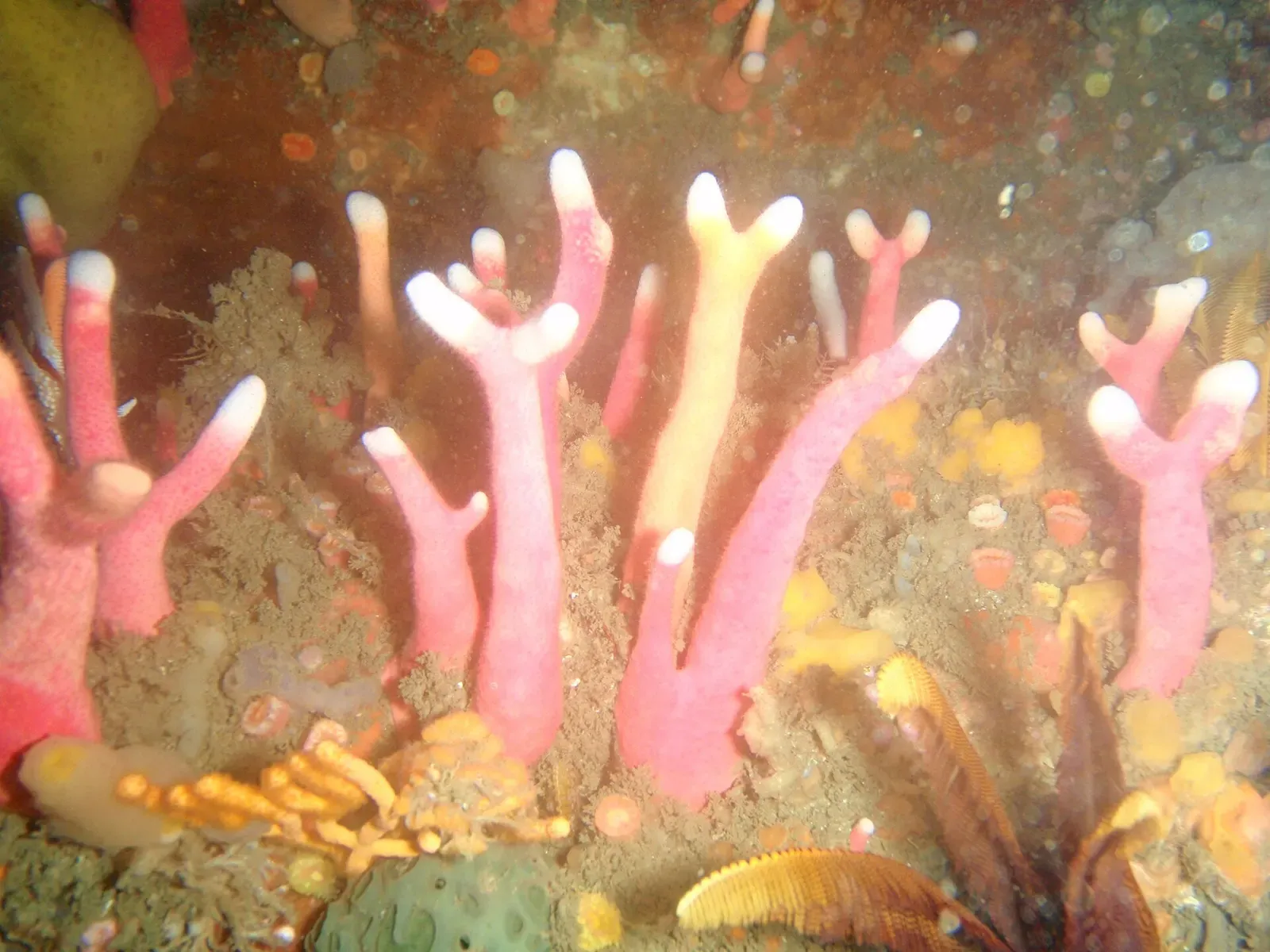


Two-tank boat days pairing a Hermanus reef with a kelp-forest dive