What cold water gives you
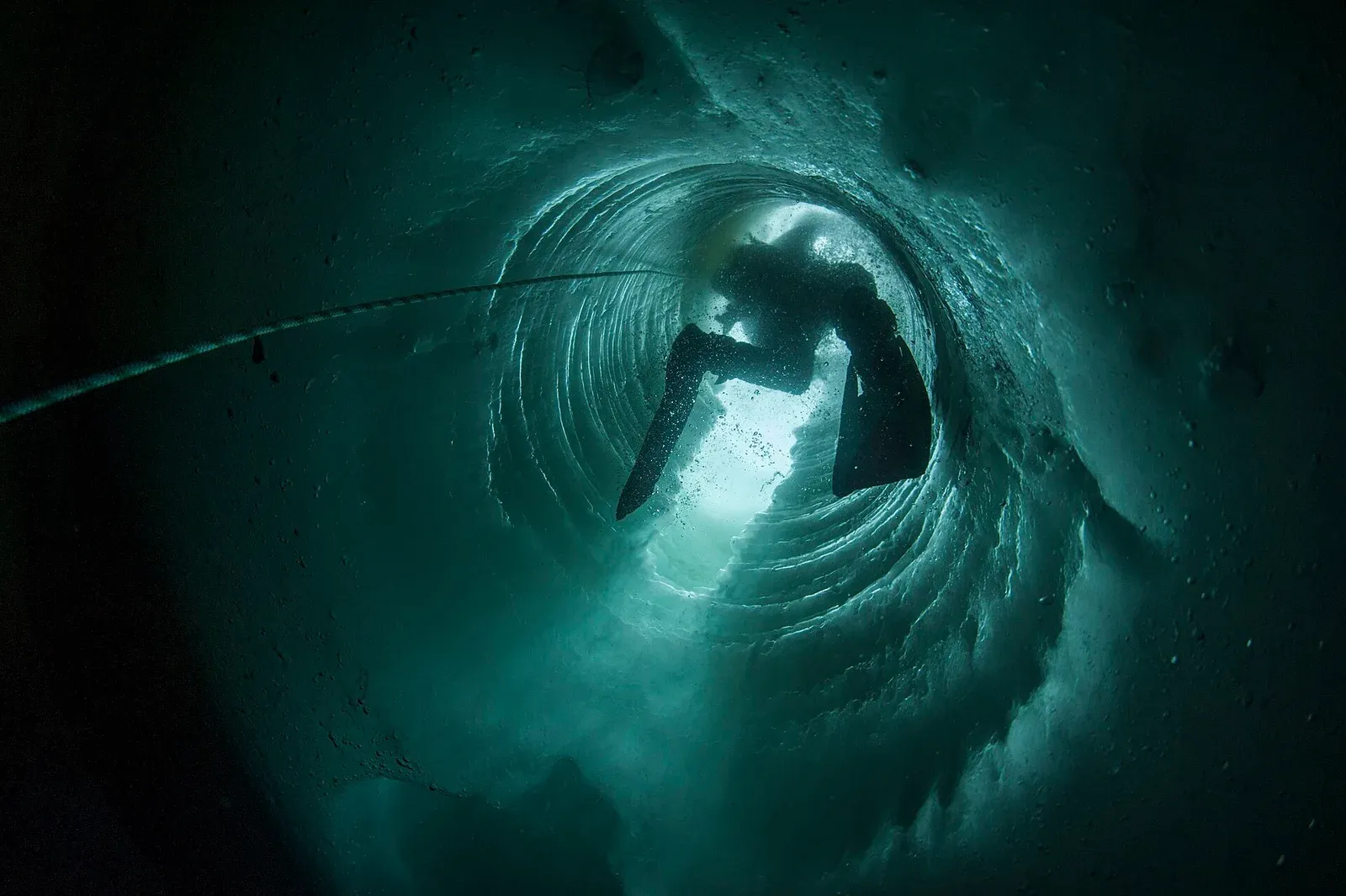
Cold water is not warm water with a penalty attached. It is a different kind of diving, and four things it does better are worth the trouble of getting into it.
It is clearer. Cold water holds less of the plankton that turns a tropical reef milky in the afternoon. The extreme case is Silfra in Iceland, where glacial meltwater filters through lava for decades before it reaches the fissure and arrives with 40 to 80 m of visibility — you can watch a diver two groups ahead of you. But the effect is general: Antarctic water runs 15 to 35 m, and the North Sea wrecks at Malin Head sit in 10 to 30 m of it.
It preserves. Cold, dark, low-oxygen water is the reason a wooden schooner that sank in 1875 still has her masts standing, and the reason the Baltic holds ships that would have been a debris field anywhere warm. Warm-water wrecks become reefs; cold-water wrecks stay ships.
It grows forests, not gardens. Kelp is structural in a way coral is not. A kelp bed is a canopy with a floor and a middle storey, and diving one feels like moving through woodland rather than over a field.
It is empty. Several of the areas here run a single operator, a handful of boats and a season measured in weeks. Most of these sites will give you a reef to yourself, and that is a large part of the point.
What the suit actually costs you
The honest accounting matters, because the barrier to cold water is not courage, it is task loading.
A drysuit is a second buoyancy device, and learning to use one is the whole of the difficulty. You are managing gas in the suit and gas in the wing at the same time, in more weight than you are used to, with thicker gloves that make every clip and valve harder. Every operator on this list treats that as a prerequisite rather than something to sort out on the day: Strýtan asks for Advanced plus drysuit certification or ten logged drysuit dives and at least 25 dives overall, and the polar ships ask for thirty logged drysuit dives before they will put you in the water.
The second cost is that the dive ends when you get cold, not when the gas or the no-stop time runs out. On Partridge Point the site notes say it plainly: hypothermia, not remaining pressure, is what sets the length of a long dive. Plan shorter dives and more of them.
The third is equipment failure of a kind warm water never produces. A regulator can free-flow into ice at low temperature, which is why Svalbard’s ships require two freeze-protected regulator sets per diver rather than one. Below about 10 °C this stops being a theoretical concern.
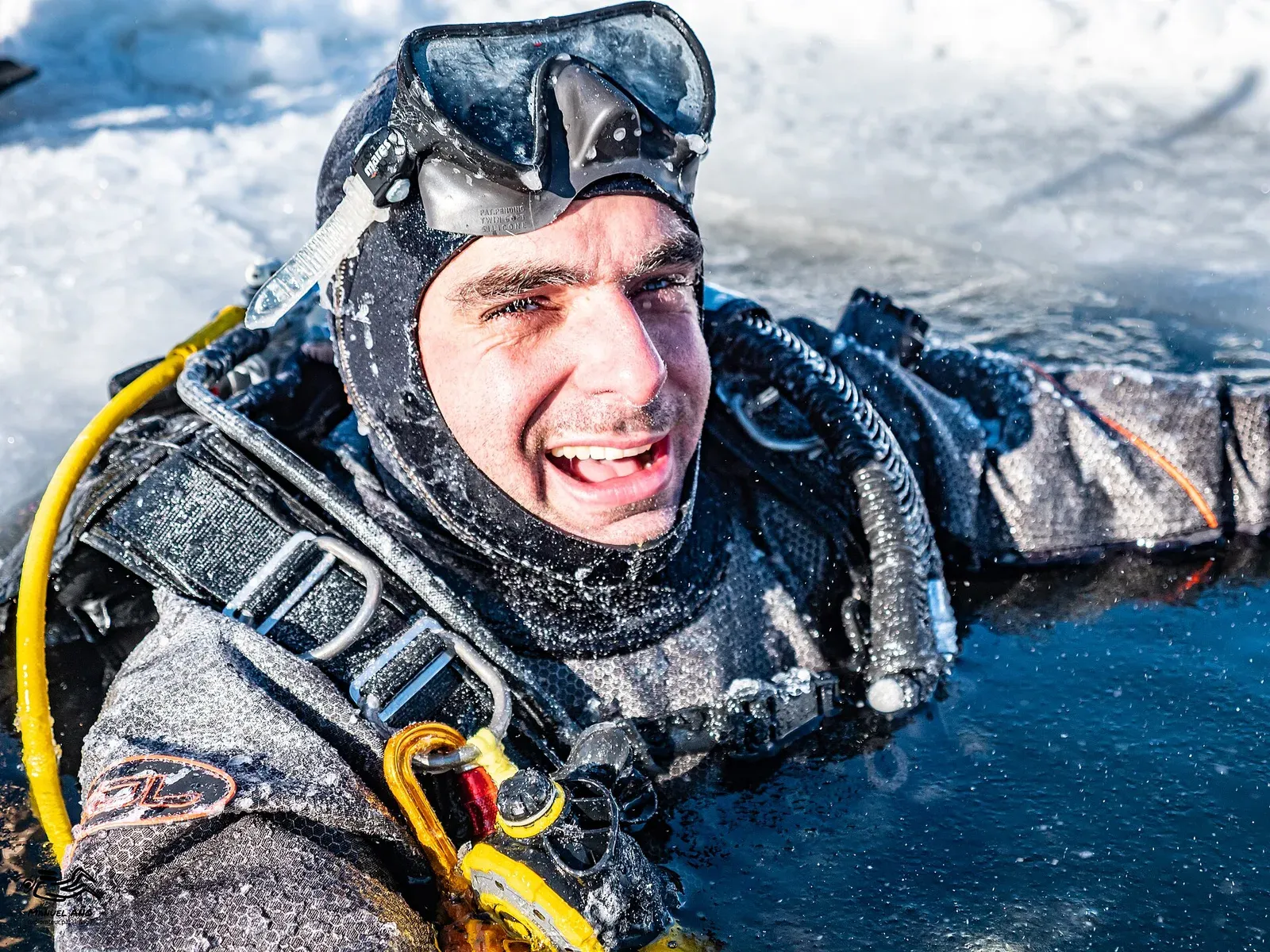
The fourth is the season. Almost every place here has a window measured in months, sometimes weeks. Malin Head runs May to September and even then only on a handful of settled days, because Atlantic swell closes the ground for weeks at a time. Drift ice reaches the Shiretoko coast in Hokkaidō for a few weeks around February; outside that window the dive does not exist.
Ice, and the two ends of the earth
The polar dives are the extreme version of everything above, and both ends of the earth are ship-only.
Svalbard sits at 78° north in water of −2 to 6 °C. Everything runs from expedition vessels out of Longyearbyen between June and September, diving from tenders: glacier fronts at Kongsfjorden and Smeerenburgfjorden, worked well clear of any calving face and among grounded blocks rather than under them, and the documented walrus haul-out at Poolepynten. AECO’s guidance on walrus is explicit that recreational water contact with them is dangerous, so this is a dive near a haul-out, not a swim with the animals. Outside the settlements a rifle is carried against polar bears, which tells you what kind of trip it is.
The Antarctic Peninsula is colder still — −1 to 2 °C, near the freezing point of seawater — and clearer, at 15 to 35 m. Ships sail from Ushuaia across the Drake Passage, two days each way, in the austral summer of December to February. Paradise Harbour is kept ice-free by a tidal current strong enough to stop it freezing in midwinter; Deception Island is a flooded volcanic caldera; Cuverville and Half Moon Island put you under gentoo and chinstrap colonies, with crabeater seals around all season and guides calling divers out of the water when a leopard seal takes an interest.
| Site | Depth | Level | Best months |
|---|---|---|---|
| Kongsfjorden Svalbard · Norway | to 20 m | Advanced | Jun–Aug |
| Smeerenburgfjorden Svalbard · Norway | to 20 m | Advanced | Jun–Aug |
| Poolepynten Svalbard · Norway | to 20 m | Advanced | Jun–Aug |
| Paradise Harbour Antarctic Peninsula · Antarctica | to 20 m | Advanced | Dec–Feb |
| Deception Island Antarctic Peninsula · Antarctica | to 20 m | Advanced | Dec–Feb |
| Cuverville Island Antarctic Peninsula · Antarctica | to 20 m | Advanced | Dec–Feb |
| Half Moon Island Antarctic Peninsula · Antarctica | to 20 m | Advanced | Dec–Feb |
Fresh water, and the clearest diving there is
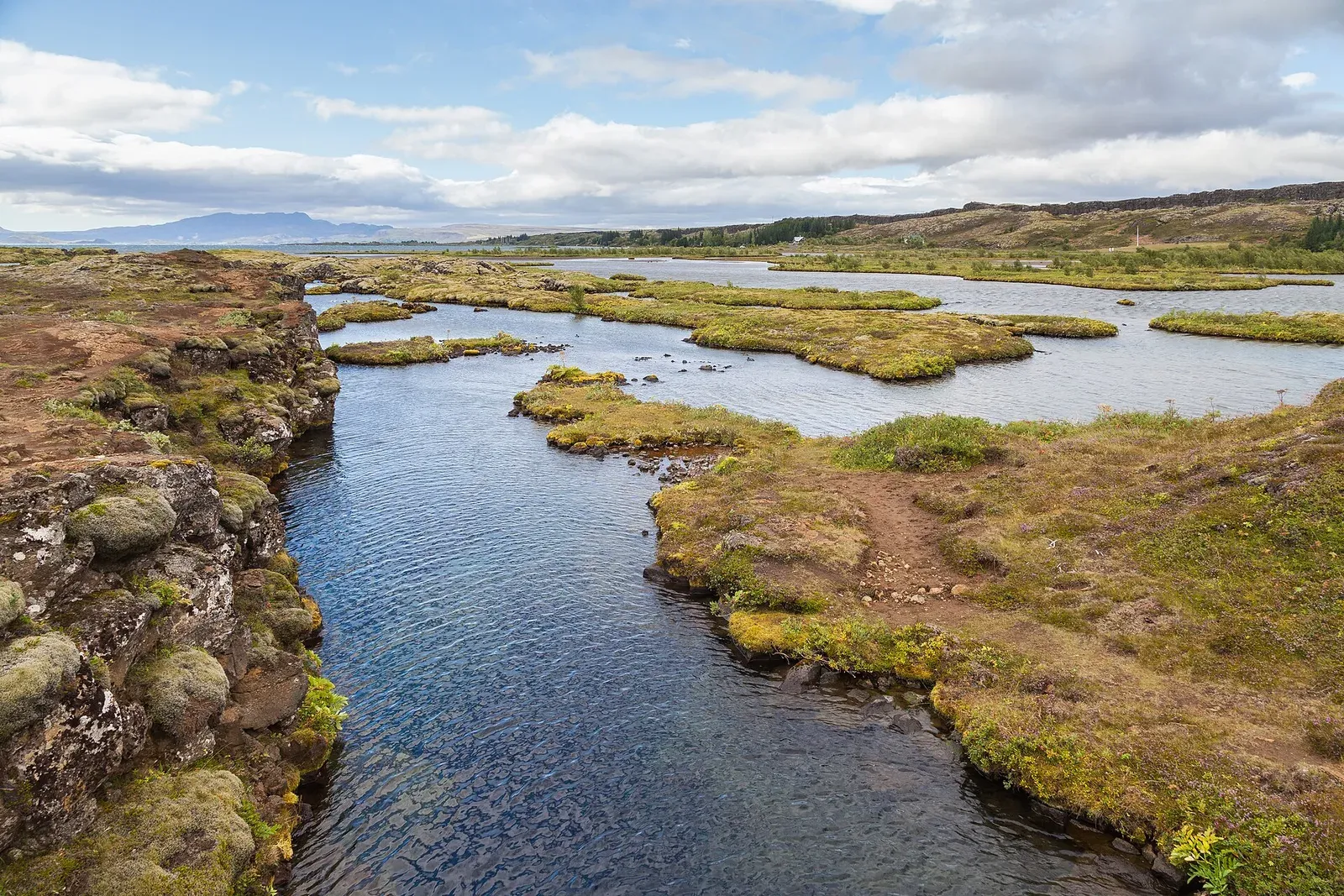
Fresh water is where cold pays its most obvious dividend. Silfra is a rift between the North American and Eurasian plates filled with filtered glacial groundwater at a constant 2 to 4 °C, and the reason to go is the visibility rather than the life — the fissure is close to empty apart from algae and a few small char. Big Crack is narrow enough to touch both continents at once; the Cathedral is a 100 m corridor you can see the far end of from the entrance. Diving is capped at 18 m (60 ft), permit-only through an operator, and Open Water plus drysuit certification is the minimum. The caverns opening off the fissure are closed at every depth.
The Great Lakes are the other freshwater case, and there the cold is doing preservation work. In NOAA’s Thunder Bay sanctuary, the Montana still has a three-storey steam engine standing intact at 20 m, and the Cornelia B. Windiate — a schooner that foundered with all hands in 1875 — sits upright at 56 m with her masts still up and the crew’s lifeboat resting nearby. At Tobermory the Arabia’s bowsprit still extends from an 1852 hull at 32 m. Both are 2 to 18 °C, and both reward a drysuit even in August.
| Site | Depth | Level | Best months |
|---|---|---|---|
| Silfra Big Crack Silfra · Iceland | 0.5–18 m | Intermediate | May–Sep |
| Silfra Cathedral Silfra · Iceland | to 18 m | Intermediate | May–Sep |
| Silfra Hall Silfra · Iceland | to 10 m | Intermediate | May–Sep |
| Montana Thunder Bay · United States | to 20 m | Intermediate | Jul–Sep |
| Cornelia B. Windiate Thunder Bay · United States | to 56 m | Advanced | Jul–Sep |
| Arabia Tobermory · Canada | to 32 m | Advanced | Jul–Sep |
| Forest City Tobermory · Canada | 18–46 m | Advanced | Jul–Sep |
| Lillie Parsons Brockville · Canada | 6–21 m | Intermediate | Jul–Sep |
| Ponte dei Salti Verzasca Valley · Switzerland | to 10 m | Intermediate | Jun–Aug |
Steel that never rusted
The best-preserved wrecks in the world are all in cold water, and three grounds stand out.
Scapa Flow holds what is left of the German High Seas Fleet, scuttled on von Reuter’s order in 1919 and salvaged for decades afterwards. Four ships are the core of it: the battleships Markgraf and König, upturned in 40 to 45 m, and the light cruisers Dresden and Köln on their sides in the thirties. It is 7 to 13 °C, dark, and dived off hard boats from Stromness in the long days of June to August.
Malin Head is the harder version — an Atlantic ground 15 to 21 miles offshore where the Empire Heritage lies at about 70 m with the Sherman tanks she was carrying scattered on the seabed beside her. Most of it is trimix diving on a handful of settled days a year.
Then there is Norway. At Narvik, the destroyers sunk in the two battles of April 1940 are still where they went down, and the Hermann Künne runs from the low-water line down to 40 m, which makes her one of the few German destroyer wrecks any qualified diver can see the shallow end of. Add the Baltic — the Vrouw Maria, carrying art bought for Catherine the Great when she sank in 1771, sits at 41 m under camera surveillance and a permit regime — and the pattern is clear: the colder and darker the water, the more ship is left.
| Site | Depth | Level | Best months |
|---|---|---|---|
| SMS Dresden Scapa Flow · United Kingdom | 25–38 m | Advanced | Jun–Aug |
| SMS Köln Scapa Flow · United Kingdom | 22–36 m | Advanced | Jun–Aug |
| SMS König Scapa Flow · United Kingdom | 25–40 m | Advanced | Jun–Aug |
| SMS Markgraf Scapa Flow · United Kingdom | 25–45 m | Advanced | Jun–Aug |
| SS Laurentic Malin Head · Ireland | 30–40 m | Advanced | Jun–Aug |
| SS Empire Heritage Malin Head · Ireland | to 70 m | Advanced | Jun–Aug |
| Hispania Sound of Mull · United Kingdom | 25–30 m | Advanced | Jun–Sep |
| Thesis Sound of Mull · United Kingdom | 14–31 m | Advanced | Jun–Sep |
| Hermann Künne Narvik · Norway | 0–40 m | Intermediate | Jun–Aug |
| Wilhelm Heidkamp Narvik · Norway | 12–24 m | Intermediate | Jun–Aug |
| Antares Bohuslän & Gullmarsfjord · Sweden | 53–55 m | Advanced | Jul–Sep |
| Vrouw Maria Gulf of Finland · Finland | to 41 m | Advanced | Jun–Aug |
| SS Saganaga Bell Island & Conception Bay · Canada | 18–26 m | Intermediate | Jun–Aug |
Kelp, vents and the temperate reef
The everyday case for cold water is not polar or historic, it is the temperate reef, and the Cape Peninsula is the clearest example of how it works. Two coasts, one city: the Atlantic side clears in winter from May to August, False Bay in summer from November to March, so the morning’s wind decides which side you dive rather than the calendar. Cape fur seals are the constant, curious on almost any dive, and the kelp does the rest.
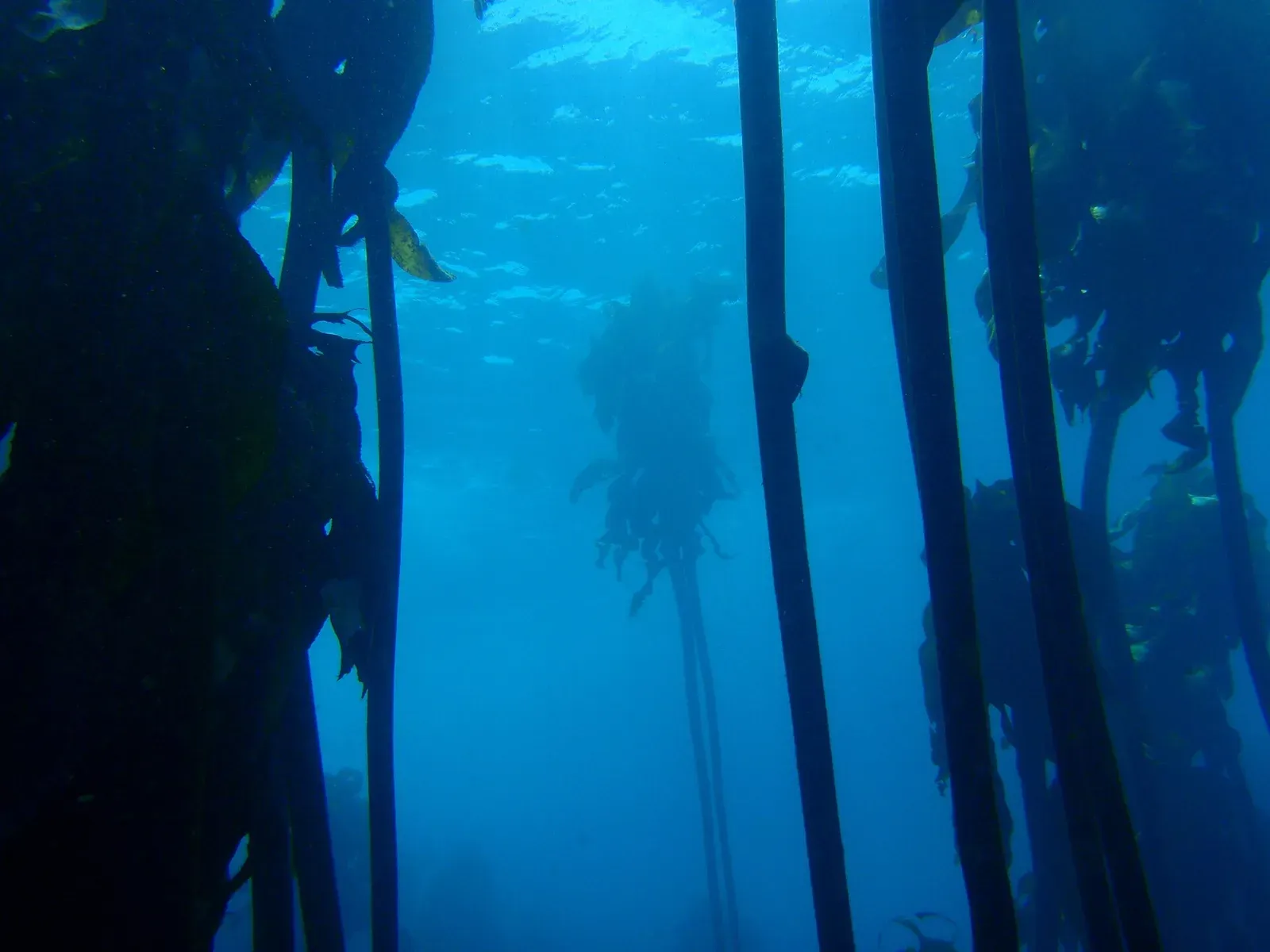
California runs the same play in Macrocystis: Whalers Cove at Point Lobos needs a reserve reservation and proof of certification before you can get in, and the kelp cover itself is seasonal enough to change navigation from one month to the next. Arch Rock at Anacapa marks the edge of a no-take reserve in 12 to 19 °C water. In the southern hemisphere, Eaglehawk Neck in Tasmania has weedy seadragons resident in the kelp year-round, and Milford Sound does something no other site here can: a dark freshwater layer on top of the fiord fools deep-water species into growing shallow, so black coral that belongs below 100 m grows at recreational depth.
Iceland’s Strýtan is the oddest dive on the list — the only hydrothermal chimney shallow enough to reach on scuba, a cone topping out at 15 m above a fjord floor 65 to 70 m down, venting fresh water at 72 to 75 °C with wolffish holding in the crevices around it. Nearby Arnarnesstrýtur vents at about 79 °C with a pH of 10, which is a good reason to keep hands and hoses out of the outflow.
Elsewhere the draw is what the cold concentrates: giant Pacific octopus and wolf eels in Puget Sound, where the season peaks in winter — October to March, once the plankton dies back, with market squid moving into the shallows to spawn after dark; cuttlefish courting in April to June on the tideless side of Zeeland, in water you can see a few metres through; jewel anemones on the pinnacles at Knoll Pins; grey seals in the water every month the boats run at the Farnes. And a handful of places on this coastline have no dive sites in our guides yet but belong to the same world: the orca and herring snorkelling at Skjervøy from November to January, the slack-water windows at Saltstraumen, and the anemone walls of Browning Pass.
| Site | Depth | Level | Best months |
|---|---|---|---|
| Strýtan Strýtan · Iceland | 15–30 m | Advanced | May–Aug |
| Arnarnesstrýtur Strýtan · Iceland | 15–23 m | Intermediate | May–Aug |
| Knivestone Farne Islands · United Kingdom | 3–20 m | Advanced | Jun–Sep |
| Longstone Farne Islands · United Kingdom | 20–33 m | Advanced | Jun–Sep |
| Cathedral Rock St Abbs & Eyemouth · United Kingdom | 3–18 m | Intermediate | Jun–Sep |
| Glanmire St Abbs & Eyemouth · United Kingdom | to 30 m | Advanced | Jun–Sep |
| Knoll Pins Lundy Island · United Kingdom | 15–25 m | Intermediate | Jun–Sep |
| Gannets Rock Lundy Island · United Kingdom | to 12 m | Beginner | Jun–Sep |
| Shores at Tjørnuvík Faroe Islands · Faroe Islands | 3–12 m | Intermediate | Jun–Aug |
| Ertholmene Bornholm · Denmark | to 30 m | Advanced | Jun–Sep |
| Hammeren Bornholm · Denmark | to 14 m | Beginner | Jun–Sep |
| Kostersten Bohuslän & Gullmarsfjord · Sweden | to 50 m | Intermediate | Jul–Sep |
| Bergse Diepsluis Zeeland · Netherlands | to 19 m | Beginner | Apr–Jun |
| Den Osse Zeeland · Netherlands | to 30 m | Intermediate | Apr–Jun |
| Sund Rock Puget Sound · United States | 21–24 m | Intermediate | Oct–Feb |
| Cove 2 Puget Sound · United States | to 40 m | Intermediate | Oct–Feb |
| Point Lobos — Whalers Cove Monterey Bay · United States | 9–21 m | Intermediate | Sep–Oct |
| Middle Reef Point Lobos · United States | 6–20 m | Intermediate | Sep–Nov |
| Anacapa Island — Arch Rock Channel Islands · United States | 15–37 m | Advanced | Sep–Nov |
| Partridge Point Cape Peninsula Kelp Forests · South Africa | to 26 m | Intermediate | Nov–Jun |
| Castle Rocks Cape Peninsula Kelp Forests · South Africa | to 18 m | Intermediate | Nov–Jun |
| Miller's Point Cape Peninsula Kelp Forests · South Africa | to 8 m | Intermediate | Nov–Jun |
| Milford Sound (Piopiotahi) Fiordland · New Zealand | to 40 m | Advanced | Dec–Feb |
| Edwards Island Stewart Island · New Zealand | to 3 m | Intermediate | Dec–Mar |
| Kaikōura Canyon Kaikōura · New Zealand | to 30 m | Advanced | Nov–Mar |
| Hippolyte Rocks Eaglehawk Neck · Australia | to 40 m | Advanced | Dec–Mar |
Where to start
Not all of this is expedition diving. Several of these sites are the gentlest introductions to cold water there are: Hammeren on Bornholm is a beginner-rated shore circuit, Bergse Diepsluis is a beginner-rated muck dive with no current at all, and Cove 2 is a beach entry in the middle of Seattle. Start on ground like that, in the same suit you intend to travel with, close enough to home that a bad day costs nothing.


