Cozumel · Mexico · Cave & cavern · Wall · Drift
Punta Sur
The Cathedral cave sits in the same block of reef as the throat
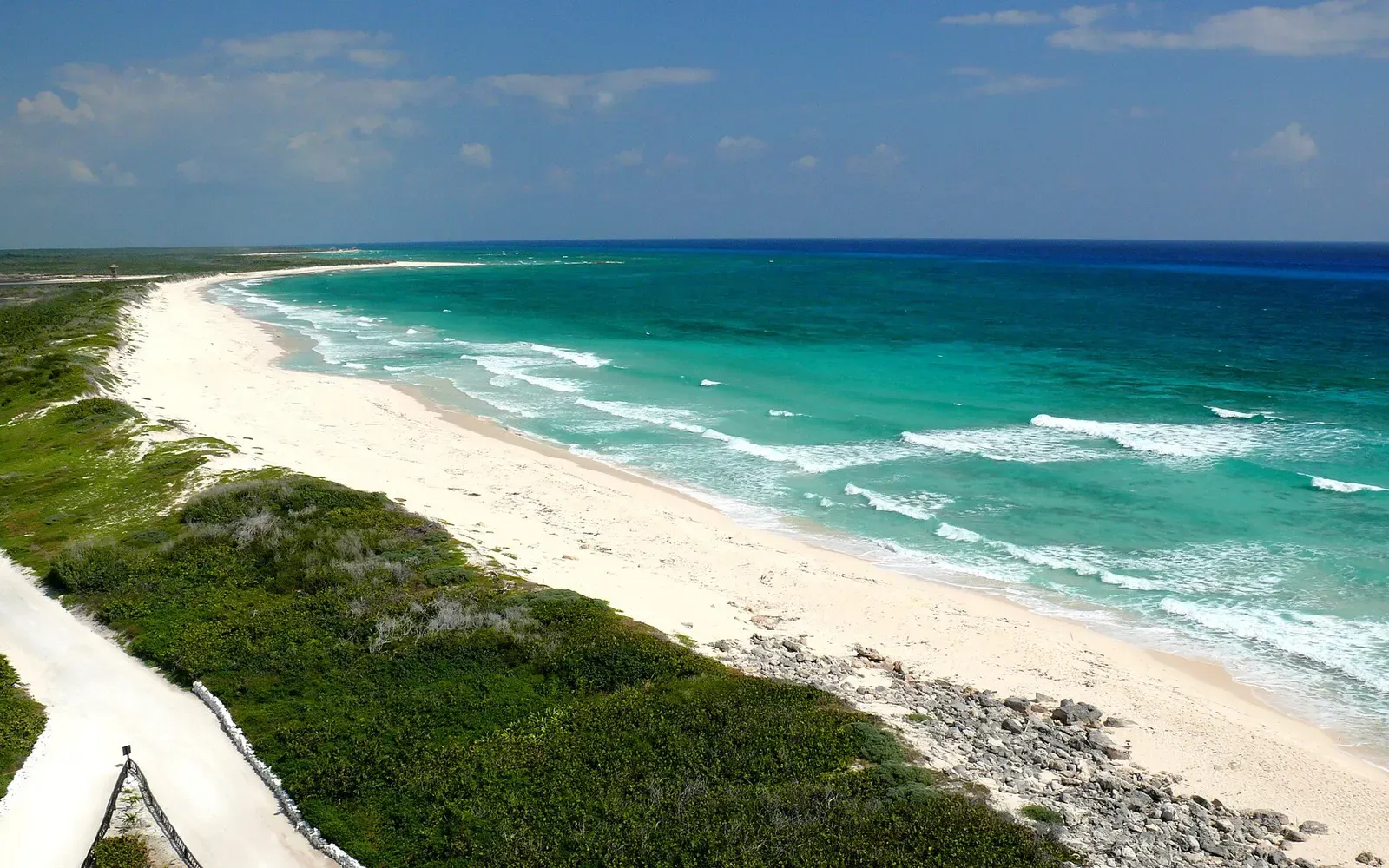
Photo: Ken Thomas · Public domain
Punta Sur is the deep drift off the southern point of Cozumel, and what divers ask for by name is the Devil's Throat: a narrow tunnel that drops through the red coral at about 45 degrees and opens onto the wall at roughly 41 metres. The reef structure starts at around 24 metres, the overhead is real, and the dive sits at the edge of recreational limits.
Also known as Devil's Throat.
Where it is and how deep
20.2800° N, 86.9900° WApproximate position — the dashed circle shows where the site lies; your operator's briefing has the mooring.
The dive
Punta Sur marks the southern point of the island, and the site is really two dives stacked on each other: a drift along the wall and reef, and the overhead system cut into the coral below it. The reef structure starts at around 80 feet, 24 metres, which is already deep by Cozumel standards, so everything that follows is committed diving with no shallow reef to duck onto.
The Devil's Throat itself is a narrow tunnel dropping through the red coral at roughly 45 degrees, entered at about 100 feet, 30 metres, and running down to around 125 feet, 38 metres, before it opens out on the wall at approximately 135 feet, 41 metres, right at the edge of recreational dive limits. Divers carry a light through it, and scissor kicks are discouraged because the sediment they lift takes the visibility from everyone behind.
The formation holds more than the one tunnel. A cave called Catedral, the Cathedral, sits in the same block of reef, with shafts of light falling into it through the tunnels above. Once the group is out of the throat and onto the wall the dive becomes a drift back along the reef, with the ascent starting early because most of the bottom time has already gone below 30 metres.
Background
The Cathedral was known for a crucifix-shaped sponge formation in the ceiling of the cave, backlit by a shaft of light falling through one of the tunnels, and it was the image most divers associated with this end of the island. Hurricane Wilma destroyed the sponge cross in 2005. The cave and the tunnels below the reef are unchanged; the formation that gave the Cathedral its name is not there any more.
Marine life and season
The sources we used don't single out particular species here.
| Jan | Feb | Mar | Apr | May | Jun | Jul | Aug | Sep | Oct | Nov | Dec |
|---|---|---|---|---|---|---|---|---|---|---|---|
| Prime | Prime | Prime | Prime | Good | Good | Good | Fair | Fair | Fair | Fair | Good |
Season follows Cozumel: January–April is prime with December close behind; lighter trades keep the leeward side calm, though winter nortes can shut the port for a day. Peak hurricane risk falls in September and October.
Know before you go
- The profile runs to the edge of recreational limits, so exceeding no-decompression limits is the first risk here, on a dive with no shallow reef to sit on while the computer clears.
- Nitrogen narcosis is a factor at 38 to 41 metres, and most divers on this site are breathing compressed air rather than trimix.
- The tunnel silts easily. Scissor kicks are discouraged: one diver finning badly takes the visibility from everyone behind them inside an overhead.
- The system is usually classed as cavern rather than cave, since daylight reaches most of it, but it is still an overhead: a light and the skills to dive with one are the entry requirement.
Photos from Punta Sur
Ken Thomas · Public domain
Dive videos
Cozumel Punta Sur Devil's Throat 1080P with Canon T2i · Kenneth Edwards on YouTube
LA GARGANTA DEL DIABLO - Devil's Throat, Punta Sur, CZM, MX · Aqua Lung1962 on YouTube
Questions divers ask
How deep is the Devil's Throat?+
The tunnel is entered at about 100 feet, 30 metres, and drops at roughly 45 degrees to around 125 feet, 38 metres, opening onto the wall at approximately 135 feet, 41 metres. The reef structure above it starts at around 24 metres, so no part of this dive is shallow.
Is the Devil's Throat a cave dive?+
It is usually described as a cavern rather than a cave, because daylight reaches most points inside it, and it is dived on a single tank within recreational depths. It is still an overhead environment: divers carry a light, and the accepted risks are decompression obligation, narcosis and silt-out.
Sources
- Devil's Throat at Punta Sur — Wikipedia
- Punta Sur — Wikipedia
- Cozumel — Wikivoyage
Photo credits
- Rocky windward coastline viewed from the Punta Sur lighthouse in Cozumel by Ken Thomas, Public domain, via Wikimedia Commons
- Windward shoreline looking toward the Punta Sur lighthouse in the distance by Ken Thomas, Public domain, via Wikimedia Commons
In The Logbook
- What is decompression sickness (the bends)?Body & health · 18 min read
- How long does a tank of air last?Gear & kit · 9 min read
- How a dive computer calculates no-stop timeBody & health · 10 min read
- Air, nitrox or trimix: which gas, and when?Gear & kit · 15 min read
More dive sites in Cozumel
Drift
Reef sharks seen more often than anywhere else on Cozumel
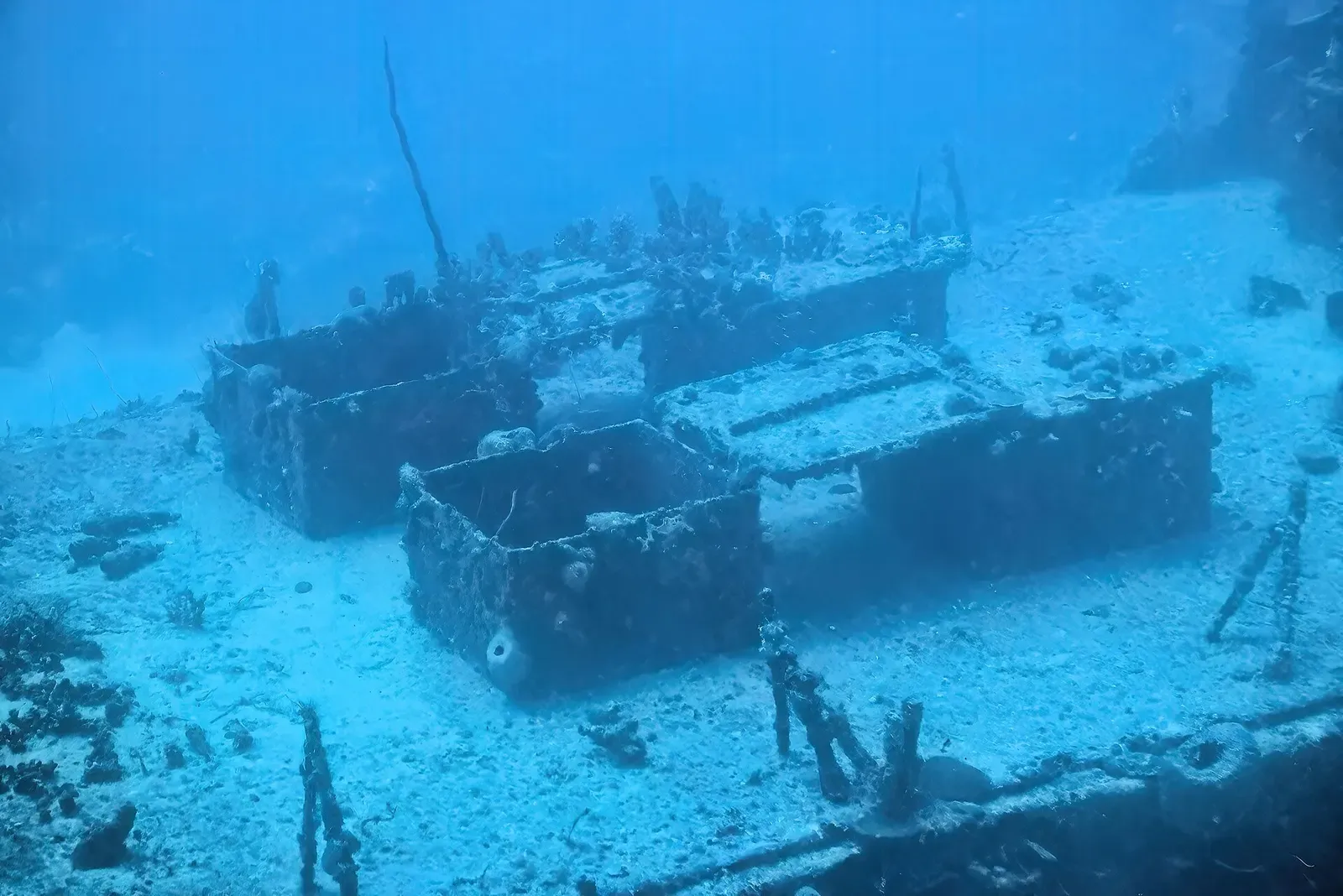
A hull that was placed rather than lost, upright at 25 m
Cave & cavern
Sunlight streaking through a vaulted cavern ceiling
Wall
Coral gardens on the shelf, steep drops below to 27 m
Reef
Sheltered reef just off Chankanaab National Park
Reef
Giant coral pinnacles cut with caves, tunnels and caverns
Mild current in a protected pocket, 9 to 15 m
Reef
Permit cruising over coral heads on open sand
Similar dives elsewhere

Two long tunnels that empty out onto the open blue


An L-shaped cave in from 14 m and out of the wall at 22 m
Cave & cavern
Frenchman Hole
Negril & Bloody Bay · Jamaica
A shore-entry cavern in a ledged, sloping wall
A twin-entrance overhang at 24 m below a 16 m cleaning station