Dahab · Egypt · Coral garden · Lagoon · Reef
The Islands
Two underwater islands linked by coral passages and lagoons
Photo: Tim Sheerman-Chase · CC BY 2.0
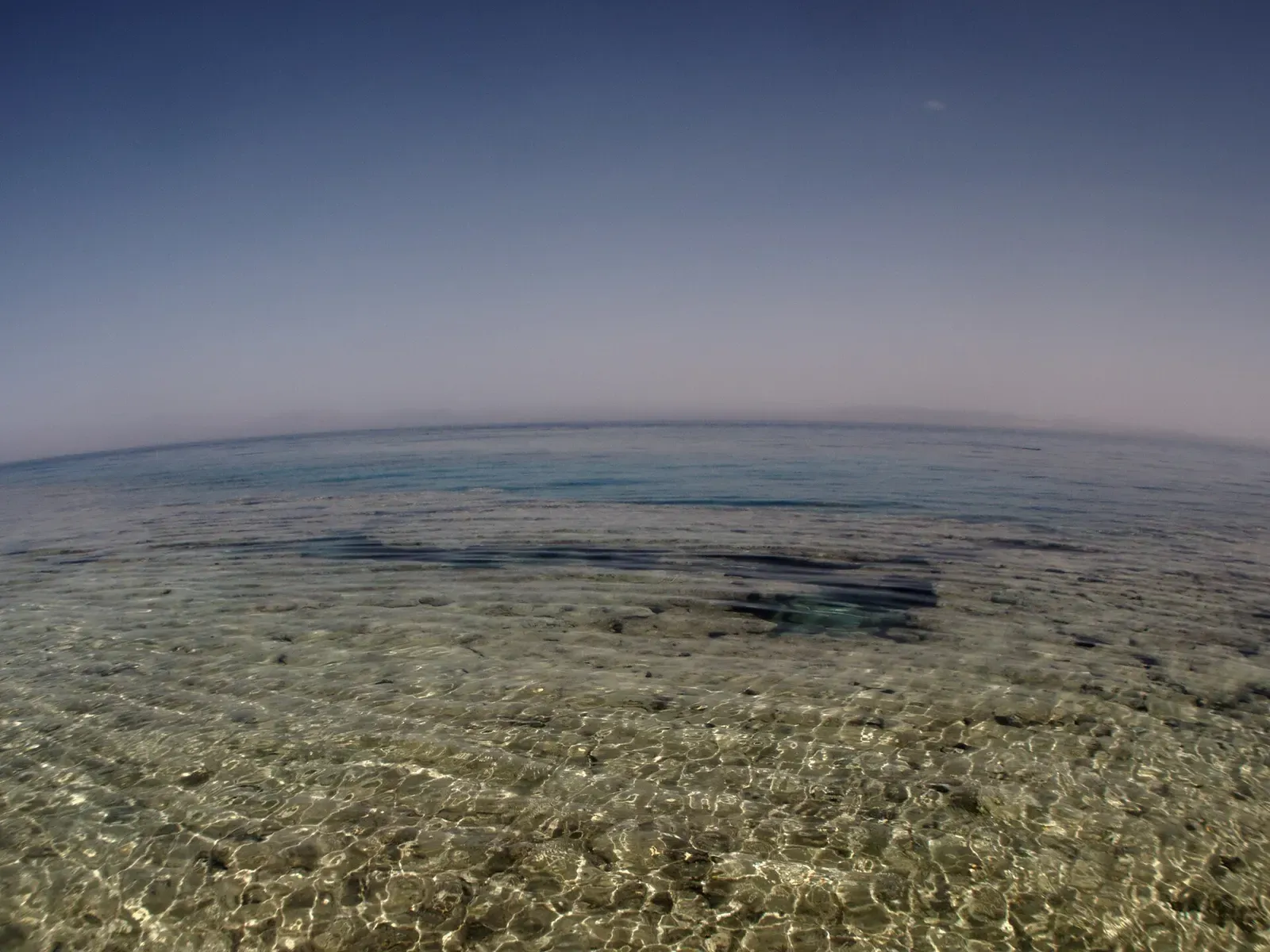
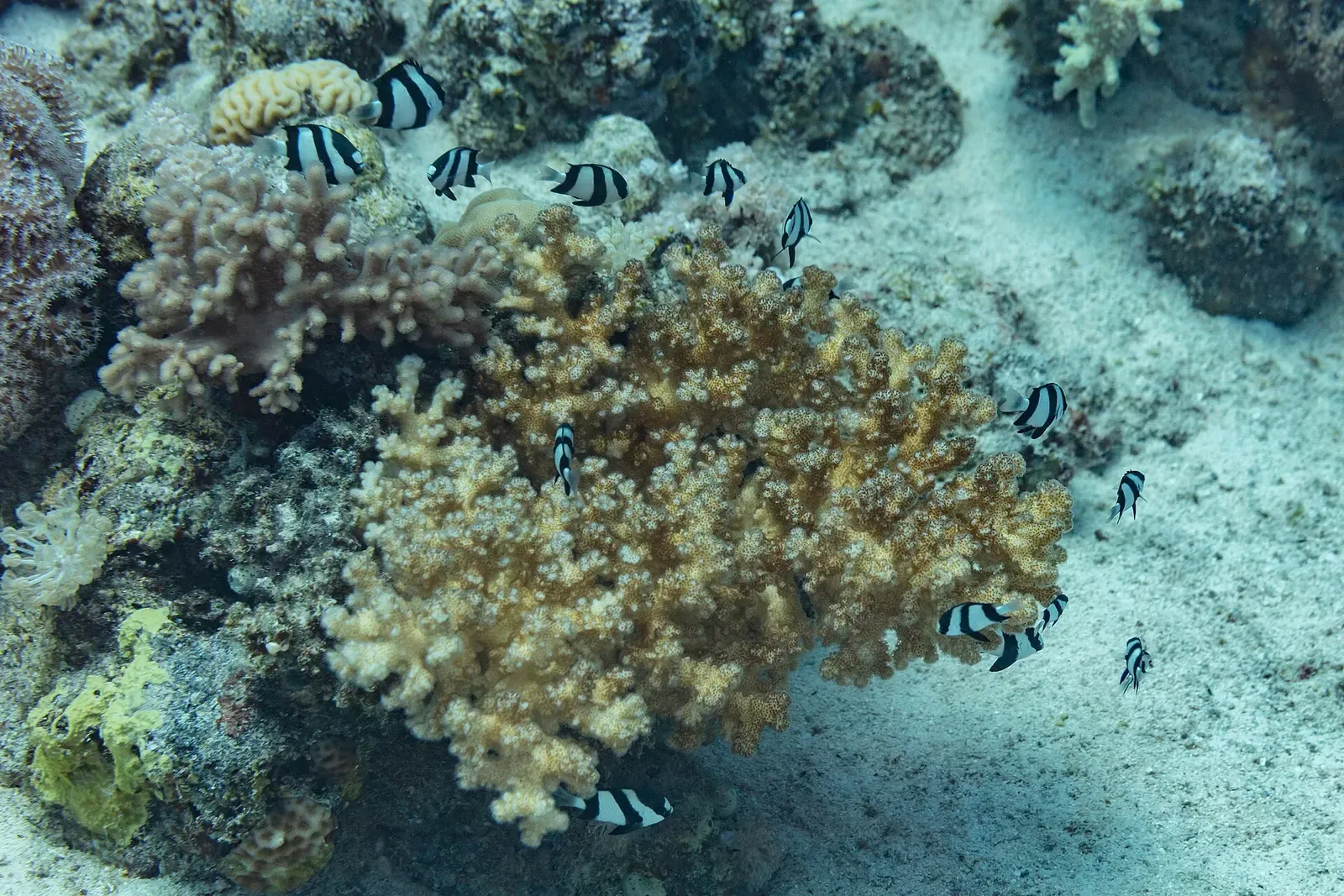
The Islands centres on two underwater islands joined by a maze of lagoons and coral formations. Shallow sandy pools shape much of the dive, with schooling barracuda and reef predators among the wildlife; the site also supports snorkelling and recreational freediving.
Where it is and how deep
28.4778° N, 34.5123° EApproximate position — the dashed circle shows where the site lies; your operator's briefing has the mooring.
The dive
The entry crosses a wide reef platform, best at high tide. The route begins through sandy-bottomed pools at 7–10 m, enclosed by hard coral formations, then explores the connecting labyrinths and lagoons around the islands. The maximum depth is 20 m, and a small crack in the reef wall provides an exit.
Stingrays, Napoleon wrasse, Picasso triggerfish and crocodile fish inhabit the coral landscape, with schooling barracudas also present. Yellowtail barracuda, groupers and lionfish occur here; eagle rays and turtles sometimes pass through, and guitar sharks are a possible encounter.
Marine life and season
- Stingrays
- Napoleon wrasse
- Barracuda
- Eagle rays
- Sea turtles
- Groupers
| Jan | Feb | Mar | Apr | May | Jun | Jul | Aug | Sep | Oct | Nov | Dec |
|---|---|---|---|---|---|---|---|---|---|---|---|
| Good | Good | Good | Prime | Prime | Good | Good | Good | Prime | Prime | Good | Good |
Season follows Dahab: Conditions stay calm and shore-diveable year-round; visibility peaks in spring and autumn shoulder months.
Know before you go
- The entry requires crossing a wide reef platform; high tide is preferable.
Photos from The Islands
Tim Sheerman-Chase · CC BY 2.0
mattk1979 · CC BY-SA 2.0
mattk1979 · CC BY-SA 2.0
Dive videos
Diving at The Islands, Dahab (1) - 4K Scuba Dive [Egypt, Red Sea, 2024] · Jarek F. PL on YouTube
Questions divers ask
What training suits the full Islands profile?+
Advanced Open Water training suits the full profile to 20 m. The initial sandy pools lie at 7–10 m, before the route explores the labyrinths and lagoons around the connected islands.
When is entry at the Islands easiest?+
High tide is preferable because the shore entry crosses a broad reef platform. A white sign marks the entrance.
Can snorkellers and freedivers visit the Islands?+
The site supports snorkelling and recreational freediving as well as scuba diving, with lagoons and coral formations around the underwater islands.
How does the Islands dive end?+
A small crack in the reef wall offers an exit from the coral maze and lagoons. The dive begins through shallow sandy-bottomed pools.
Sources
- Islands - Dahab Dive Sites — H2O Divers Dahab
- The Islands Dive Site — Red Sea Tribe
- Islands dive site — PADI
- OpenStreetMap coastline at The Islands — OpenStreetMap
Photo credits
- Shallow, sandy shore entry into the coral maze at The Islands dive site by Tim Sheerman-Chase, CC BY 2.0, via Wikimedia Commons
- Red Sea anemonefish sheltering in a bubble-tip anemone at The Islands by Tim Sheerman-Chase, CC BY 2.0, via Wikimedia Commons
- A cloud of orange anthias fish over coral pinnacles at The Islands by mattk1979, CC BY-SA 2.0, via Openverse
- A slender cornet fish hovering over staghorn coral at The Islands by mattk1979, CC BY-SA 2.0, via Openverse
In The Logbook
- The best shore dives in the worldShore diving · 8 min read
More dive sites in Dahab
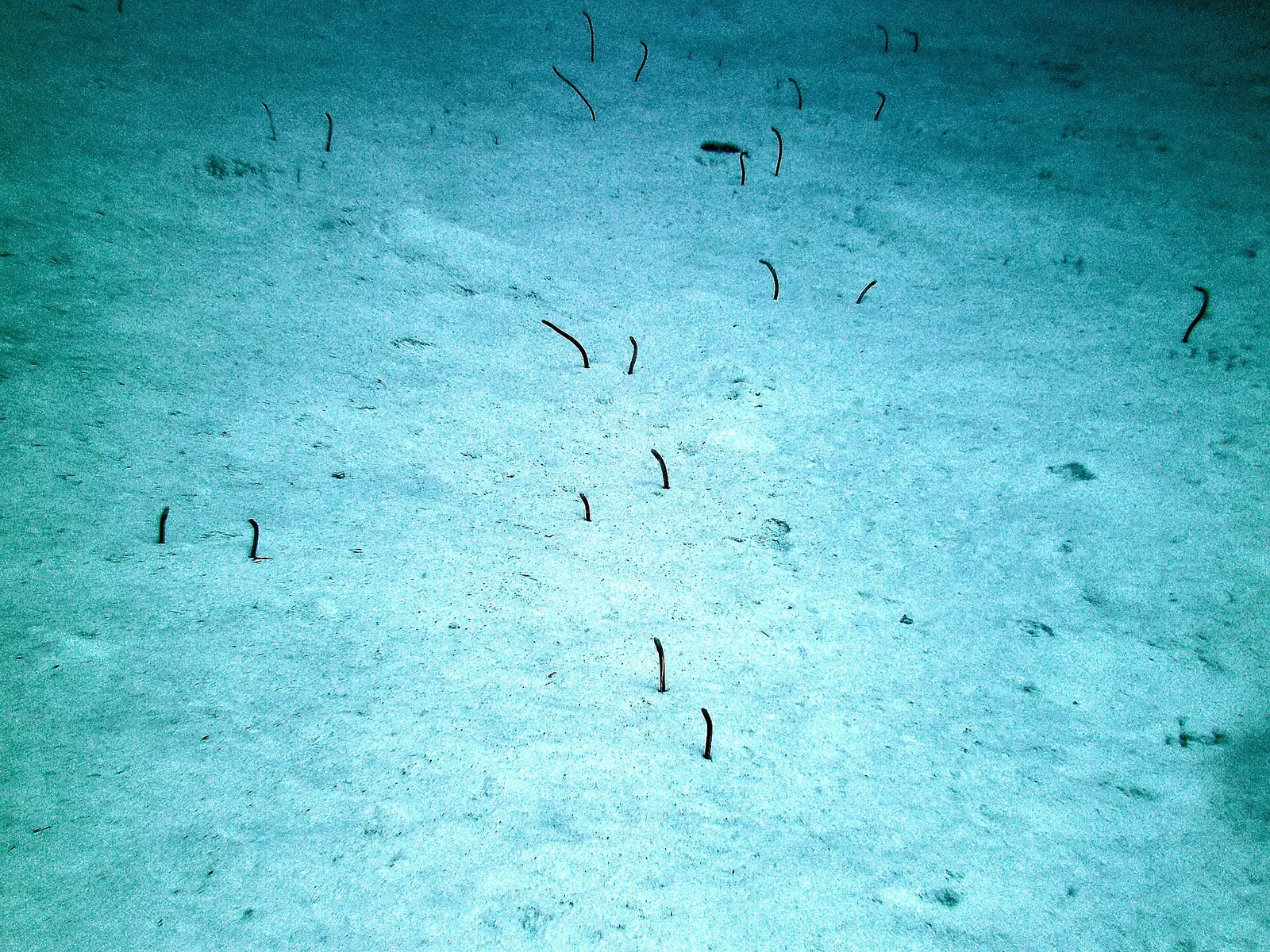
Garden eels feed above permanent burrows in the sand
A scrap-metal elephant marks the turn towards the coral reef
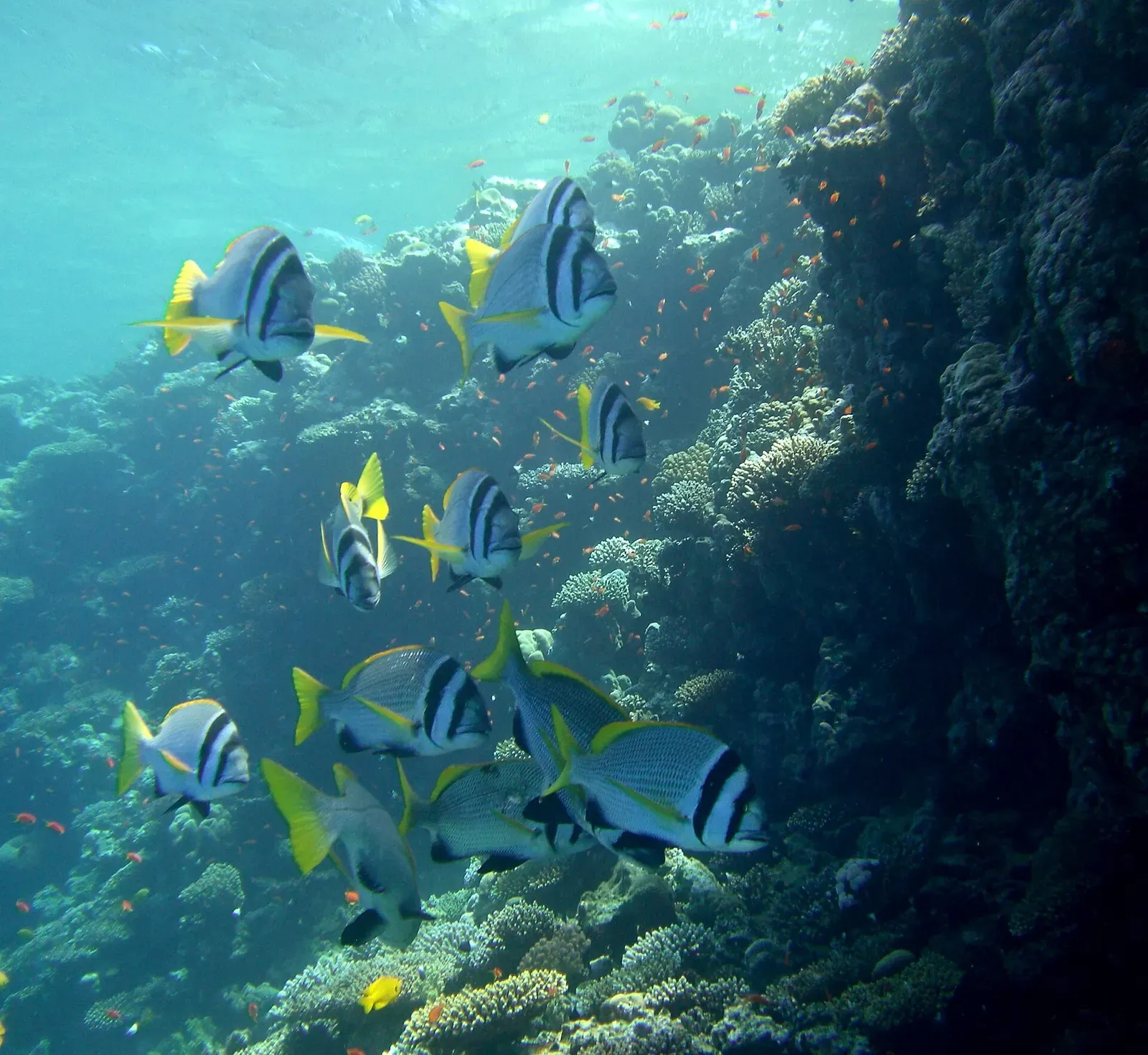
A small reef filled to the brim with schooling bannerfish
Reef
Fish and Friends
A town house reef: seagrass, then coral blocks to 22 metres
Sand slope
El Gehaza
A single large block at 14 metres, loaded with small life
Reef
Golden Blocks
A coral block packed with glassfish and bannerfish
Reef
Moray Garden
A gentle 6-metre shelf that slopes on down to 30
Reef
Umm Sid
A deep gorgonian below table corals and the reef wall
Similar dives elsewhere

A resting pod of 60 to 80 spinner dolphins in the lagoon.
Diverse coral between 15 and 20 m, a short boat ride out
Hole-in-the-roof entry to coral blocks rising from 10 to 40 m to the surface


Coral gardens with angelfish, butterflyfish and parrotfish