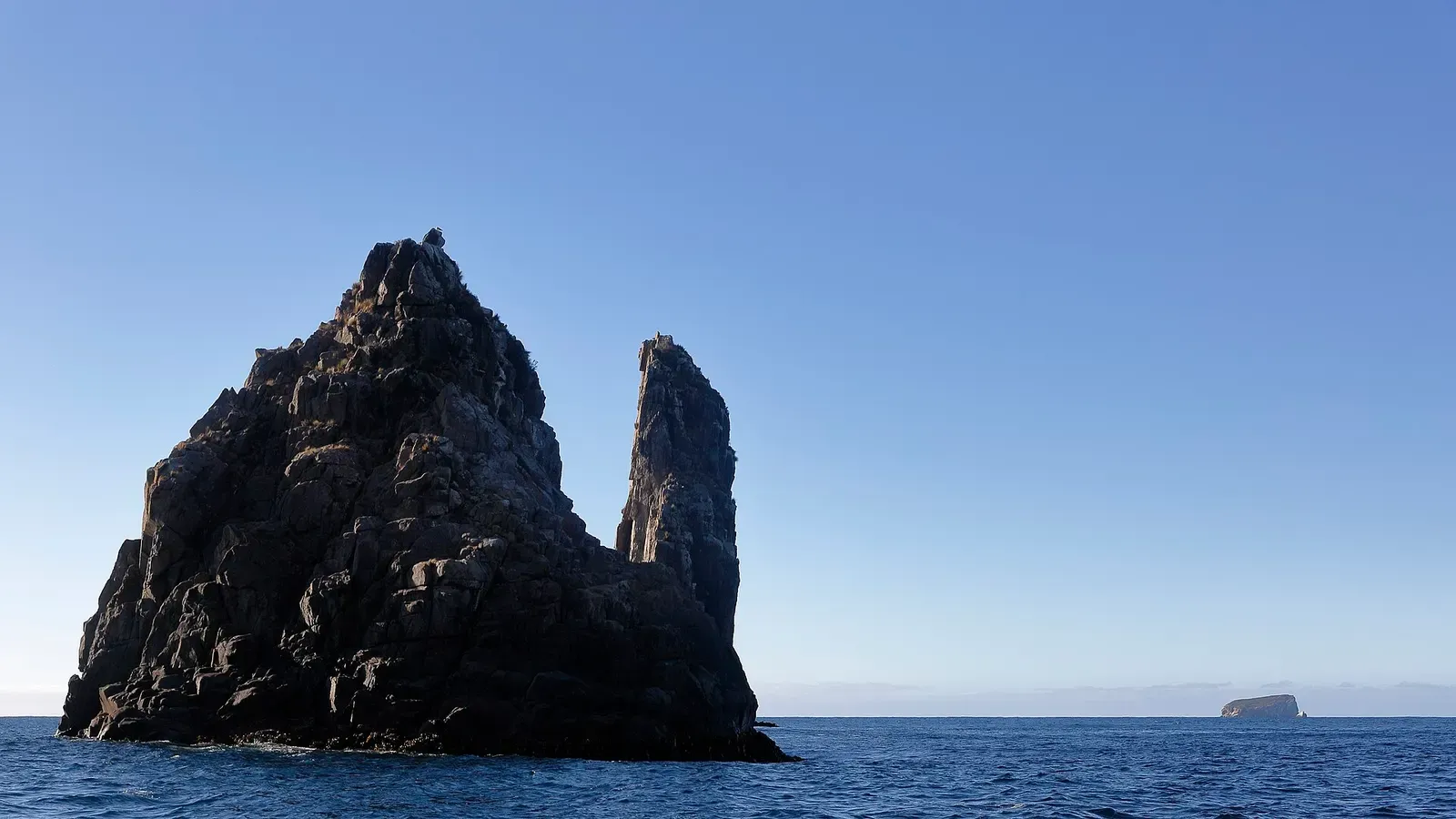
A granite island ringed by cliffs up to 65 metres, with reef running well below it, described as the best and among the most challenging diving in Tasmania. Bull kelp grows down to about 15 metres, and below 30 the weed gives out and colourful coral and sponge reef takes over, worked by thousands of fish. Reaching it takes a flat, westerly day.
Where it is and how deep
43.1221° S, 148.0532° EPublished position for this site.
The dive
The Hippolytes are a small granite island, Big Hippolyte, with Little Hippolyte, the Needle and the Pie alongside it, ringed by steep cliffs up to 65 metres and dropping into water that forms part of the Great Southern Reef. Bull kelp grows down to about 15 metres here, a lot deeper than it does at other sites on this coast, so the first stage of every descent is worked through weed rather than over open rock.
Below about 30 metres the seaweed stops and the reef turns to coral and sponge, dense with colour and covered in fish: over twenty species at a time, butterfly perch, large schools of bastard trumpeter, plenty of boarfish, and the occasional big bluefin tuna out in the blue. Recreational divers work this down to 40 metres. Past that needs technical training, and the reef is thought to keep going to around 65.
The Nord lies at about 40 metres between the islands, split almost in half in the middle of a sandy patch, covered in fish, with seals very often roaming and hunting over it. The Tasman is deeper again at 70 metres and needs specialised equipment to reach. Australian fur seals use the island above as a haul-out site, so they are as much a fixture of the dive here as the reef itself.
Background
Both wrecks between the islands were claimed by the Needle, one of the rocks lying off Big Hippolyte. The Tasman went in 1883 on a Hobart to Sydney voyage with 27 crew and officers and 29 passengers aboard; her captain rushed on deck to find the vessel where she had no business to be, between the Greater and Lesser Hippolytes. The Nord followed in 1915, carrying 12,000 cases of benzine from Melbourne to Hobart. The Tasman lies at 70 metres, the Nord at 40.
Marine life and season
- Seals & sea lions
- Tuna
- Reef fish swarms
| Jan | Feb | Mar | Apr | May | Jun | Jul | Aug | Sep | Oct | Nov | Dec |
|---|---|---|---|---|---|---|---|---|---|---|---|
| Prime | Prime | Prime | Good | Good | Fair | Fair | Fair | Good | Good | Good | Prime |
Season follows Eaglehawk Neck: Summer (Dec–Mar) brings the calmest seas and best boat access to exposed sites; winter swell restricts trips to Hippolyte Rocks and Cathedral Cave.
Know before you go
- Tuna boats work the surface directly above the site — expect engines overhead and plan the ascent and surfacing around them.
- The site is fully exposed and needs no swell and a westerly wind; conditions close it at short notice, so the day is decided on the water.
- The reef runs well past recreational limits, and the 40 metre line is easy to cross on structure that keeps dropping to around 65.
Photos from Hippolyte Rocks
Ed Dunens · CC BY 2.0
Dive videos
Outer Hippolyte Rocks · Tasmanian Underwater Explorer on YouTube
Questions divers ask
How deep is the diving at Hippolyte Rocks?+
Bull kelp runs down to about 15 metres and the coral and sponge reef takes over below 30. Recreational divers work the site to 40 metres, dives to about 55 metres have been made, and the reef is thought to continue to around 65.
What certification do you need for Hippolyte Rocks?+
A recreational licence covers you to 40 metres, but this is not a dive for someone inexperienced: the guidance is at least 60 dives and a deep certification, going out with a professional operator. Anything below 40 metres, including the two wrecks, requires technical training.
When can you dive Hippolyte Rocks?+
Only on a flat day with a westerly wind. The site is exposed enough that workable weather is rare — in one recent year just a handful of weekends were diveable, one of them the Easter long weekend.
Sources
- Hippolyte Rocks — Wikipedia
- Below the Hippolyte Rocks on the Tasman Peninsula lies a colourful reef full of coral, sponges and fish — ABC News
- Hippolyte Rocks (islet) — OpenStreetMap / Gazetteer of Australia
Photo credits
- The twin sea stacks of Hippolyte Rocks rising from open water off the Tasman Peninsula by Ed Dunens, CC BY 2.0, via Wikimedia Commons
- Close view of the split granite pinnacles of Hippolyte Rocks against a clear sky by Ed Dunens, CC BY 2.0, via Wikimedia Commons
In The Logbook
- Kelp forest diving, and where it still growsCold water · 13 min read
- Where to dive in DecemberTrip planning · 10 min read
- Where to dive with seals and sea lionsBig animals · 17 min read
- Cold-water diving: is it worth the drysuit?Cold water · 8 min read
More dive sites in Eaglehawk Neck
Cave & cavern
A massive entrance running back into tunnels and cross passages
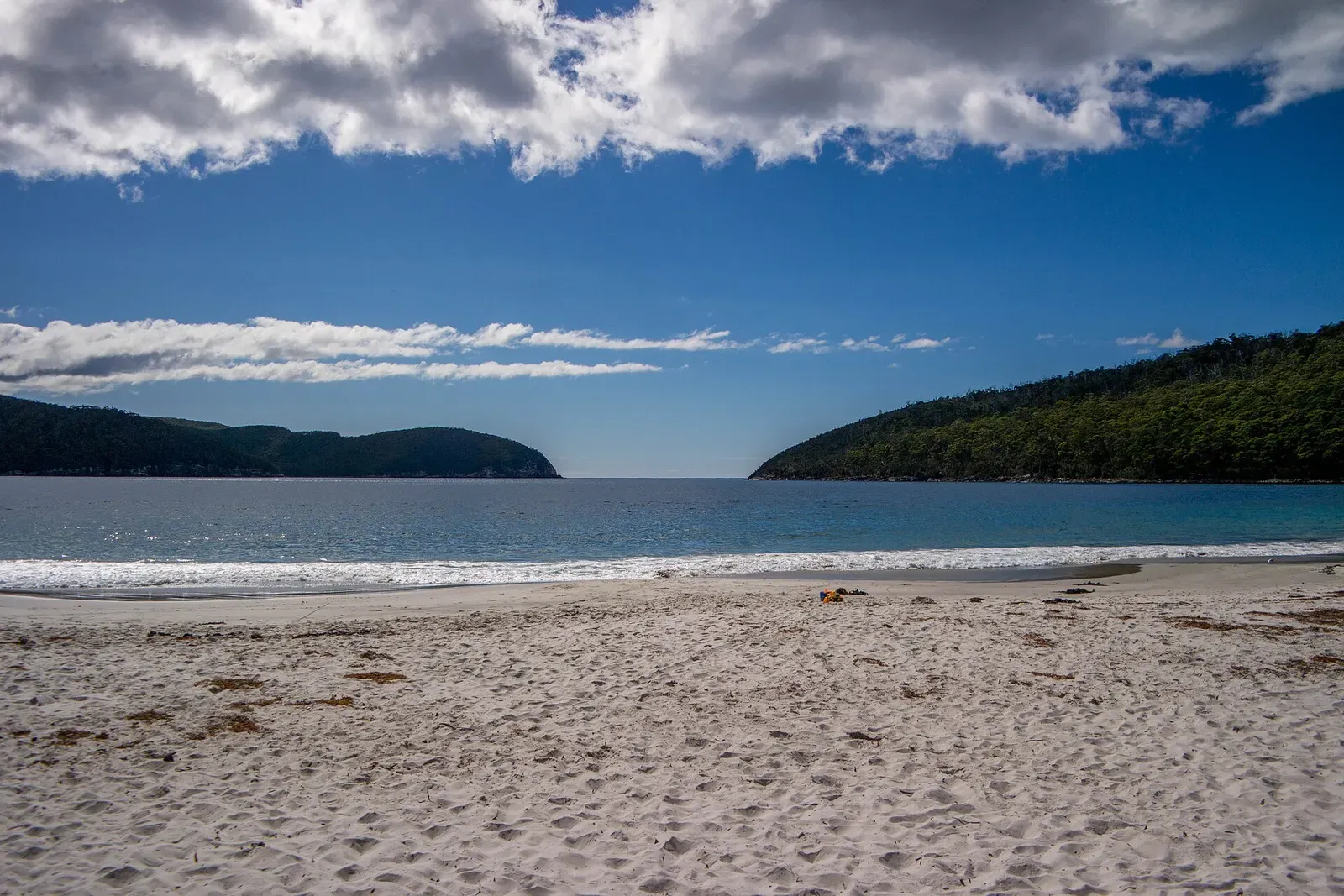
Beach access at the end of 12 km of unsealed road
Wreck
One of Tasmania's few intact wrecks, in 42 m off Hippolyte Rocks
Similar dives elsewhere

A manta cleaning station beside a coral-covered Admiralty anchor

Vertical cracks and caves in volcanic pinnacles, sharks below

Maze-like rock stacks full of red sea fans to 40 m
.jpg)
.jpg)
A chain of rock heads under the Estérel, 6 m to 40 m