The one big animal that comes to you
Most big-animal diving is diving you take to the animal. You get on a boat before dawn, cross open water to an offshore pinnacle, drop into current, hold onto rock at 30 m and hope something passes. There is no such thing as a beginner hammerhead dive — not one hammerhead site in our records carries that rating, and the single one you can walk into from a beach is graded advanced.
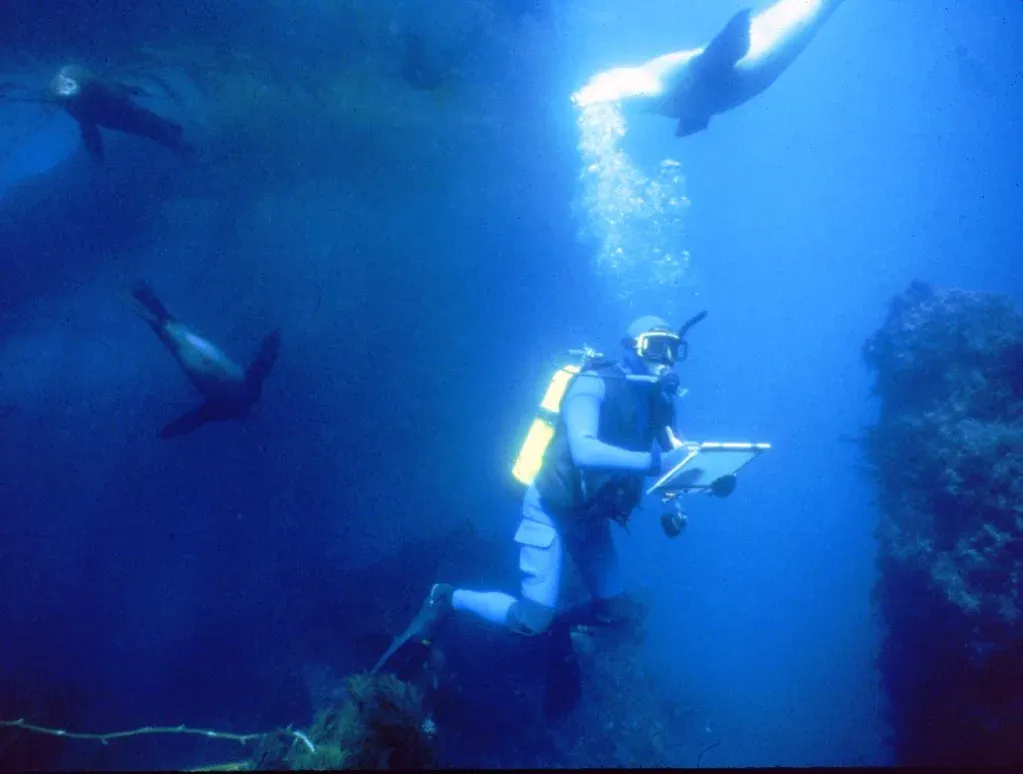
Seals and sea lions invert all of it. La Jolla Cove is a walk down a path in San Diego into water that never goes past 14 m, and California sea lions are the constant there. Rye Pier is a Melbourne shore dive in 2 to 6 m of water where Australian fur seals come through. Punta Loma in Argentine Patagonia is a beginner-rated dive in exactly 6 m. La Lobera in Baja is 3 to 9 m over bare rock, and the whole point of it is that the animals come down to inspect you.
That is the argument of this article, and everything else follows from it. You do not chase a pinniped; you settle, and it decides. Which means the diving is shallow, the bottom time is long, the certification bar is low — and the two things that actually decide whether the trip works are the calendar and the cold.
Which one is looking at you
There are two shapes of animal here and the difference predicts the encounter.
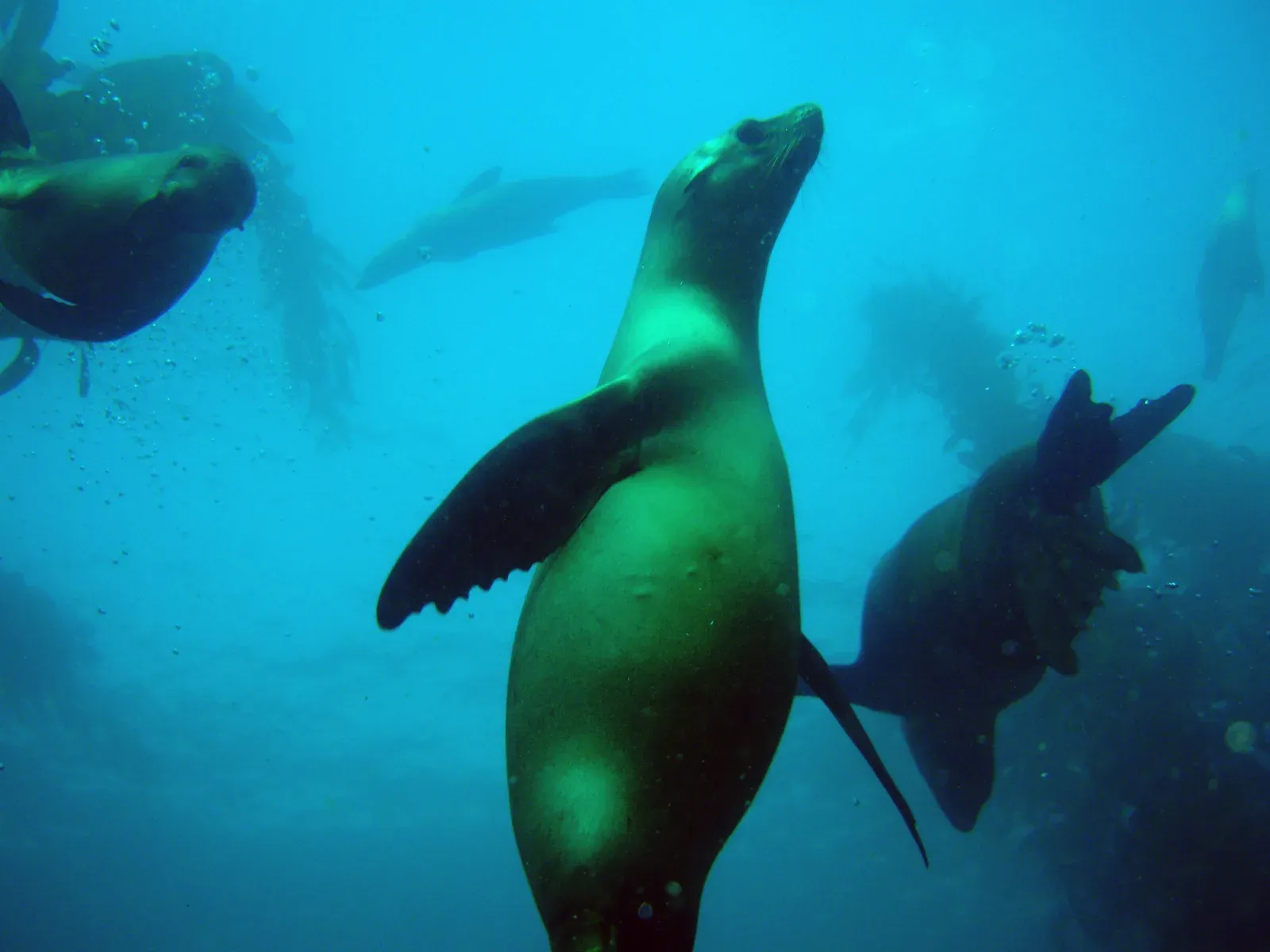
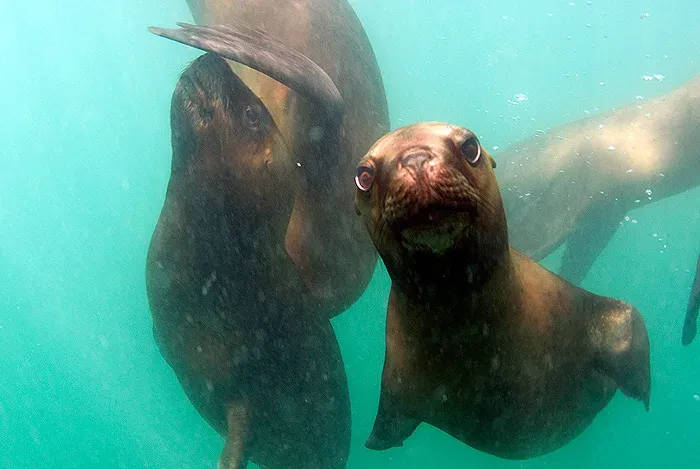
Otariids — sea lions and fur seals — have small external ear flaps, swim with their fore-flippers in a wing-like stroke similar to penguins and sea turtles, and can turn their hind flippers forward to walk on all fours on land. They are the noisy, social, barking ones, and they are the ones that spiral, mimic and mouth your fins. Almost every dive in this guide that reads like a game is an otariid dive.
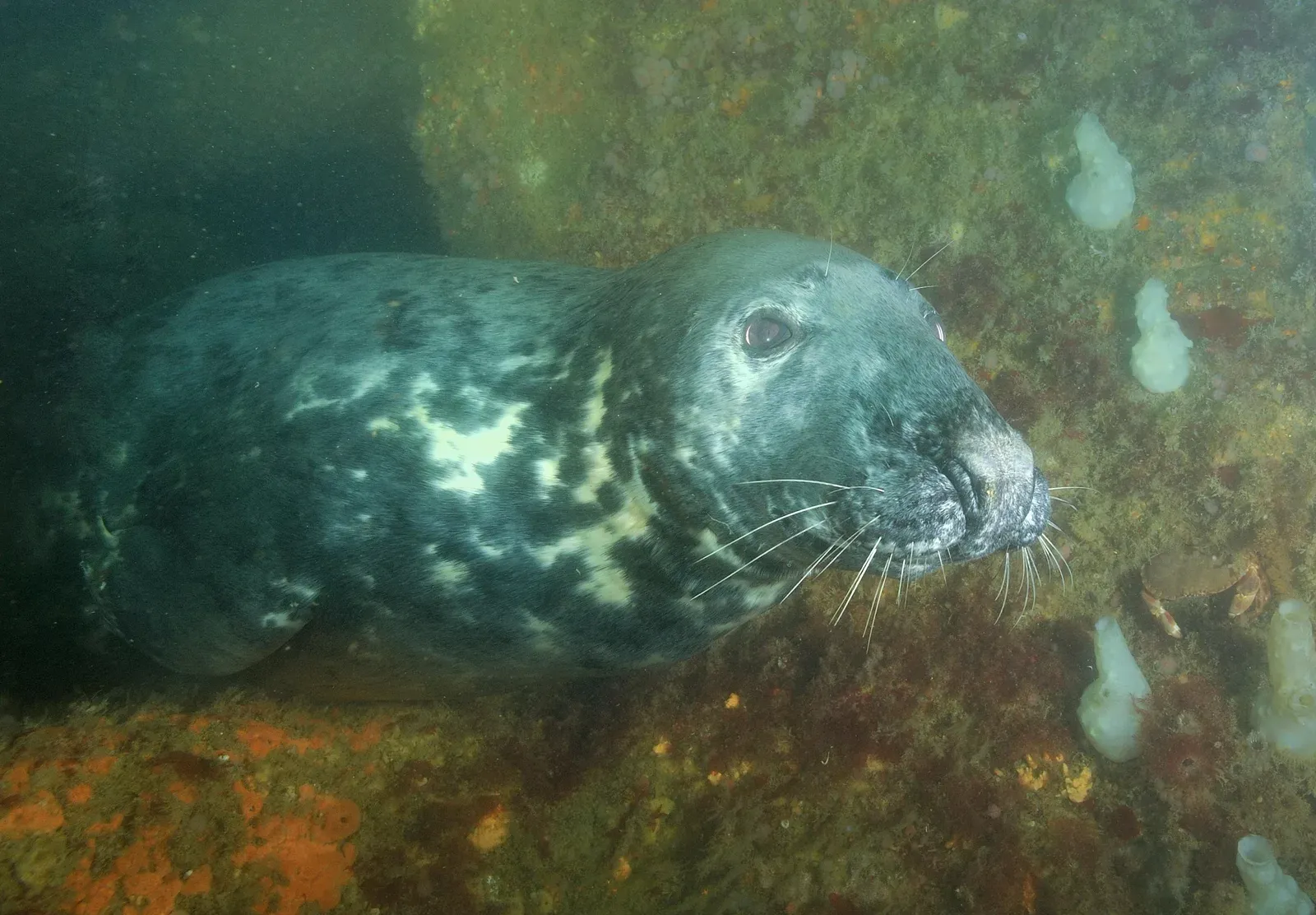
Phocids — true seals, including grey, harbour and monk seals — have no external ears, swim by swinging their hind flippers and lower body from side to side, and cannot walk on land at all; they flop and wriggle forward on their bellies instead. They are quieter and generally deeper divers. A grey seal encounter at Lundy or the Farnes is a slower, closer, more deliberate thing than a sea lion encounter in kelp: the animal arrives, examines you at arm’s length, sometimes takes a fin in its mouth, and leaves.
The ones that come close are the young ones
Read our site records back to back and the same detail keeps appearing. At Punta Loma it is the juveniles that break away from the colony to spiral around a diver’s fins while the adults watch from the surface. At Kaikōura the fur seals that follow a snorkeller around the peninsula rocks are juveniles. At Gannets Rock the animals come right up to the mask, nibble fins and hug legs. At Seal Colony off Jervis Bay they will mimic what a diver does underwater, which is why the dive works better if you settle and let them come than if you swim after them.
Where the records distinguish at all, the adults stay on the haul-out or watch from the surface. If you have booked a seal dive and the animals on the rocks will not get in, you have not necessarily had a bad day — you may have had a day with no juveniles in the water.
The North Atlantic and the North Sea
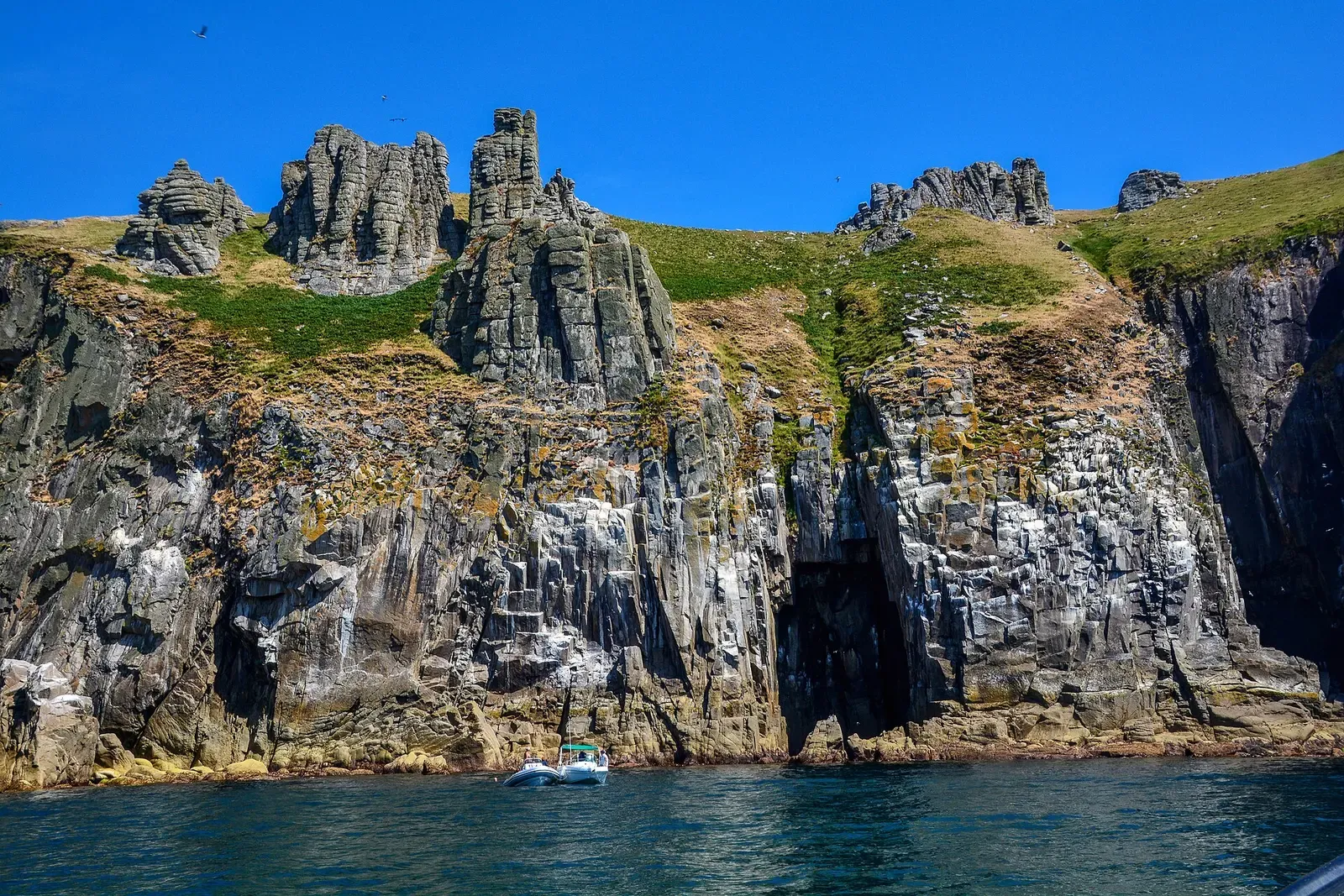
Gannets Rock is the purest version of this dive in Britain. It is a sheltered bay on Lundy’s east side where the reef bottoms out at around 12 m, so the whole dive is a slow potter through kelp with grey seals circling. Lundy is home to over 200 Atlantic grey seals and is a Marine Conservation Zone with a no-take zone; the boats run from Ilfracombe between April and October. Around the corner, Knoll Pins is the harder, prettier dive — jewel-anemone walls dropping to a sandy slope at 25 m, timed to slack water, with seals filmed hanging around the pinnacles.
The Farne Islands are the other British answer, and the diving there is not gentle. Knivestone is an underwater graveyard where more than sixty ships have been lost; the rocks dry to 3 m only on low-water spring tides, and the boat drops you on a kelp plateau in 3 to 5 m, which is where the seals are, before you work down a slope to scattered boilers and propellers. Longstone is the deep one, a 1915 Danish steamer at 33 m below Grace Darling’s lighthouse, with the seals held back in the shallows above the wreck. Both are graded advanced and both run in strong current.
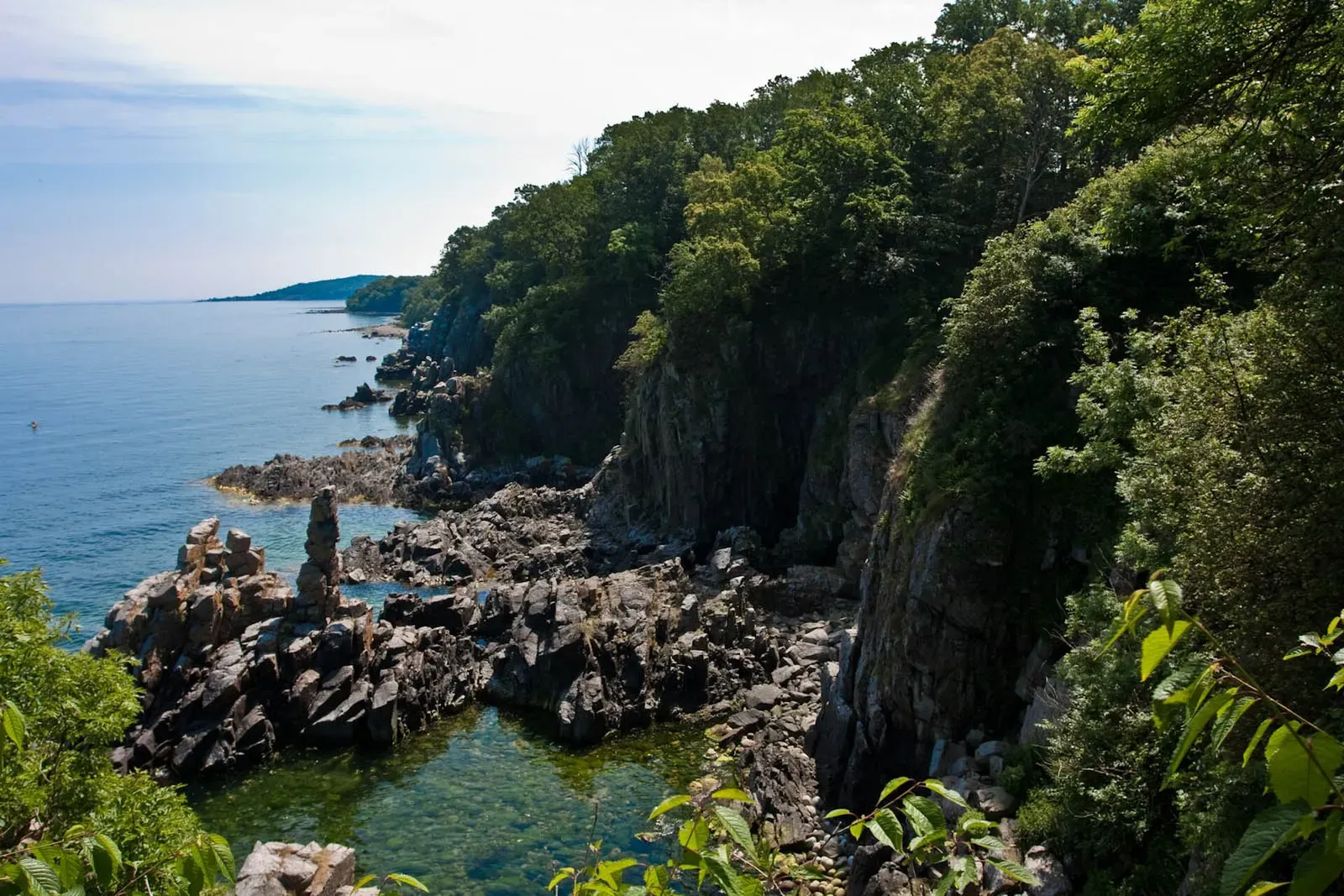
In the Baltic, Ertholmene is the outlier worth knowing about: wall diving to 30 m on an archipelago 20 km north-east of Bornholm, Natura 2000 site number 189, where the grey seal colony on the skerry Tat went from around 40 animals in 2009 to at least 80 in 2010 and at least 180 in 2011. Tat and Græsholm are closed bird sanctuaries with no landing. An encounter there is a real possibility rather than a booking.
The eastern Pacific
This is the sea lion coast, and it is where the shore dives are. Whalers Cove inside the Point Lobos State Marine Reserve is a 9 m cove in one of the richest marine habitats in California, and harbour seals and sea otters use it alongside the divers. Nothing may be taken from the water there — not a fish, not a mollusc. La Jolla Cove is the same idea further south and warmer — a protected ecological reserve with a hard 14 m floor, sea lions as the constant, garibaldi in the kelp and sevengill sharks turning up in April. Push out to the canyon and the kelp beds on the outer edge of the slope are where the seals, dolphins and fish all concentrate, with a 150 m drop just off the rim. Further north, Monterey Bay and the Channel Islands hold the same cast in colder, clearer autumn water.
Baja does the warm-water version. Swanee Reef south of Espíritu Santo is coral heads in no more than 11 m with sea lions, rays and morays; La Reina is the lighthouse islet the same colony uses, with mantas passing in open water off the rock. Down the cape, La Lobera is the sea lion colony dive proper — 3 to 9 m over rock with no coral, where most divers simply stop swimming once the animals come down — while El Bajo logs them as one name on a long list rather than a resident. On the Pacific side, Thetis Bank is a different animal entirely: sea lions working a striped-marlin baitball alongside orcas, makos and dolphins, in short bursts with the boat close by.
And in Galápagos the sea lions are simply always there, on top of whatever else you came for: at Shark Bay off Wolf they are in the water as the group descends, and at Punta Vicente Roca they drop down from the surface to look divers over in some of the coldest water in the archipelago.
The southern rim
The southern hemisphere has the widest spread of these dives, and the most tightly organised one.
Punta Loma, twenty minutes by boat from Puerto Madryn into Chubut’s oldest protected reserve, is Argentina’s signature sea lion dive and the most tightly regulated one in our records. Divers drop onto a rocky reef at about 6 m below a resident colony of roughly 600 South American sea lions and hold position behind a marked buoy line set 50 m from the haul-out. Groups are capped at six divers plus instructors, no more than 24 people are allowed in the water across the whole reserve, only three boats may be inside at a time, rangers watch from the cliffs, and the dive is capped at 40 minutes. Along the outer arm of the peninsula, Punta Pirámide is the breeding and haul-out ground: 132 hectares of protected cliff established in 1974, averaging about 10 m and reaching 25.
Two famous colonies sit in our data as areas rather than sites, and it is worth saying so rather than inventing records for them. At the Palomino Islands off Lima, South American sea lions hold the rocks all year and December to April is when conditions most reliably allow time in the water with them. At Montague Island in New South Wales the fur seal haul-out is fullest through winter, roughly May to September. Both are dives; neither has a site record here yet.
Australia and New Zealand run the temperate version. Seal Colony south of St Georges Head is the one genuinely demanding dive on this list, boulder ground with a bottom at 25 to 30 m, dived only in the winter window when the animals move there. Rye Pier and Popes Eye inside Port Phillip are the opposite: shallow, easy, and the seals are one of several reasons to be there. Hippolyte Rocks off Tasmania puts Australian fur seals over a 40 m sponge reef and a broken wreck. At the South Neptunes the record is blunt that the pinnipeds are the draw on the southern islands — Australian sea lions haul out there and New Zealand fur seals breed across the group — although the diving happens in a cage, at 2 m or on the seabed at 18, because this is also the only place in Australia where cage diving has been legal since 2002. Across the Tasman, Ulva Island is 1,075 hectares of no-take kelp reserve closed to fishing since 2004, holding 56 species of fish with fur seals, sea lions and yellow-eyed penguins passing through, and Milford Sound has seals on the same walls as its shallow-water black coral.
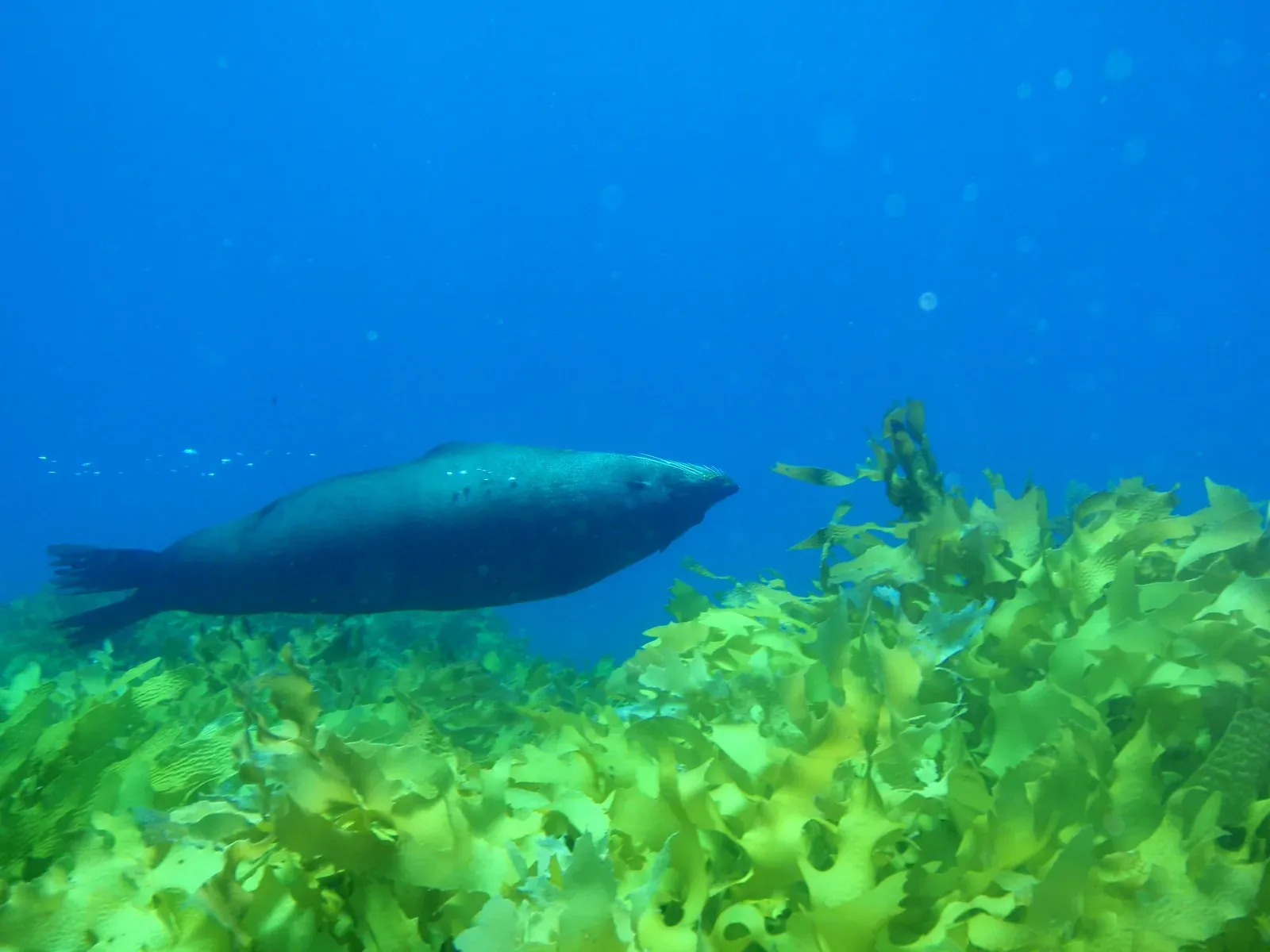
South Africa’s Cape Peninsula belongs here too. Partridge Point is a granite boulder reef of overhangs and swim-throughs reaching about 26 m on the sand east of Seal Rock, and Cape fur seals often visit divers on it; over in Algoa Bay, Bell Buoy is a ragged-tooth reef minutes from the beach that is also a common resting place for seals.
At the poles the relationship changes. Half Moon Island has Weddell and Antarctic fur seals hauled out on its beaches below a chinstrap colony of about 2,000 pairs, and dive plans there are fitted around the landing schedule rather than the other way round. And Poolepynten on Svalbard is the exception that proves the rule of this whole article: it is a documented walrus haul-out, AECO’s guidance keeps vessels 150 m off and under 5 knots within 300, and the same guidance says never to swim, kayak or dive in walrus waters. Not every pinniped is an invitation.
The monk seals
Two of the rarest seals on earth are in this guide, and the rule for both is different from everything above: you do not approach, and you do not follow.
The Mediterranean monk seal is a cave-breeding phocid that has retreated into sea caves as human pressure on open beaches grew. Its population is estimated at between 800 and 1,000 animals across the Aegean, Madeira and Cabo Blanco, and the IUCN moved it from endangered to vulnerable in 2023 — on indications of small increases in some subpopulations and a decline that has slowed, rather than on a recovery. It forages to 250 m. In our records it turns up in the Zakynthos caverns: at Keri Caves, in the dark end of a 75 m cavern entered at 12 m, eating shrimp or sleeping; at The Arch, frequently, in the big cathedral-like swim-through; and at Butterfly Cave, many times, inside a 35 m cavern in 8 to 10 m of water. It is reported occasionally at Macronisos Canyon in the Kea Channel, a couple at a time. And at Grotta del Bue Marino in the Adriatic, the seals are gone: the cave’s name is all that is left of the animals that once used the archipelago.
MOm, the Hellenic society that runs monk seal conservation in Greece, puts the guidance in one line — stay out of the caves, their last refuge — and adds that disturbing a seal that is giving birth can cause it to flee or abandon its pup. The Keri operator, meanwhile, reports the animal in the caverns at six of its sites. That is public information and the operators publish it too, so the honest answer is framing rather than silence: if a monk seal is in the cavern when you arrive, the cavern is occupied. Do not go further in, do not corner it, and leave it an exit.
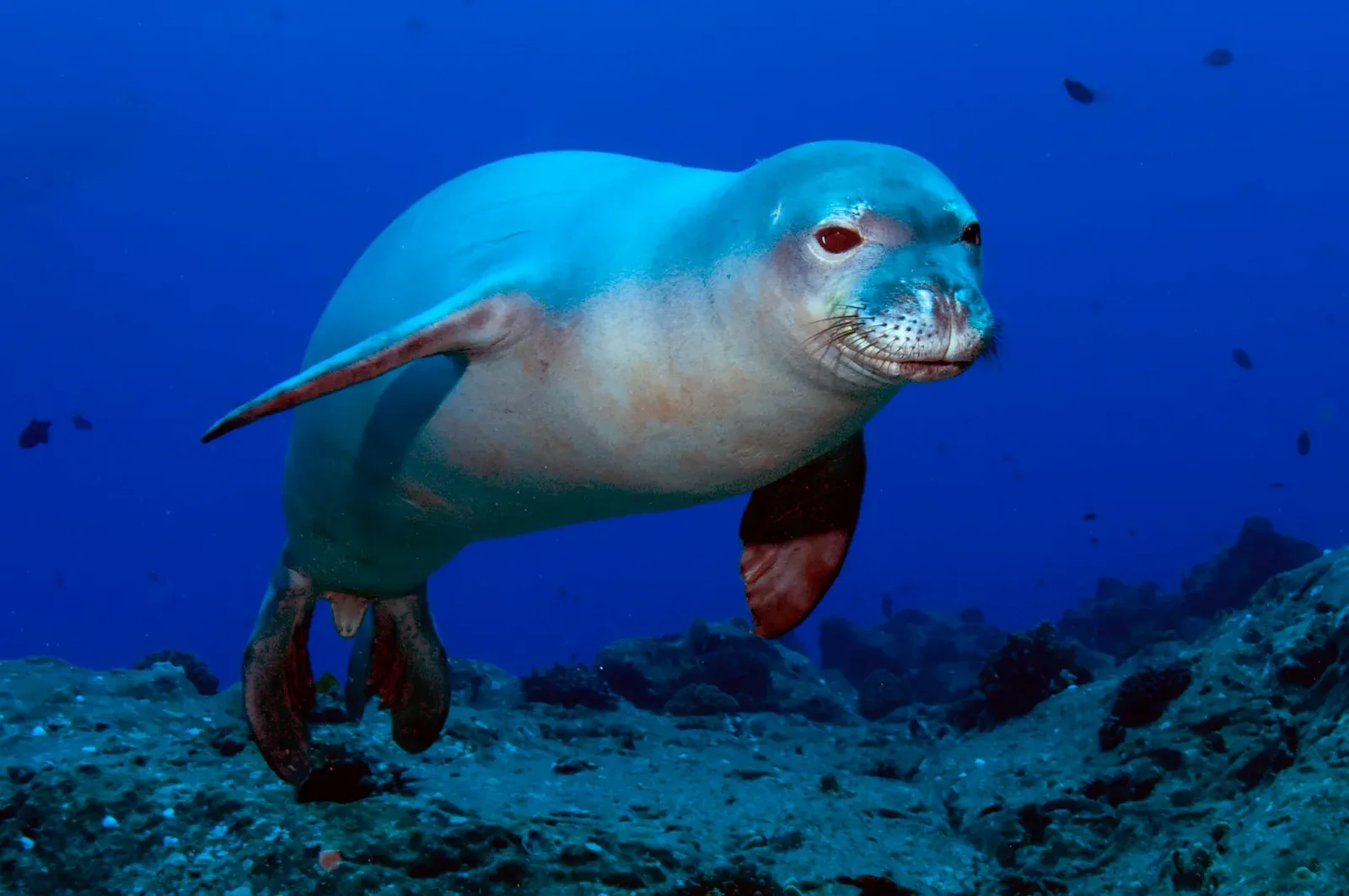
The Hawaiian monk seal is the Pacific version and, if anything, rarer: NOAA estimates around 1,600 animals, nearly 1,200 of them in Papahānaumokuākea and 400 in the main islands, and it is listed as endangered under the Endangered Species Act. It usually dives an average of six minutes to less than 60 m, though it can hold its breath for twenty and reach past 550. Our Oʻahu record is the conservative one to trust — monk seals there are reported but occasional — even though Spitting Cave, a drifted lava wall from 15 m to 43, is where they are looked for. NOAA’s advice if one approaches you in the water is not to enjoy it: cautiously exit the water.
The season is not the pupping season
Here is the finding that contradicts what a reader expects. More seals is not better diving.
The month with the most animals ashore in Britain is the month with territorial bulls, the roughest North Sea and beach access restrictions. Our own Farne Islands record puts it plainly: summer and early autumn combine workable weather with playful, non-breeding seals, while the late-autumn pupping season brings huge numbers but rougher seas and some access closed. Pupping timing runs anticlockwise around the British coast — September in Cornwall and the Isles of Scilly, December in Scotland and the Farnes, January on the south-east coast — so the peak wildlife-press month for grey seals is, at the Farnes, the month the diving stops being worth doing.
The southern hemisphere is on the opposite half of the year and much of it is opening now. Península Valdés runs its sea lion dives best from September to March. Kaikōura is November to March, Stewart Island December to May, the Palomino Islands December to April. Jervis Bay is the awkward one: the seals are there in winter, April to July, which is also when the bay is clearest.
| Site | Jan | Feb | Mar | Apr | May | Jun | Jul | Aug | Sep | Oct | Nov | Dec |
|---|---|---|---|---|---|---|---|---|---|---|---|---|
| Gannets RockLundy Island | Off-season | Off-season | Off-season | Fair | Good | Prime | Prime | Prime | Prime | Fair | Off-season | Off-season |
| KnivestoneFarne Islands | Off-season | Off-season | Off-season | Fair | Good | Prime | Prime | Prime | Prime | Good | Fair | Off-season |
| ErtholmeneBornholm | Fair | Fair | Fair | Good | Good | Prime | Prime | Prime | Prime | Good | Fair | Fair |
| Partridge PointCape Peninsula Kelp Forests | Good | Good | Good | Good | Good | Good | Fair | Fair | Fair | Fair | Good | Good |
| Whalers CovePoint Lobos | Fair | Fair | Fair | Fair | Good | Good | Good | Good | Prime | Prime | Prime | Fair |
| La Jolla CoveLa Jolla Cove & Canyon | Good | Good | Fair | Fair | Good | Good | Prime | Prime | Prime | Prime | Good | Good |
| La LoberaCabo Pulmo | Fair | Fair | Fair | Good | Good | Prime | Prime | Prime | Prime | Prime | Good | Fair |
| Punta LomaPuerto Madryn & Península Valdés | Good | Prime | Prime | Good | Good | Good | Good | Good | Prime | Prime | Prime | Good |
| Seal ColonyJervis Bay | Good | Good | Good | Prime | Prime | Prime | Prime | Good | Good | Good | Good | Good |
| Rye PierPort Phillip | Good | Good | Good | Good | Prime | Prime | Prime | Good | Good | Good | Good | Good |
| South Neptune IslandsNeptune Islands | Good | Good | Fair | Fair | Prime | Prime | Prime | Prime | Prime | Prime | Good | Good |
| Ulva IslandStewart Island | Prime | Prime | Prime | Good | Good | Fair | Off-season | Off-season | Off-season | Off-season | Fair | Prime |
Read that matrix as conditions and nothing else. No site in our data carries its own seasons; every one inherits its area’s ratings, which describe swell, visibility and whether the boats run. The animals have their own calendar and it is in the paragraphs above, not in the colours.
What the cold actually costs
A seal dive is a cold dive with a long shallow bottom time, and that combination is a specific gear problem rather than a general one.
Look at the water. Lundy runs 8 to 17 °C, the Farnes 6 to 15, Monterey Bay 9 to 16, Point Lobos 10 to 16, Stewart Island and Fiordland 8 to 16, Península Valdés 9 to 18, Kaikōura 10 to 17, the Cape Peninsula 8 to 20. Those are annual ranges, so the upper figure is the best month of the year, not the month you are going.
Now put that against the crossover. Our own conduction model puts the point where a 5 mm suit starts to beat a 3 mm at 17.7 °C. Only the Cape Peninsula’s best month, at 20 °C, gets above that line at all, and every one of those places spends most of its year well below it.
The bottom time makes it worse rather than better. A hammerhead dive is over in twenty minutes because of depth. A seal dive at 6 or 12 m is limited by nothing except your gas and your patience, which is the whole appeal — and it means an hour in the water in single figures, mostly hovering still, waiting for an animal to make up its mind. Stillness is the enemy of staying warm. Take the thicker suit, or a drysuit, and take a hood: what the water steals from you and how thick a suit needs to be both go into the arithmetic.
What it is doing when it leaves you
Here is the part that changes how the encounter looks.
The sea lion turning circles around you in 6 m of water is not there because that is as deep as it can go. A California sea lion has been recorded at 274 m and for 9.9 minutes; its ordinary dives are to about 80 m and last less than three. Eighty metres is twice the recreational limit on air. At 40 m our model gives a diver 10.5 minutes before a stop is owed; at 80 m it gives a minute and a half.
So run the animal’s ordinary afternoon through our own decompression model and see what it would cost a human. Twenty dives to 80 m, three minutes each, three minutes at the surface between them: a hundred and seventeen minutes, call it two hours, of routine feeding.
The ceiling ratchets down and never comes back up. By the last dive the model will not let a diver go shallower than 9.1 m, and the way home is 28 minutes at 9 m, 40 at 6 and 80 at 3 — two hours and thirty-six minutes of hanging, after two hours of work. The animal surfaces and goes to sleep. And notice how sensitive that is to the pauses: stretch the surface intervals from three minutes to five and the ceiling falls to 5.9 m. The surface interval is doing most of the work here, which is the same thing your own computer has been telling you all along.
The usual explanation for how the animal gets away with it is that it exhales before it dives: air is forced out of the lungs, the alveoli deflate, whatever is left is pushed into the bronchioles and trachea where no gas exchange happens, and no nitrogen is absorbed. That is the standard account and it is roughly the right shape. It is also over-tidy. A 2012 review in Proceedings of the Royal Society B points out that the claim that pinnipeds are exhalation divers is “only true for the phocid seals, some of which may in fact only reduce lung volume by 20 per cent” — that is, the sea lions and fur seals doing the spiralling are not established exhalation divers at all.
The same paper is blunter still about the folk conclusion. Breath-hold diving marine mammals were thought to be relatively immune to decompression sickness, it says, but recent observations have shown that gas bubbles may form and tissue injury may occur in marine mammals under certain circumstances. They are not immune. They manage it — with dive profiles, ascent behaviour and surface time that a diver would recognise as a decompression schedule.
What is genuinely and permanently different is the gas supply. The animal carries one breath, taken at the surface, at surface pressure. However deep it goes, that is all the nitrogen it has. You carry a cylinder that hands you fresh gas at ambient pressure on every breath, all the way down, which is why depth costs you and costs the animal comparatively little. How deep you can dive and what decompression sickness actually is both start from that one asymmetry.
The rules, which are mostly one rule
You may not approach. They may approach you. Every regulation below is a version of that sentence.
Two things are worth adding that no code covers. Breeding-season bulls are large, territorial and fast, and the months when a colony is at its noisiest are the months to dive somewhere else. And touching is the line: an animal mouthing your fin is the animal’s choice, and reaching out to it is yours.
The colony dives, side by side
| Site | Depth | Current | Level | Best months |
|---|---|---|---|---|
| Gannets Rock Lundy Island · United Kingdom | to 12 m | Mild | Beginner | Jun–Sep |
| Knoll Pins Lundy Island · United Kingdom | 15–25 m | Moderate | Intermediate | Jun–Sep |
| Knivestone Farne Islands · United Kingdom | 3–20 m | Strong | Advanced | Jun–Sep |
| Longstone Farne Islands · United Kingdom | 20–33 m | Strong | Advanced | Jun–Sep |
| Ertholmene Bornholm · Denmark | to 30 m | Mild | Advanced | Jun–Sep |
| Partridge Point Cape Peninsula Kelp Forests · South Africa | to 26 m | Moderate | Intermediate | Nov–Jun |
| Bell Buoy Algoa Bay · South Africa | 12–18 m | Moderate | Intermediate | Nov–Mar |
| Whalers Cove Point Lobos · United States | to 9 m | Mild | Beginner | Sep–Nov |
| La Jolla Cove La Jolla Cove & Canyon · United States | to 14 m | Mild | Beginner | Jul–Oct |
| La Jolla Canyon La Jolla Cove & Canyon · United States | 18–24 m | Mild | Advanced | Jul–Oct |
| Swanee Reef Sea of Cortez · Mexico | to 11 m | Mild | Beginner | Jun–Oct |
| La Reina Sea of Cortez · Mexico | 8–30 m | Moderate | Advanced | Jun–Oct |
| La Lobera Cabo Pulmo · Mexico | 3–9 m | Mild | Beginner | Jun–Oct |
| El Bajo Cabo Pulmo · Mexico | 11–18 m | Mild | Beginner | Jun–Oct |
| Thetis Bank Magdalena Bay · Mexico | 5–30 m | Moderate | Advanced | Oct–Nov |
| Punta Loma Puerto Madryn & Península Valdés · Argentina | 6–6 m | Mild | Beginner | Sep–Nov |
| Punta Pirámide Puerto Madryn & Península Valdés · Argentina | to 25 m | Mild | Intermediate | Sep–Nov |
| Punta Vicente Roca Galápagos West (Isabela & Fernandina) · Ecuador | 12–27 m | Strong | Advanced | Jan–Apr |
| Shark Bay Galápagos · Ecuador | 8–25 m | Moderate | Advanced | Jun–Nov |
| Seal Colony Jervis Bay · Australia | to 30 m | Mild | Advanced | Apr–Jul |
| Rye Pier Port Phillip · Australia | 2–6 m | Mild | Beginner | May–Jul |
| Popes Eye Port Phillip · Australia | 2–12 m | Mild | Intermediate | May–Jul |
| Hippolyte Rocks Eaglehawk Neck · Australia | to 40 m | Mild | Advanced | Dec–Mar |
| South Neptune Islands Neptune Islands · Australia | 2–18 m | Moderate | Intermediate | May–Oct |
| Ulva Island Stewart Island · New Zealand | to 20 m | Mild | Intermediate | Dec–Mar |
| Milford Sound (Piopiotahi) Fiordland · New Zealand | to 40 m | Mild | Advanced | Dec–Feb |
| Half Moon Island Antarctic Peninsula · Antarctica | to 20 m | Mild | Advanced | Dec–Feb |