
Fakarava · French Polynesia · Channel & pass · Drift
North Pass (Garuae)
Hook into the reef and let the flood run sharks past you
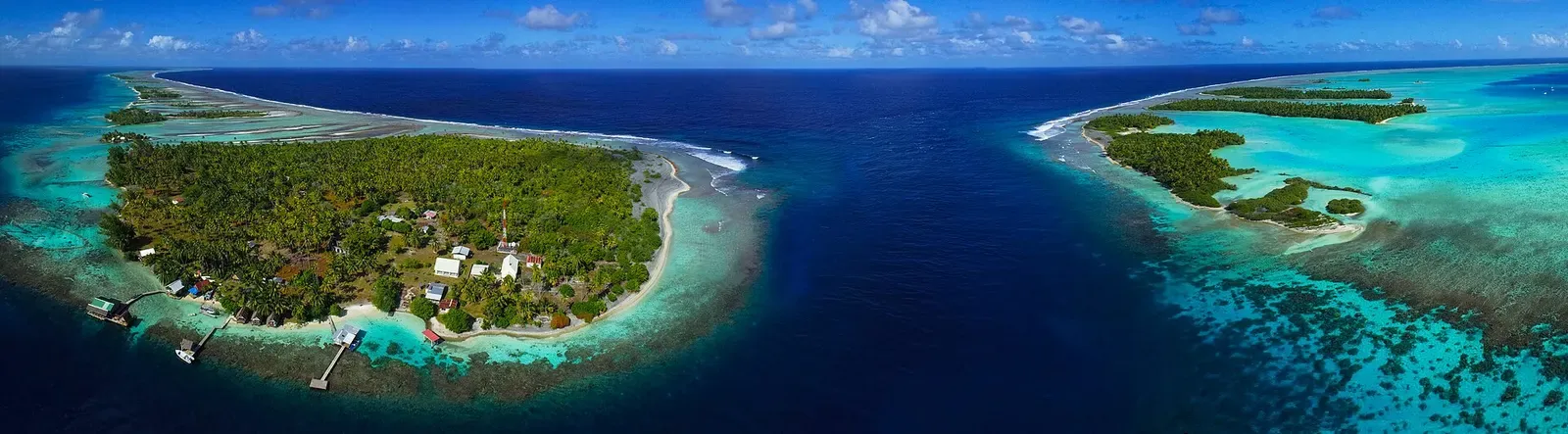
Area photo: Rachel Crane · CC BY 4.0
Garuae is Fakarava's northern channel and the largest pass in French Polynesia at 1.37 km across. It is dived two ways: as a range of separate sites along the channel at slack water, and as a drift when the tide floods into the lagoon. Rays including mantas, barracuda, groupers, turtles and dolphins are all reported in the pass, and on the inbound current experienced divers see sharks by the hundred.
Also known as Passe Garuae, Passe Nord.
Where it is and how deep
16.0821° S, 145.7165° WApproximate position — the dashed circle shows where the site lies; your operator's briefing has the mooring.
The dive
The pass is dived on the flood. Ocean water pushes into the lagoon through a channel 1.37 km wide - the largest in French Polynesia - and for safety and visibility the dives are run at slack water or on the inflowing current, from the ocean side inwards. The working depth is around 15 to 21 m. The standard move is to hook into the reef and hold there while the water does the work: experienced divers watching from the hook see sharks riding the current past them in the hundreds, and grey reef sharks cruise the pass entrance by the dozen.
At slack water the channel is dived differently, as a range of separate sites rather than one continuous run, with the drift setting in once the tide turns and pushes inward. Garuae is rich in marine fauna beyond the sharks - rays including mantas, barracuda, groupers, turtles and dolphins are all reported in it, and the Ali Baba canyon inside the pass is where the fish gather to shelter from the current. Fakarava's southern pass lies about 60 km away at the other end of the atoll, so the two are dived as separate trips.
Marine life and season
- Reef sharks
- Manta rays
- Barracuda
- Groupers
- Sea turtles
- Dolphins
| Jan | Feb | Mar | Apr | May | Jun | Jul | Aug | Sep | Oct | Nov | Dec |
|---|---|---|---|---|---|---|---|---|---|---|---|
| Good | Good | Good | Good | Good | Prime | Prime | Good | Good | Good | Good | Good |
Season follows Fakarava: Jun-Jul brings the grouper spawning aggregation and peak shark density; conditions stay clear and diveable year-round otherwise.
Know before you go
- The dive depends on the inbound current running through a channel over a kilometre wide; a reef hook, and the discipline to place it off live coral, is standard kit here.
Dive videos
26/11/2015 : plongée à la passe Garuae, Fakarava nord, Tuamotu, Polynésie française · yeap31 on YouTube
PLONGÉE À FAKARAVA · DiveSpiritTV on YouTube
Questions divers ask
How wide is Fakarava's North Pass?+
1.37 km across, which makes Garuae the largest pass in French Polynesia. The atoll's other channel, Tumakohua in the south, is about 200 m wide and lies some 60 km away at the far end of the lagoon.
Is the North Pass dived on the incoming or outgoing tide?+
The incoming. Garuae is run as a drift on the inbound current, with divers hooking into the reef to hold position while sharks ride the flow past them. At slack water the channel is dived as a range of separate sites instead.
How deep is the North Pass dive?+
Around 15 to 21 m. The depth is not what makes Garuae demanding - the current is. TopDive asks for significant experience with strong current and divers in full command of their buoyancy before running the dive.
Sources
- Fakarava — Wikipedia
- Diving at Fakarava Atoll — Divezone
- OpenStreetMap search: Passe Garuae — OpenStreetMap
- Scuba diving in Fakarava — TopDive
In The Logbook
- Drift diving: how to read and ride a currentDrift & current · 8 min read
More dive sites in Fakarava
The highest concentration of grey reef sharks recorded anywhere
Similar dives elsewhere

Mantas and eagle rays in the outer reaches of a tidal cut
Channel & pass
Calalin Channel
Majuro & Mili · Marshall Islands
A fast tidal drift past sharks, eagle rays and trevally
Every manta in or out passes through one narrow restriction

Hammerheads and tigers in a pass drifted above 10 m