
Pacific Islands · French Polynesia
Fakarava
Hundreds of grey reef sharks pack South Pass during the June grouper spawn.
Photo: Rachel Crane · CC BY 4.0
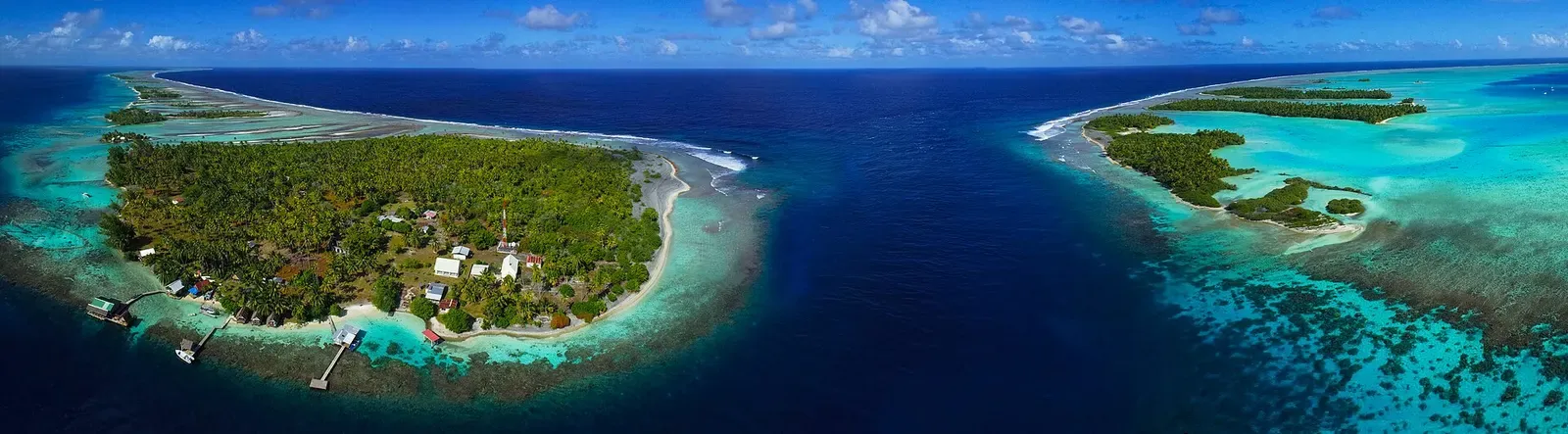
Fakarava's South Pass is a UNESCO biosphere site famous for one of the densest known aggregations of grey reef sharks, with several hundred sometimes packed wall-to-wall in the current during a June-July grouper spawning event. Divers drift through the pass past napoleon wrasse, barracuda, and schooling jacks, dropping in around 30 meters and rising with the tide. The atoll's remoteness keeps the water exceptionally clear year-round, among the best visibility in French Polynesia.
About diving in Fakarava
The atoll works as two dive bases at opposite ends of a very long lagoon. Most visitors stay in the northern village, Rotoava, and reach the pass there in minutes; the southern channel sits at the far end, reached either by a long lagoon crossing for the day or by moving down to the few small pensions at Tetamanu beside it. Liveaboards solve the geography differently, working both ends on one trip and adding neighbouring Tuamotu atolls in between.
Tides set the schedule. On the flood, ocean water pushes in and the channel runs clean; on the ebb the lagoon empties out and takes the clarity with it, so trips are built around the incoming window, and a single day can hold two or three passes through the same water at different strengths. Guides read the strength off the surface before anyone gears up, and a window missed by half an hour changes the dive completely.
The two passes dive nothing alike. Tumakohua in the south is narrow enough that divers tuck into the coral out of the flow and watch the sharks hold position in front of them, so most of the dive is spent stationary. Garuae in the north is wide enough to feel like open water rather than a corridor: more ground covered, animals met out in the blue, a longer swim to anything. Around the full moon in June or July the south adds night dives, when the sharks hunt in the dark.
This is a single-purpose destination and honest about it. There are few sites, and the same pass is dived over and over at different tide states, so the appeal is depth of experience rather than variety; divers who want a new site every tank will get restless. Comfort in strong water and the discipline to stay off the coral matter more than a long logbook. Facilities are thin, especially at the southern end, where power, water and meals all come from the pension you are staying in.
Best time to dive Fakarava
| Jan | Feb | Mar | Apr | May | Jun | Jul | Aug | Sep | Oct | Nov | Dec | |
|---|---|---|---|---|---|---|---|---|---|---|---|---|
| Season | Good | Good | Good | Good | Good | Prime | Prime | Good | Good | Good | Good | Good |
| Sea surface | 29°C84°F | 29°C84°F | 29°C84°F | 29°C84°F | 28°C82°F | 28°C82°F | 27°C81°F | 27°C81°F | 27°C81°F | 27°C81°F | 28°C82°F | 28°C82°F |
| Daytime high | 28°C82°F | 28°C82°F | 29°C84°F | 29°C84°F | 28°C82°F | 28°C82°F | 27°C81°F | 27°C81°F | 27°C81°F | 27°C81°F | 28°C82°F | 28°C82°F |
| Rain | 165 mm6.5 in | 136 mm5.4 in | 100 mm3.9 in | 98 mm3.9 in | 66 mm2.6 in | 68 mm2.7 in | 46 mm1.8 in | 33 mm1.3 in | 53 mm2.1 in | 67 mm2.6 in | 113 mm4.4 in | 183 mm7.2 in |
| Jan | Feb | Mar | Apr | May | Jun |
|---|---|---|---|---|---|
| Good | Good | Good | Good | Good | Prime |
| Sea surface | |||||
| 29°C84°F | 29°C84°F | 29°C84°F | 29°C84°F | 28°C82°F | 28°C82°F |
| Daytime high | |||||
| 28°C82°F | 28°C82°F | 29°C84°F | 29°C84°F | 28°C82°F | 28°C82°F |
| Rain | |||||
| 165 mm6.5 in | 136 mm5.4 in | 100 mm3.9 in | 98 mm3.9 in | 66 mm2.6 in | 68 mm2.7 in |
| Jul | Aug | Sep | Oct | Nov | Dec |
|---|---|---|---|---|---|
| Prime | Good | Good | Good | Good | Good |
| Sea surface | |||||
| 27°C81°F | 27°C81°F | 27°C81°F | 27°C81°F | 28°C82°F | 28°C82°F |
| Daytime high | |||||
| 27°C81°F | 27°C81°F | 27°C81°F | 27°C81°F | 28°C82°F | 28°C82°F |
| Rain | |||||
| 46 mm1.8 in | 33 mm1.3 in | 53 mm2.1 in | 67 mm2.6 in | 113 mm4.4 in | 183 mm7.2 in |
2011–2025 averages. Sea surface: NOAA Coral Reef Watch, measured at the surface, so deeper water can run colder. Daytime high and rain: NASA POWER.
Jun-Jul brings the grouper spawning aggregation and peak shark density; conditions stay clear and diveable year-round otherwise.
Fakarava water temperature and weather by month
The sea surface stays between 27 and 29 °C (81–84 °F) all year. Most rain falls from November to April, peaking at about 180 mm (7.1 in) in December; July to September are the driest. Daytime highs sit around 28 °C (82 °F) all year. The coldest water here is about 26 °C (79 °F), so pack a 3 mm full suit.
Dive types & marine life
Grey reef sharks are present in numbers year-round, with whitetips and blacktips in the shallows and napoleon wrasse, barracuda and jack schools working the current lines. The camouflage grouper aggregation around the full moon in June or July draws the heaviest shark activity of the year, which is why those months rate highest. Eagle rays are seen more often at the north pass.
- Drift
- Wall
- Pelagic & blue water
- Reef
- Reef sharks
- Groupers
- Napoleon wrasse
- Barracuda
- Trevally & jacks
- Eagle rays
Best dive sites in Fakarava
Channel & pass
Hook into the reef and let the flood run sharks past you
The highest concentration of grey reef sharks recorded anywhere
Ali Baba's Cave
Shallow cavern near the south pass with schooling fish.
Ohotu
Lagoon pinnacle with groupers and reef sharks.
How to get to Fakarava
Air Tahiti flies from Papeete to the airstrip at Rotoava in the north, where most pensions and dive centres are based. The south pass is reached by a long boat crossing of the lagoon, or by staying at Tetamanu, where accommodation is a few small pensions and little else. Liveaboards cover both ends and nearby atolls on one trip.
Photos from Fakarava
Rachel Crane · CC BY 4.0
Rachel Crane · CC BY 4.0
Rachel Crane · CC BY 4.0
Frédéric Jacquot · CC BY-SA 2.5
Dive videos
The LEGENDARY Wall Of Sharks In Fakarava 🇵🇫 - Scuba Diving With 500 SHARKS 🦈 · Blue Horizon Diving on YouTube
The Wall of Sharks-Fakarava South Pass-French Polynesia · Global Dive Media on YouTube
Photo credits
- A school of blue-spotted cornetfish hovers over coral in the clear lagoon waters near Fakarava by Rachel Crane, CC BY 4.0, via Wikimedia Commons
- Three napoleon wrasse swim over the reef in clear blue water near Fakarava by Rachel Crane, CC BY 4.0, via Wikimedia Commons
- A large napoleon wrasse glides through open blue water near Fakarava's reefs by Rachel Crane, CC BY 4.0, via Wikimedia Commons
- A napoleon wrasse swims near the surface, backlit by sunlight, over the reef near Fakarava by Rachel Crane, CC BY 4.0, via Wikimedia Commons
- A wooden pontoon extends into Fakarava's turquoise lagoon near the village of Rotoava by Frédéric Jacquot, CC BY-SA 2.5, via Wikimedia Commons
Embed
Run a dive centre, club or blog? Embed this map of 2 dive sites near Fakarava on your own page.
In The Logbook
- Where to see reef sharks on your first divesBig animals · 14 min read
- Where to dive in every month of the yearTrip planning · 14 min read
- When does coral spawn? The moon's calendarBig animals · 10 min read
- When is slack water? Tides for diversOcean science · 7 min read
- How long should a surface interval be?Body & health · 8 min read
- Drift diving: how to read and ride a currentDrift & current · 8 min read
Similar destinations

Hooked onto the reef at Blue Corner as schools and grey reef sharks pour past

Soft corals turn ghostly white along the current-fed Great White Wall.
Pacific Islands
A hundred kilometres of barrier reef with almost no divers on it


A pass so packed with fish Cousteau's team singled it out