
Yap · Micronesia · Channel & pass · Drift · Reef
Goofnuw Channel
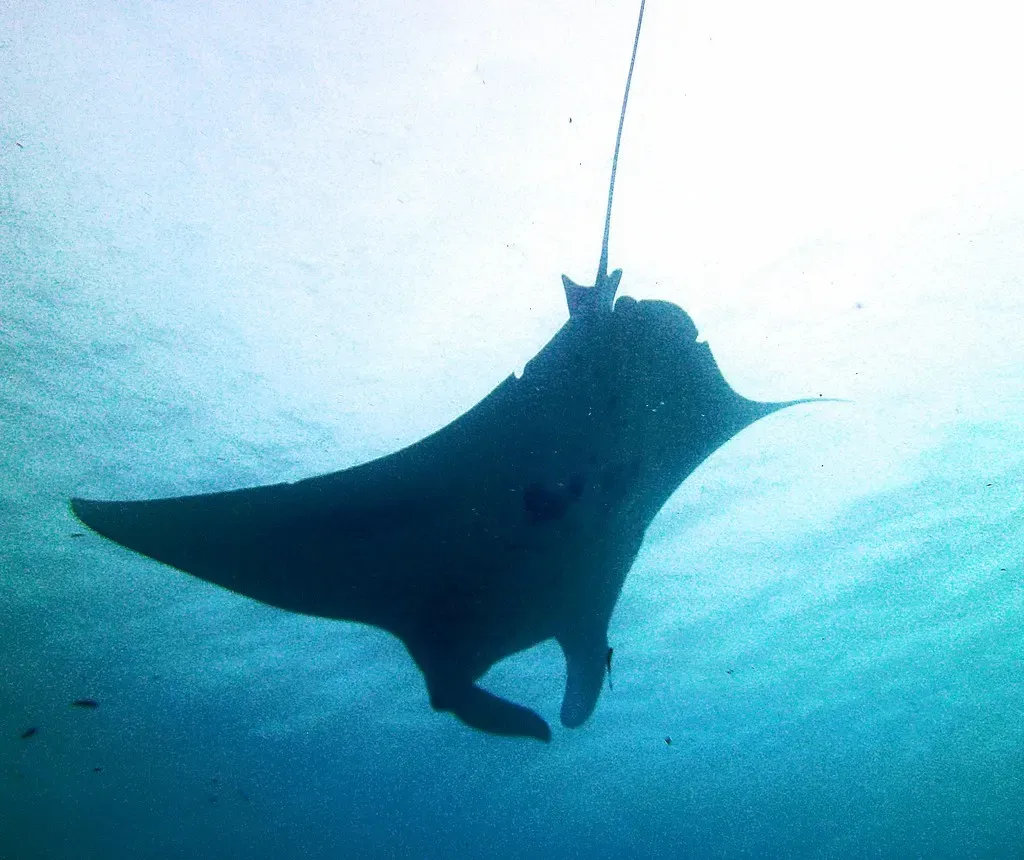
Every manta in or out passes through one narrow restriction
Area photo: Jeff Hemminger · CC BY-SA 3.0
The channel narrows to a restriction that every manta entering or leaving the cleaning areas has to pass through, so the dive is run as a drift in with the incoming tide rather than a wait at a station. Depths run from 9 m to 37 m, the current can approach 2 knots just before high tide, and ten to twenty sharks on a drift is not unusual.
Also known as Goofnuw Mini Wall.
Where it is and how deep
No published position for this site — the map shows Yap and its other sites; operators know the mooring.
The dive
Goofnuw is a drift, and the point of it is a pinch in the channel. All of the mantas moving in and out of the cleaning areas pass through this restriction, so instead of waiting at a station you ride the flow past the point everything has to funnel through. Vertical walls run along the sides of the channel from 9 m to 30 m, alternating with sandy and coral slopes, and the full profile reaches 37 m at the deep end.
Sharks are the other constant. It is not uncommon to see ten to twenty on the drift, with whitetips and stingrays frequently in the sand near the mouth of the channel, and leopard sharks occasionally lying on the bottom. Schools of snapper and humphead parrotfish work the same stretch, the shallow hard coral is prolific, and lobsters sit back in the ledges.
The current is what decides the dive. It can approach 2 knots just before high tide, and the drift is run into the channel with the incoming tide, often combined with a visit to the Valley of the Rays. Outside the channel the water clears to 25 m and more; inside, the nutrient-rich tidal flow that draws the fish in keeps it thicker than that.
Marine life and season
- Manta rays
- Reef sharks
- Stingrays
- Reef fish swarms
| Jan | Feb | Mar | Apr | May | Jun | Jul | Aug | Sep | Oct | Nov | Dec |
|---|---|---|---|---|---|---|---|---|---|---|---|
| Prime | Prime | Prime | Good | Good | Fair | Fair | Fair | Fair | Good | Good | Prime |
Season follows Yap: Mantas are present year-round, but the Dec-Mar dry season brings calmer seas and clearer water for photographing the cleaning stations.
Know before you go
- The current can approach 2 knots just before high tide; the dive goes with the flow into the channel on the incoming tide, not back against it.
Dive videos
Yap Island 2025: Goofnuw Channel Dive for Manta Rays · Random Adventure & Interest on YouTube
Questions divers ask
Is Goofnuw Channel a manta dive?+
Yes, but a moving one. Every manta entering or leaving the cleaning areas passes through the channel's restriction, so the dive is run as a drift past that pinch point rather than as a sit at a cleaning station.
How many sharks are seen here?+
Ten to twenty on a drift is not unusual, mostly reef sharks, with whitetips and stingrays frequently near the mouth of the channel and leopard sharks occasionally resting on the bottom.
Sources
- Goofnuw Mini Wall dive site — Manta Ray Bay Resort / Yap Divers
In The Logbook
- Where to dive with manta rays, month by monthBig animals · 8 min read
More dive sites in Yap
Channel & pass
Mantas and eagle rays in the outer reaches of a tidal cut
Channel & pass
A landing craft, a torpedo and a circus boat in one channel
Three manta cleaning stations in one stretch of channel
Swim-through chimneys lit by skylights in the coral
Similar dives elsewhere
A manta cleaning station at the mouth of a channel cut in 1908

Tuna, wahoo and gray reef sharks over a reef bridge

.jpeg)
Often-strong current turns the channel into a drift
Channel & pass
Calalin Channel
Majuro & Mili · Marshall Islands
A fast tidal drift past sharks, eagle rays and trevally