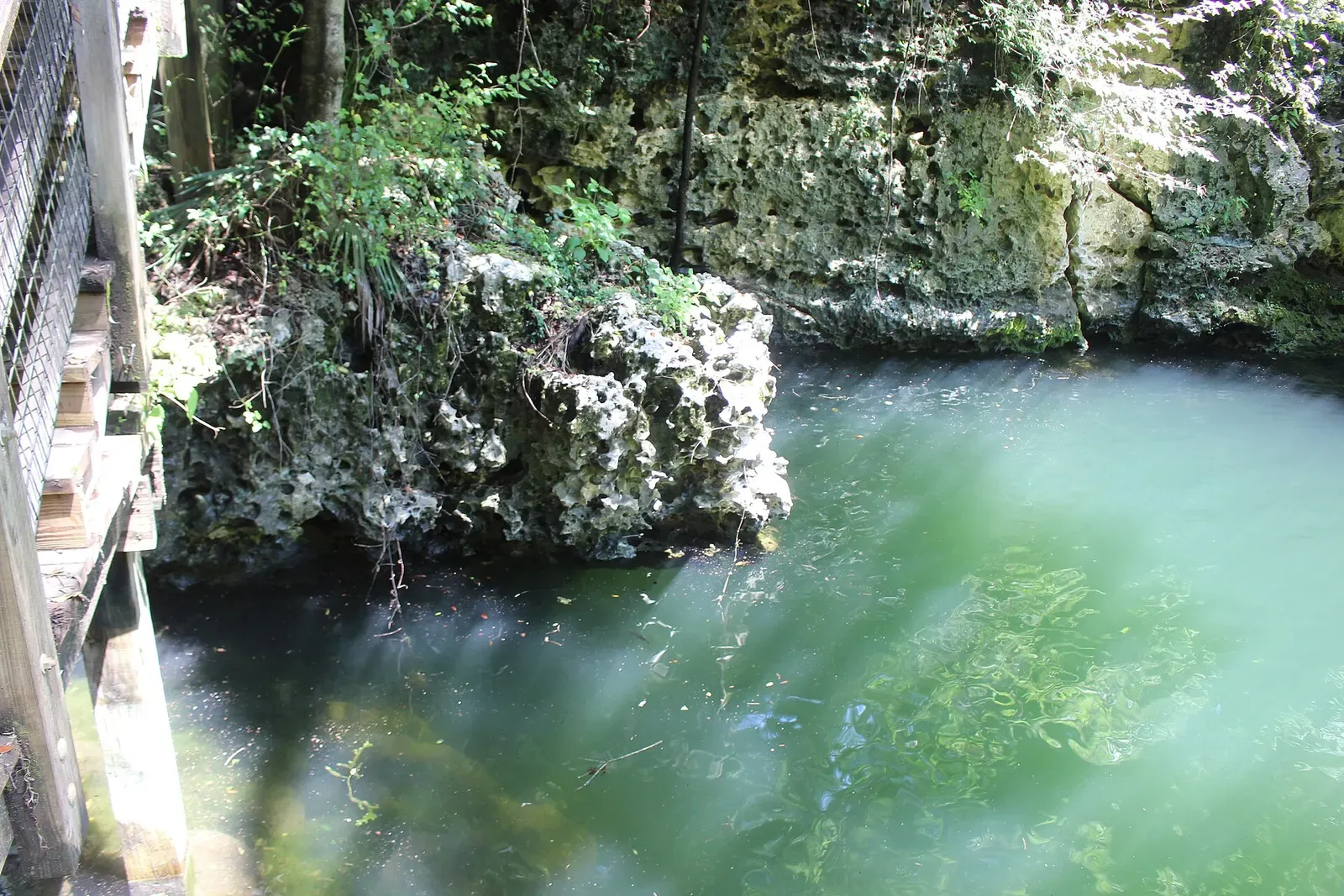
North Florida Springs · United States · Cave & cavern · Freshwater
Peacock Springs
7,408 metres of mapped passage, and a 2010 connection added 3,000 more
Photo: Michael Rivera · CC BY-SA 4.0
A cave-diving park rather than a single dive: several entrances into one of the longest mapped underwater systems anywhere, measured at 7,408 metres in June 2008, then the 24th longest in the world, and extended by another 3,000 metres when a connection was made in 2010. Orange Grove is the basin open to certified divers, and the tunnels behind it run from 6 metres down past 61.
Also known as Wes Skiles Peacock Springs State Park.
Where it is and how deep
30.1269° N, 83.1361° WPublished position for this site.
The dive
The park is a set of entrances rather than one dive, so the plan starts with which card you hold. Orange Grove is the basin open to certified divers, and the cave system behind it is what the rest of the property exists for. Facilities are picnic tables, trails and port-a-potties, which tells you what kind of day this is: you park, kit up and walk to the water rather than book a boat.
Depth depends entirely on which tunnel you are in. Peanut Tunnel runs between 6 and 18 metres, or 20 to 60 feet, and Pothole Tunnel has a maximum of 20 metres, 65 feet. Below that the system keeps going well past recreational limits: Lower Orange Grove extends down to 55 metres, 180 feet, and Henley's Castle in Peacock III drops past 61 metres, over 200 feet.
Distance is covered on fins. Diver propulsion vehicles have been prohibited in the system since 25 April 2002, a decision the park took to protect the cave from damage, so range has to come out of gas planning and swimming rather than a scooter. There is a lot of passage to plan against: 7,408 metres as of June 2008, with a further 3,000 metres added by the connection Agnes Milowka and James Toland made between Baptizing and Peacock springs in 2010.
Background
Vasco Murray first explored the Peacock Springs cave system in 1956, and mapping it took another four decades: Sheck Exley, leading a National Speleological Society team, completed the first map of the system in 1995, after more than 521 dives. The park stopped allowing diver propulsion vehicles on 25 April 2002 in order to protect the cave from damage. In 2010 it was renamed Wes Skiles Peacock Springs State Park, for the diver and explorer, and a connection made the same year added another 3,000 metres to the mapped system.
Marine life and season
The sources we used don't single out particular species here.
| Jan | Feb | Mar | Apr | May | Jun | Jul | Aug | Sep | Oct | Nov | Dec |
|---|---|---|---|---|---|---|---|---|---|---|---|
| Good | Good | Good | Good | Good | Good | Good | Good | Good | Good | Good | Good |
Season follows North Florida Springs: The spring water holds a constant 22 °C (72 °F), so diving runs all year; Ginnie Springs is crowded on weekends from Memorial Day to Labor Day.
Know before you go
- Past the daylight zone this is full cave diving, with no daylight reference once you are into the system, and it needs full cave certification.
- Henley's Castle drops past 61 metres and Lower Orange Grove extends to 55, both far outside recreational depth and gas limits.
- Diver propulsion vehicles are prohibited, so any penetration distance has to be planned on fins and gas alone rather than scootered.
Photos from Peacock Springs
State of Florida, photo by A. Willet · Public domain
Michael Rivera · CC BY-SA 4.0
Jlcnuke1 · CC BY-SA 4.0
Dive videos
Peacock Springs Cave Dive (Can we make it to Olsen Sink?) · BlueWorldTV on YouTube
Questions divers ask
How deep is Peacock Springs?+
The tunnels at recreational depths run 6 to 18 metres in Peanut Tunnel and to a maximum of 20 metres in Pothole Tunnel. The system goes far deeper in places, with Lower Orange Grove at 55 metres and Henley's Castle past 61, which is technical ground rather than recreational.
Do you need a cave certification for Peacock Springs?+
Orange Grove is open to certified divers. Everything beyond the daylight zone requires full cave certification, and diver propulsion vehicles have been prohibited in the system since April 2002, so distance is swum.
Sources
- Wes Skiles Peacock Springs State Park — Wikipedia
- Peacock Springs dive site — ScubaGo / SSI MyDiveGuide
Photo credits
- Weathered limestone outcrop overhanging the teal spring water at Peacock Springs' Orange Grove Sink by Michael Rivera, CC BY-SA 4.0, via Wikimedia Commons
- Wooden stairs descending into the clear turquoise water at Peacock Springs' main spring basin by State of Florida, photo by A. Willet, Public domain, via Wikimedia Commons
- Teal spring water at Orange Grove Sink framed by overhanging trees, with a diver visible at the water's edge by Michael Rivera, CC BY-SA 4.0, via Wikimedia Commons
- A pale, blind cave crawfish clinging to limestone rock inside the Peacock Springs cave system by Jlcnuke1, CC BY-SA 4.0, via Wikimedia Commons
In The Logbook
- Cave diving: what it takes and where to goCaves & caverns · 12 min read
- How long does a tank of air last?Gear & kit · 9 min read
- Freshwater diving: lakes, springs and quarriesFreshwater · 15 min read
- DPV diving: what an underwater scooter changesGear & kit · 10 min read
More dive sites in North Florida Springs
Cave & cavern
Clear water to 30 metres in a cavern worked by training courses
Cave & cavern
Daylight drops through a collapsed roof into a 37 m (120-foot) chamber
Freshwater
A 15-to-20-foot (6 m) spring pool, entered by stairs from the park
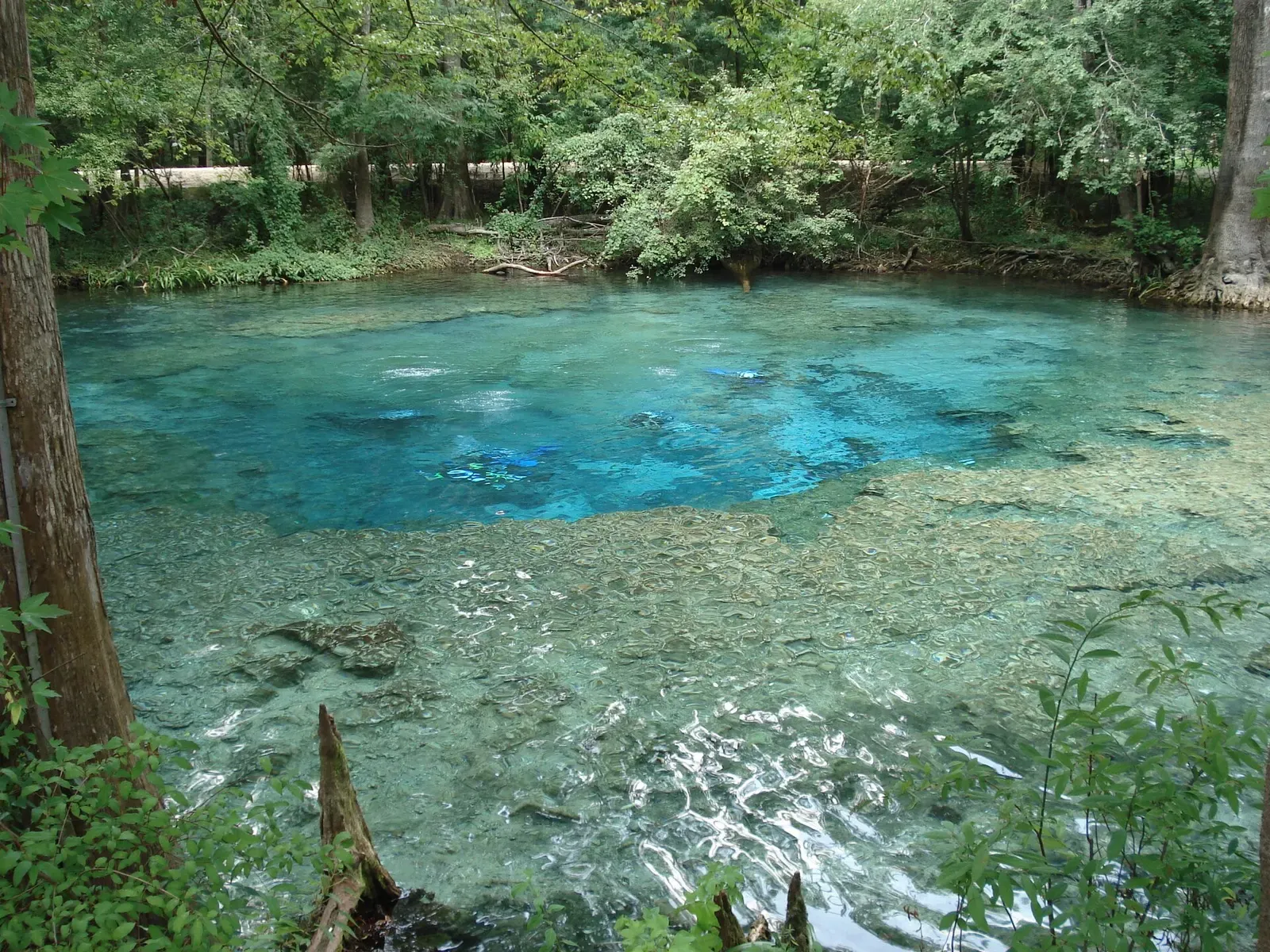
An iron grate closes the most dangerous part of the cave in the Ballroom
Cave & cavern
Manatees in the run, miles of mapped cave under it
Wreck
A Confederate steamer, scuttled in 1863, in shallow spring water
Similar dives elsewhere

A 60 m spring basin with a vent bottoming out around 20 m

A 72 m rope descent onto a lake 80 m deep
Swim-through caves and a standing garden of conger eels


A sinkhole lake dived down a scree slope into a shaft that goes past 100 m