Fuerteventura · Spain · Reef
Cementerio de Barco (Mole)
Anchors, masts and a sunken buoy on an 8 m harbour bottom
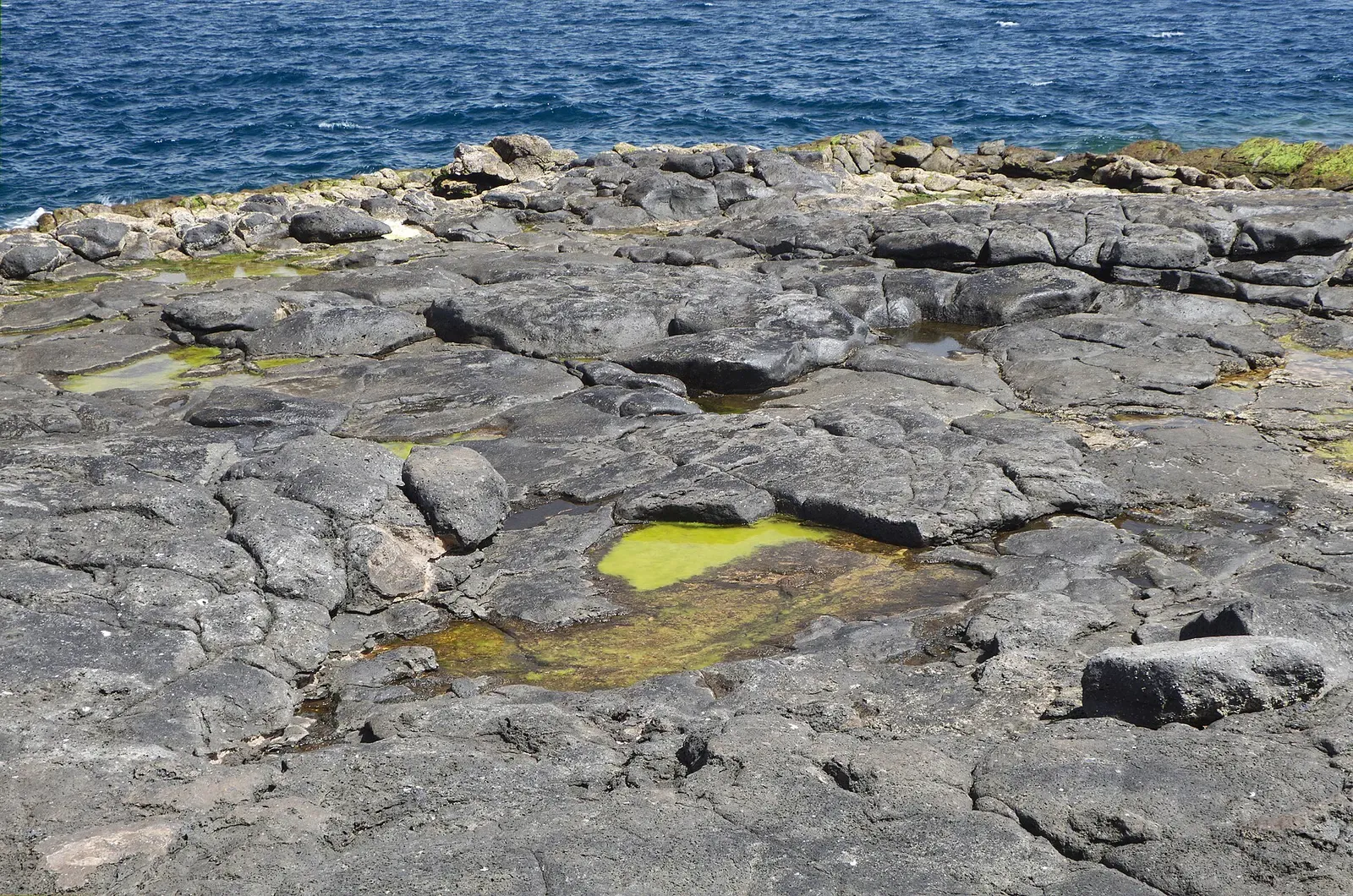
Area photo: H. Zell · CC BY-SA 3.0
A shallow dive along the harbour wall where the bottom alternates constantly between sand and stone and nothing goes below 8 metres. The eastern end is scattered with wreck parts, anchors, masts and a sunken marker buoy, none of them identified. Fish use the sheltered ground as a nursery before moving out to the reefs.
Where it is and how deep
28.3912° N, 13.8560° WPublished position for this site.
The dive
The dive runs along the harbour wall and never goes deeper than 8 metres, which makes it a long, slow look at the bottom rather than a profile to manage. Inside the shelter of the wall the ground alternates constantly between sand and stone, and having the two habitats side by side across the whole site is what gives it its species count.
The eastern end is the reason for the name. Wreck parts lie scattered there, along with anchors, masts and a sunken marker buoy, none of them identified and all of them now standing in for structure. Barracuda, octopus, cuttlefish, parrotfish and scorpionfish are all found here, with many other species using the site as a nursery before they move out to the reefs.
Because the maximum is 8 metres the dive ends on gas or on cold rather than on depth. That makes it a useful second tank of the day, a check dive at the start of a week, or a camera dive spent working the sand patches between the stones. The shelter of the harbour wall is what keeps it that undemanding.
Background
At the eastern end of the site the bottom is scattered with wreck parts, anchors, masts and a sunken marker buoy, and that accumulation is where the name, ship cemetery, comes from. The source identifies none of the vessels the pieces came from and gives no dates, so what is on the bottom reads as debris gathered along the harbour wall over time rather than as a single ship that went down in one place.
Marine life and season
- Barracuda
- Octopus & cuttlefish
- Reef fish swarms
| Jan | Feb | Mar | Apr | May | Jun | Jul | Aug | Sep | Oct | Nov | Dec |
|---|---|---|---|---|---|---|---|---|---|---|---|
| Good | Good | Good | Good | Good | Prime | Prime | Prime | Prime | Prime | Good | Good |
Season follows Fuerteventura: Divable in every month; water runs 18–23°C, coolest in late winter and warmest from August into October, and the desert climate keeps conditions mild.
Questions divers ask
How deep is Cementerio de Barco?+
The site runs along the harbour wall to a maximum depth of 8 metres, so it is one of the shallowest dives on this coast.
Is Cementerio de Barco a wreck dive?+
Not in the usual sense. The eastern end holds scattered wreck parts, anchors, masts and a sunken marker buoy, but no vessel is identified, so it is a debris field rather than a ship to swim through.
Sources
- Cementerio de Barco (Mole) dive site — Scubago
More dive sites in Fuerteventura
Cave & cavern
A narrow gorge from 23 m to a portal in the reef at 32 m
Reef
A volcanic plateau at 24 m dropping to sand at 35 m
Reef
A false ceiling right around a 10 m shoal off Corralejo
Reef
A shore-parallel reef with angel sharks on the sand in winter
Reef
Wreckage and coal at 12 m under a reef that crests at 1.5 m
Reef
A reef edge at 7 m that steps down to past 40 m
Reef
A diveable breakthrough in an 18 m rock wall at 32 m
Reef
A shore-or-boat platform running from 15 m out to 40 m
Similar dives elsewhere
Reef
Baía da Guia
Cascais & Cabo Raso · Portugal
Small passages through the reef top on the swim back to the sand
Reef
Pedra da Nau
Cascais & Cabo Raso · Portugal
Sheltered bay where an undulate ray turns up on lucky days

Easy 2-metre entry, small wreck off the point


Shore-entry reef at 7-8 m, the local beginner and refresher dive