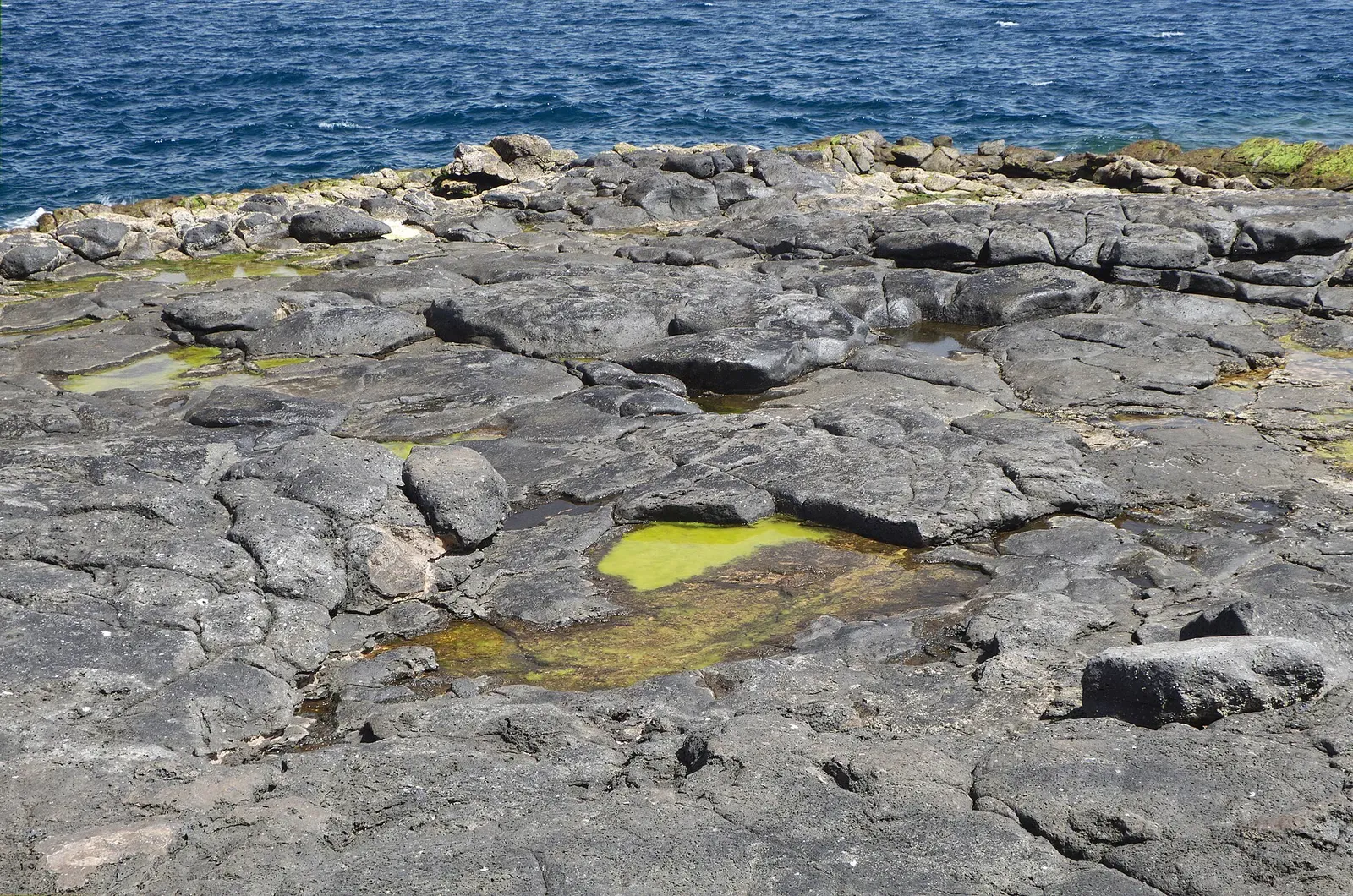
Atlantic · Spain
Fuerteventura
A 1.5 km volcanic reef stepping from 7 m to past 40 m off Caleta de Fuste
Photo: H. Zell · CC BY-SA 3.0
Fuerteventura dives in two zones. Off Caleta de Fuste the Salinas Reef runs about 1.5 km of jagged volcanic rock, stepping from a 7 m reef edge down through 15, 19 and 32 m to past 40. In the north, the channel between Corralejo and Lobos Island is cut with walls, natural bridges and tunnels. Sardine schools pull in yellowtail mackerel, tuna and bonito over the outer pinnacles, and groupers, eagle rays and stingrays up to two metres hold on the reef. Water runs 18 to 23°C through the year and logged visibility is usually 10 to 20 m.
About diving in Fuerteventura
Diving splits between two bases. From the marina at Caleta de Fuste a boat reaches Castillo Reef in five to ten minutes and the exposed Nuevo Horizonte Reef in about fifteen, so a morning is two tanks with the surface interval back at the quay. In the north, centres in Corralejo dive Las Salinas, Archies Bay and El Jablito and run the short crossing to Lobos Island. Shore days are the cheap alternative: Pozo Negro is a beach entry with little or no wave, and La Lajita is shallow sand used as a training area.
The rock is volcanic and it comes in steps rather than slopes. At El Muellito the reef edge sits at 7 m and then drops in stages — 15, 19, 32 m — before running past 40, with a detached rock pin sheltering young groupers. El Fafo descends a narrow gorge from 23 m to 32 m where the reef opens into a portal, and Calamareo off Lobos falls vertically from a 12 m platform to 22 m through overhangs hung with red gorgonians. Seagrass meadows cover the sand around Lobos, holding bream, wrasse and grouper, while eagle rays, morays, octopus, cuttlefish and stingrays up to two metres work the reef itself.
It suits divers who want range across a week: easy beach entries, a sand training area, and outer pinnacles at 30 to 40 m with moderate-to-strong drift and no shelter from swell, which is Advanced and Deep territory. Lobos is worth understanding before booking. The islet is a natural park in its own right, with a free permit required to land since 2019 and a cap of 400 visitors a day, and it sits here only because Corralejo operators run the trips as part of the island's diving. Divers set on an underwater museum or a dense shore-diving strip are better served on Lanzarote, thirty minutes away by ferry from Corralejo.
When to dive Fuerteventura
| Jan | Feb | Mar | Apr | May | Jun | Jul | Aug | Sep | Oct | Nov | Dec |
|---|---|---|---|---|---|---|---|---|---|---|---|
| Good | Good | Good | Good | Good | Prime | Prime | Prime | Prime | Prime | Good | Good |
Divable in every month; water runs 18–23°C, coolest in late winter and warmest from August into October, and the desert climate keeps conditions mild.
Dive types & marine life
Sardine schools hunted by yellowtail mackerel are the set piece on the Salinas pinnacles, with barracuda and tuna over the reef edge and angel sharks and stingrays to two metres on the sand below. Groupers, moray eels, eagle rays, octopus and cuttlefish are the everyday reef life, and the seagrass around Lobos holds bream and wrasse.
- Reef
- Wall
- Cave & cavern
- Drift
- Wreck
- Night
- Barracuda
- Groupers
- Eagle rays
- Stingrays
- Octopus & cuttlefish
- Tuna
- Sardine baitballs
- Reef fish swarms
Notable dive sites in Fuerteventura
Wall
Huge ancient anchors on a wall running from 18 m to 27 m
Reef
A false ceiling right around a 10 m shoal off Corralejo
Wall
A vertical drop from a 12 m platform to 22 m off Lobos
Anchors, masts and a sunken buoy on an 8 m harbour bottom
Cave & cavern
A narrow gorge from 23 m to a portal in the reef at 32 m
Reef
A reef edge at 7 m that steps down to past 40 m
Reef
A diveable breakthrough in an 18 m rock wall at 32 m
Reef
A volcanic plateau at 24 m dropping to sand at 35 m
Reef
Wreckage and coal at 12 m under a reef that crests at 1.5 m
Reef
A shore-parallel reef with angel sharks on the sand in winter
Reef
A 17 to 32 m platform where angel sharks lie on the sand
Reef
A shore-or-boat platform running from 15 m out to 40 m
Tesoro Negro
Small overhang and rock pinnacles; sand tiger shark teeth turn up on the sand below.
Pozo Negro
Beach entry with little or no wave, easy for all levels and busy with fish.
El Puente
Lobos Island: a swell-carved lava bridge with a narrow tunnel and a maze.
Getting there
Fuerteventura Airport (FUE, El Matorral) serves the whole island. Dive centres cluster in Corralejo at the north tip and around Caleta de Fuste and Las Playitas on the east coast, with the Jandía sites another 50 km south near Morro Jable. Boats to Lobos leave from Corralejo harbour, and car ferries cross to Playa Blanca on Lanzarote roughly hourly in 30 minutes.
Photo credits
- Dark volcanic rock shelf with tide pools meeting the Atlantic at Salinas del Carmen, Fuerteventura's east coast by H. Zell, CC BY-SA 3.0, via Wikimedia Commons
Similar destinations
Atlantic
Azores — São Miguel
Portugal
The WWII Liberty ship Dori in 21m, minutes off Ponta Delgada

Around three hundred charted wrecks, most of them shallower than 20 m
Atlantic
Tenerife
Spain
Black sand and lava arches metres from shore, with resident pilot whales
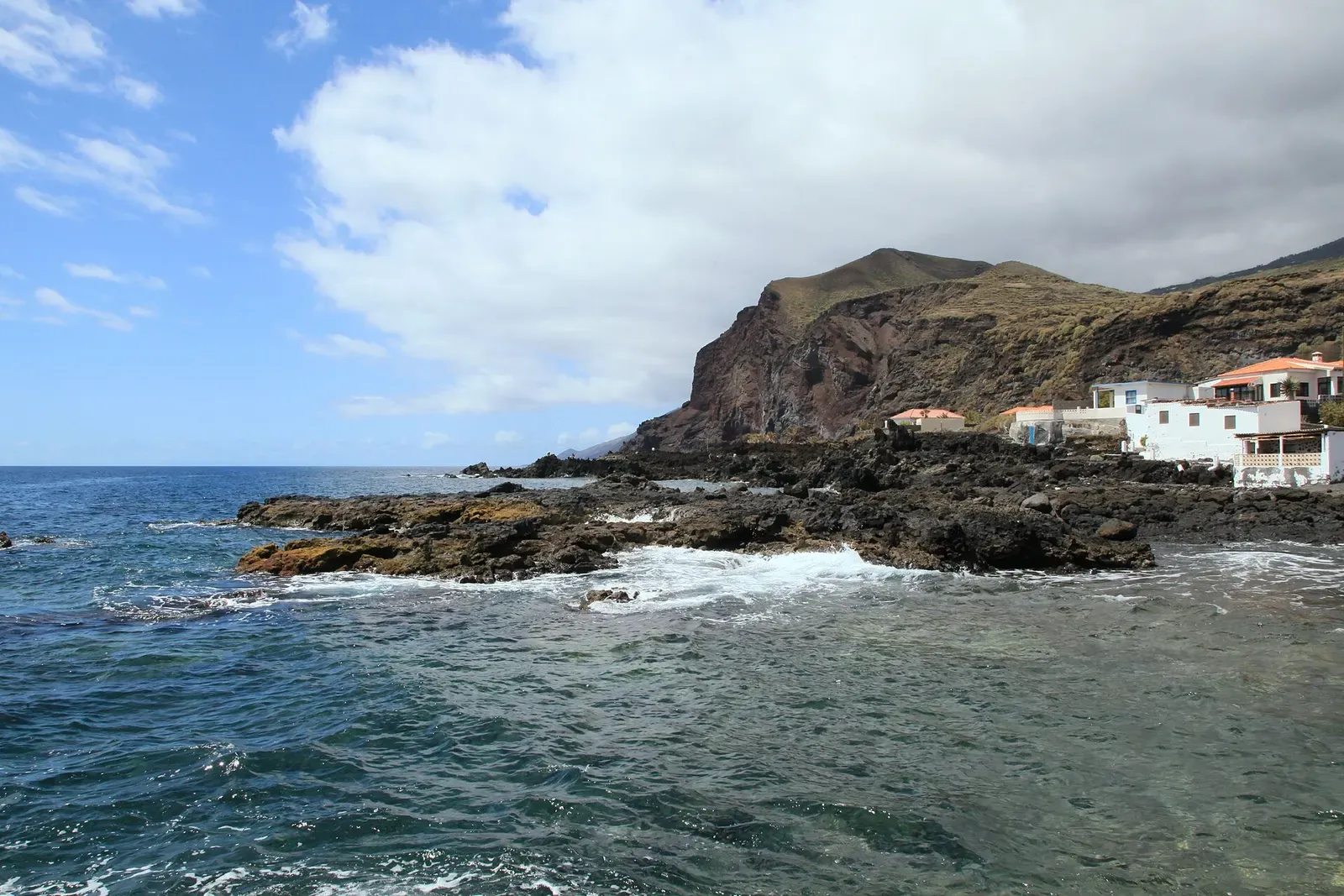

Lava arches, tunnels and a black-coral tower wall from 5 m to about 40 m