
Farikede is a short drift in strong current over a plateau off Fuvahmulah, worked to a maximum of 30 m. The water moves hard and that is the point of the dive: it carries you across the plateau while pelagics come up out of the blue — hammerheads, thresher sharks, silvertips, whale sharks, oceanic mantas and mola mola are all recorded here.
Also known as Fari Kede.
Where it is and how deep
0.3238° S, 73.4487° EPublished position for this site.
The dive
This is a drift, and a relatively short one. You go in from the boat, get down without wasting time and let the current carry you across the plateau at a maximum of 30 m. The plateau itself lies at 40 to 60 m, so the dive is worked over deep water rather than along a reef: the guide sets the depth, the group stays tight, and the drift lasts as long as the water takes to move everyone across the structure.
What comes past is the reason to accept those terms. Hammerhead and thresher sharks, silvertips, whale sharks, oceanic manta rays, mola mola, whales, dolphins and turtles are all logged at the site, along with barracuda, tuna and trevally holding in the moving water. It is ocean diving rather than reef diving, so the blue is where attention belongs once the group has settled at depth.
Threshers are worth understanding before booking. Fuvahmulah has several relatively shallow cleaning stations at 12 to 15 m that thresher sharks use, and they are most consistent between April and November — shallower water than this drift, and a reminder that the island's thresher diving does not depend on going deep. Thresher sharks are listed among the regular sightings at Farikede itself.
Marine life and season
- Hammerheads
- Thresher sharks
- Whale sharks
- Manta rays
- Mola mola
- Reef sharks
- Barracuda
- Tuna
- Trevally & jacks
- Dolphins
- Sea turtles
| Jan | Feb | Mar | Apr | May | Jun | Jul | Aug | Sep | Oct | Nov | Dec |
|---|---|---|---|---|---|---|---|---|---|---|---|
| Prime | Prime | Prime | Prime | Good | Good | Good | Good | Good | Fair | Fair | Prime |
Season follows Fuvahmulah: Tiger sharks are resident year-round; the dry NE monsoon (Dec-Apr) gives the calmest seas, while the Oct-Nov transition brings choppier open-water conditions.
Know before you go
- The water movement over the plateau is powerful; descend promptly, stay with the group and let the boat collect you wherever the drift ends rather than swimming against it.
- Thirty metres in moving open water uses gas and no-decompression time quickly, and there is no sheltered reef to hang on during the ascent — plan the turn and the safety stop in the blue.
Dive videos
160523 Farikede Plateau 1-2 · distorsionando on YouTube
Thresher Shark sighting in Farikede, Fuvahmulah. · Extreme Dive Fuvahmulah on YouTube
Questions divers ask
How deep is Farikede?+
Divers drift over the plateau at a maximum depth of about 30 m. It is an open-water profile rather than a reef wall, and the site is reached by boat from Fuvahmulah's harbour.
What certification do you need for Farikede?+
Advanced Open Water certification is recommended, along with drift diving and buoyancy experience. The current is powerful and the dive is run as a group drift, so comfort in moving open water matters more than logged depth.
When is the best time to see thresher sharks?+
Fuvahmulah's relatively shallow thresher cleaning stations, at 12 to 15 m, are used most consistently between April and November. Those are shallower than the 30 m drift at Farikede, which lists thresher sharks among its own regular sightings.
Sources
- Farikede dive site — PADI
- Fuvahmulah Island dive sites — Dive The World
In The Logbook
- Where to dive in DecemberTrip planning · 10 min read
- Sunfish diving: where and when to see a molaBig animals · 11 min read
- Malapascua thresher sharks: Monad or Kimud?Big animals · 11 min read
- Where to dive with whale sharks, month by monthBig animals · 16 min read
- When and where to dive with hammerheadsBig animals · 16 min read
More dive sites in Fuvahmulah
An overhung wall to 40 m with grey reef and silvertip sharks
Sea fans from 14 m to 35 m, with macro tucked into the overhangs
Wall
A thresher cleaning station at 35 m below the island's old harbour
Reef
The world's largest known tiger shark aggregation, in 12 m of water
Similar dives elsewhere
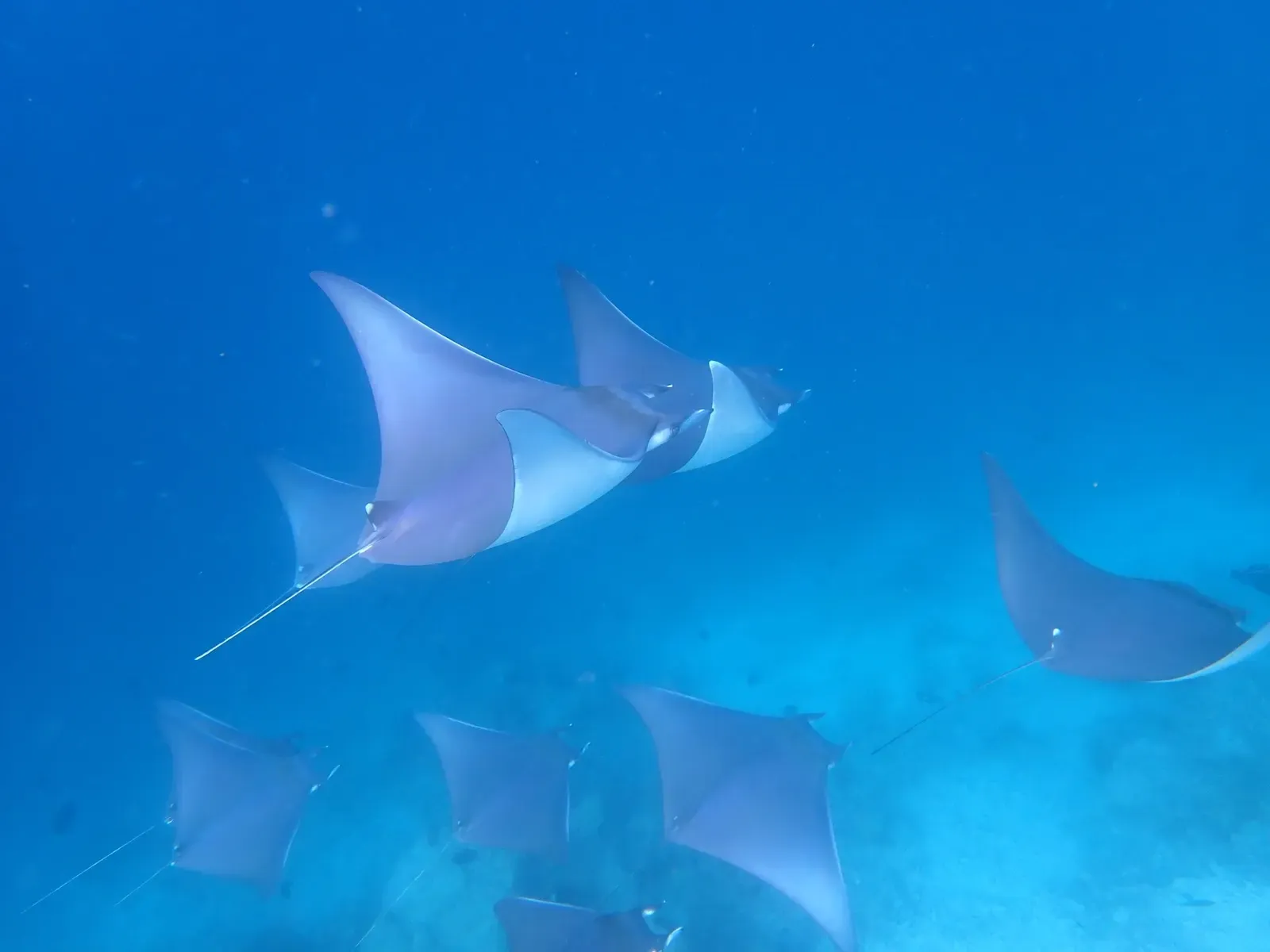
Mantas swooping past a reef cut with shelter channels
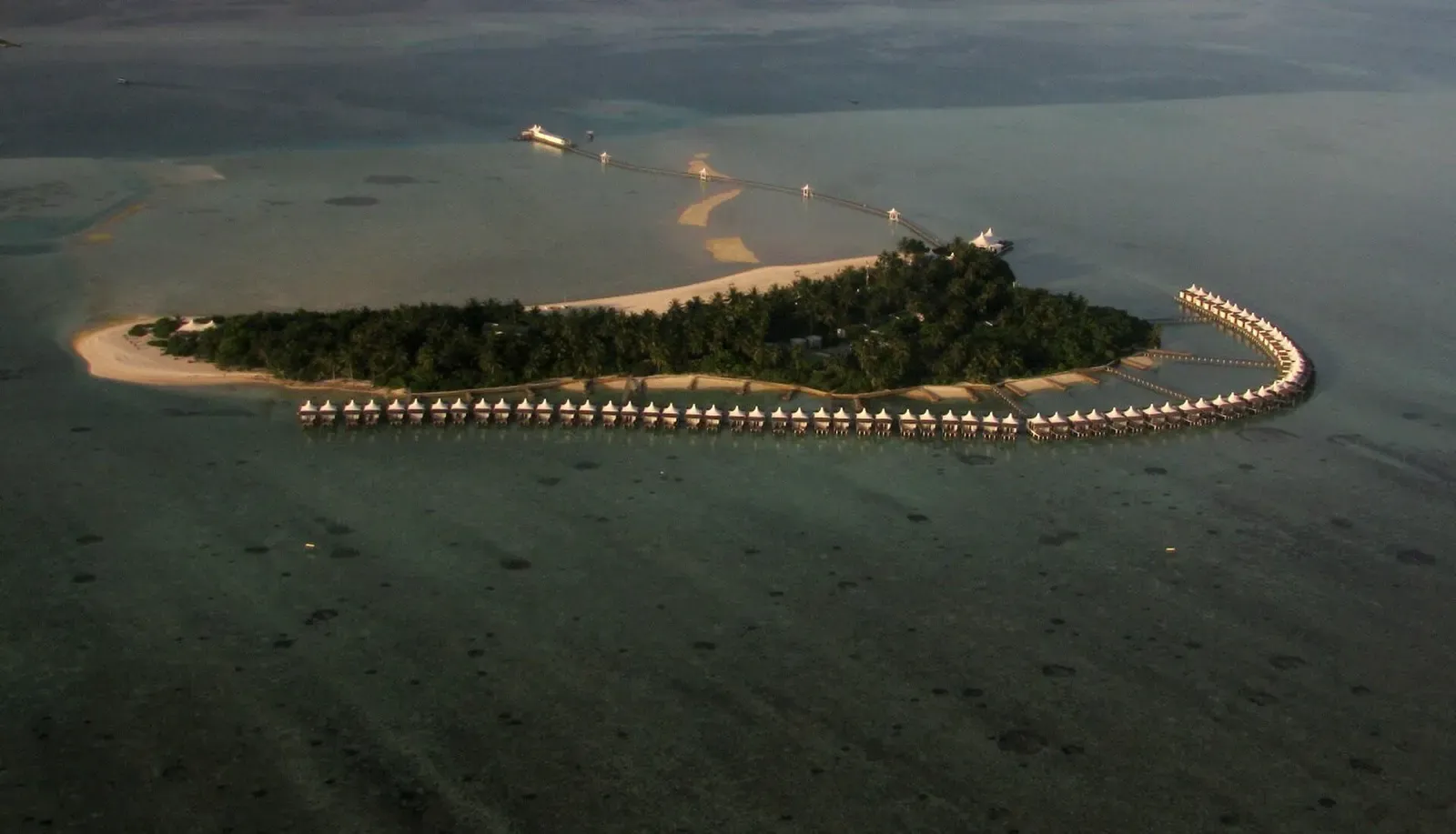
Manta cleaning stations at 10–15 m, with 8–9 mantas at once on a good day

A kilometre of channel drifted on the outgoing tide
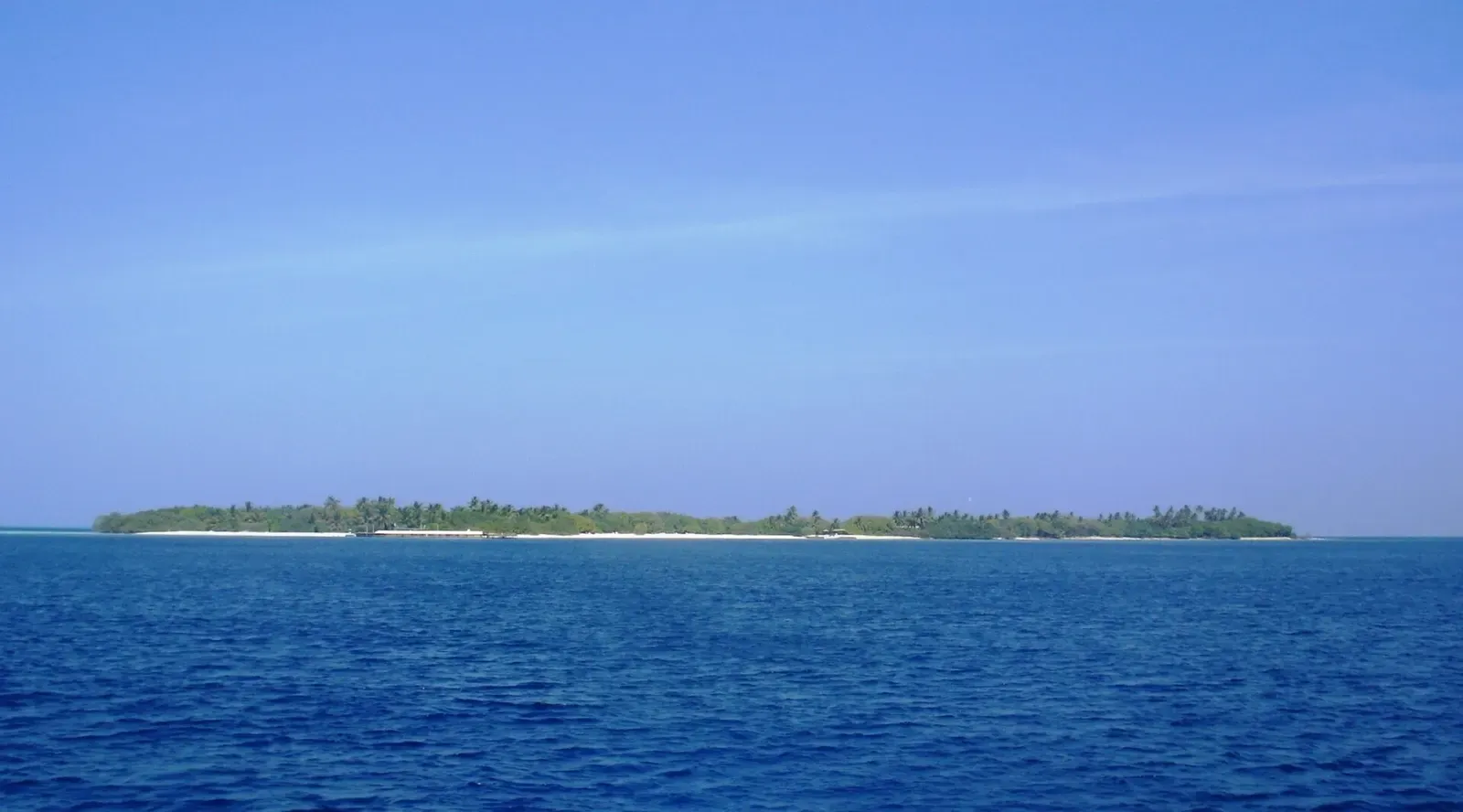

Sharks, jacks and eagle rays on the channel-mouth current