Eastern Pacific · Ecuador
Galápagos — Central & South Islands
Schooling hammerheads at Gordon Rocks on a day trip from Puerto Ayora
Photo: Paul and Jill · CC BY 2.0
The central Galápagos are dived by day boat from Puerto Ayora on Santa Cruz. The sites are volcanic craters, uplifted islets and channels: Gordon Rocks, North Seymour, Mosquera, Bartolome and Daphne Minor. Most dives run from about 6 m on crater pinnacles to 30 m on terraced slopes, and what brings divers here is schooling hammerhead sharks at Gordon Rocks, reached on a day trip.
About diving in Galápagos — Central & South Islands
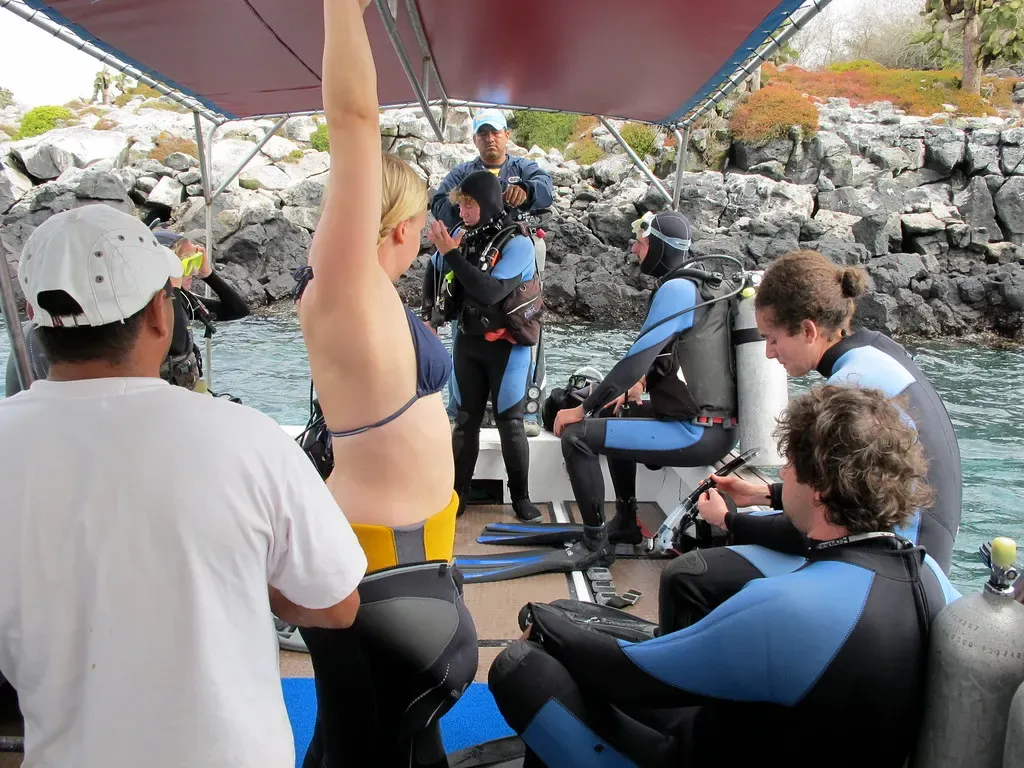
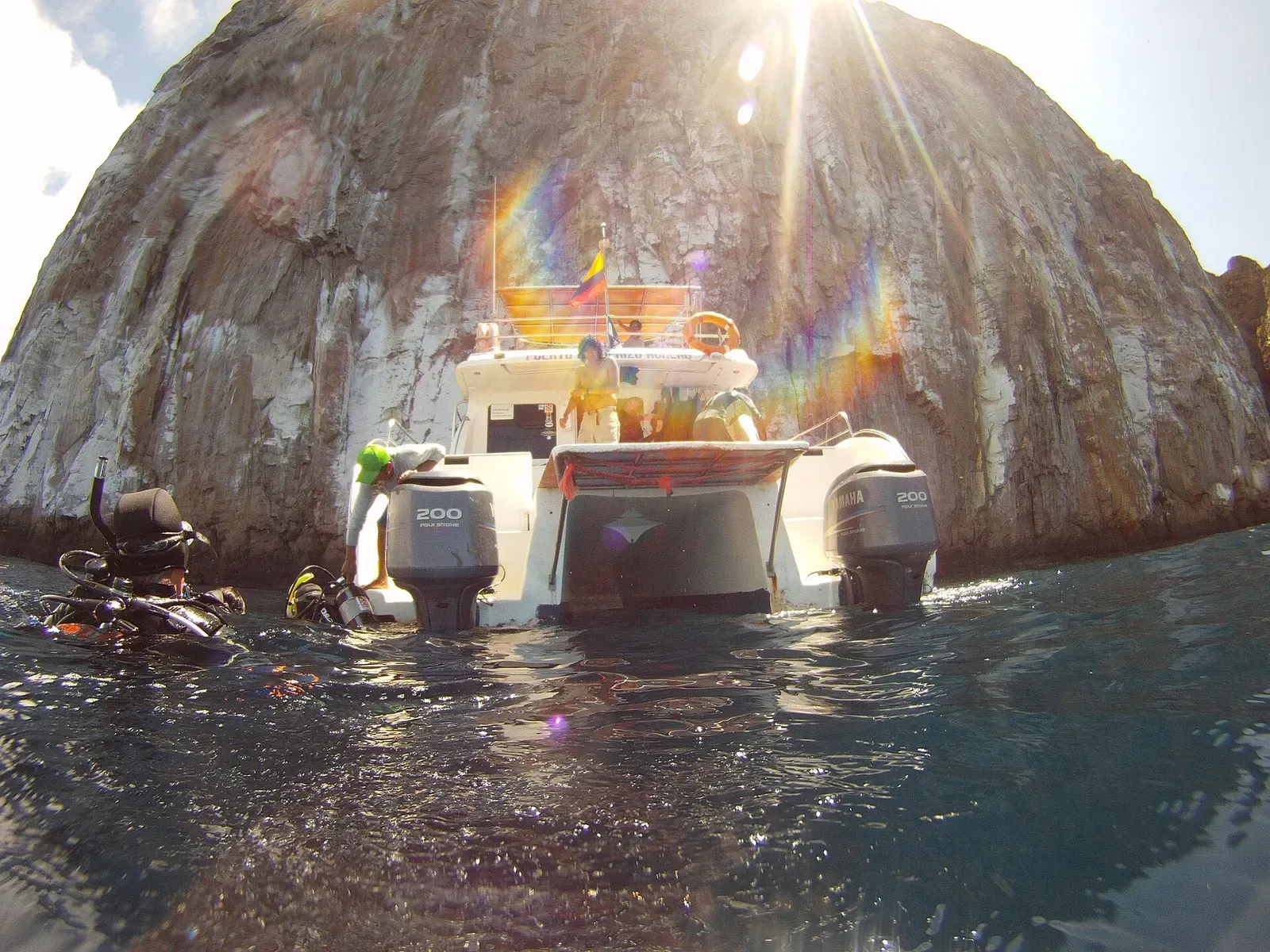
Diving here is a day-boat affair. Dive centres in Puerto Ayora on Santa Cruz run daily trips in boats that carry at most 12 guests, and local operators also dive from San Cristobal, where Kicker Rock is about 45 minutes by boat from Puerto Baquerizo Moreno. Gordon Rocks lies east of Santa Cruz, about 60 minutes from Puerto Ayora or 45 minutes from the Itabaca Channel; after a briefing at Plazas Island, 5 minutes away, the guide checks the current and visibility and sets the dive plan. North Seymour is 25 minutes from the channel and Pinzon, off the west coast, about 1 hour from town.
The underwater terrain is volcanic. Gordon Rocks is an extinct crater with a sandy bottom at 30 m inside and a wall dropping to about 65 m outside, with three pinnacles in its northern part rising to about 8 m. Bartolome and Cousins descend in terraced steps to 30 m before a sandy bottom at 40 m, and Beagle Rocks are the remains of a tuff cone. Hammerheads school at cleaning stations kept by butterflyfish and bannerfish, thousands of Galápagos garden eels crane from the sandy platform at Mosquera, and red-lipped batfish live on the sandy bottom at Guy Fawkes.
An Open Water certification covers every daily tour except Gordon Rocks, which needs Advanced and at least 25 logged dives because of its very strong currents and few visual references. Divers without a certification can make a Discovery Dive at every site except Gordon Rocks. Currents, surge, cold water and sometimes poor visibility make the islands a challenge, though Seymour and Mosquera suit divers with limited experience and Floreana, 1.5 to 2 hours from Puerto Ayora, has very little current. Divers set on Darwin and Wolf need a liveaboard, since day boats do not reach them.
Best time to dive Galápagos — Central & South Islands
| Jan | Feb | Mar | Apr | May | Jun | Jul | Aug | Sep | Oct | Nov | Dec |
|---|---|---|---|---|---|---|---|---|---|---|---|
| Prime | Prime | Prime | Prime | Prime | Good | Good | Good | Good | Good | Good | Prime |
Diving runs all year. From December to May the southeast trade winds weaken, warmer water arrives from the Panama Basin, crossings to the sites are easier and visibility averages around 12 m, which makes these the relaxed months. From June to November the Humboldt Current brings choppy seas and strong surge, longer crossings and visibility nearer 7 m. In those cold months the chance of meeting an ocean sunfish on a day dive is better.
Dive types & marine life
Hammerheads are in the islands all year and gather in schools at Gordon Rocks, one of the best places to find pelagic animals. Manta rays visit Daphne Minor frequently, and the chance of an ocean sunfish on a day dive is better from June to November.
- Drift
- Wall
- Pelagic & blue water
- Hammerheads
- Manta rays
- Mola mola
- Seals & sea lions
Best dive sites in Galápagos — Central & South Islands
- 1
Gordon Rocks
Volcanic crater with very strong currents, where hammerheads circle the rocks in schools of up to 50
- 2
Kicker Rock
Rock whose walls rise 60 m (200 ft) above the sea and drop straight to a bottom near 20 m
- 3
North Seymour
Channel dive off a flat uplifted island, with moderate and sometimes surprisingly strong current
- 4
Bartolome
Young island off Santiago with a pinnacle and black-coral steps, a good place to find Pacific seahorses
- 5
Daphne Minor
Wall dive off the north coast of Santa Cruz with little current
- 6
Mosquera
Sand and rock islet between Seymour and Baltra where sea lions gather
- 7
Santa Fe
Island site counted among the easiest dives in the Galápagos
- 8
Punta Carrion
Site at the mouth of the Itabaca Channel, sheltered from strong open-water currents
Site guides
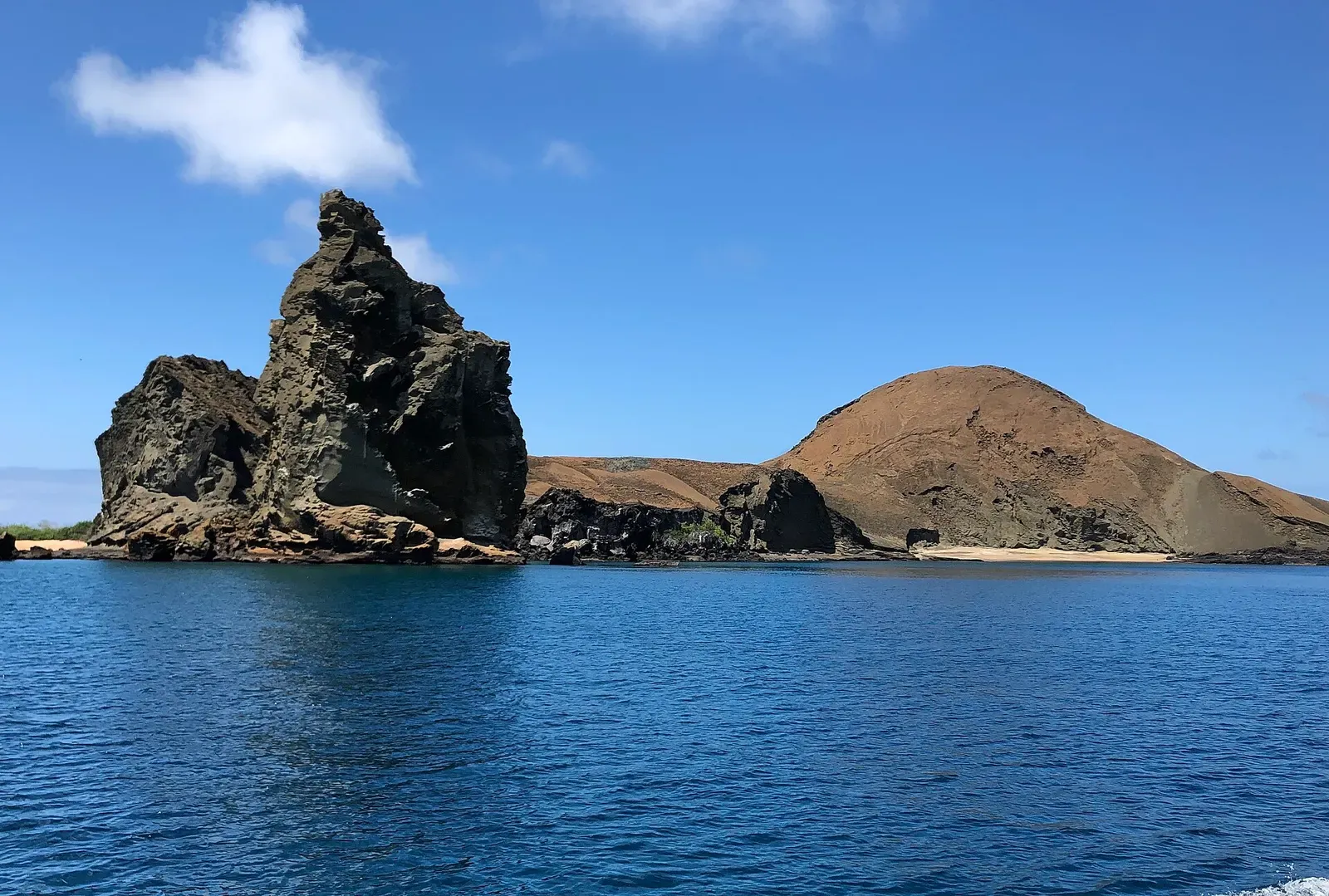
Sand and rock platform whose edge drops into cliffs where pelagic species pass
Hammerhead schools at cleaning stations inside a volcanic crater
A tuff cone split in two, its walls dropping straight to the bottom
Reef
Endemic garden eels rising from a sand platform beside a sea lion islet
Channel & pass
Channel dive beside an island raised flat by volcanic uplift
How to get to Galápagos — Central & South Islands
Daily flights from Quito and Guayaquil land at Seymour Airport on Baltra, about an hour by taxi and ferry from Puerto Ayora on Santa Cruz, where the dive centres are. Foreign visitors pay a $200 Galápagos National Park entry fee.
Photos from Galápagos — Central & South Islands
Diego Delso · CC BY-SA 4.0
Dive videos
Scuba Diving at SANTA FE Island - Galápagos #Galapagos #ScubaDiving · Maxx Dives on YouTube
Questions divers ask
What certification is needed to dive Gordon Rocks?+
Gordon Rocks needs an Advanced certification and at least 25 logged dives, because of its very strong currents and few visual references. Open Water is enough for the other daily tours.
How do divers reach the dive centres in Puerto Ayora?+
Flights leave Quito and Guayaquil daily for Seymour Airport on Baltra, and Puerto Ayora is about an hour away by taxi and ferry. Foreign visitors pay a $200 national park entry fee.
When is the best time to dive the central Galápagos?+
December to May has warmer, calmer water and visibility around 12 m. June to November is colder and choppier, with visibility nearer 7 m, but gives better odds of an ocean sunfish.
Can Darwin and Wolf be dived from Puerto Ayora?+
No. Only liveaboards reach Darwin and Wolf; the Puerto Ayora day boats work the central islands such as Gordon Rocks, North Seymour and Bartolome.
Sources
- Gordon Rocks dive site — Scuba Iguana
- Galapagos Dive Sites — Academy Bay Diving
- Galapagos Islands — Wikivoyage
- Mosquera North dive site — Scuba Iguana
- North Seymour Channel dive site — Scuba Iguana
- Bartolome dive site — Scuba Iguana
- Punta Carrion dive site — Scuba Iguana
- Kicker Rock diving tour — Scuba Iguana
Photo credits
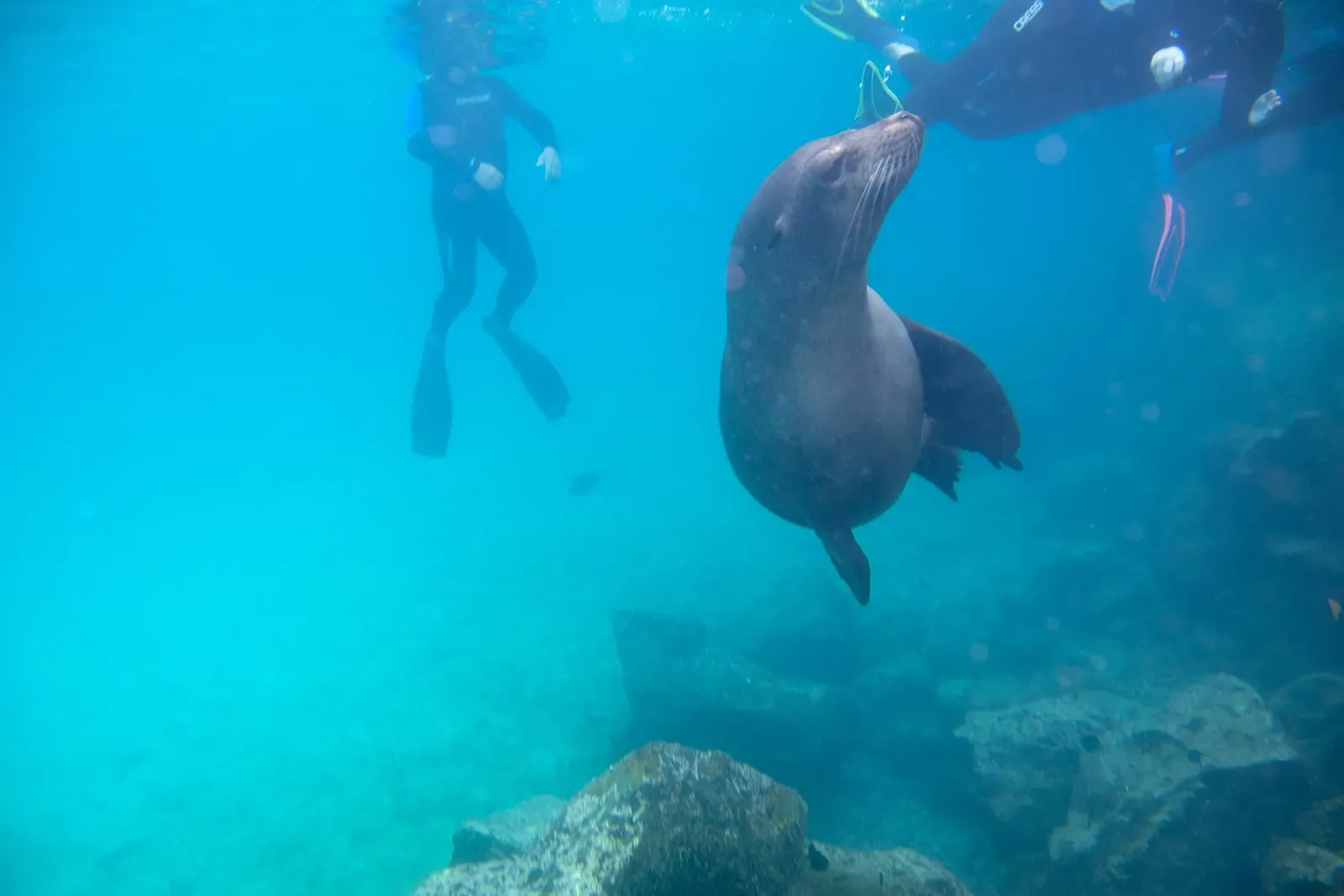
- A brown sea lion swims upward through clear turquoise water over rocks, with snorkellers in wetsuits and fins behind it by Paul and Jill, CC BY 2.0, via Wikimedia Commons
- A brown sea lion swims straight toward the camera just below a sunlit surface, front flippers spread by Diego Delso, CC BY-SA 4.0, via Wikimedia Commons
Embed
Run a dive centre, club or blog? Embed this map of 5 dive sites near Galápagos on your own page.
Similar destinations
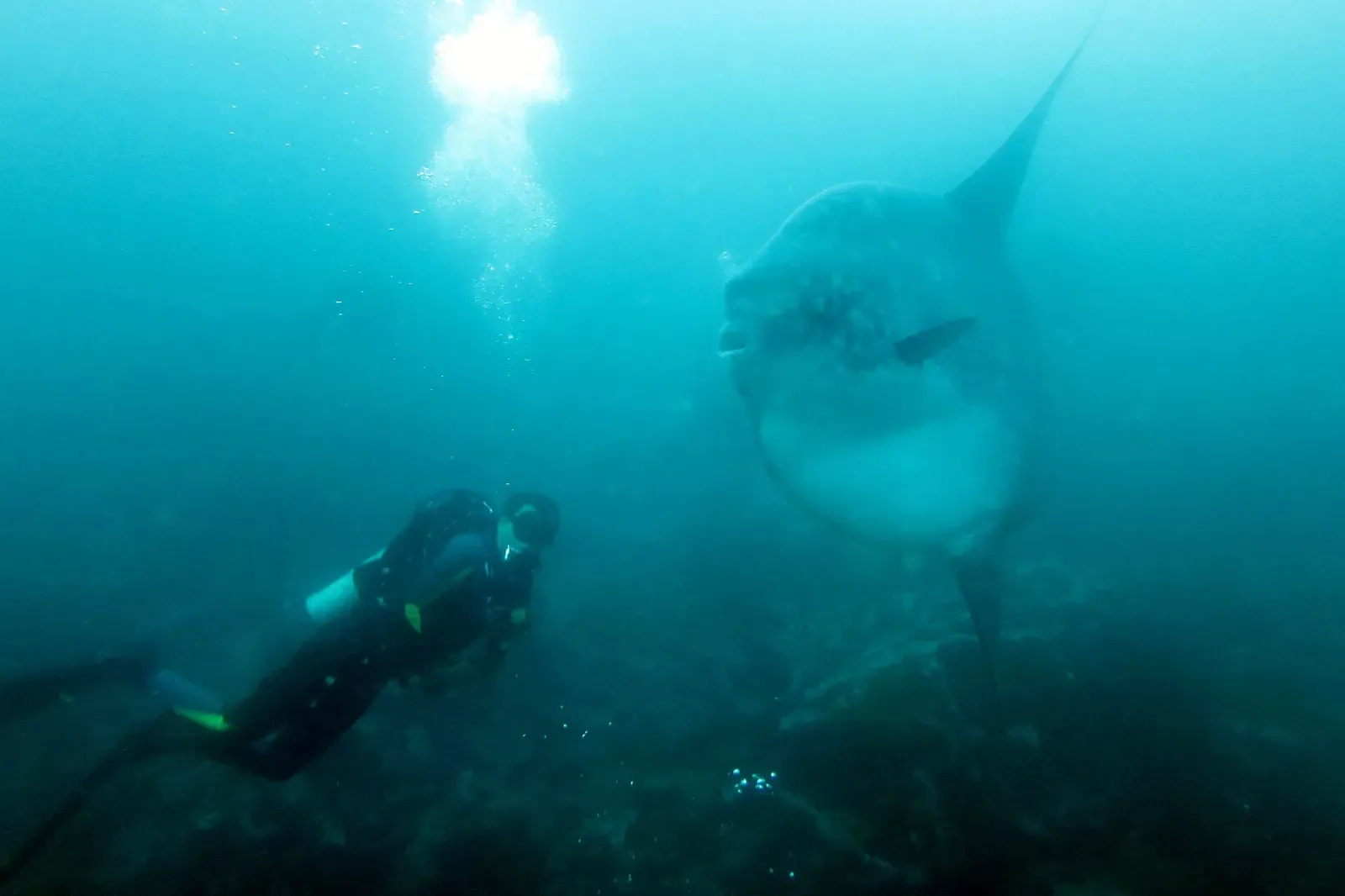
Cold Cromwell Current upwelling brings mola mola, penguins and marine iguanas

Schooling hammerheads over the rocky walls and slopes of Wolf and Darwin

Hundreds of scalloped hammerheads overhead on the Bajo Alcyone seamount

,_isla_de_San_Crist%C3%B3bal,_islas_Gal%C3%A1pagos,_Ecuador,_2015-07-25,_DD_28.JPG)
Hammerhead schools of 200-plus circle La Nevera's cold-water cleaning station