Eastern Pacific · Colombia
Malpelo
Hammerhead schools of 200-plus circle La Nevera's cold-water cleaning station
Photo: Jdmacarenoq · CC BY-SA 4.0
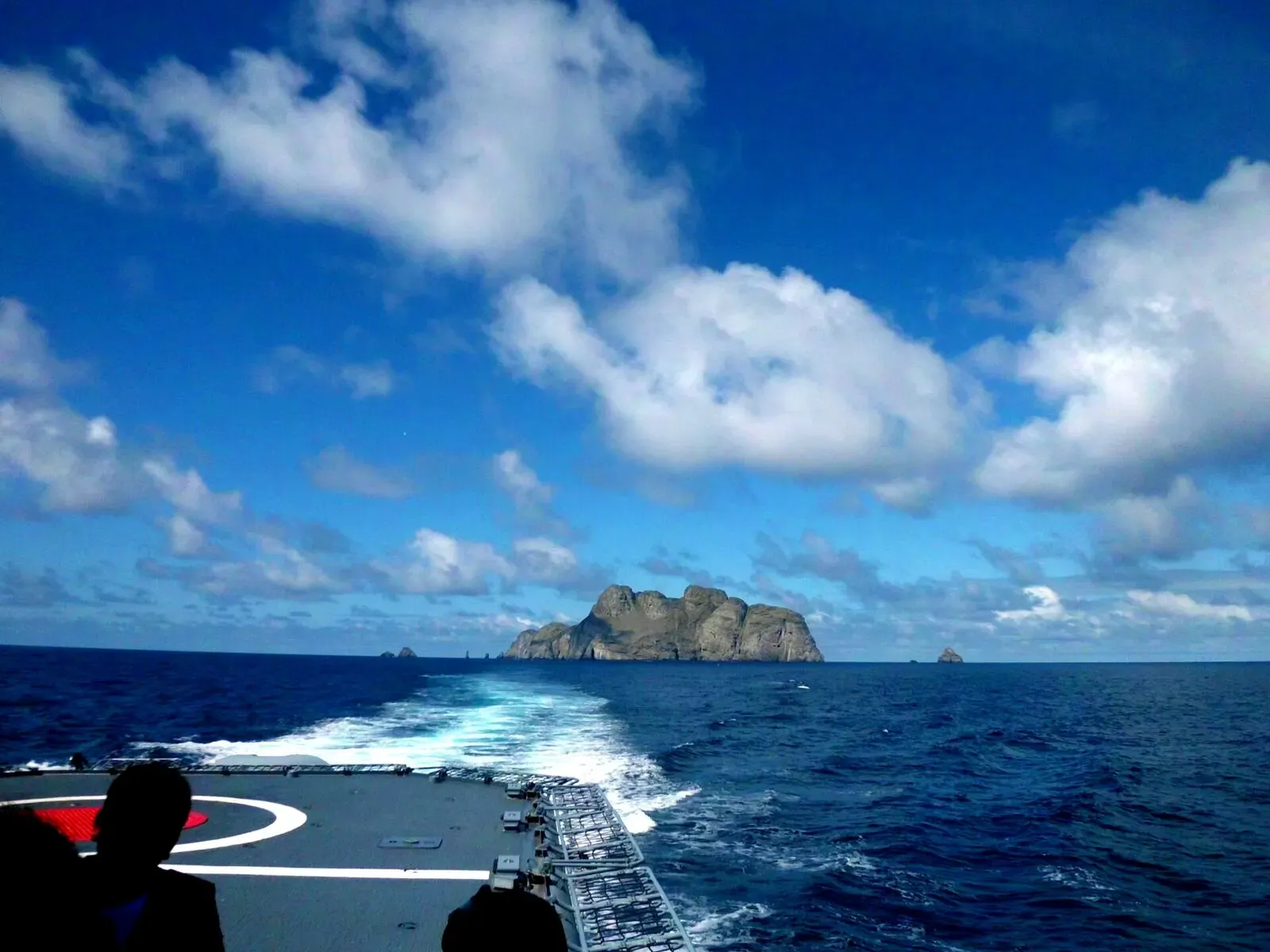
Malpelo is a bare volcanic rock 500 km off Colombia's Pacific coast, a UNESCO World Heritage sanctuary reached only after a 36-40 hour liveaboard crossing from Buenaventura. Hundreds of scalloped hammerheads circle cleaning stations at La Nevera and gather around El Bajo del Monstruo, while whitetip reef sharks rest by the dozen in caves and on ledges below. Currents are frequently intense and unpredictable, and a shifting thermocline can drop water temperature sharply within a single dive.
About diving in Malpelo
There is no infrastructure out here. A small Colombian navy detachment holds the rock, divers do not land, and the liveaboard is the only shelter for hundreds of kilometres, with no harbour to run to if the sea gets up. Diving works off tenders that drop you beside a wall and collect you in swell afterwards, so surface markers and the habit of coming up as a group matter more than they do on a house reef. Only a small number of vessels hold sanctuary permits, and their dates go far ahead.
The island is a single cliff-sided monolith with satellite islets scattered around it, and it behaves the same way underwater. The walls fall away steeply from close to the surface with almost no shallow ground to potter on, so nearly every dive is a wall or a detached pinnacle hanging in blue water. Cracks and overhangs give the fish somewhere out of the flow while the exposed corners collect the current. Above the waterline the cliffs are white with seabird colonies that feed on the same food chain the diving depends on.
Exposure protection is the thing people get wrong. The latitude suggests a thin suit, and then a dive spent hanging in the cold layer — often where the shark activity concentrates — turns into an endurance exercise; hoods and 5 mm or thicker suits are the norm. Current is the other variable, changing strength and direction between dives on the same site, so the shape of the dive tends to be decided by the guide in the water rather than agreed on deck beforehand.
Malpelo rewards a narrow kind of diver. Coral cover is thin, there is no macro programme to speak of and little calm water beyond El Altar, the gentler zone used for acclimatisation, so a poor-visibility day leaves nothing to fall back on. It tends to be a second or third Eastern Pacific trip rather than a first, chosen by people who already know what a hammerhead school looks like and want the rawest version of it. The smalltooth sand tiger sightings that made the rock interesting to researchers are reported mainly from depths below the recreational range.
Best time to dive Malpelo
| Jan | Feb | Mar | Apr | May | Jun | Jul | Aug | Sep | Oct | Nov | Dec | |
|---|---|---|---|---|---|---|---|---|---|---|---|---|
| Season | Good | Good | Good | Good | Prime | Prime | Prime | Prime | Prime | Prime | Prime | Prime |
| Sea surface | 27°C81°F | 27°C81°F | 26°C79°F | 28°C82°F | 28°C82°F | 28°C82°F | 27°C81°F | 27°C81°F | 27°C81°F | 27°C81°F | 27°C81°F | 27°C81°F |
| Daytime high | 28°C82°F | 28°C82°F | 28°C82°F | 29°C84°F | 28°C82°F | 28°C82°F | 27°C81°F | 27°C81°F | 27°C81°F | 27°C81°F | 27°C81°F | 28°C82°F |
| Rain | 107 mm4.2 in | 50 mm2.0 in | 41 mm1.6 in | 113 mm4.4 in | 183 mm7.2 in | 185 mm7.3 in | 177 mm7.0 in | 147 mm5.8 in | 106 mm4.2 in | 114 mm4.5 in | 115 mm4.5 in | 127 mm5.0 in |
| Jan | Feb | Mar | Apr | May | Jun |
|---|---|---|---|---|---|
| Good | Good | Good | Good | Prime | Prime |
| Sea surface | |||||
| 27°C81°F | 27°C81°F | 26°C79°F | 28°C82°F | 28°C82°F | 28°C82°F |
| Daytime high | |||||
| 28°C82°F | 28°C82°F | 28°C82°F | 29°C84°F | 28°C82°F | 28°C82°F |
| Rain | |||||
| 107 mm4.2 in | 50 mm2.0 in | 41 mm1.6 in | 113 mm4.4 in | 183 mm7.2 in | 185 mm7.3 in |
| Jul | Aug | Sep | Oct | Nov | Dec |
|---|---|---|---|---|---|
| Prime | Prime | Prime | Prime | Prime | Prime |
| Sea surface | |||||
| 27°C81°F | 27°C81°F | 27°C81°F | 27°C81°F | 27°C81°F | 27°C81°F |
| Daytime high | |||||
| 27°C81°F | 27°C81°F | 27°C81°F | 27°C81°F | 27°C81°F | 28°C82°F |
| Rain | |||||
| 177 mm7.0 in | 147 mm5.8 in | 106 mm4.2 in | 114 mm4.5 in | 115 mm4.5 in | 127 mm5.0 in |
2011–2025 averages. Sea surface: NOAA Coral Reef Watch, measured at the surface, so deeper water can run colder. Daytime high and rain: NASA POWER.
Jan-Apr is cooler and drier with a shallow, cold thermocline; May-Dec runs warmer with better visibility and the strongest shark and pelagic activity.
Best months: May, June, July, August, September, October, November, December
Malpelo water temperature and weather by month
The sea surface stays between 26 and 28 °C (79–82 °F) all year. Most rain falls from May to August, peaking at about 190 mm (7.5 in) in June; February and March are the driest. Daytime highs sit around 28 °C (82 °F) all year. Below the surface the water can drop to about 17 °C (63 °F), so pack a 7 mm suit with a hood, or a semi-dry.
Dive types & marine life
Scalloped hammerhead schools hold year-round and thicken across the May-to-December prime stretch, with whitetips a permanent fixture on the rock beneath them. Jacks and hunting tuna cross most dives and eagle rays pass in loose groups; whale sharks and dolphins stay occasional rather than dependable, inside the prime months as much as outside them.
- Pelagic & blue water
- Seamount
- Wall
- Drift
- Hammerheads
- Whale sharks
- Reef sharks
- Eagle rays
- Tuna
- Trevally & jacks
- Dolphins
Best dive sites in Malpelo
Seamount
Largest dog snapper school at Malpelo, at 27 to 50 m
Reef
Gentle slopes and compact coral formations with shark schools
Seamount
Current-swept seamount with hammerhead schools in Jan and Feb
Wall
A wall dive to a 27 m crack with sharks at its exit
Wall
Cleaning stations where hammerheads and Galápagos sharks gather
Cave & cavern
Grotto entrance to the La Chupadera tunnel through Malpelo
Pinnacle
Sea stacks with a tunnel swim-through beneath an islet
How to get to Malpelo
Trips generally start with a flight into Cali, a road transfer of three to four hours down to the port at Buenaventura and boarding the same day. Sanctuary permits cap how many vessels may work the rock, so departure dates are scarce and tend to be taken many months ahead; nothing about the schedule flexes once you are at sea.
Photos from Malpelo
Jdmacarenoq · CC BY-SA 4.0
Jdmacarenoq · CC BY-SA 4.0
Dive videos
Malpelo, the island of the Hammerhead sharks- The film- 4K · SUBIMAGERY PRODUCTIONS SARL on YouTube
Malpelo on MV Ferox 2018 - Silky sharks - whale sharks & hammerheads · Dive Cooky on YouTube
Photo credits
- Sheer grey rock of Malpelo Island rising from deep blue Pacific under cumulus, seen from the stern of a navy ship, with small islets either side by Jdmacarenoq, CC BY-SA 4.0, via Wikimedia Commons
- Row of jagged sea stacks silhouetted against an orange sunset beside a dark cliff, calm swell in the foreground by Jdmacarenoq, CC BY-SA 4.0, via Wikimedia Commons
- Rocky cliff top with two Nazca boobies, a naval vessel anchored offshore and open ocean to the horizon by Jdmacarenoq, CC BY-SA 4.0, via Wikimedia Commons
Embed
Run a dive centre, club or blog? Embed this map of 6 dive sites near Malpelo on your own page.
Similar destinations

Hundreds of scalloped hammerheads overhead on the Bajo Alcyone seamount

Hannibal Bank rises from 400 m and pulls in billfish and tuna

Schooling hammerheads over the rocky walls and slopes of Wolf and Darwin


Whitetip reef sharks stack up by the dozen on volcanic pinnacles