Guam · Guam · Reef · Lagoon
Piti Bomb Holes
Natural percolation pits in a reef flat, 9 m at their deepest
Photo: David Burdick. · Public domain
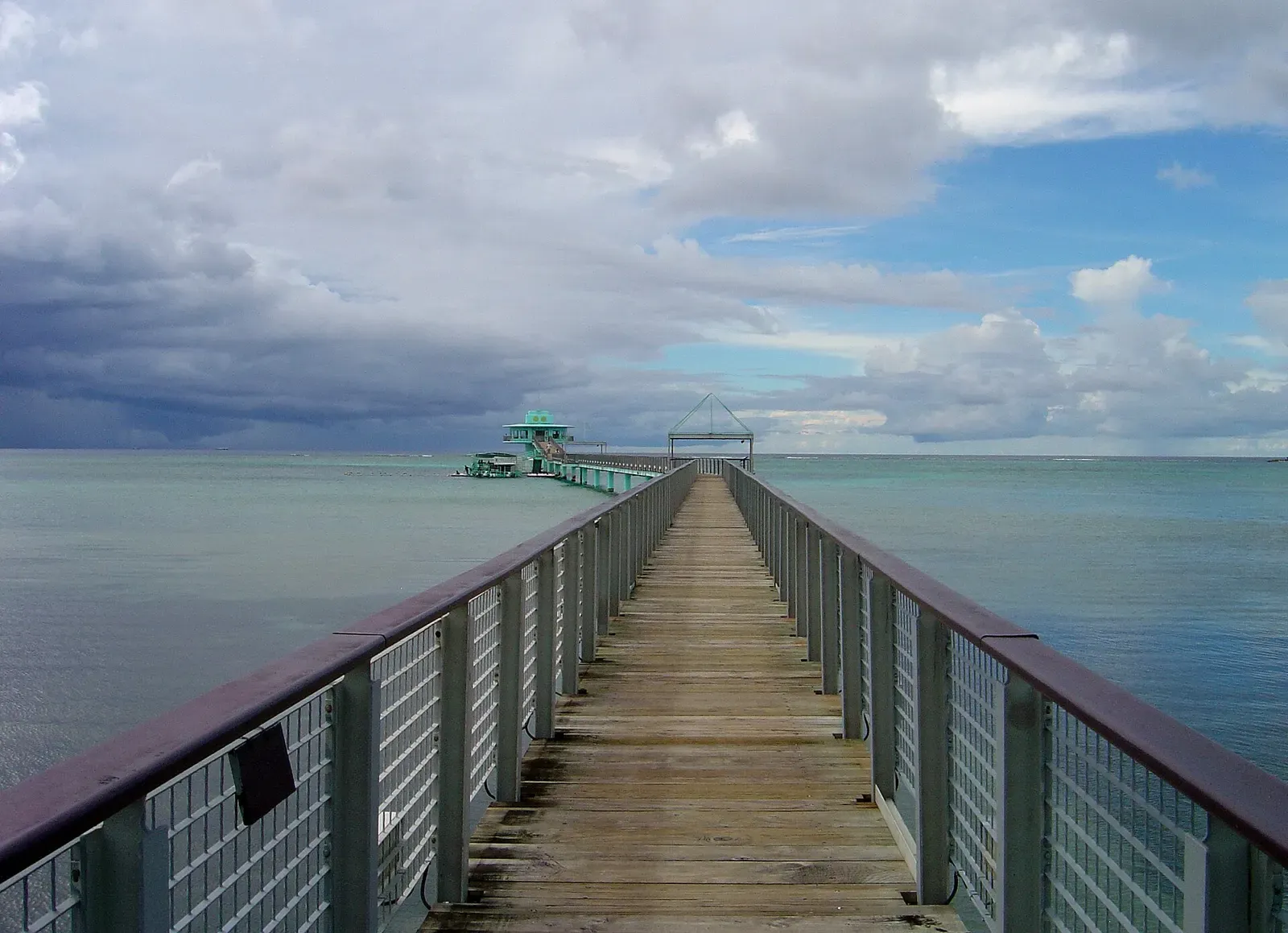
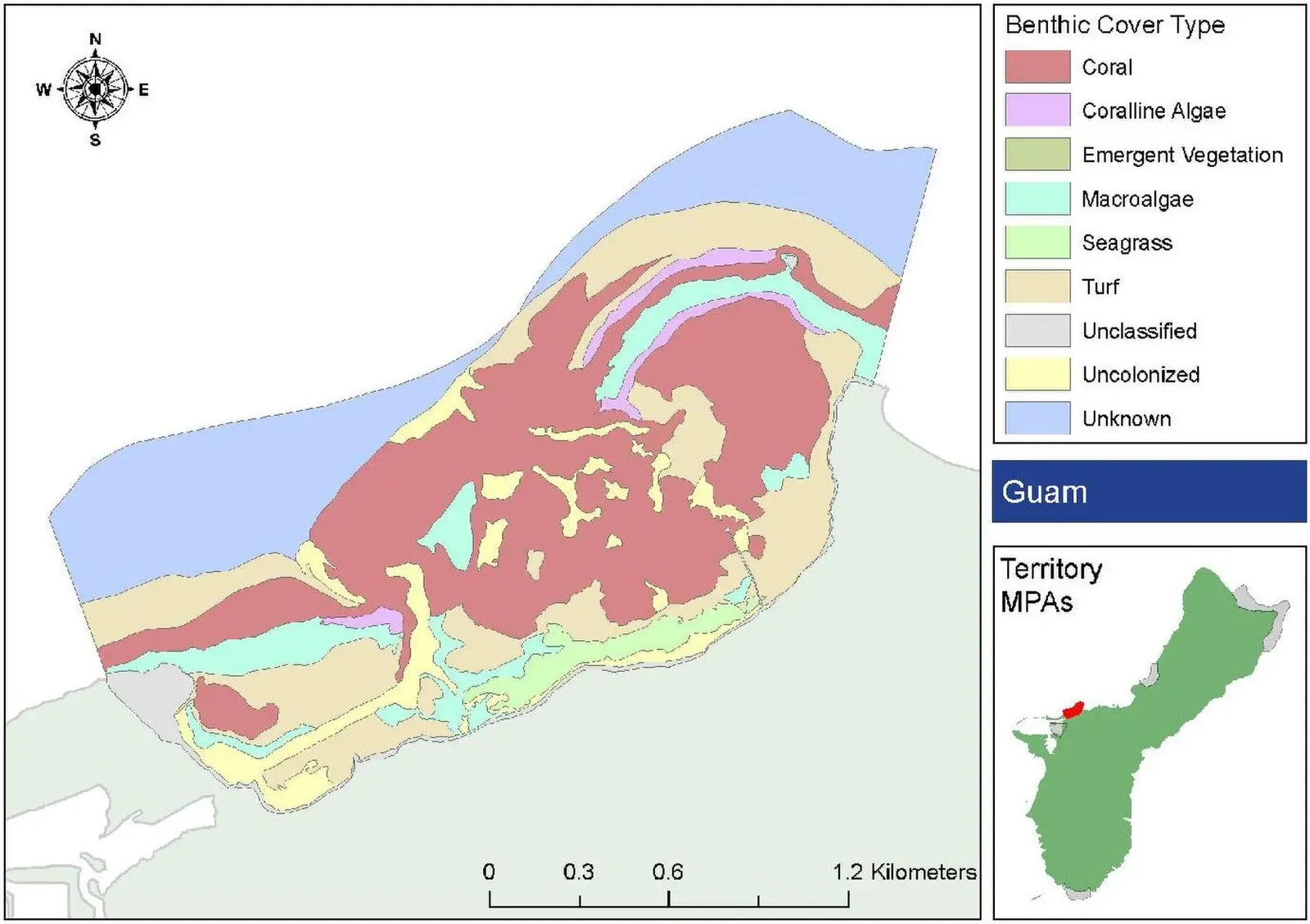
Piti Bay on Guam's west coast is a marine preserve whose "bomb holes" are not bomb craters at all: they are natural percolation pits where fresh water filters up into the shallow lagoon, cut into a reef flat you can walk out to and reaching only 25 to 30 feet (7.6 to 9.1 m). The largest pit holds the Fish Eye observatory, and an estimated 50 to 200 dives a day fall inside the preserve.
Where it is and how deep
13.4702° N, 144.7012° EApproximate position — the dashed circle shows where the site lies; your operator's briefing has the mooring.
The dive
Entry is from Tepungan Park: you walk or snorkel out along the right-hand side of the pier for about 75 yards (69 m) to reach the holes. They are not craters but natural percolation pits, where fresh water filters up into the shallow lagoon through the reef flat, and they range down only to 25 to 30 feet (7.6 to 9.1 m). The whole dive therefore sits inside the first ten metres, and gas rather than depth decides when it ends.
The largest pit houses the Fish Eye Marine Park observatory, which visitors descend into to look at what has grown in the sinkhole, and helmet divers on surface-supplied air pose for photographs on the bottom nearby. You share the water with their hoses and handlers. Traffic sets the character of the dive: an estimated 50 to 200 dives a day fall within a single 0.25-hectare section of the preserve, putting the annual total above 18,000.
Coral damage starts to accumulate rapidly somewhere between 4,000 and 6,000 dives a year, which leaves this patch far past the line, and the numbers climbed sharply after access to Outhouse Beach on Apra Harbor was restricted in 2001. Trim carefully, keep fins clear of the bottom and take nothing out of the water: the whole of Piti Bay is a designated marine preserve.
Marine life and season
The sources we used don't single out particular species here.
| Jan | Feb | Mar | Apr | May | Jun | Jul | Aug | Sep | Oct | Nov | Dec |
|---|---|---|---|---|---|---|---|---|---|---|---|
| Good | Good | Good | Good | Good | Good | Good | Good | Good | Good | Good | Good |
Season follows Guam: Dry season runs January to June and rainy season July to December; the water stays warm and diving continues all year.
Know before you go
- Tourists in Seawalker helmets work the bottom on surface-supplied air in the same water; stay clear of their hoses and their handlers.
- An estimated 50 to 200 dives a day fall on one 0.25-hectare patch, far past the 4,000 to 6,000 a year at which coral damage accelerates, so stay off the bottom.
Photos from Piti Bomb Holes
David Burdick / NOAA · Public domain
Gabriel · CC BY 4.0
Dive videos
Guam Dive Sites: Fisheye/ Piti Bomb Holes Marine Preserve · Random Adventure & Interest on YouTube
Questions divers ask
How deep is Piti Bomb Holes?+
The holes reach only 25 to 30 feet (7.6 to 9.1 m) in a shallow reef flat, so the site is dived and snorkelled well inside recreational limits.
Can you dive Piti Bomb Holes from shore?+
Yes. Entry is from Tepungan Park, walking or snorkelling out along the right-hand side of the pier for about 75 yards (69 m) to reach the holes.
Are the Piti bomb holes really bomb craters?+
No. The name is a misnomer. They look like craters in the reef flat but they are natural percolation pits, where fresh water filters up into the shallow lagoon.
Sources
- Piti Bomb Holes Marine Preserve — Wikipedia
- Underwater diving in Guam — Wikipedia
- Diving in Guam — Wikivoyage
Photo credits
- A long pier leads out over shallow turquoise water to the Fish Eye observation tower by David Burdick., Public domain, via Wikimedia Commons
- Benthic habitat map of Piti Bay showing coral, algae and turf cover with a Guam location inset by National Oceanic and Atmospheric Administration, Public domain, via Wikimedia Commons
- A pier stretches across calm lagoon water to a distant elevated tower by David Burdick / NOAA, Public domain, via Wikimedia Commons
- A spotted coral grouper swims over the reef in blue water by Gabriel, CC BY 4.0, via Wikimedia Commons
In The Logbook
- Wetsuit thickness by water temperatureGear & kit · 11 min read
More dive sites in Guam
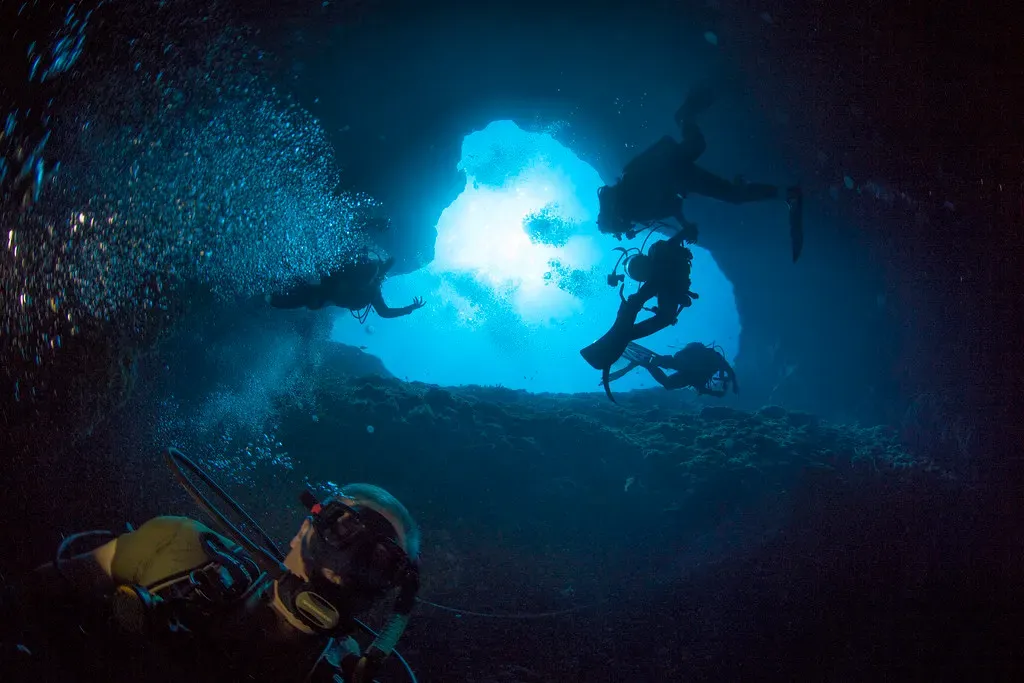
A reef sinkhole with a window at 40 m opening onto the outer wall
Reef
Stairs down to a harbour reef that steps out to a 37 m drop-off
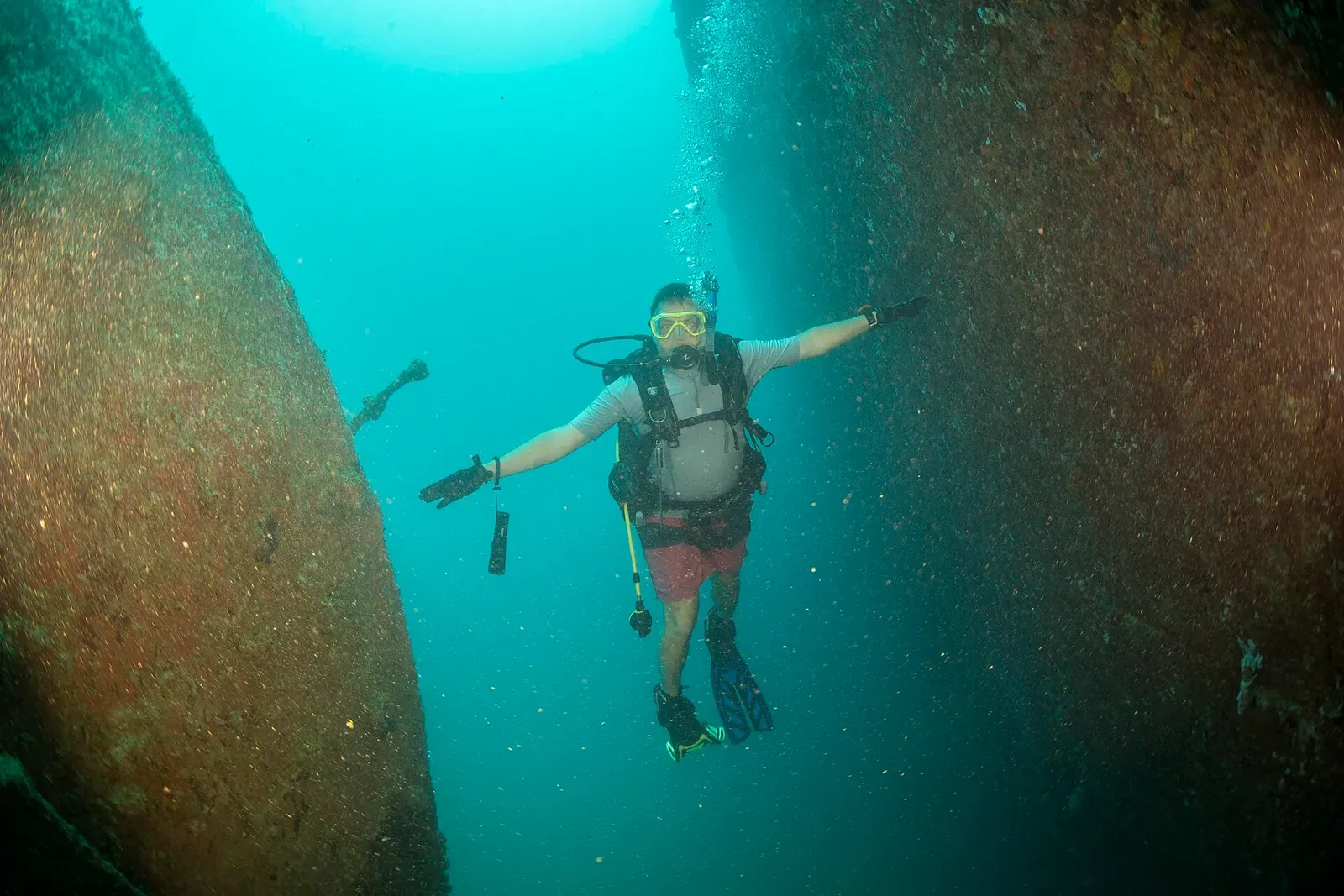
A 1917 raider and a 1943 freighter lying against each other
Similar dives elsewhere

Five to ten green turtles on a dive, in 11 m off the beach
Shore-entry reef with a spring nursery of young tiger sharks

Up to 40 eagle rays over one rock in 9 m


.jpg)

Protected since 1967, about 400 fish species