Guam · Guam · Reef
Gab Gab Reef
Stairs down to a harbour reef that steps out to a 37 m drop-off
Area photo: David Burdick, NOAA · Public domain
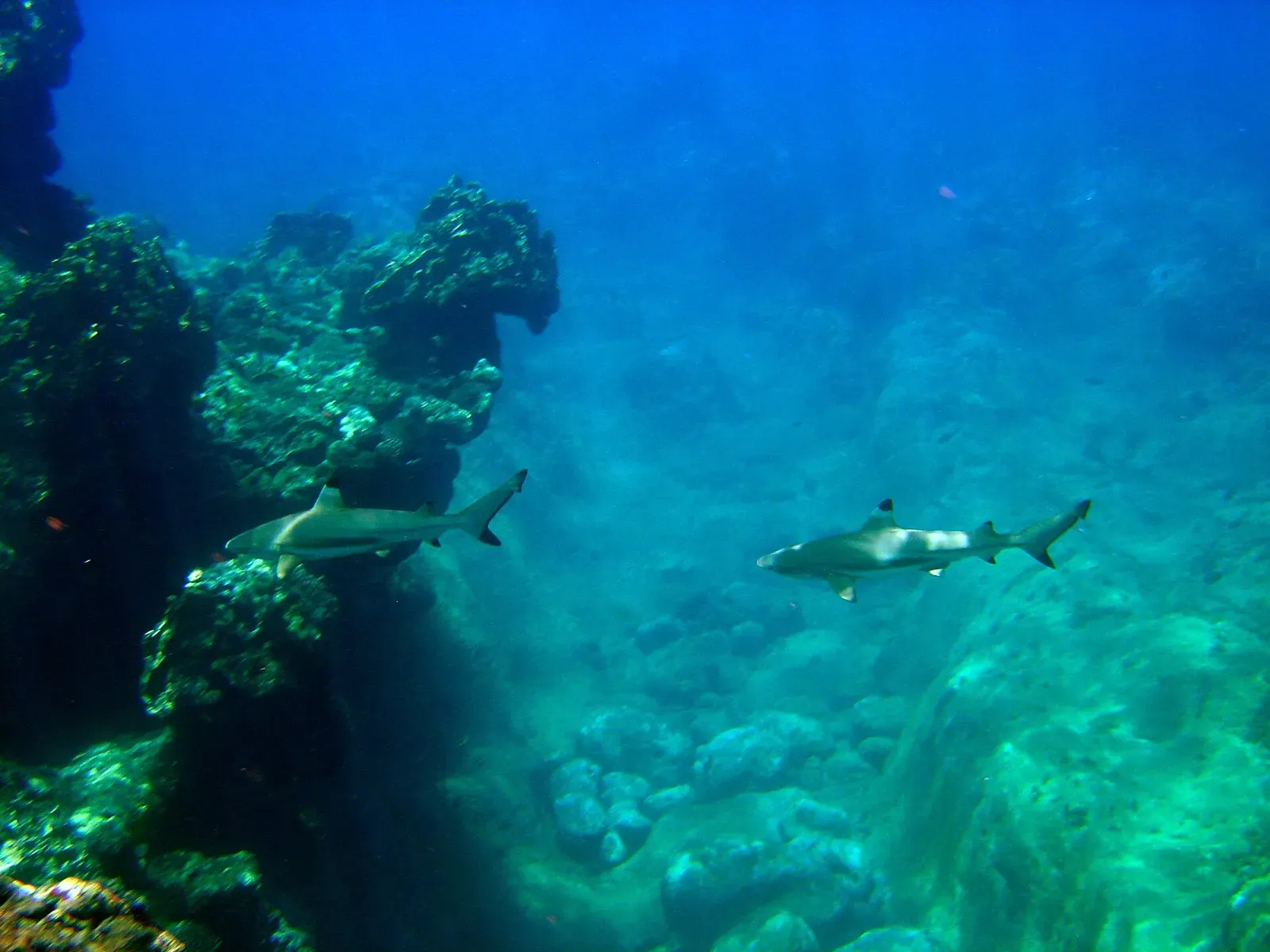
A run of coral slope inside Apra Harbor on the Naval Station shoreline, entered down a set of stairs with railings at Gab Gab beach. The reef starts a few metres down and steps out to a drop-off that carries on to about 37 m, with concrete tie-offs for floats at roughly 5 and 8 m. Turtles, anemones and reef fish are the everyday company, and the trevally at the feeding areas come in close.
Also known as Gab Gab Beach, Gab Gab 2.
Where it is and how deep
13.4423° N, 144.6445° EApproximate position — the dashed circle shows where the site lies; your operator's briefing has the mooring.
The dive
Divers with base access walk in down the stairs at Gab Gab beach, inflating before the last step because the rocks at the bottom are slippery. Heading north brings you to the first reef and its drop-off, where concrete buckets at about 5 and 8 m give something to tie a float to. Visibility inside the harbour usually runs 9 to 21 m, so the shallow reef stays bright while the deeper slope goes dim.
About 200 m north of the Gab Gab monument the ground continues as Gab Gab 2, where the top of the reef sits at roughly 14 m and larger schools gather. The Atlantis tourist submarine works this stretch and its crew feed the fish, which is why the residents are unusually approachable; stay at least 15 m clear of the submarine itself. Civilian divers reach the same ground on the short boat ride to the white buoy.
The fish behave accordingly around the feeding areas. Giant trevally arrive fast and close and are known to bite fingers, so keep hands closed and carry nothing that looks like food. Turtles, several kinds of anemone, sponges and soft corals fill the reef between them, and a large eel has been reported by the feed bucket. From the drop-off the slope carries on to about 37 m, so agree a maximum before you get in.
Marine life and season
- Sea turtles
- Trevally & jacks
- Reef fish swarms
| Jan | Feb | Mar | Apr | May | Jun | Jul | Aug | Sep | Oct | Nov | Dec |
|---|---|---|---|---|---|---|---|---|---|---|---|
| Good | Good | Good | Good | Good | Good | Good | Good | Good | Good | Good | Good |
Season follows Guam: Dry season runs January to June and rainy season July to December; the water stays warm and diving continues all year.
Know before you go
- Giant trevally at the feeding areas are known to bite fingers; keep hands closed and carry nothing that resembles food.
- The rocks at the base of the entry stairs are slippery: inflate your BCD before stepping in and take the last metres slowly.
- The Atlantis tourist submarine runs through the Gab Gab 2 stretch; keep at least 15 m clear of it.
Dive videos
FREE DIVING at Gab Gab Beach GUAM · Helena Smith on YouTube
Gab Gab 2 Reef Sharks · greenhornet2ss on YouTube
Questions divers ask
How deep is Gab Gab?+
The published range is 3 to 37 m. The reef top and the float tie-offs sit in the first few metres, and the drop-off north of the stairs carries the bottom to about 37 m, so most dives are planned well inside that.
Can civilian divers dive Gab Gab?+
Gab Gab beach is inside the ComNavMar naval base and shore entry is limited to people with base access. Everyone else takes a short boat ride to the white buoy set directly across from the beach, over Gab Gab 2.
Sources
- Gab Gab — Guam Dive Guide
- Gab Gab 2 — Guam Dive Guide
- Diving in Guam — Wikivoyage
- OpenStreetMap: Gab Gab Beach — OpenStreetMap
In The Logbook
- The best shore dives in the worldShore diving · 8 min read
More dive sites in Guam
A reef sinkhole with a window at 40 m opening onto the outer wall
Natural percolation pits in a reef flat, 9 m at their deepest
A 1917 raider and a 1943 freighter lying against each other
Similar dives elsewhere
A 5-15 m coral plateau at the angle of the pass

The verified anchor from Samuel Wallis's 1767 expedition
Reef
Beach House
Kauaʻi · United States
A large arch joining two parallel lava fingers
Reef
General Store
Kauaʻi · United States
The boiler and anchors of the Pele, lost in the late 1800s