Guam · Guam · Wreck
SMS Cormoran & Tokai Maru
A 1917 raider and a 1943 freighter lying against each other
Photo: Jon Rasmussen · Public domain
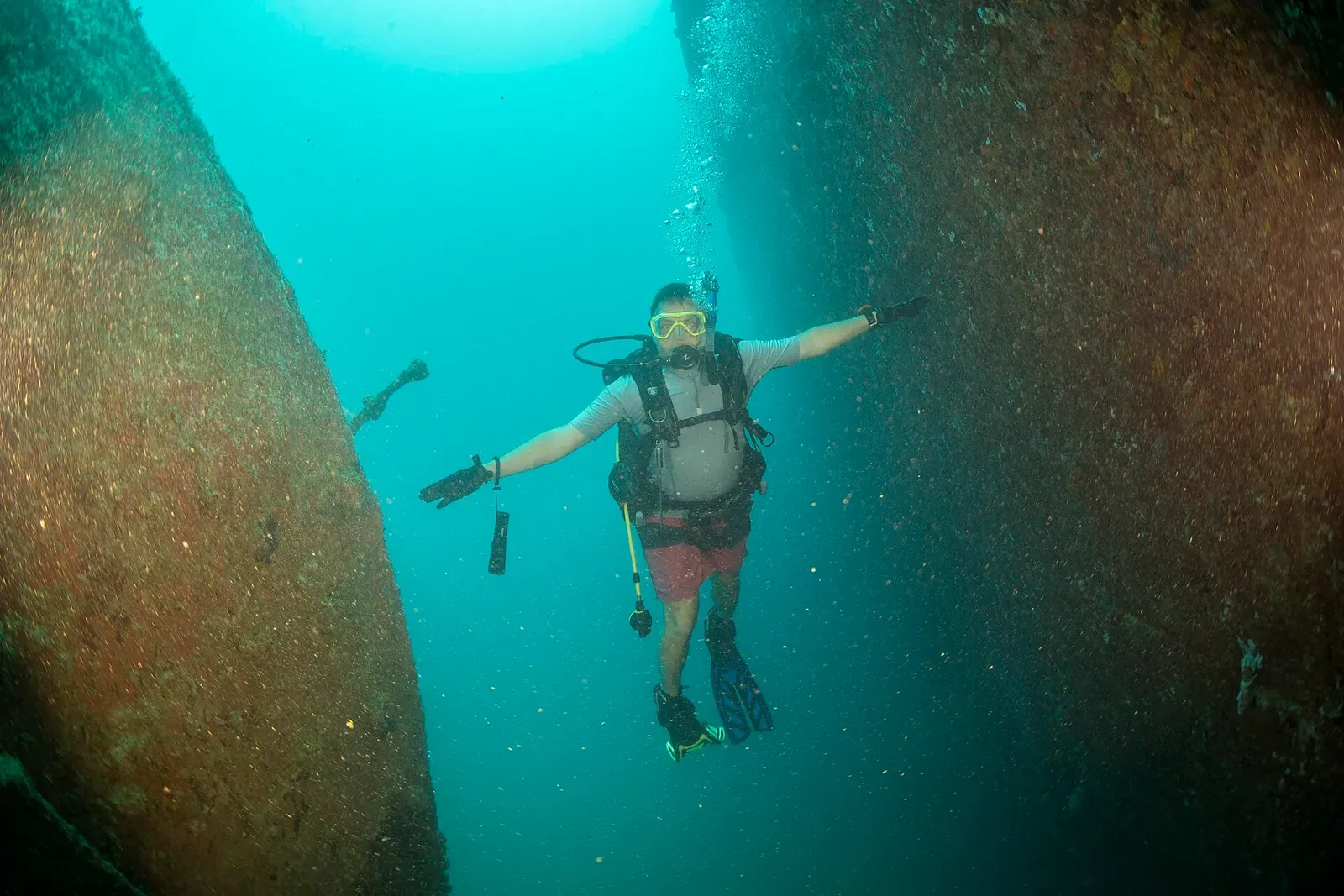
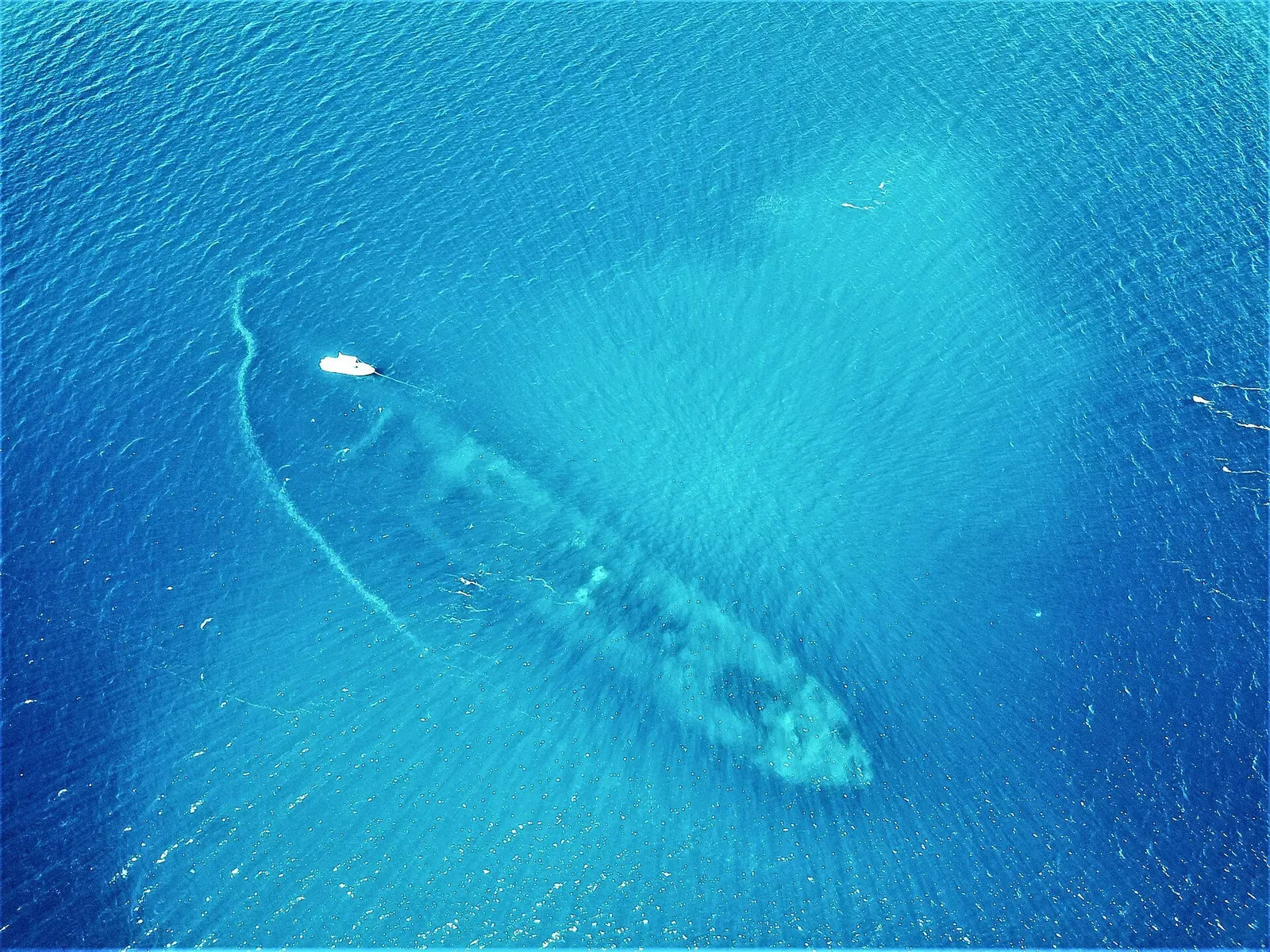
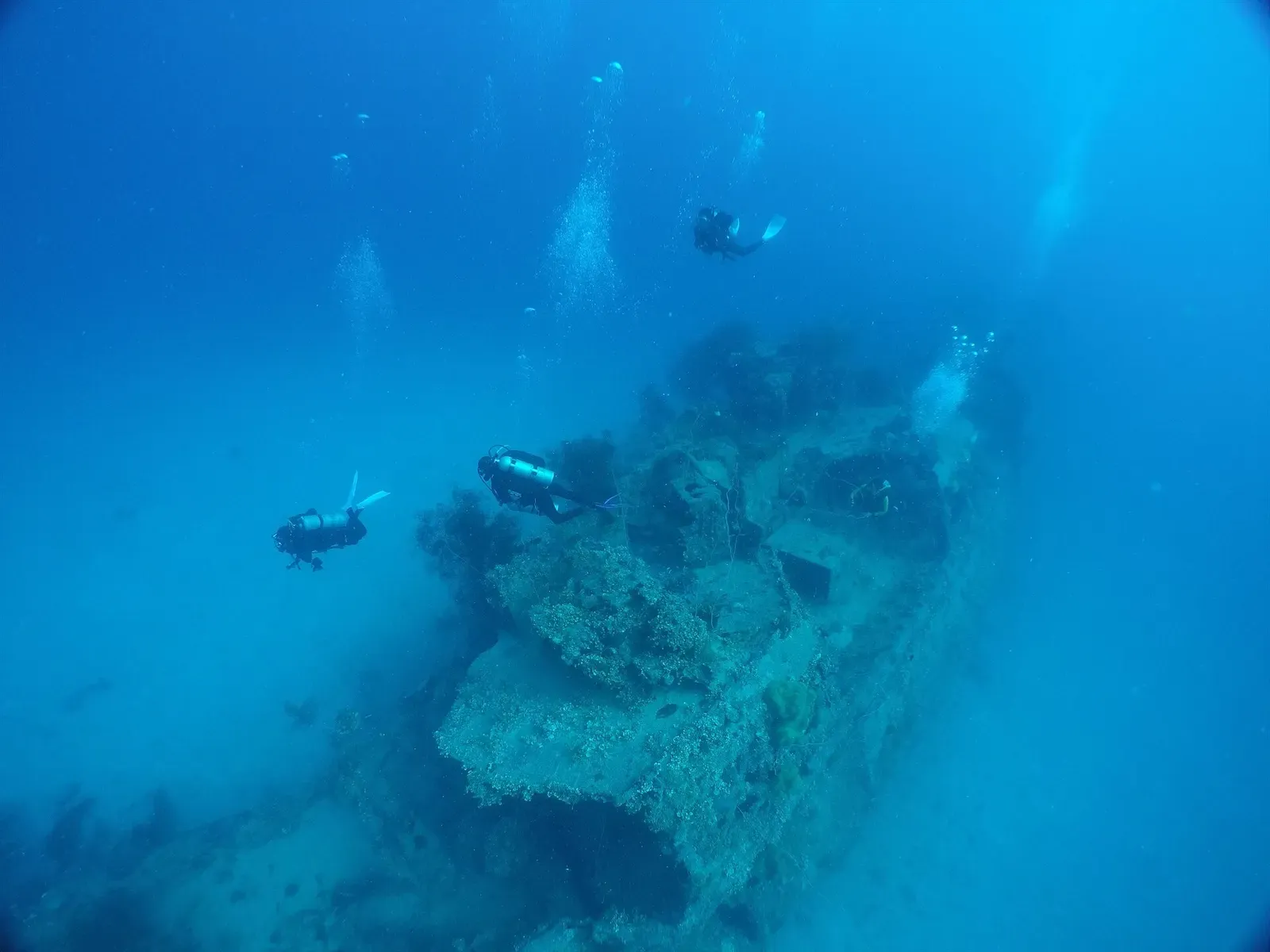
Two wrecks from two wars lie touching on the floor of Apra Harbor: the German armed merchant raider SMS Cormoran, scuttled by her own crew in April 1917, and the Japanese cargo ship Tokai Maru, torpedoed by the submarine USS Snapper in August 1943. The Cormoran rests on her starboard side at 34 m with the Tokai leaning against her screw, so one dive covers both ships.
Also known as Cormoran II.
Where it is and how deep
13.4592° N, 144.6542° EPublished position for this site.
The dive
The descent starts on the Tokai Maru, the larger of the two ships at over 130 m long. Her shallowest structure is the upper forward bridge at about 12 m, and she rests in 37 m of water with an 85-degree list to port, so her decks stand almost on edge and you work along what was once her side. A torpedo hole in the port number 3 cargo hold marks where the shot from USS Snapper went in.
To reach the Cormoran, follow the Tokai's midsection hull over the side and keep descending; the German ship comes into view at about 24 m and runs down to 34 m, lying on her starboard side with her drive shaft closest to the Tokai. She is 88 m long, and the two hulls are in contact, which is the reason divers come: this is one of the few places where a First World War wreck lies against a ship from the Second.
Depth, not the wrecks, sets the shape of the dive. The bottom sits between 24 and 37 m, and harbour visibility averages 8 to 12 m and shifts with the tide and with large ship traffic, so the route is agreed before the descent and the deep leg is kept short. In the after-deck house at the Tokai's stern at least four unexploded depth charges are plainly visible from the top of the structure. The bottom is metal and silt, and the Tokai's bridge at 12 m makes the natural place to finish.
The wreck
- Vessel
- SMS Cormoran (Cormoran II) and Tokai Maru
- Type
- German merchant raider and Japanese cargo ship
- Built
- 1909
- Sunk
- 1917
- Cause
- Cormoran scuttled in 1917; Tokai Maru torpedoed by USS Snapper in 1943
- Lies
- Cormoran on her starboard side at 34 m, the Tokai Maru leaning against her screw
Cormoran began as the Russian merchant ship Ryazan, built in 1909 and captured by the German cruiser SMS Emden in August 1914, then converted into an armed raider. Low on fuel after raiding commerce, her crew burned much of her woodwork in the boilers to make port; she reached Apra Harbor in December 1914 and was interned for over two years. When the US entered the war in April 1917 and moved to seize her, a charge hidden in her coal bunker blew and she went down. The exchange produced the first American shots fired at Germany, the first German prisoners taken by the US and the first Germans killed by American forces. She was listed on the National Register of Historic Places in 1975.
Marine life and season
The sources we used don't single out particular species here.
| Jan | Feb | Mar | Apr | May | Jun | Jul | Aug | Sep | Oct | Nov | Dec |
|---|---|---|---|---|---|---|---|---|---|---|---|
| Good | Good | Good | Good | Good | Good | Good | Good | Good | Good | Good | Good |
Season follows Guam: Dry season runs January to June and rainy season July to December; the water stays warm and diving continues all year.
Know before you go
- At least four unexploded depth charges sit in the after-deck house at the Tokai Maru's stern, plainly visible from above the structure. Do not touch or move them.
- Visibility averages only 8 to 12 m and drops further with tide and large ship traffic, so fix a turn point and stay in close contact on the deeper Cormoran.
Photos from SMS Cormoran & Tokai Maru
Jon Rasmussen · Public domain
Unknown authorUnknown author · Public domain
Dive videos
Guam Diving twin ship wrecks: Tokai Maru and SMS Cormoran II · Wandering Woody on YouTube
Questions divers ask
How deep is the Cormoran and Tokai Maru dive?+
The site runs from 24 to 37 m. The Tokai Maru's upper forward bridge is the shallowest structure at about 12 m, the Cormoran appears at around 24 m, and she lies on her starboard side at 34 m.
What certification do I need?+
Advanced-level training with deep experience. The Cormoran's hull sits at 34 m, the Tokai bottoms out at 37 m, and no-decompression time at those depths is short, so the deep leg has to be planned before the descent.
Can you dive both wrecks on one dive?+
Yes, they are in contact. The usual route follows the Tokai Maru's midsection hull over the side until the Cormoran appears at about 24 m, so a single dive covers a 1917 wreck and a 1943 wreck.
Sources
- SMS Cormoran (1914) — Wikipedia
- Diving in Guam — Wikivoyage
Photo credits
- A diver hovers in the narrow gap between the rusted hulls of two wrecks by Jon Rasmussen, Public domain, via Wikimedia Commons
- A diver ascends between two rust-covered hulls with a gun barrel visible in the background by Jon Rasmussen, Public domain, via Wikimedia Commons
- Black and white photo of the steamship SMS Cormoran afloat, twin funnels smoking by Unknown authorUnknown author, Public domain, via Wikimedia Commons
In The Logbook
- Deep wreck diving: where recreational stopsWrecks · 8 min read
More dive sites in Guam
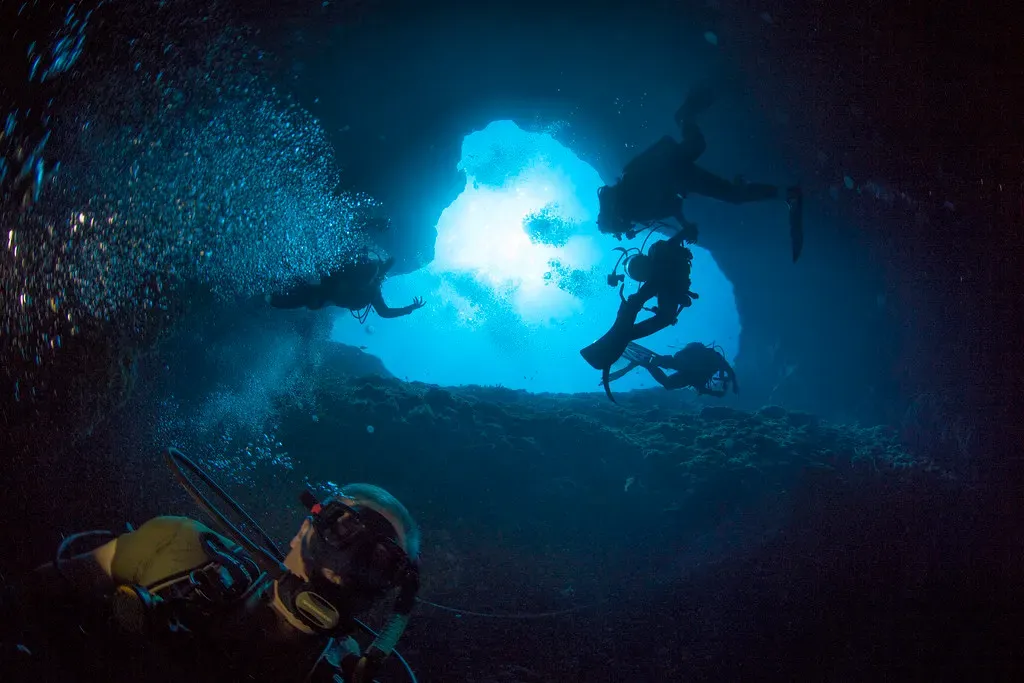
A reef sinkhole with a window at 40 m opening onto the outer wall
Reef
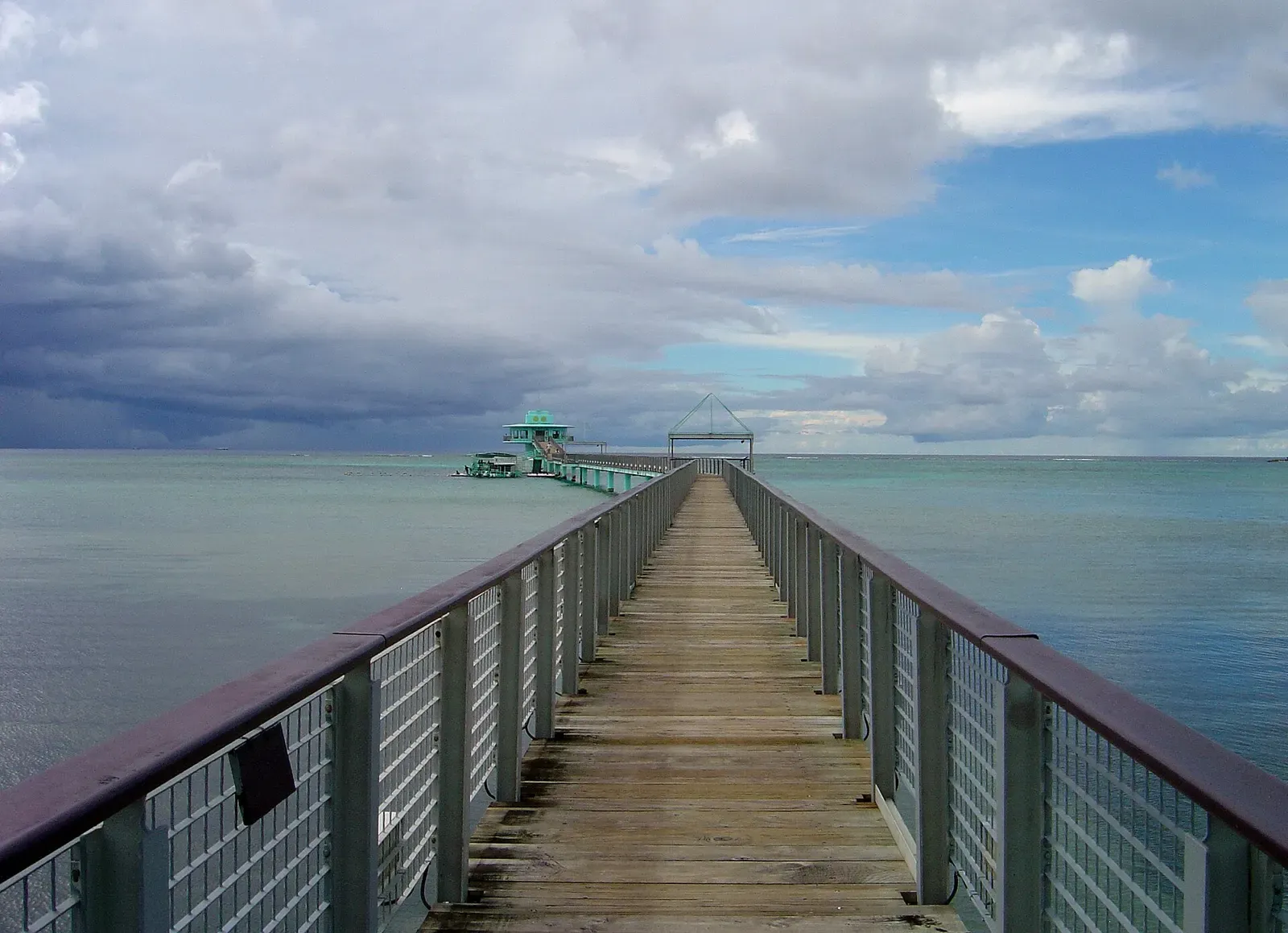
Stairs down to a harbour reef that steps out to a 37 m drop-off
Natural percolation pits in a reef flat, 9 m at their deepest
Similar dives elsewhere

A freighter so thick with lionfish it took their name
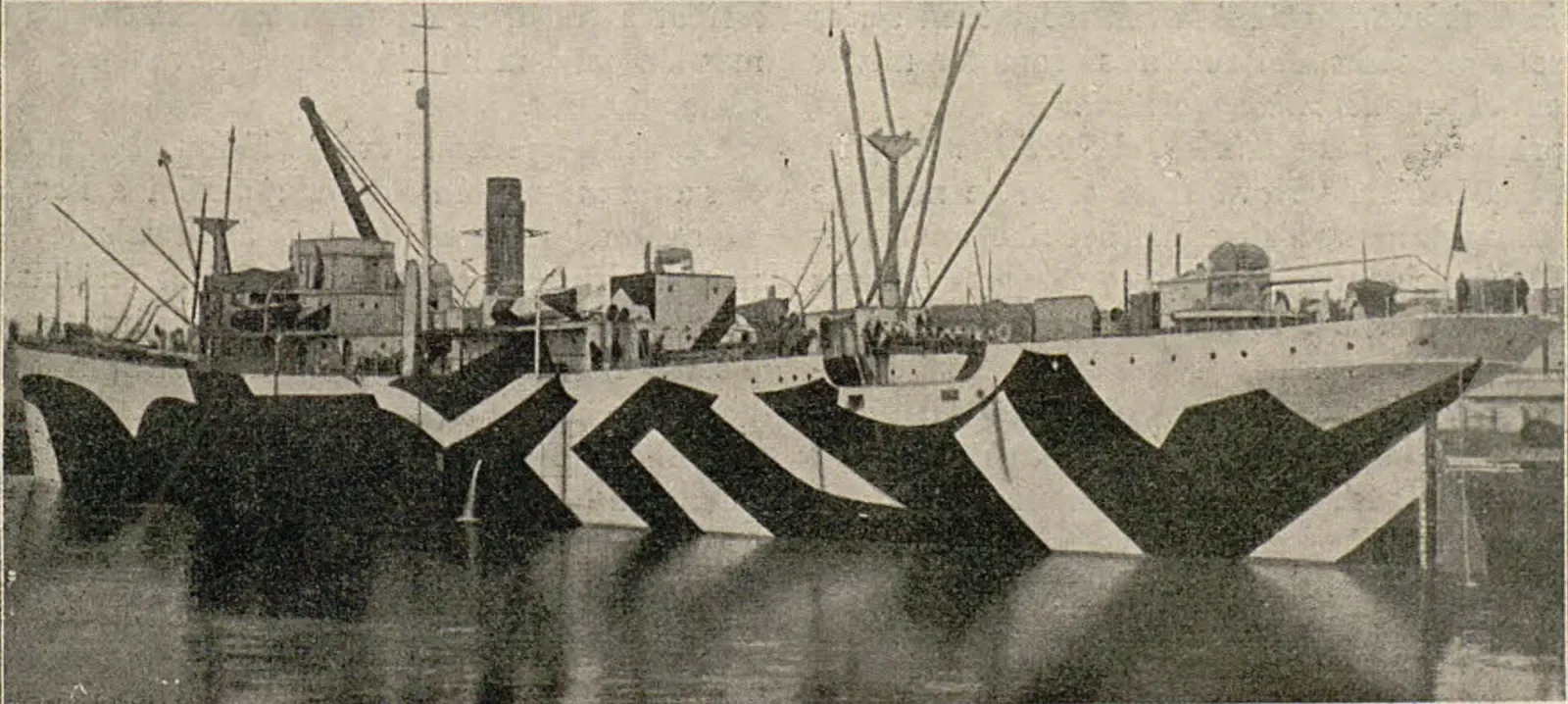
A 122-metre Clan Line steamer (400 feet) that burnt out at Vava'u in 1927
The sole surviving A5M Claude, stacked in a cargo hold

.jpg)
.jpg)
Bow and stern guns on a sunken Japanese destroyer