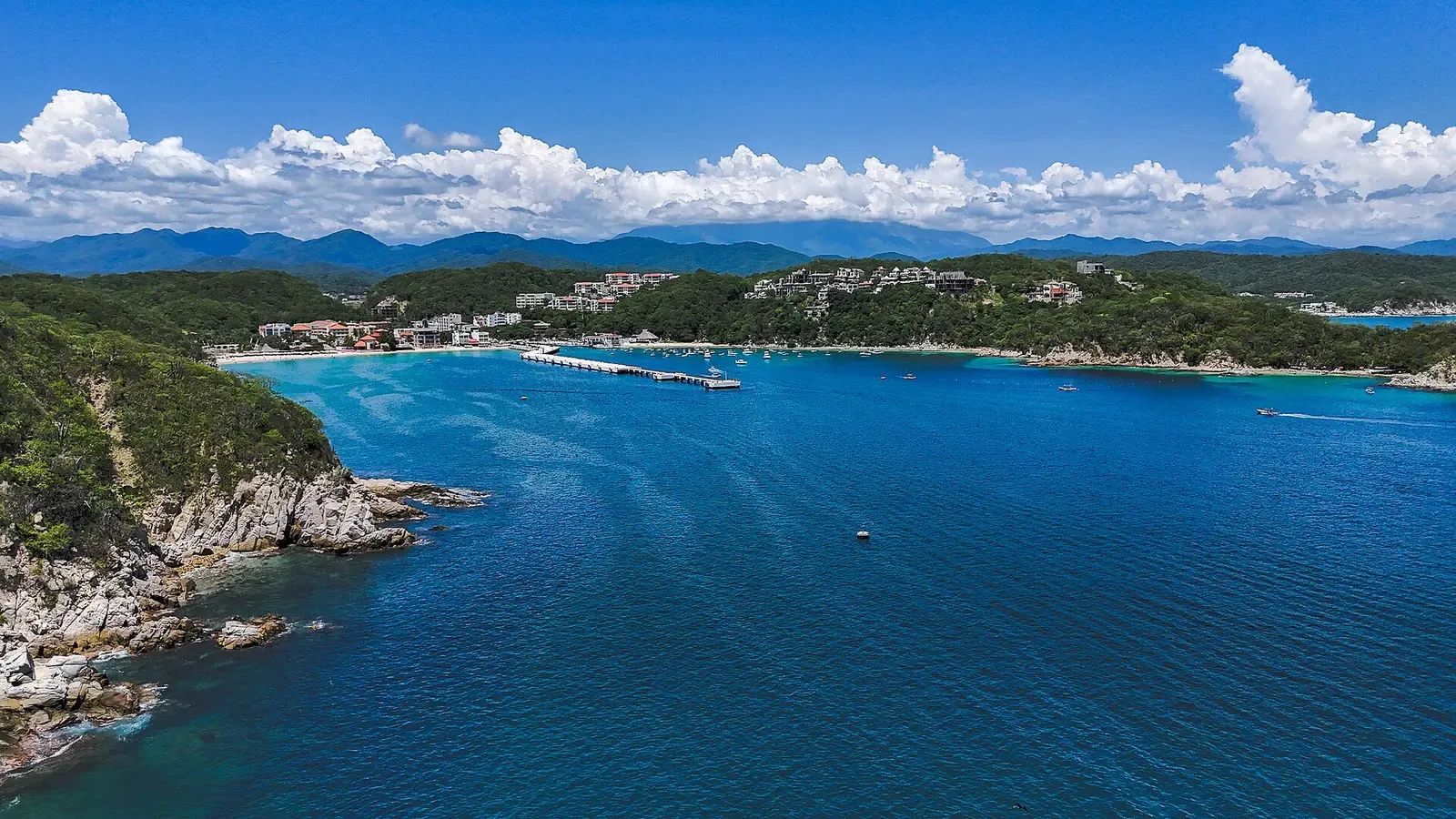
North America · Mexico
Huatulco
Spotted eagle rays over rocky reefs in warm national-park bays.
Photo: ProtoplasmaKid · CC BY-SA 4.0
Huatulco, on the Pacific coast of Oaxaca, dives the bays of Huatulco National Park, a protected area since 1998. The reefs and canyons are a 5 to 25 minute boat ride from the Santa Cruz Marina, and spotted eagle rays, sea turtles, octopus and moray eels are the regulars, with 70 eagle rays once seen together at La Montosa. Dives run from coral plates in the first 12 m (40 ft) to average depths of 18–21 m (60–70 ft), the water averages 27–30 °C through the year, and from May to November a manta or whale shark is an occasional bonus.
About diving in Huatulco
Diving here is a day-boat affair. Three PADI centres work the coast. Hurricane Divers runs from the Santa Cruz Marina, 5 to 25 minutes from the sites of Huatulco National Park; Huatulco Dive Center runs every trip on its own 10-metre boat (33 ft), the Mako; and Anfibios Huatulco runs night dives and courses, with the confined-water part of its discovery dives at a pool or at La Entrega reef. In high winds the marinas close and the boats stay in.
The coast has nine bays, and the national park takes in the western ones, from Maguey to San Agustín. On this Pacific side of Mexico the bottom is mostly rock, zigzagging formations and canyons carrying patches of hard and soft coral, and most of that coral died in the marine heat wave of 2023. Moray eels, lobsters, octopus, sea turtles and several kinds of ray live among the rocks. Spotted eagle rays are among the regulars, and 70 eagle rays were once seen together at La Montosa, where nurse and whitetip sharks also turn up. Hammerheads have been seen at Tapesco, and seahorses live on a sandy beginner area.
Coral plates sit in the first 12 m (40 ft) and the deeper reef dives average 18–21 m (60–70 ft), and sheltered sites such as Riscalillo Reef suit every level, so the coast works well for newer divers and for courses. Experienced divers with a deep specialty have The Point, which drops to 40 m (130 ft) and holds red snapper and amberjacks. Anyone travelling mainly for coral cover should weigh the 2023 die-off, and mantas and whale sharks, possible from May to November, are luck rather than a plan.
Best time to dive Huatulco
| Jan | Feb | Mar | Apr | May | Jun | Jul | Aug | Sep | Oct | Nov | Dec |
|---|---|---|---|---|---|---|---|---|---|---|---|
| Good | Good | Good | Good | Good | Fair | Fair | Fair | Fair | Fair | Fair | Good |
No month stands out as a diving peak. December to May is the dry season and June to November the rainy one; mantas and whale sharks are occasional from May to November.
Dive types & marine life
Spotted eagle rays, sea turtles, octopus, moray eels and lobsters live on the rocky reefs, and La Montosa also brings nurse and whitetip sharks. Hammerheads appear at Tapesco now and then. From May to November a giant manta or whale shark is an occasional sighting, never a sure one.
- Reef
- Night
- Eagle rays
- Sea turtles
- Octopus & cuttlefish
- Manta rays
Best dive sites in Huatulco
- 1
La Montosa
Eagle-ray site, once 70 together, with nurse and whitetip sharks.
- 2
Tapesco
Rock formations to explore, with hammerhead sightings now and then.
- 3
Chachacual
Bay known for mantas, turtles and a wide mix of Pacific marine life.
- 4
Riscalillo Reef
Well-protected reef that suits divers of every level.
- 5
Maguey
Bay with three different dive options.
Site guides
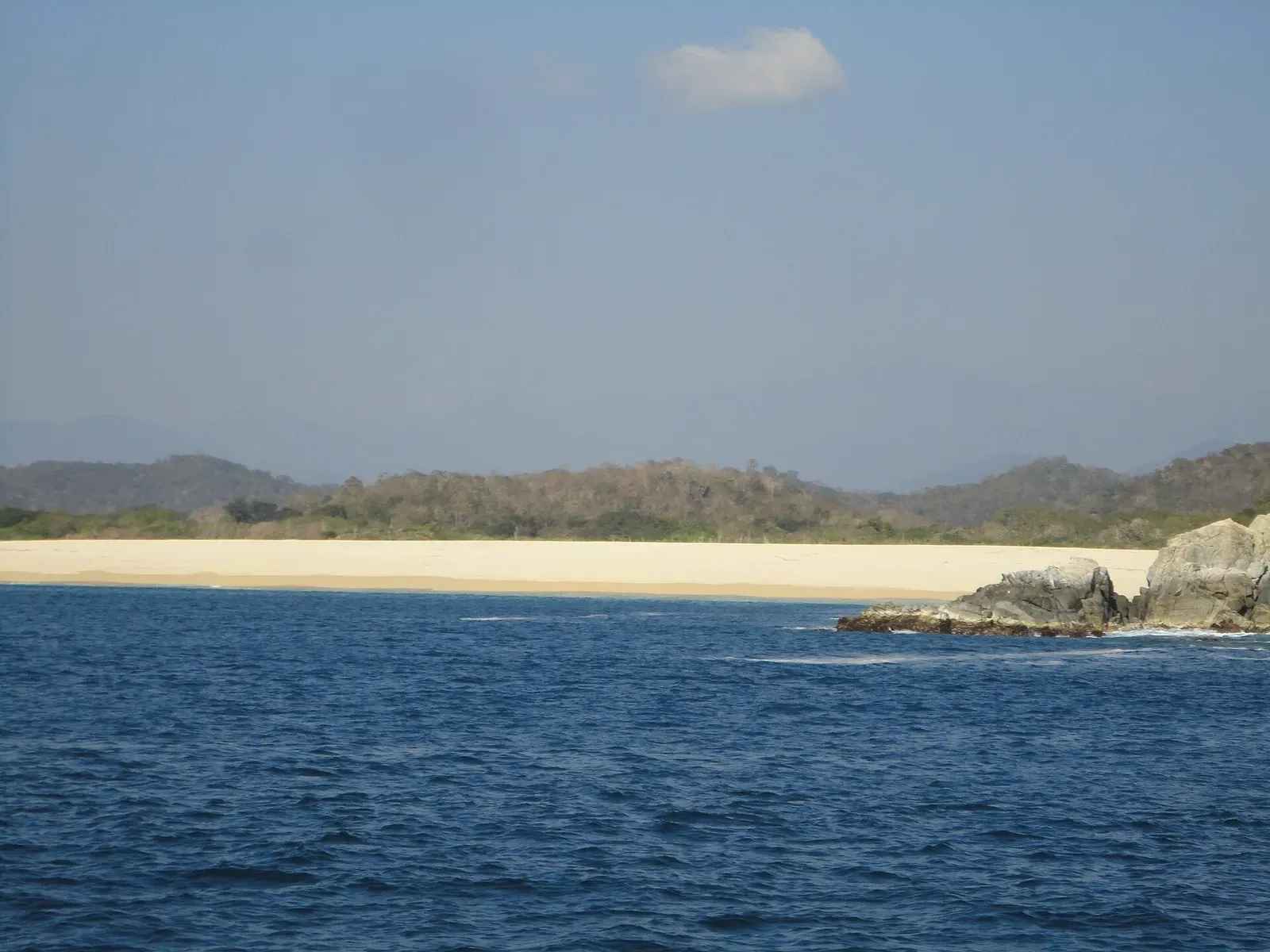
Sea turtles on the inner coral plate, eagle rays at La Grieta.
Reef
A winter carpet of rays in the cove, small caves on the rock.
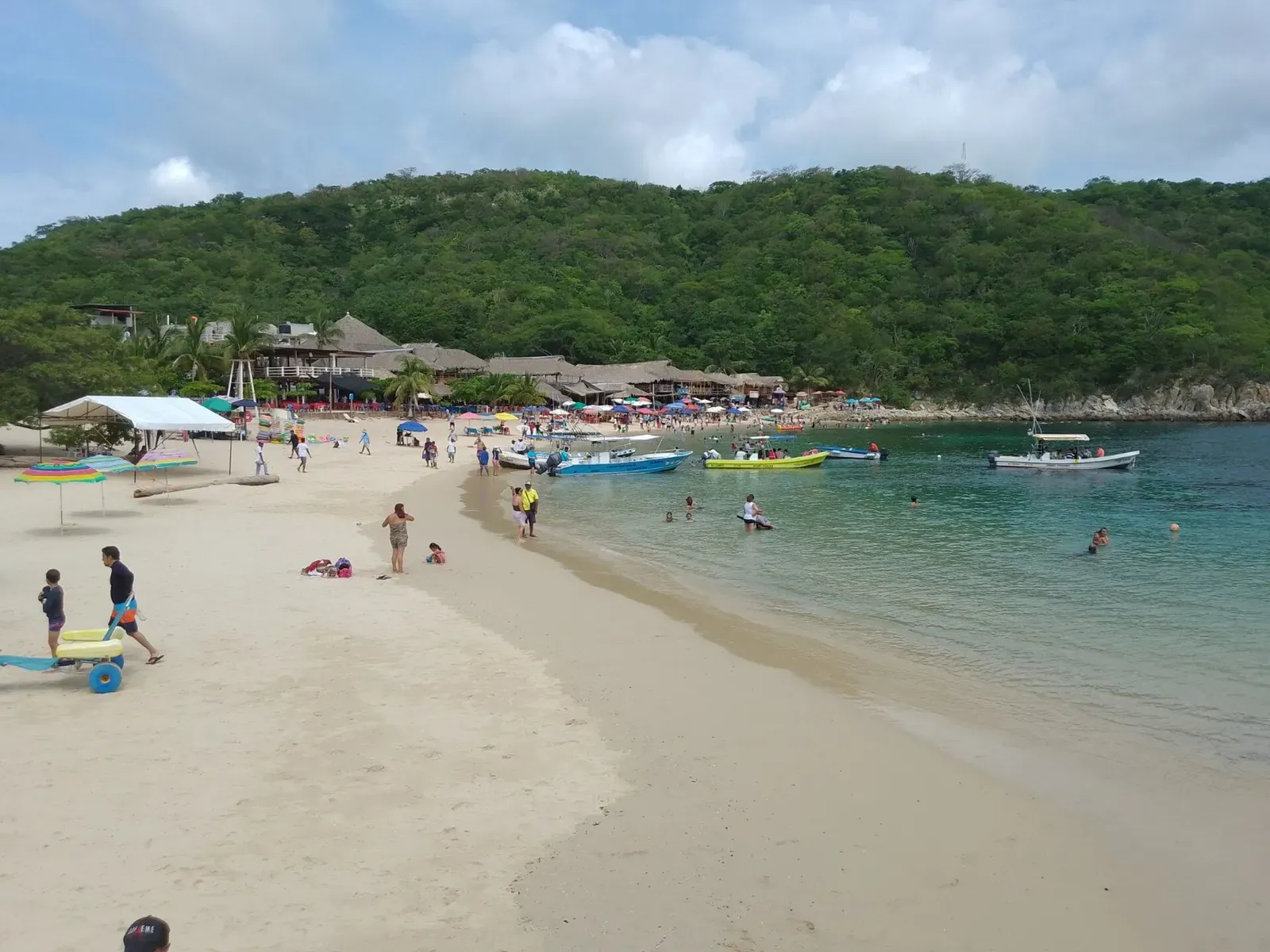
A 9 m coral plateau used for discovery-dive training.
Reef
Eagle rays, once 70 together, over volcanic rock
Reef
Seahorses on the sand, canyons at 18 m, The Point at 40 m.
How to get to Huatulco
Huatulco International Airport is a 10- to 20-minute drive from La Crucecita, Santa Cruz and Tangolunda, where most hotels are. Hurricane Divers' boats leave from the Santa Cruz Marina, 5 to 25 minutes from the national-park sites.
Photos from Huatulco
Own work · CC BY-SA 4.0
ProtoplasmaKid · CC BY-SA 4.0
Dive videos
Huatulco Diving November · Lifeuw on YouTube
Scuba Diving in Huatulco, Mexico · Renate Mattsson on YouTube
Questions divers ask
Are there mantas and whale sharks at Huatulco?+
A giant manta or whale shark is an occasional sighting from May to November, never a sure one. Spotted eagle rays are the regulars on the rocky reefs, and 70 were once seen together at La Montosa.
What certification do Huatulco dives need?+
Riscalillo Reef suits all levels and Tapesco needs Advanced Open Water. The Point drops to 40 m (130 ft) and is a deep specialty dive.
Is there still coral at Huatulco?+
Most of the coral died in the marine heat wave of 2023, leaving rock, formations and canyons with patches of hard and soft coral. Anyone travelling mainly for coral cover should weigh the die-off.
How far are the Huatulco dive sites from the marina?+
Sites in Huatulco National Park are a 5 to 25 minute boat ride from the Santa Cruz Marina. In high winds the marinas close and the boats stay in.
Sources
- Huatulco Scuba Diving Guide — My Huatulco Vacation
- Hurricane Divers - Diving Tours — Hurricane Divers
- Hurricane Divers — Hurricane Divers
- Huatulco Dive Center — Huatulco Dive Center
- Anfibios Huatulco — Anfibios Huatulco
- Huatulco - Wikivoyage — Wikivoyage
- Bahías de Huatulco - Wikipedia — Wikipedia
- Huatulco water temperature — seatemperature.org
Photo credits
- Aerial view over deep blue water toward Santa Cruz bay, its long pier and green hills below a mountain range by ProtoplasmaKid, CC BY-SA 4.0, via Wikimedia Commons
- Aerial view of rocky islets and granite outcrops in clear blue water off a forested shore by Own work, CC BY-SA 4.0, via Wikimedia Commons
- Aerial view of a small cove with a pale sandy shallow, palapa restaurants and forested hills by ProtoplasmaKid, CC BY-SA 4.0, via Wikimedia Commons
Embed
Run a dive centre, club or blog? Embed this map of 5 dive sites near Huatulco on your own page.
Similar destinations
North America
Redondo, Palos Verdes & San Pedro
United States
Market squid spawn on the Redondo canyon edge from mid-December to early March

Walk down the stairs at Casino Point straight into a giant kelp forest

Warm shallow reefs and famous wrecks a short boat run from Key Largo and Islamorada


Healthy coral reef caps 161 km offshore (100 miles), famous for August coral spawning.